Interventional Neuroradiology vs Neurosurgery: How the Treatments Differ
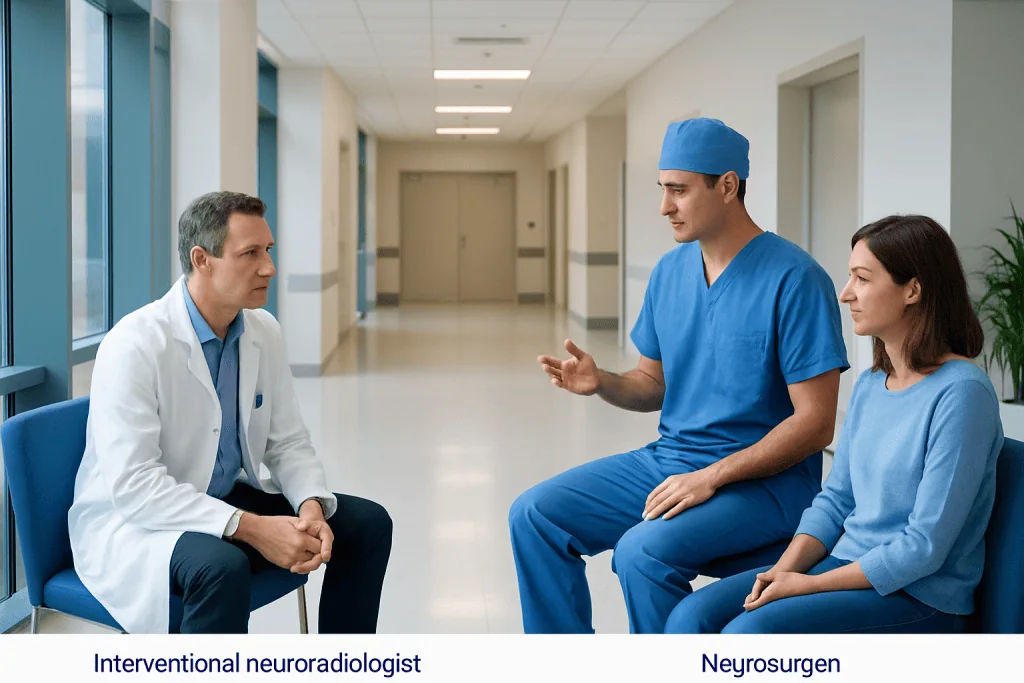
Interventional neuroradiology uses catheters and imaging guidance to treat certain brain and spinal conditions from inside the blood vessels. Neurosurgery involves operative treatment, which may be open, microscopic, endoscopic, or minimally invasive depending on the condition.
Key Takeaways
- Interventional neuroradiology uses catheters and imaging guidance to treat certain brain and spinal conditions from inside the blood vessels.
- Neurosurgery involves operative treatment, which may be open, microscopic, endoscopic, or minimally invasive depending on the condition.
- The best option depends on the diagnosis, the location of the problem, the patient’s overall health, and treatment goals.
- Some conditions can be treated by either specialty, while others need a combined team approach.
- Recovery time, hospital stay, and risks may differ between the two approaches.
Interventional neuroradiology and neurosurgery both treat disorders of the brain, spine, and blood vessels, but they do so in different ways. One relies on image-guided, minimally invasive techniques through blood vessels, while the other uses surgical procedures that may involve direct access to the brain or spine.
Overview: Two Different Ways to Treat the Nervous System
Interventional neuroradiology and neurosurgery are closely related specialties that treat conditions affecting the brain, spine, head, neck, and the blood vessels that supply them. They often care for the same diseases, but the methods they use are different. Understanding that difference can help patients and families feel more prepared when discussing treatment options.
Interventional neuroradiology, also called endovascular or image-guided neurovascular treatment in some settings, uses detailed imaging to guide tiny instruments through the blood vessels. A specialist usually inserts a thin catheter through an artery, often in the wrist or groin, and navigates it to the target area. This approach avoids a large surgical incision and may reduce recovery time for selected patients.
Neurosurgery is the specialty that treats disorders of the brain, spine, nerves, and skull through operative techniques. Depending on the condition, this may include open surgery, microsurgery, endoscopic surgery, or other minimally invasive procedures. Neurosurgeons can directly remove tumors, relieve pressure, repair structural problems, or stabilize the spine when needed.
These specialties are not competitors in a simple sense. In many hospitals, they work together as part of a multidisciplinary team. For some conditions, one approach is clearly preferred; for others, both may be appropriate, or a patient may need a combination of treatments.
How Interventional Neuroradiology Works
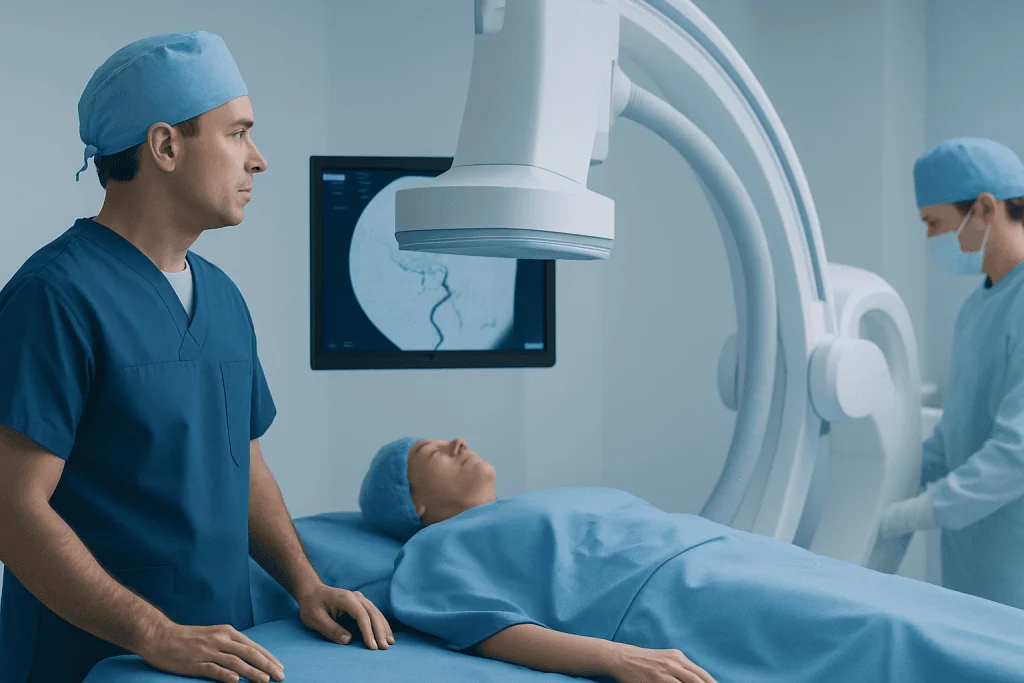
Interventional neuroradiology treats disease from inside the blood vessels using real-time imaging such as fluoroscopy, angiography, CT, or MRI planning. The physician guides a catheter to a precise location and then delivers treatment without opening the skull or making a large incision. This is why it is often described as minimally invasive.
Common techniques include coiling or flow diversion for aneurysms, embolization to block abnormal blood vessels, thrombectomy for certain strokes, and stenting in selected vascular narrowings. These procedures are designed to treat blood vessel problems or conditions that can be reached safely through the circulation. In some cases, they are used before surgery to reduce bleeding risk.
The main advantages of this approach may include smaller incisions, less tissue disruption, shorter hospital stays, and faster return to daily activities. However, it is not suitable for every condition. The success of treatment depends on the anatomy, the type of disease, and how safely the catheter can reach the target area.
Because these procedures involve delicate blood vessels in the brain and spine, careful imaging and planning are essential. Specialists evaluate not only the target problem but also the overall circulation, nearby structures, and the patient’s general health before deciding if an endovascular approach is appropriate.
How Neurosurgery Works

Neurosurgery uses direct operative techniques to diagnose or treat conditions affecting the nervous system. In some cases, the surgeon makes an opening in the skull or spine to reach the problem directly. In others, the procedure may be performed through a microscope, an endoscope, or small incisions using advanced navigation systems.
This specialty is often needed when a condition cannot be reached through blood vessels, when tissue must be removed, or when pressure on the brain or spinal cord must be relieved promptly. Examples include removing many tumors, treating spinal disc disease, repairing certain traumatic injuries, and managing some forms of bleeding or hydrocephalus.
Neurosurgery can also be highly precise and minimally invasive in selected cases. Modern neurosurgical care may involve neuronavigation, intraoperative imaging, and microsurgical techniques that aim to protect healthy tissue as much as possible. Even so, it remains surgery, and recovery may be longer than with catheter-based procedures depending on the operation.
For patients, the key point is that neurosurgery provides options that interventional neuroradiology cannot always offer. If the goal is to remove a mass, decompress nerves, obtain a tissue diagnosis, or reconstruct part of the skull or spine, neurosurgical treatment may be the most effective and safest path.
Conditions That May Be Treated by One or Both Specialties
Some diseases are mainly treated by interventional neuroradiology, some mainly by neurosurgery, and some by both. Blood vessel disorders are among the most common reasons patients see an interventional neuroradiology team. These include brain aneurysms, arteriovenous malformations, dural arteriovenous fistulas, and certain cases of acute ischemic stroke.
Neurosurgery more commonly treats brain tumors, spinal cord compression, degenerative spine disease, traumatic brain injury, and structural abnormalities such as some forms of chiari malformation or hydrocephalus. It may also be needed when bleeding causes pressure on the brain and urgent surgical drainage is required.
There is important overlap. For example, some aneurysms can be treated either with endovascular coiling or with surgical clipping. Some vascular malformations may need embolization followed by surgery, or surgery followed by imaging-based treatment. Similarly, stroke care can involve urgent stroke treatment by an endovascular team, followed by neurosurgical support if swelling or bleeding develops.
Patients may also encounter related conditions such as brain aneurysm, arteriovenous malformation, or stroke, where the treatment decision depends heavily on anatomy and timing. In complex cases, a multidisciplinary board may review imaging and discuss whether catheter-based treatment, surgery, radiation, or observation offers the best balance of safety and benefit.
Key Differences in Procedure, Recovery, and Risks
The biggest difference between interventional neuroradiology and neurosurgery is how the treatment reaches the problem. Interventional neuroradiology reaches the target through blood vessels using a catheter, while neurosurgery reaches it through an operation. This affects anesthesia, recovery, scarring, and the type of risks a patient may face.
Interventional neuroradiology often involves smaller entry points, less postoperative pain, and shorter recovery for suitable cases. Many patients spend less time in the hospital than they would after open surgery, although this depends on the disease being treated. Risks can include bleeding, vessel injury, clot formation, stroke, contrast-related problems, or recurrence requiring follow-up treatment.
Neurosurgery may involve a longer hospital stay and a more gradual recovery, especially after major cranial or spinal procedures. Risks vary by operation but may include infection, bleeding, anesthesia-related complications, fluid leakage, nerve injury, seizures, or neurological deficits. At the same time, surgery can provide benefits that catheter-based therapy cannot, such as direct tissue removal or immediate decompression.
Another important difference is follow-up. Many endovascular treatments need repeat imaging over time to confirm that the treated vessel remains stable. Neurosurgical procedures may also need imaging and rehabilitation, particularly after tumor, spine, or trauma surgery. In both cases, the care plan is individualized, and long-term monitoring can be just as important as the procedure itself.
How Doctors Decide Which Treatment Is Best
Choosing between interventional neuroradiology and neurosurgery starts with an accurate diagnosis. Doctors consider imaging results, the type of disease, its size and location, symptoms, urgency, age, overall health, and the patient’s preferences. No single treatment is automatically best for everyone.
For example, a small aneurysm in a favorable location may be suited to an endovascular procedure such as aneurysm treatment, while another aneurysm may be safer to clip surgically because of its shape or surrounding anatomy. A brain tumor usually needs neurosurgical evaluation because treatment may require removal or biopsy, though vascular procedures may sometimes support surgery by reducing blood flow to the tumor first.
In spine care, conditions like severe compression or instability often require an operative solution such as neurosurgery or spine surgery. By contrast, diseases that primarily involve abnormal brain or spinal blood vessels may be better candidates for endovascular management. The goal is always to choose the approach that offers the best chance of benefit with the lowest acceptable risk.
Shared decision-making matters. Patients should feel comfortable asking why a certain option is recommended, what alternatives exist, whether a second opinion is helpful, and what recovery will involve. In experienced centers, these discussions often include specialists from neuroradiology, neurosurgery, neurology, stroke medicine, intensive care, and rehabilitation.
Questions Patients Can Ask Before Treatment
Patients and families often find it helpful to prepare questions before meeting the care team. Understanding the reason for a recommended treatment can make decisions less overwhelming and improve confidence in the plan. It also helps set realistic expectations about benefits, limits, and recovery.
Useful questions may include:
- What exactly is the diagnosis, and how urgent is treatment?
- Why is interventional neuroradiology or neurosurgery being recommended in this case?
- Are there non-surgical or less invasive alternatives?
- What are the main risks and possible complications?
- How long is the hospital stay and recovery period likely to be?
- Will rehabilitation, repeat imaging, or additional procedures be needed later?
It is also reasonable to ask who will be involved in care, whether the case has been reviewed by a multidisciplinary team, and what signs to watch for after discharge. Some conditions need urgent treatment, but even then, clear communication remains important. Patients should not hesitate to ask for explanations in plain language.
Near the end of the decision process, practical issues also matter, including anesthesia, medications, blood thinners, travel, and follow-up plans. Acibadem International’s multidisciplinary specialists and JCI-accredited hospitals diagnose and treat these conditions for international patients, with care pathways that may include both endovascular and neurosurgical expertise when appropriate.
When to Seek Medical Attention
Symptoms related to brain, spine, or blood vessel disorders should never be self-diagnosed. Sudden weakness, facial drooping, speech difficulty, severe sudden headache, loss of consciousness, seizures, new confusion, or sudden vision loss need urgent medical attention. These symptoms may indicate stroke, bleeding, or another neurological emergency.
Less urgent but still important symptoms include persistent headaches with neurological changes, worsening balance problems, numbness, progressive limb weakness, memory changes, or back and neck pain with bowel or bladder symptoms. These signs do not always mean a serious condition, but they do deserve medical assessment. Early diagnosis can sometimes make treatment simpler and safer.
Patients who already have a diagnosed aneurysm, vascular malformation, tumor, or spinal problem should attend regular follow-up as advised. Even when symptoms improve, imaging and specialist review may still be needed to monitor stability. Delaying recommended evaluation can allow a treatable problem to progress.
Whether the answer is interventional neuroradiology, neurosurgery, or another form of care, timely expert evaluation is the most important first step. The choice of treatment is based on the individual patient, and a specialist can explain the safest and most effective path forward.
Frequently asked questions
Is interventional neuroradiology the same as neurosurgery?
No. Interventional neuroradiology uses image-guided catheters inside blood vessels, while neurosurgery treats the brain, spine, and nerves through operative techniques. They may treat similar conditions, but the methods are different.
Which is safer, interventional neuroradiology or neurosurgery?
Neither is universally safer for every patient or every condition. Safety depends on the diagnosis, anatomy, urgency, and the person’s overall health. A specialist team weighs the benefits and risks of each option before making a recommendation.
Can a brain aneurysm be treated without open surgery?
Yes, many brain aneurysms can be treated with endovascular techniques such as coiling or flow diversion. However, some aneurysms are better treated with surgical clipping. The best approach depends on the aneurysm’s size, shape, and location.
Do patients recover faster after interventional neuroradiology?
In many suitable cases, recovery is faster because the procedure is minimally invasive and does not require a large incision. Hospital stays may be shorter, and postoperative discomfort may be less. Still, recovery varies depending on the condition being treated and whether complications occur.
Why would someone need neurosurgery if a minimally invasive option exists?
A minimally invasive option is not always possible or effective. Some conditions require direct removal of tissue, relief of pressure, repair of structural damage, or stabilization of the spine. In those situations, neurosurgery may provide the most complete and durable treatment.
Can both specialties be involved in the same patient’s care?
Yes. Many complex neurological conditions are managed by a team that includes interventional neuroradiologists and neurosurgeons. One procedure may be performed first to make the next step safer or more effective.
References
- World Health Organization
- National Institute of Neurological Disorders and Stroke
- American Association of Neurological Surgeons
- Society of NeuroInterventional Surgery
- Radiological Society of North America
This article is for general information only and is not a substitute for professional medical advice. Please consult a qualified doctor about your individual situation.
Interventional Neuroradiology in Turkey — costs, top hospitals & a free quote
JCI-accredited · board-certified surgeons · reply within 24h
Add us as a Preferred Source to see more of our trusted health content across Google Search, AI Overviews and Discover.

More from the Health Library



Related Specialists

Dr. Savaş Beyaztaş
Cardiology
Prof. Dr. Osman Bilgin Timuralp
Cardiology
Assoc. Prof. Dr. Serap Aktaş Yıldırım
Anesthesiology
Prof. Dr. Murat Kılıç
General Surgery