Is GBS a Neuromuscular Disease? How Guillain-Barré Syndrome Affects Nerves and Muscles

GBS is a neuromuscular condition that affects the peripheral nerves rather than the brain or spinal cord itself. It often begins with tingling or weakness in the legs and can spread upward over days to weeks.
Key Takeaways
- GBS is a neuromuscular condition that affects the peripheral nerves rather than the brain or spinal cord itself.
- It often begins with tingling or weakness in the legs and can spread upward over days to weeks.
- Early diagnosis and close monitoring are important because symptoms can worsen quickly in some people.
- Treatment may include immunotherapy, supportive hospital care, and rehabilitation.
- Many people improve over time, but recovery can take weeks to months and sometimes longer.
Guillain-Barré syndrome, often called GBS, is considered a neuromuscular disorder because it affects the peripheral nerves that control muscle movement and sensation. Although the muscles themselves are not usually the main problem, nerve damage can lead to weakness, numbness, and sometimes difficulty with breathing or walking.
Overview: Is GBS a Neuromuscular Disease?
Yes, Guillain-Barré syndrome (GBS) is generally considered a neuromuscular disorder. It affects the peripheral nervous system, which includes the nerves outside the brain and spinal cord. These nerves carry signals to and from the muscles, so when they become inflamed or damaged, muscles may become weak, reflexes may decrease, and normal movement can become difficult.
GBS is not usually a primary muscle disease. Instead, the main problem is that the immune system mistakenly attacks parts of the peripheral nerves. Because muscles depend on healthy nerves to receive signals, nerve injury can lead to symptoms that feel muscular, such as heaviness, weakness, poor balance, or trouble climbing stairs.
Doctors often describe GBS as an acute immune-mediated polyneuropathy. “Acute” means it develops over a relatively short time, and “polyneuropathy” means multiple nerves are affected. This is why GBS is often discussed alongside other neuromuscular diseases, even though its pattern and pace are different from many chronic neuromuscular conditions.
How Guillain-Barré Syndrome Affects Nerves and Muscles
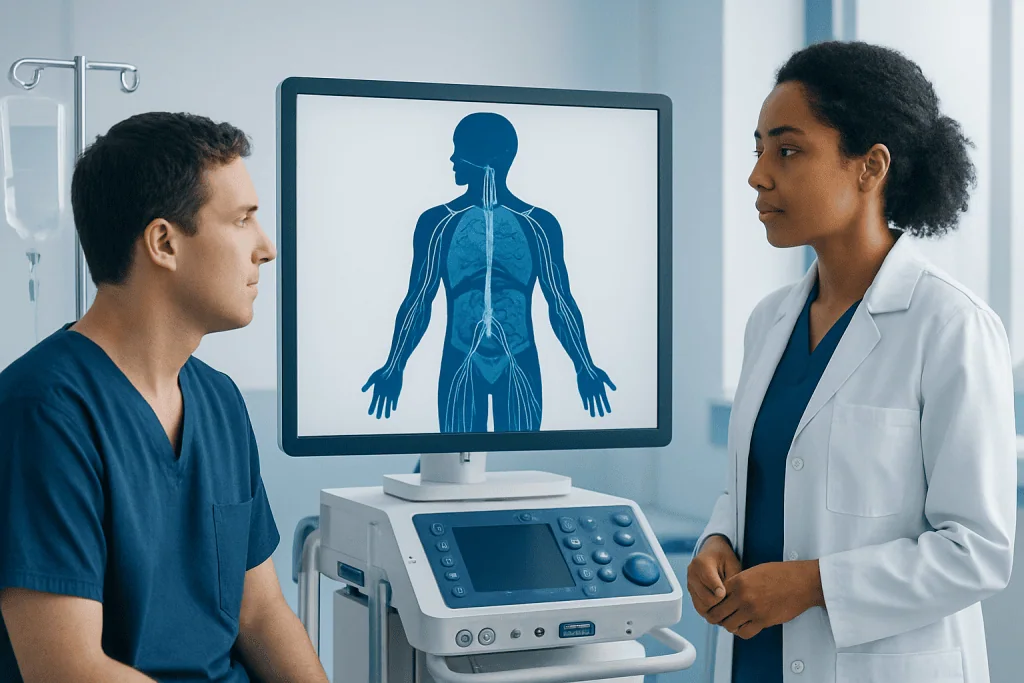
In GBS, the body’s immune system targets the covering of nerves called myelin, the nerve fibers themselves, or both. Myelin acts like insulation around electrical wires. When it is damaged, nerve signals slow down or fail to reach the muscles properly. As a result, muscles may not respond normally even though the muscle tissue itself may be healthy.
This disruption can affect motor nerves, sensory nerves, and sometimes autonomic nerves. Motor nerve involvement causes weakness, often starting in the feet or legs and moving upward. Sensory nerve involvement can lead to tingling, numbness, burning discomfort, or unusual sensations. Autonomic nerve involvement may affect blood pressure, heart rate, sweating, or bladder and bowel function.
The severity of GBS varies. Some people develop mild weakness and recover steadily, while others experience rapid progression that affects walking, swallowing, facial movement, or breathing. Because the condition can change quickly, new or worsening symptoms should be evaluated promptly by a doctor.
Symptoms of GBS

GBS often begins with tingling, numbness, or weakness in the feet and legs. Over time, the weakness may spread to the arms and upper body. Many people notice that both sides of the body are affected, and deep tendon reflexes, such as the knee-jerk reflex, may become reduced or absent.
Symptoms can progress over days to a few weeks. In addition to weakness, a person may develop difficulty walking, climbing stairs, lifting the arms, or holding objects. Facial muscles can also be involved, leading to trouble smiling, chewing, swallowing, or closing the eyes fully. Some people experience significant nerve pain or aching, especially in the back or legs.
Possible symptoms include:
- Tingling or pins-and-needles sensations in the hands or feet
- Symmetrical weakness, usually starting in the legs
- Loss of reflexes
- Unsteady walking or frequent falls
- Facial weakness or double vision
- Difficulty swallowing or speaking clearly
- Shortness of breath
- Changes in heart rate or blood pressure
Because breathing muscles can become weak, GBS is treated as a condition that may require urgent care. Symptoms such as rapidly worsening weakness, difficulty breathing, or trouble swallowing should not be ignored.
Causes and Risk Factors
The exact cause of GBS is not always clear, but it commonly appears after an infection. In many cases, symptoms begin days or weeks after a respiratory illness or stomach infection. Researchers believe the immune response triggered by the infection may accidentally attack the nerves because of similarities between infectious agents and components of nerve tissue.
Common triggers may include viral or bacterial infections, and less often surgery, vaccination, or other immune stimulation. However, it is important to remember that GBS remains uncommon, and most people who have these triggers do not develop it. The condition is not contagious and cannot be passed directly from one person to another.
Several forms of GBS exist. The most common form in many regions is acute inflammatory demyelinating polyradiculoneuropathy, which mainly affects myelin. Other variants can affect the nerve axon more directly. Doctors may also consider related conditions such as peripheral neuropathy when sorting out the cause of weakness and sensory symptoms, although GBS has a more sudden onset and a different treatment approach.
How GBS Is Diagnosed
GBS is diagnosed through a combination of medical history, physical examination, and supportive tests. A doctor will ask when symptoms began, how quickly they are progressing, whether both sides of the body are affected, and whether there was a recent infection. The examination often looks for weakness, reduced reflexes, sensory changes, and signs that breathing or swallowing may be affected.
Tests may include nerve conduction studies and electromyography to evaluate how well nerves and muscles are working together. These tests can help show whether the problem lies in the peripheral nerves and whether demyelination or axonal injury is present. Blood tests may also be used to rule out other causes of weakness, and a spinal tap may show a typical pattern of elevated protein in the cerebrospinal fluid.
Because symptoms can overlap with other neurological conditions, doctors may use neurological examination and additional assessments to identify the cause accurately. In some situations, breathing function and heart rhythm are monitored closely in the hospital, especially if symptoms are progressing quickly or autonomic involvement is suspected.
Treatment Options and Recovery
GBS usually requires hospital-based care, especially in the early phase. Treatment focuses on stopping or reducing the harmful immune attack, supporting vital functions, and preventing complications. The two main immune treatments are intravenous immunoglobulin and plasma exchange. Both are used to shorten the course of the disease and improve recovery when given at the appropriate time.
Supportive care is just as important as immunotherapy. Some people need careful monitoring of breathing, heart rate, blood pressure, swallowing, and mobility. If respiratory muscles weaken, temporary breathing support may be needed. Pain control, blood clot prevention, skin care, nutrition support, and help with bladder or bowel issues may also be part of treatment. In specialized settings, related support may involve intensive care and coordinated inpatient management.
Recovery can take time. Many people begin to improve after the disease reaches its peak, but nerves heal gradually. Physical therapy, occupational therapy, and sometimes speech or swallowing therapy can help restore strength, balance, endurance, and daily function. For ongoing weakness or mobility limitations, a structured physical therapy and rehabilitation plan can be an important part of recovery.
Although many patients recover well, some continue to have fatigue, mild weakness, numbness, or pain for months or longer. Regular follow-up helps doctors track improvement, manage lingering symptoms, and look for signs that another condition may be involved.
Prevention, Self-care, and Living After GBS
There is no guaranteed way to prevent GBS because it is usually triggered by an abnormal immune response rather than a directly preventable cause. Still, general infection prevention measures, such as hand hygiene, safe food practices, and staying up to date with routine medical care, may support overall health. People should talk with their doctor about personal risk factors and any concerns about recent illnesses or vaccinations.
During recovery, self-care focuses on pacing, gradual activity, and rehabilitation. Fatigue is common even as strength returns, so it often helps to balance exercise with adequate rest. Home safety changes, mobility aids, and practical support from family or caregivers can make daily life easier while recovery is ongoing.
Emotional adjustment also matters. Sudden weakness and hospitalization can be stressful, and some people feel anxious about whether symptoms will return. Clear communication with the care team, realistic recovery goals, and timely rehabilitation support can be reassuring. Near the end of the recovery journey, some patients may benefit from multidisciplinary follow-up in centers experienced in nerve and muscle disorders; Acibadem International’s multidisciplinary specialists and JCI-accredited hospitals diagnose and treat neuromuscular conditions for international patients.
When to See a Doctor
Any new weakness that develops over hours or days should be assessed by a doctor, especially if it starts in the legs and spreads upward. Tingling alone can have many causes, but tingling combined with increasing weakness, poor balance, reduced reflexes, or difficulty walking needs prompt medical evaluation.
Urgent medical attention is especially important if there is shortness of breath, trouble swallowing, choking, faintness, severe weakness, or rapid worsening of symptoms. These features can suggest that GBS is affecting breathing muscles or autonomic nerves and may require hospital monitoring.
Even after diagnosis, people recovering from GBS should report worsening weakness, new pain, falls, or problems with daily activities. Follow-up allows the care team to track recovery, adjust rehabilitation, and make sure another nerve condition is not being missed.
Frequently asked questions
Is GBS a muscle disease or a nerve disease?
GBS is mainly a nerve disease, specifically a disorder of the peripheral nerves. It causes muscle weakness because damaged nerves cannot send signals to the muscles normally. That is why it is often grouped under neuromuscular disorders.
Can Guillain-Barré syndrome affect breathing?
Yes, in some people GBS can weaken the muscles used for breathing. This is one reason early medical evaluation is so important. Breathing changes, chest tightness, or shortness of breath should be treated as urgent symptoms.
Does GBS go away completely?
Many people improve significantly and may recover most or all of their function over time. However, recovery can be slow, and some people continue to have fatigue, numbness, pain, or mild weakness. Ongoing rehabilitation and follow-up can help support recovery.
How quickly does GBS progress?
GBS usually progresses over days to a few weeks, often reaching its worst point within about four weeks. In some cases, symptoms worsen more rapidly. Because the course can be unpredictable, doctors often monitor patients closely early on.
What usually triggers GBS?
GBS often happens after a respiratory or gastrointestinal infection. The immune system may react to that infection and mistakenly attack the nerves. Less commonly, it may follow other immune triggers, but in many cases no single clear cause is confirmed.
Is Guillain-Barré syndrome the same as peripheral neuropathy?
GBS is a type of acute peripheral nerve disorder, but it is not the same as all forms of peripheral neuropathy. Peripheral neuropathy is a broader term that includes many nerve conditions with different causes and time courses. GBS is notable for its relatively sudden onset and potential need for urgent treatment.
This article is for general information only and is not a substitute for professional medical advice. Please consult a qualified doctor about your individual situation.
Explore treatments in Turkey — costs, top hospitals & a free quote
JCI-accredited · board-certified surgeons · reply within 24h
Add us as a Preferred Source to see more of our trusted health content across Google Search, AI Overviews and Discover.
Check your numbers in seconds
BMI, calories, due date, blood pressure and 30+ more clinical calculators — free, instant, doctor-reviewed ranges.

More from the Health Library

Nervous System Disorders That Affect Movement: When Symptoms Point to Neuromuscular Disease

Central Nervous System Disorders and Neuromuscular Symptoms: When They Overlap

Can Neuromuscular Disease Be Cured? Treatment Goals and Realistic Outcomes

How Neuromuscular Diseases Are Diagnosed: Blood Tests, Genetics, Imaging, and More

Peripheral Neuropathy After Infection: When Numbness and Weakness Need Urgent Evaluation