Lasik Eye Surgery: Benefits, Risks, and Recovery — A Complete Guide

Lasik eye surgery changes the shape of the cornea so light focuses more accurately on the retina. It may help correct nearsightedness, farsightedness, and astigmatism in carefully selected adults.
Key Takeaways
- Lasik eye surgery changes the shape of the cornea so light focuses more accurately on the retina.
- It may help correct nearsightedness, farsightedness, and astigmatism in carefully selected adults.
- Not everyone is a good candidate; corneal thickness, prescription stability, eye health, and general health all matter.
- Most people notice improved vision within days, but healing and visual stabilization continue over weeks to months.
- Dry eye, glare, halos, undercorrection, and overcorrection are recognized risks that should be discussed before treatment.
- A detailed preoperative eye exam is essential to confirm safety and choose the most appropriate vision correction option.
Lasik eye surgery is a laser vision correction procedure that can reduce dependence on glasses or contact lenses by reshaping the cornea. For the right candidate, it often offers quick visual recovery, but results, risks, and suitability vary and should be assessed by an eye specialist.
Overview: what lasik eye surgery does
Lasik eye surgery is a type of laser vision correction used to reduce dependence on glasses or contact lenses. It works by reshaping the cornea, the clear front surface of the eye, so that incoming light focuses more precisely on the retina. When the cornea’s shape better matches the eye’s optical needs, vision can become clearer without corrective lenses.
This procedure is most often used to treat nearsightedness, farsightedness, and astigmatism. It does not prevent the normal age-related need for reading glasses, and it does not treat every cause of blurry vision. For that reason, a detailed evaluation is needed to confirm that the problem is one LASIK can address safely and effectively.
Compared with many other eye procedures, LASIK is usually quick and performed on an outpatient basis. The main appeal is the possibility of faster visual recovery than some other refractive techniques. Still, LASIK is elective surgery, so the decision should balance expected benefits, possible side effects, and the health of the eyes over the long term.
How LASIK works and which vision problems it treats
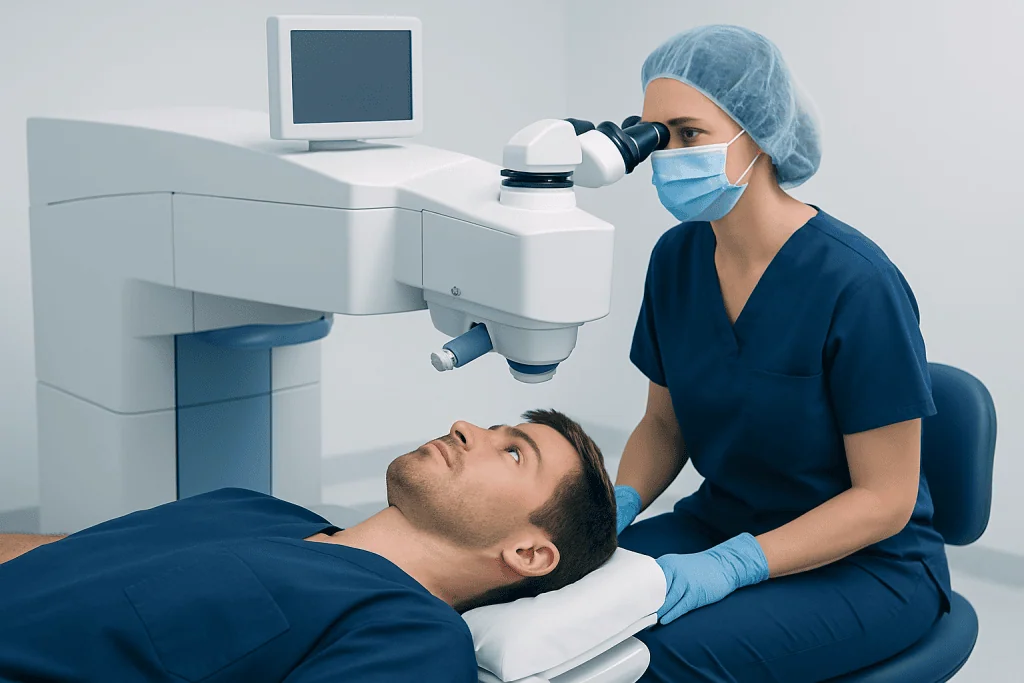
To understand LASIK, it helps to know how clear vision happens. Light enters the eye through the cornea and lens, then focuses on the retina at the back of the eye. If the eye’s shape causes light to focus in front of, behind, or unevenly on the retina, vision becomes blurry. LASIK changes the contour of the cornea to improve where light lands.
LASIK is commonly used for:
- Nearsightedness (myopia): when distant objects look blurry because light focuses in front of the retina.
- Farsightedness (hyperopia): when nearby vision is more difficult because light focuses behind the retina.
- Astigmatism: when the cornea has an irregular shape, causing distorted or blurred vision at multiple distances.
The laser treatment is guided by precise measurements of the eye. The goal is to reduce refractive error, but results can vary from person to person. Some people achieve excellent unaided vision, while others still need glasses for certain tasks, especially at night or for fine print.
In some situations, other procedures may be more suitable than LASIK. If the cornea is too thin, the prescription is outside a safe treatment range, or dry eye is significant, an ophthalmologist may discuss alternatives such as laser eye surgery options or other forms of vision-related eye surgery.
Who is a good candidate for lasik eye surgery
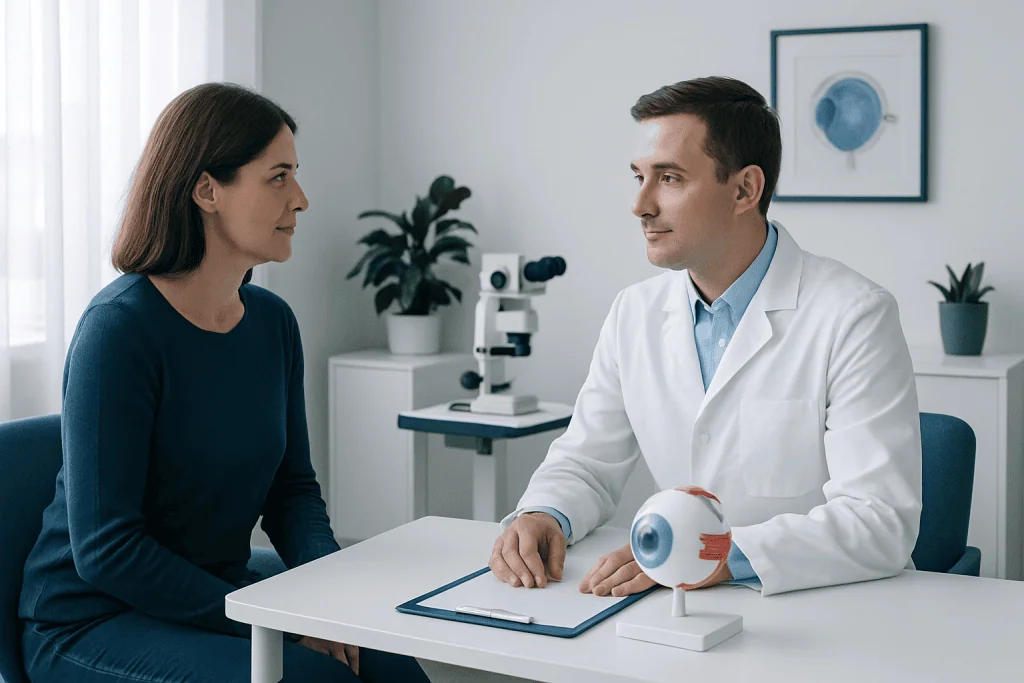
Good candidacy depends on more than wanting freedom from glasses. In general, LASIK is considered for adults whose vision prescription has been stable for at least a period of time and whose eyes are otherwise healthy. The cornea must be thick and regular enough to allow safe reshaping, and the pupil size, tear film, and overall focusing error also influence eligibility.
A person may be a reasonable candidate if they have a treatable degree of myopia, hyperopia, or astigmatism and do not have active eye disease. Before surgery, the ophthalmologist checks for conditions that can affect outcomes, such as astigmatism, corneal irregularities, severe dry eye, cataracts, glaucoma, or retinal problems. Pregnancy, breastfeeding, autoimmune conditions, and certain medications may also affect timing or suitability.
Not everyone with blurry vision should have LASIK. People with unstable prescriptions, very thin corneas, uncontrolled diabetes, frequent eye infections, or habits that raise eye injury risk may be advised against it. This does not necessarily mean vision correction is impossible, only that another approach may be safer or more effective.
The most important part of candidacy is realistic expectations. LASIK can reduce reliance on glasses or contact lenses, but it cannot guarantee perfect vision in every situation. An honest discussion about goals, work demands, night driving, screen use, and future age-related vision changes helps guide the decision.
Step by step: what happens during the procedure
Before the procedure begins, numbing eye drops are used to make the eye more comfortable. The patient remains awake, and the eye area is cleaned and prepared. A device is used to keep the eyelids open so blinking does not interrupt treatment. Many people feel pressure during parts of the procedure, but significant pain is not expected.
In standard LASIK, the surgeon creates a very thin flap in the cornea, often with a femtosecond laser. This flap is gently lifted to expose the deeper corneal tissue. An excimer laser then removes microscopic amounts of tissue according to the eye’s measured refractive error. The flap is then repositioned, where it naturally adheres without stitches.
The laser treatment itself usually lasts only a short time for each eye. During this period, the patient is asked to focus on a target light while the laser works. Modern systems use advanced tracking technology to help compensate for small eye movements. Both eyes are often treated in the same session, depending on the treatment plan.
After the procedure, the eyes may feel watery, mildly gritty, or sensitive to light. Vision is often hazy at first, then improves over the following hours and days. Patients are usually given instructions about protective eye shields, lubricating drops, and follow-up visits. Those considering LASIK are generally advised to plan transportation home and rest after the appointment.
Benefits, risks, and possible side effects
The main benefit of LASIK is reduced dependence on glasses or contact lenses. Many people appreciate greater convenience for daily life, sports, travel, and work. Because the cornea heals relatively quickly at the surface, visual improvement is often noticed soon after surgery. For appropriately selected patients, satisfaction can be high when expectations are realistic.
However, LASIK is still surgery, so it carries risks and limitations. Common short-term effects include dryness, glare, halos around lights, fluctuating vision, and light sensitivity. These symptoms often improve as healing continues, but some can persist for longer or occasionally remain bothersome. Temporary discomfort is more common than severe pain.
Less common but important risks include infection, inflammation, flap-related complications, undercorrection, overcorrection, irregular astigmatism, or reduced quality of vision in low light. Some people may later need an enhancement procedure or still use glasses for certain activities. Very rarely, structural weakening of the cornea can occur, which is why careful preoperative screening is so important.
LASIK also does not stop the natural aging of the eye. Even if distance vision improves, many people develop presbyopia with age and may eventually need reading glasses. In addition, conditions unrelated to refractive error, such as cataract, can still affect vision later in life and require separate assessment and treatment.
Recovery timeline and self-care after LASIK
Recovery after LASIK is usually faster than many people expect, but it still happens in stages. In the first 24 hours, the eyes may burn slightly, tear, or feel scratchy. Resting, avoiding eye rubbing, and using prescribed or recommended drops exactly as directed are important. Vision may be blurry or fluctuate early on, which is usually part of normal healing.
Within a few days, many people can return to routine activities, though driving and work readiness should follow the surgeon’s advice. It is generally wise to avoid swimming, hot tubs, dusty environments, eye makeup for a period, and contact sports until the eye doctor says it is safe. Screens can usually be used, but regular blinking and lubricating drops may help if dryness occurs.
Over the next several weeks to months, vision often becomes more stable. Dry eye symptoms, glare, or halos may gradually lessen during this time. Follow-up visits are important because the eye can look comfortable even when the doctor still needs to monitor healing, flap position, refraction, and tear film health.
Self-care supports the best recovery. Helpful steps may include using artificial tears if advised, wearing sunglasses outdoors, protecting the eyes during sleep if instructed, and keeping all follow-up appointments. If symptoms seem to worsen instead of improve, the patient should contact the care team rather than trying over-the-counter treatments without guidance.
When to seek medical care
Most people have mild symptoms after lasik eye surgery that improve steadily, but certain changes need prompt medical attention. A patient should contact an eye doctor right away if there is significant or increasing pain, sudden vision loss, rapidly worsening redness, marked light sensitivity, thick discharge, or a sensation that something is seriously wrong in the eye.
Urgent review is also important if the eye is injured during recovery, if vision suddenly becomes much hazier after initially improving, or if there are new flashes, many floaters, or a curtain-like shadow in vision. These symptoms are not always caused by LASIK itself, but they should never be ignored.
Even when recovery seems smooth, planned follow-up care matters. The doctor checks that healing is progressing as expected and that no complications are developing quietly. Near the end of the care pathway, it may also be helpful to review whether any remaining refractive error, dryness, or night-vision symptoms need additional management. Acibadem International’s multidisciplinary specialists and JCI-accredited hospitals diagnose and treat eye conditions for international patients, including assessment for LASIK when appropriate.
Frequently asked questions
Is lasik eye surgery permanent?
The corneal reshaping created by LASIK is intended to be lasting. However, the eyes can still change over time because of aging, presbyopia, cataracts, or natural shifts in prescription, so some people may still need glasses later.
How long does it take to recover from LASIK?
Many people notice better vision within 24 to 48 hours, and routine activities often resume within a few days. Full visual stabilization and improvement in dryness or glare can take several weeks to a few months.
Does LASIK hurt?
LASIK is usually not described as painful during the procedure because numbing eye drops are used. Afterward, mild burning, tearing, grittiness, or light sensitivity can occur for a short time, but these symptoms often ease quickly.
Can everyone with glasses have LASIK?
No. LASIK is suitable only for selected patients after a detailed eye examination confirms that the cornea, prescription, tear film, and overall eye health make the procedure safe and likely to be effective.
What are the most common side effects of LASIK?
Common side effects include dry eye, glare, halos around lights, fluctuating vision, and temporary light sensitivity. These often improve during healing, but some people may continue to notice symptoms, especially in low-light conditions.
Will LASIK eliminate the need for reading glasses?
Not necessarily. LASIK mainly corrects refractive errors such as myopia, hyperopia, and astigmatism, but it does not stop age-related loss of near focusing called presbyopia. Many adults still need reading glasses as they get older.
References
- American Academy of Ophthalmology
- National Eye Institute
- U.S. Food and Drug Administration
- Royal College of Ophthalmologists
This article is for general information only and is not a substitute for professional medical advice. Please consult a qualified doctor about your individual situation.
Eye Surgery in Turkey — costs, top hospitals & a free quote
JCI-accredited · board-certified surgeons · reply within 24h
Add us as a Preferred Source to see more of our trusted health content across Google Search, AI Overviews and Discover.

Ophthalmology
Comprehensive eye care from laser vision correction to retina, cornea and cataract surgery.
75 specialists in this unit