LASIK for Farsightedness: An Evidence-Based Patient Guide

LASIK can correct mild to moderate farsightedness in carefully selected adults with stable prescriptions and healthy eyes. The procedure steepens the central cornea to improve focusing for distance vision.
Key Takeaways
- LASIK can correct mild to moderate farsightedness in carefully selected adults with stable prescriptions and healthy eyes.
- The procedure steepens the central cornea to improve focusing for distance vision.
- Reading glasses may still be needed later because LASIK does not prevent presbyopia, the normal age-related loss of near focus.
- Outcomes are often good, but farsighted corrections can be less predictable than some nearsighted corrections and may regress over time.
- A comprehensive examination is needed to assess corneal shape, tear health, pupil size, prescription stability and lens changes.
- Blurred vision, worsening pain, marked redness, light sensitivity or a sudden change in vision after surgery require prompt ophthalmic advice.
LASIK for farsightedness may reduce the need for distance glasses or contact lenses by reshaping the cornea so light focuses more accurately on the retina. It is not suitable for every person, particularly when age-related near-vision changes, cataracts, dry eye or corneal conditions are present, so a detailed eye assessment is essential.
Overview: can LASIK correct farsightedness?
LASIK for farsightedness can improve unaided distance vision for many suitable adults with hyperopia, the medical term for farsightedness. During the procedure, an ophthalmologist reshapes the clear front surface of the eye, called the cornea, so incoming light is focused more precisely on the retina.
Farsightedness occurs when the eye is relatively short, the cornea is too flat, or both. Distance objects may be clearer than close objects, although people with higher prescriptions can experience blur at several distances, eye strain or headaches. LASIK does not remove the underlying tendency of the eye to focus differently; it changes corneal curvature to compensate for it.
The best decision depends on more than a prescription. Age, the stability and degree of hyperopia, corneal thickness and shape, dry-eye symptoms, pupil size, general eye health and the condition of the natural lens all influence whether laser surgery is appropriate. A refractive-surgery consultation should include discussion of alternatives, including glasses, contact lenses and lens-based procedures.
How LASIK works for farsightedness and nearsightedness
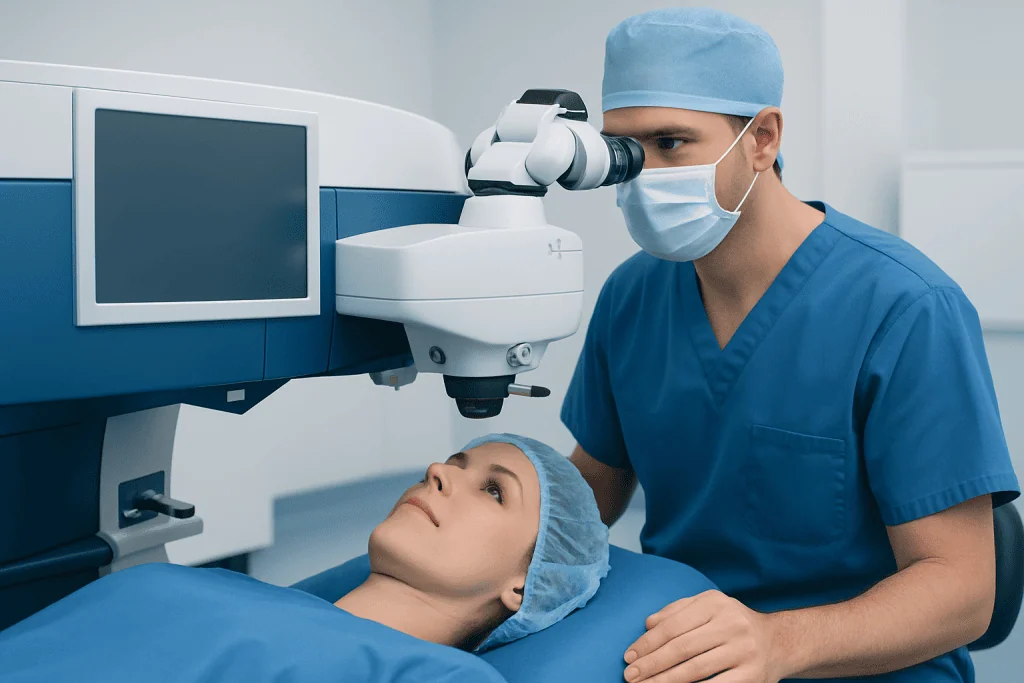
LASIK uses an excimer laser to reshape corneal tissue beneath a thin corneal flap. In LASIK for farsightedness, the laser pattern primarily steepens the central cornea. This increases the eye’s focusing power, helping light rays reach the retina rather than focusing behind it.
By comparison, LASIK for farsightedness and nearsightedness uses different reshaping patterns. In nearsightedness, or myopia, the central cornea is flattened to reduce focusing power because light focuses in front of the retina. Astigmatism can often be treated at the same time by making the corneal surface more symmetrical.
Modern planning may use detailed corneal mapping and wavefront measurements to personalize treatment. These measurements can help the surgeon assess optical imperfections and screen for irregular corneas. They improve planning, but they cannot guarantee that every person will achieve perfect vision or permanent freedom from glasses.
Farsightedness may also be associated with a higher likelihood of regression than some myopic corrections, meaning part of the original prescription gradually returns. The possibility of enhancement surgery, if clinically appropriate, is usually discussed before treatment.
Who is a candidate for LASIK for farsightedness?
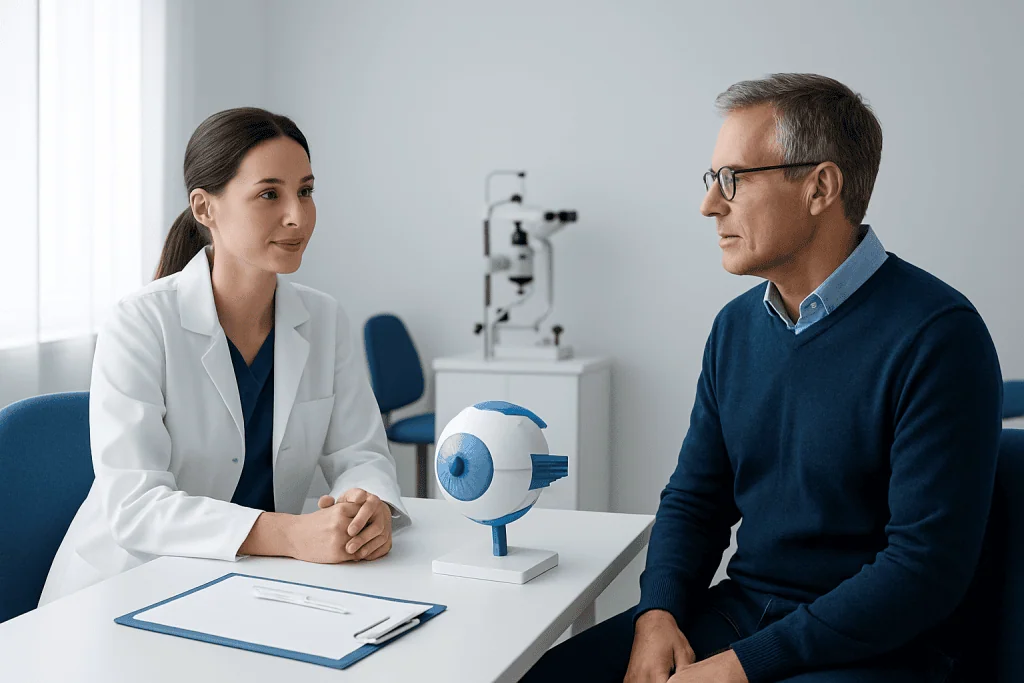
Potential candidates are generally adults whose prescription has been stable for at least a period determined by their ophthalmologist. They need adequate corneal thickness, regular corneal shape and no active eye infection or inflammation. The evaluation also checks whether the proposed correction is within a safe treatment range for the individual cornea.
People may be less suitable for LASIK if they have significant dry eye, keratoconus or another corneal ectasia, uncontrolled diabetes, autoimmune disease affecting healing, active eye disease, glaucoma that requires special consideration, or pregnancy and breastfeeding-related prescription changes. Certain medicines and previous eye procedures may also affect eligibility.
Age deserves particular attention. LASIK for farsightedness due to age does not reverse presbyopia, the gradual stiffening of the natural lens that makes close work harder, commonly beginning in the 40s. Some people consider monovision, where one eye is corrected more for distance and the other for near vision; a contact-lens trial can help determine whether the brain tolerates this approach.
For people with early cataract changes or substantial age-related focusing difficulty, a lens-based solution may be more appropriate than corneal laser surgery. An ophthalmologist can also assess related refractive conditions, including farsightedness (hyperopia), as part of a complete eye examination.
What happens during the LASIK procedure?
Before surgery, the ophthalmology team performs vision testing, refraction, corneal topography or tomography, corneal thickness measurement, pupil assessment and tear-film evaluation. Contact lens wear may need to be stopped for a period before these measurements because lenses can temporarily alter corneal shape. The surgeon explains expected benefits, limitations and individual risks before consent is given.
On the day of treatment, numbing eye drops are used. The eyelids are gently held open, and the person is asked to focus on a fixation light. A femtosecond laser or, in selected cases, a mechanical device creates a thin corneal flap. The flap is lifted, the excimer laser applies the planned reshaping pattern, and the flap is repositioned without stitches.
The laser portion is brief, while preparation and alignment take longer. People are awake but should not feel pain; pressure sensations, light or temporary visual dimming can occur. Most patients go home the same day and need another adult to accompany them because vision is initially blurred and driving is not safe.
LASIK is one form of LASIK eye surgery. Depending on corneal findings, prescription and lifestyle needs, the surgeon may discuss other approaches, such as surface laser treatment or lens-based refractive surgery, rather than proceeding with LASIK.
Recovery timeline, benefits and possible risks
Vision often begins to clear within the first day or two, although sharpness can fluctuate while the cornea heals. Mild burning, tearing, light sensitivity, foreign-body sensation and hazy vision are common during the first hours. Lubricating drops and prescribed eye drops are used exactly as directed, and rubbing the eyes should be avoided.
Many people return to desk-based activities within a few days, but recovery instructions vary. Swimming, hot tubs, eye makeup, contact sports and environments with dust or irritants may need to be avoided temporarily. Follow-up visits allow the surgeon to check flap position, healing, eye pressure and visual recovery.
Potential benefits include reduced dependence on corrective lenses and improved convenience for daily activities. However, outcomes vary. Possible side effects include dry eye, glare, halos or starbursts around lights, reduced contrast in low light, fluctuating vision, undercorrection, overcorrection and regression. Some people continue to need glasses for certain tasks or require an enhancement after healing.
Rare but serious complications can include infection, inflammation, corneal flap problems, scarring or lasting loss of best-corrected vision. Careful screening and prompt assessment of concerning symptoms help reduce risks. A patient should balance the potential convenience of surgery against the possibility of visual symptoms and the continued need for glasses as eyes age.
Is LASIK worth it for farsightedness?
Whether LASIK is worth it for farsightedness is a personal decision based on clinical suitability, visual priorities and comfort with the potential trade-offs. It may be valuable for a person with a stable prescription who wants less reliance on glasses or contact lenses and understands that the goal is improved functional vision, not a guarantee of perfect vision at every distance.
It may be less appealing when reading glasses are already frequently needed, when dry eye is significant, or when early lens changes make a lens-based option more logical. People considering monovision should ideally try it first with contact lenses because adaptation differs considerably from person to person.
Online LASIK for farsightedness reviews can describe helpful personal experiences, but they cannot determine whether surgery is suitable for an individual eye. Reviews may not include details such as prescription range, corneal measurements, night-driving needs, dry-eye status or the length of follow-up. A consultation with a refractive surgeon provides a more reliable basis for a decision.
Why don't doctors recommend LASIK?
Doctors do recommend LASIK for many appropriately selected patients, but they may advise against it when the expected benefit is limited or the risk is higher than usual. This is not necessarily a negative judgment about the procedure; it reflects the need to match treatment to the individual eye and to protect long-term vision.
Reasons to defer or avoid LASIK can include an unstable prescription, a thin or irregular cornea, keratoconus risk, significant dry eye, uncontrolled systemic illness, active eye inflammation, or a treatment amount that would leave too little corneal tissue. A doctor may also recommend waiting if pregnancy, breastfeeding or medication changes are likely to affect refraction.
For older adults, presbyopia and cataract development can change the best treatment choice. LASIK changes the cornea but does not prevent the natural lens from becoming less flexible or cloudy over time. In these situations, the surgeon may recommend observation, glasses, contact lenses or a discussion of lens-related options instead.
What is the success rate of LASIK for farsightedness? What happens 10 years after LASIK?
Success should be defined carefully. In refractive surgery, it may mean achieving useful uncorrected distance vision, reducing the prescription, or decreasing reliance on glasses and contact lenses. Studies generally show that many properly selected patients obtain good distance vision after hyperopic LASIK, but individual results are influenced by the initial prescription, age, corneal characteristics, healing response and the treatment method used.
Farsighted LASIK can be somewhat less predictable and more prone to regression than lower-range myopic treatment. Some patients have a small remaining prescription, while others may develop enough change over time to use glasses again or consider an enhancement if the cornea and eye health allow it. An ophthalmologist should interpret outcome data in the context of the person’s own measurements rather than promising a particular result.
At 10 years after LASIK, the corneal correction itself may remain stable for many people, but eyes continue to age. Presbyopia often means that reading glasses are needed, and cataracts can eventually develop regardless of previous LASIK. Prior laser surgery does not prevent cataract surgery, but it is important to tell the cataract surgeon about it because it affects calculations for the replacement lens.
Anyone who develops a gradual decline in vision years after LASIK should have a full eye examination rather than assuming the procedure has failed. The cause may be prescription regression, dry eye, cataract, retinal disease, glaucoma or another treatable condition. Acibadem International’s multidisciplinary specialists and JCI-accredited hospitals assess and treat refractive and broader eye-care needs for international patients.
When to seek medical care
A planned eye examination is appropriate before considering LASIK, particularly for people with changing prescriptions, eye discomfort, diabetes, a family history of keratoconus or glaucoma, or prior eye surgery. An eye specialist can determine whether symptoms are caused by refractive error alone or by another condition requiring treatment.
After LASIK, contact the treating eye team promptly for increasing pain, worsening redness, discharge, marked light sensitivity, a sudden drop in vision, new flashes of light, a curtain-like shadow, or injury to the eye. These symptoms are uncommon but need timely assessment to protect vision.
Routine follow-up is also important even after a smooth recovery. Regular eye examinations can identify dry eye, pressure changes, cataracts and retinal conditions early, while updating glasses if needed for reading, driving or other activities.
Frequently asked questions
Can LASIK fix farsightedness permanently?
LASIK can provide long-lasting reduction in farsightedness for many suitable patients, but it does not stop the eyes from changing with age. Some degree of regression can occur, and presbyopia may still lead to a need for reading glasses. Cataracts can also develop later independently of LASIK.
Can LASIK treat farsightedness and astigmatism at the same time?
In many cases, LASIK can be planned to address both farsightedness and regular astigmatism. Whether this is appropriate depends on the amount of prescription, corneal shape and thickness, and the safety limits of treatment. A detailed corneal assessment is necessary before deciding.
How long does vision take to stabilize after LASIK for farsightedness?
Many people notice improvement within days, but vision can fluctuate during the first weeks as the eye heals. Stabilization may take longer in some hyperopic treatments than in lower corrections for nearsightedness. Follow-up examinations help the surgeon monitor recovery and decide when vision is stable.
Will I need reading glasses after LASIK for farsightedness?
Possibly. LASIK does not prevent presbyopia, an age-related reduction in the eye’s ability to focus up close. People in or approaching their 40s may still need reading glasses unless they choose and successfully adapt to a monovision strategy.
Is LASIK painful?
Numbing drops are used, so people usually do not feel pain during the procedure. Pressure, awareness of the instruments and temporary visual dimming can occur. Mild discomfort, tearing and light sensitivity are common shortly afterward and usually improve with prescribed care.
Can LASIK be repeated if farsightedness returns?
An enhancement may be possible for some people if enough corneal tissue remains and the eyes are otherwise healthy. The decision is based on stable measurements, the cause of the vision change and the original surgical details. In some circumstances, glasses, contact lenses or a different procedure may be safer.
References
- American Academy of Ophthalmology
- U.S. Food and Drug Administration
- National Eye Institute
- Royal College of Ophthalmologists
- European Society of Cataract and Refractive Surgeons
This article is for general information only and is not a substitute for professional medical advice. Please consult a qualified doctor about your individual situation.
Farsightedness in Turkey — costs, top hospitals & a free quote
JCI-accredited · board-certified surgeons · reply within 24h
Add us as a Preferred Source to see more of our trusted health content across Google Search, AI Overviews and Discover.

Ophthalmology
Comprehensive eye care from laser vision correction to retina, cornea and cataract surgery.
74 specialists in this unit