Lung Cancer Specialist Delaware: An Evidence-Based Patient Guide

Lung cancer care is most effective when specialists in medical oncology, thoracic surgery, radiation oncology, pulmonology, pathology, and imaging collaborate. A complete evaluation commonly includes imaging, tissue biopsy, cancer staging, and biomarker testing for many non-small cell lung cancers.
Key Takeaways
- Lung cancer care is most effective when specialists in medical oncology, thoracic surgery, radiation oncology, pulmonology, pathology, and imaging collaborate.
- A complete evaluation commonly includes imaging, tissue biopsy, cancer staging, and biomarker testing for many non-small cell lung cancers.
- Age alone does not determine treatment eligibility; functional ability, other health conditions, cancer stage, and personal preferences are all important.
- Early-stage lung cancer may be treated with surgery or focused radiation, while more advanced disease often requires systemic treatment with or without radiation.
- Breathing changes, coughing up blood, persistent chest symptoms, or unexplained weight loss warrant prompt medical assessment.
A lung cancer specialist Delaware patients consult is usually part of a multidisciplinary thoracic oncology team that confirms the diagnosis, determines the cancer stage and biology, and recommends individualized treatment. The most appropriate specialist depends on the cancer type, stage, overall health, treatment goals, and whether surgery, radiation, systemic therapy, or a combination is needed.
How a Lung Cancer Specialist in Delaware Supports Care
A lung cancer specialist Delaware patients see may be a medical oncologist, thoracic surgeon, radiation oncologist, or pulmonologist with particular experience in lung tumors. Rather than relying on one clinician alone, many people benefit from a coordinated thoracic oncology team. This approach brings together the expertise needed to diagnose the cancer accurately and discuss all appropriate treatment pathways.
The first priority is to establish exactly what is present. Lung cancer is broadly divided into non-small cell lung cancer and small cell lung cancer, which behave differently and are treated differently. Specialists also assess where the cancer began, whether it has spread, and whether tumor testing identifies molecular changes or immune features that may guide treatment.
A person seeking care should look for clear communication, access to multidisciplinary review, and experience with the relevant type and stage of lung cancer. It is reasonable to ask whether the case will be discussed at a tumor board, whether molecular testing is appropriate, and what supportive services are available for symptoms, nutrition, emotional wellbeing, smoking cessation, and rehabilitation.
Evaluation, Diagnosis, and Treatment Planning
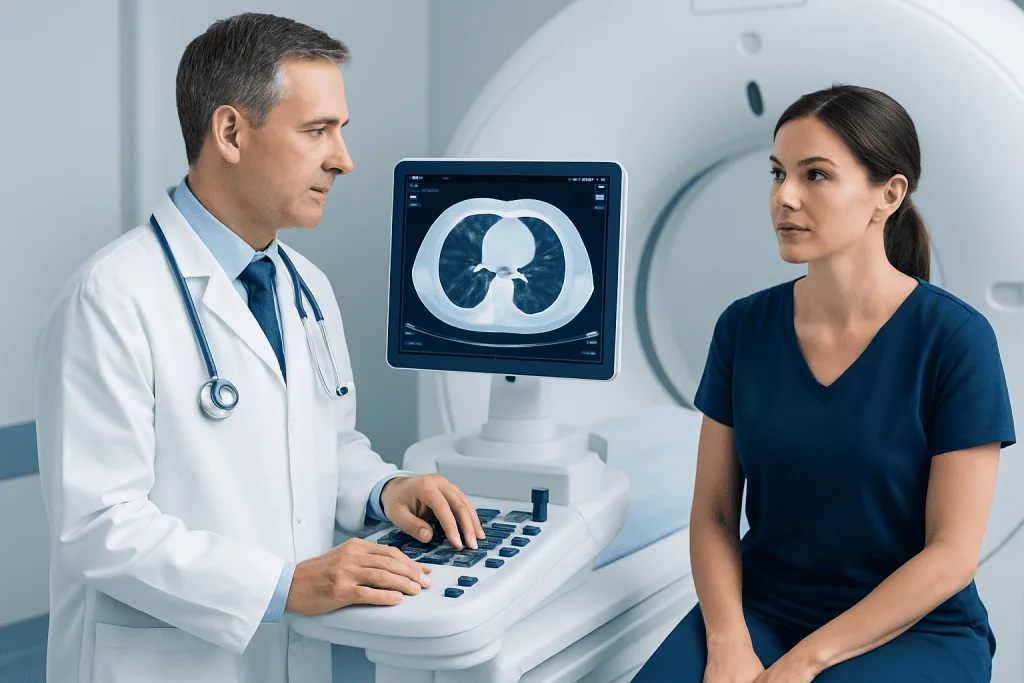
Assessment commonly begins with a review of symptoms, smoking and occupational history, previous illnesses, medications, and family history. Imaging may include a chest CT scan, PET-CT scan, and sometimes brain imaging. These tests help identify the location and size of a tumor and check for possible spread, but a biopsy is generally needed to confirm the diagnosis.
Biopsy methods vary according to where the abnormal area is located. A pulmonologist may obtain samples using bronchoscopy, including endobronchial ultrasound-guided sampling of lymph nodes. In other situations, a radiologist performs a needle biopsy through the chest wall, or a surgeon obtains tissue. A pathologist examines the sample to identify the cancer type and may arrange biomarker testing.
For many people with non-small cell lung cancer, tumor testing can include changes in genes such as EGFR, ALK, ROS1, BRAF, KRAS, MET, RET, NTRK, or HER2, as well as PD-L1 testing. Results can influence whether targeted therapy or immunotherapy may be considered. The completed assessment allows the team to stage the cancer and develop a plan that balances likely benefit, possible risks, lung function, general health, and the individual’s priorities.
People may also wish to obtain a second opinion before starting treatment, particularly when surgery, combined treatment, or a complex diagnosis is being considered. A second review of pathology and imaging can help confirm the proposed approach and may identify additional options.
Treatment Options and the Role of a Multidisciplinary Team

Treatment is individualized. Early-stage non-small cell lung cancer may be treated with surgery when the tumor can be safely removed and the person has sufficient lung and heart function. Radiation therapy, including highly focused stereotactic body radiation therapy, can be an alternative for selected people who are not candidates for surgery or prefer a non-surgical approach.
For locally advanced disease, treatment may include chemotherapy, radiation therapy, immunotherapy, surgery, or carefully planned combinations. Small cell lung cancer is commonly treated with systemic therapy and radiation, depending on its stage. For cancer that has spread to distant organs, systemic therapies such as chemotherapy, immunotherapy, targeted therapy, or a combination may help control disease, reduce symptoms, and support quality of life.
Supportive and palliative care can be introduced at any stage and does not mean that active cancer treatment has stopped. It focuses on breathlessness, pain, cough, fatigue, appetite changes, sleep, anxiety, and practical concerns. Pulmonary rehabilitation, nutrition support, and smoking cessation services may also be valuable parts of care.
At Acibadem International, multidisciplinary specialists in JCI-accredited hospitals diagnose and treat lung cancer for international patients, coordinating surgical, medical, radiation, respiratory, and supportive care when needed.
Lobectomy for Lung Cancer: How It Works, Candidacy, and Recovery
A lobectomy removes one lobe of the lung and is a common surgical option for selected people with early-stage non-small cell lung cancer. The right lung has three lobes and the left lung has two. Removing the affected lobe may offer the best opportunity to completely remove a localized cancer while preserving as much healthy lung tissue as possible.
Candidacy depends on the cancer stage and location, lymph-node assessment, lung function, heart health, and ability to tolerate anesthesia and recovery. Before surgery, patients may have breathing tests, blood tests, heart evaluation, imaging, and sometimes procedures to sample chest lymph nodes. Surgeons may use minimally invasive approaches, such as video-assisted or robotic-assisted surgery, when appropriate; some cases require an open chest incision.
During the operation, the surgeon removes the involved lobe and typically evaluates or removes nearby lymph nodes for accurate staging. After surgery, patients receive pain control, breathing exercises, early mobilization, and monitoring for air leaks or other complications. Hospital stay and recovery vary, but many people need several weeks before daily stamina improves, with fuller recovery often taking weeks to months.
Potential benefits include complete removal of an early-stage tumor and more precise staging. Risks can include bleeding, infection, pneumonia, an air leak, blood clots, irregular heart rhythm, and a temporary or lasting reduction in breathing capacity. The surgical team explains personal risks in detail and discusses whether lobectomy for lung cancer is suitable.
What Is the Life Expectancy of an 85-Year-Old With Lung Cancer?
Life expectancy for an 85-year-old with lung cancer cannot be predicted from age alone. It is influenced most strongly by the cancer type, stage, tumor biology, whether treatment is possible, lung and heart function, other medical conditions, physical independence, and the person’s own treatment goals. Two people of the same age can have very different outlooks.
Some older adults with early-stage disease are fit enough for surgery or focused radiation and may have the possibility of long-term cancer control. Others may benefit more from less intensive treatment, symptom-focused care, or a combination that protects quality of life. A geriatric assessment can help identify factors such as mobility, nutrition, memory, medication burden, and social support that may affect treatment tolerance.
Population survival statistics are useful for understanding broad patterns but cannot forecast an individual outcome. The treating team can offer a more meaningful discussion after reviewing imaging, pathology, stage, response to treatment, and overall health. Patients and families can ask about the goal of treatment, expected benefits, likely side effects, and what support will be available throughout care.
Who Is the Best Oncologist for Lung Cancer?
There is no single best oncologist for every person with lung cancer. The right clinician is one with relevant expertise in thoracic oncology who works closely with surgeons, radiation oncologists, pulmonologists, radiologists, pathologists, specialist nurses, and supportive-care professionals. The best fit also communicates in a way that helps the patient understand choices and participate in decisions.
For systemic treatment, a medical oncologist experienced in lung cancer can evaluate chemotherapy, immunotherapy, targeted treatments, and clinical trial eligibility. A thoracic surgeon is particularly important when an operation may be possible, while a radiation oncologist advises on radiation options. Pulmonologists often play central roles in diagnosis, bronchoscopy, airway procedures, and management of respiratory symptoms.
Helpful questions include how often the clinician treats the specific cancer type, whether molecular testing is routinely considered, how treatment decisions are reviewed by a multidisciplinary team, and whether a second opinion is supported. Confidence, accessible explanations, and a care plan aligned with the patient’s values are important measures of a productive therapeutic relationship.
Can You Make a Full Recovery From Lung Cancer?
Some people can make a full recovery from lung cancer, particularly when the cancer is found at an early stage and can be completely treated with surgery, radiation, or both. Doctors may use the term remission when there is no evidence of cancer after treatment. Continued follow-up is still important because recurrence can occur, and people may need support for long-term effects of treatment or underlying lung disease.
For locally advanced or metastatic lung cancer, a complete cure is less commonly possible, but treatment may still control cancer for meaningful periods and help people maintain daily activities. Advances in targeted therapies and immunotherapies have improved options for some patients, especially when tumor testing identifies a treatment-sensitive feature.
Recovery has physical and emotional dimensions. After treatment, patients may work on breathing capacity, strength, nutrition, smoking cessation, sleep, and emotional adjustment. Scheduled scans and appointments allow the team to monitor recovery, identify recurrence early when possible, and manage any late effects.
What Is the Average Life Expectancy for Someone Who Has Had a Lobectomy for Lung Cancer?
There is no single average life expectancy after a lobectomy for lung cancer because the operation is performed for people with different stages, tumor types, health conditions, and lung function. The most influential factor is the final pathologic stage, including whether lymph nodes contain cancer and whether the tumor was fully removed. Tumor biology and any additional treatment also matter.
For a person with completely removed early-stage non-small cell lung cancer, lobectomy can be potentially curative. If pathology shows a higher risk of recurrence, the team may recommend additional chemotherapy, targeted therapy, immunotherapy, or radiation in selected circumstances. These recommendations are based on the final surgical findings rather than the surgery alone.
After lobectomy, regular surveillance usually includes clinical visits and chest imaging. The care team also monitors breathlessness, exercise tolerance, and signs of complications or recurrence. Asking for an individualized prognosis after final pathology is available is more informative than relying on a general survival estimate.
For broader background on diagnosis and outlook, patients can review lung cancer information and discuss how it applies to their own situation with a qualified specialist.
When to Seek Medical Care
Medical assessment is advisable for a cough that persists or changes, coughing up blood, unexplained shortness of breath, chest pain, repeated chest infections, unexplained weight loss, ongoing fatigue, or new hoarseness. These symptoms are often caused by conditions other than lung cancer, but evaluation is important when they do not improve or when there are significant risk factors such as current or previous smoking.
Urgent medical care is needed for severe or rapidly worsening breathlessness, significant coughing up of blood, severe chest pain, fainting, new confusion, or sudden weakness. These symptoms can have several causes and should not be self-diagnosed.
People who meet local eligibility criteria may benefit from annual low-dose CT screening, which can detect lung cancer before symptoms develop. Eligibility rules vary, but screening is generally based on age and smoking history. A primary care clinician or lung specialist can explain whether screening is appropriate and help arrange follow-up if an abnormality is found.
Frequently asked questions
What does a lung cancer specialist do?
A lung cancer specialist helps confirm the diagnosis, determine the cancer stage, interpret tumor testing, and recommend treatment. Depending on the person’s needs, this may involve a medical oncologist, thoracic surgeon, radiation oncologist, or pulmonologist working as part of a coordinated team.
Should all lung cancer tumors have biomarker testing?
Biomarker testing is particularly important for many people with non-small cell lung cancer, especially advanced non-squamous disease. The results may identify targeted therapies or help guide the use of immunotherapy. The treating oncology team can explain which tests are appropriate for the specific tumor and stage.
Can an 85-year-old have lung cancer surgery?
Yes, some 85-year-olds can safely undergo lung cancer surgery, but age alone does not determine suitability. The decision depends on lung and heart function, physical resilience, cancer stage, other health conditions, and the person’s preferences. Focused radiation may be an alternative for selected people who are not surgical candidates.
How long does it take to recover from a lobectomy?
Recovery varies by surgical approach, baseline lung health, and whether complications occur. Many people need several weeks to regain everyday stamina, while full recovery can take a few months. Walking, breathing exercises, pain management, and follow-up appointments are important parts of recovery.
Is lobectomy better than removing the whole lung?
When cancer can be completely removed with a lobectomy, preserving the remaining lung tissue is generally preferred over removing an entire lung. However, the appropriate operation depends on tumor location, size, involvement of nearby structures, lymph nodes, and lung function. A thoracic surgeon can explain which option offers the best balance of cancer control and safety.
Can lung cancer return after surgery?
Yes, lung cancer can recur after surgery, even when the original tumor appears to have been completely removed. Recurrence risk depends on the cancer stage, lymph-node findings, tumor biology, and other pathology features. Follow-up imaging and, in some cases, additional treatment are used to reduce risk or detect recurrence promptly.
References
- American Cancer Society
- National Cancer Institute
- National Comprehensive Cancer Network
- American Society of Clinical Oncology
- U.S. Preventive Services Task Force
This article is for general information only and is not a substitute for professional medical advice. Please consult a qualified doctor about your individual situation.
Lung Cancer in Turkey — costs, top hospitals & a free quote
JCI-accredited · board-certified surgeons · reply within 24h
Add us as a Preferred Source to see more of our trusted health content across Google Search, AI Overviews and Discover.
Check your numbers in seconds
BMI, calories, due date, blood pressure and 30+ more clinical calculators — free, instant, doctor-reviewed ranges.

Medical Oncology Department
Medical treatment of cancer with chemotherapy, immunotherapy and targeted therapies under a multidisciplinary tumor board.
60 specialists in this unit