Male Reproduction Testing: What Semen and Hormone Results Can Show

Male reproduction testing often begins with semen analysis and hormone blood tests. Results can show sperm count, movement, shape, semen volume, and hormone balance.
Key Takeaways
- Male reproduction testing often begins with semen analysis and hormone blood tests.
- Results can show sperm count, movement, shape, semen volume, and hormone balance.
- Abnormal results do not always mean infertility, and many causes are manageable or treatable.
- Testing may also include physical examination, imaging, or genetic assessment when needed.
- Lifestyle factors, illness, medications, and timing can influence test results.
Male reproduction testing uses semen analysis, hormone blood tests, and sometimes imaging or genetic evaluation to understand fertility and reproductive health. These results can help identify treatable problems, guide next steps, and support informed decisions for individuals and couples.
Overview of Male Reproduction Testing
Male reproduction testing is a group of evaluations used to understand how well the male reproductive system is functioning. It is commonly recommended when a couple has difficulty conceiving, after certain medical treatments, or when there are symptoms such as sexual dysfunction, changes in puberty, testicular concerns, or a history of genital injury or infection. The goal is to gather clear information about sperm production, sperm delivery, and hormone balance.
The two most common first-line tests are semen analysis and blood tests for reproductive hormones. Semen analysis looks at the fluid released during ejaculation and checks features such as sperm count, sperm movement, sperm shape, and semen volume. Hormone testing looks at signals from the brain and testes that help regulate sperm production and testosterone levels.
These tests are usually interpreted together rather than alone. A single result can be affected by temporary factors such as fever, stress, recent illness, or the timing of sample collection. For this reason, doctors often repeat testing or combine it with a physical examination, ultrasound, or other evaluations when needed.
In many cases, testing provides reassurance as well as direction. It may show normal fertility-related function, identify a reversible issue, or point to a condition that needs further assessment through male reproduction care with a urologist, andrologist, or fertility specialist.
What a Semen Analysis Can Show
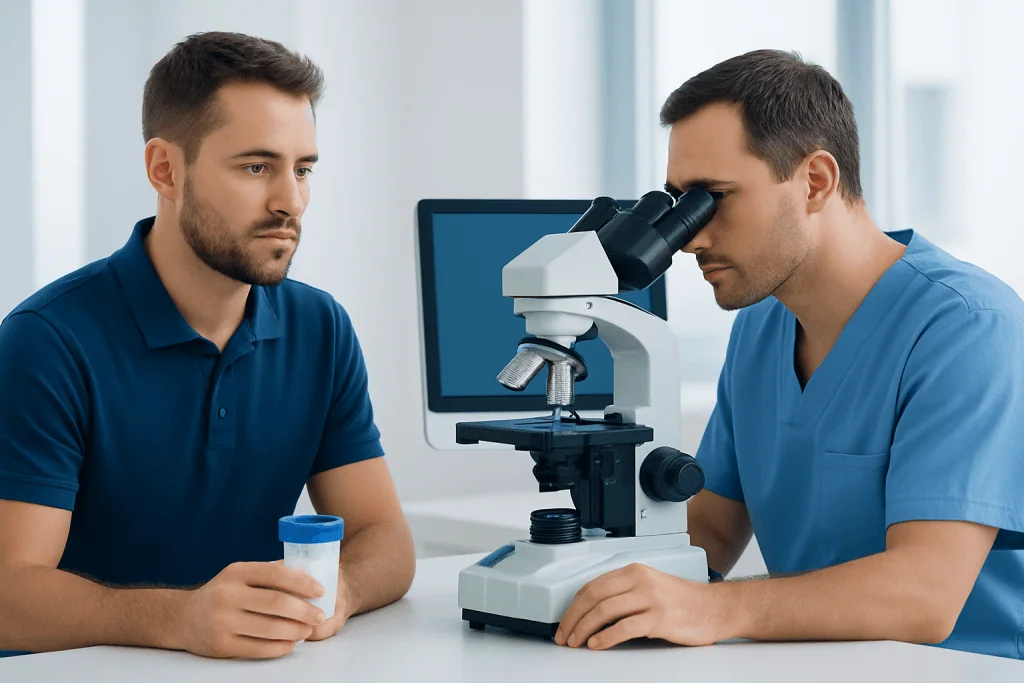
Semen analysis is one of the most important tests in male fertility assessment. It examines both the semen itself and the sperm cells it contains. A laboratory usually evaluates semen volume, acidity, concentration of sperm, total sperm number, motility, and morphology. Some reports also include semen liquefaction, viscosity, and the presence of white blood cells or antisperm antibodies in selected cases.
Each measure offers a different clue. Semen volume may reflect whether the seminal vesicles and prostate are contributing normally to the ejaculate. Sperm concentration and total sperm number help show how effectively the testes are producing sperm. Motility describes how well sperm move, which matters because sperm need forward movement to reach and fertilize an egg. Morphology refers to sperm shape; while some variation is common, a high proportion of abnormal forms may reduce the chance of natural conception.
A semen test can also suggest whether there may be blockage, inflammation, ejaculation problems, or impaired sperm production. Very low or absent sperm counts may point toward hormonal problems, testicular conditions, genetic factors, or obstruction in the reproductive tract. However, semen analysis alone does not explain every cause, and mildly abnormal values do not always prevent pregnancy.
Because sperm production follows a cycle of several weeks, results can change over time. Doctors often recommend at least two semen analyses collected on separate days for a more reliable picture. Following the laboratory’s instructions carefully, including the recommended period of abstinence before testing, helps improve accuracy.
What Hormone Tests Can Reveal

Hormone testing helps explain whether the brain and testes are communicating properly. Common blood tests include follicle-stimulating hormone (FSH), luteinizing hormone (LH), testosterone, and prolactin. Depending on the situation, a doctor may also request estradiol, thyroid tests, or sex hormone-binding globulin.
FSH plays an important role in sperm production. When FSH is high, it may suggest that the testes are not producing sperm as expected and the brain is trying to stimulate them more strongly. LH helps regulate testosterone production in the testes. Testosterone supports sexual development, libido, erections, muscle and bone health, and contributes to normal reproductive function. Prolactin is checked when low libido, erectile dysfunction, or low testosterone is present, because elevated levels can interfere with hormone balance.
Hormone results can point toward different patterns. Low testosterone with low or inappropriately normal FSH and LH may suggest a problem with the pituitary gland or hypothalamus. Low testosterone with high LH can suggest primary testicular dysfunction. Normal hormone levels do not completely rule out fertility issues, but they help narrow the possible causes and guide treatment.
These tests are especially useful when semen analysis is markedly abnormal, when puberty was delayed, when sexual symptoms are present, or when there are signs of hormone imbalance such as reduced body hair, breast enlargement, fatigue, or shrinking testicles. In selected patients, further endocrinology or urology assessment may be needed.
Causes of Abnormal Results and Risk Factors
Abnormal semen or hormone results can happen for many reasons. Some involve sperm production in the testes, while others affect transport of sperm through the reproductive tract. Common causes include varicocele, prior undescended testes, hormonal disorders, genetic conditions, past surgery, injury, and obstruction. Infections and inflammation can also affect sperm quality, particularly when the prostate, epididymis, or urinary tract is involved.
Lifestyle and environmental factors may also play a role. Smoking, heavy alcohol use, recreational drugs, obesity, poor sleep, severe stress, overheating of the testes, and exposure to certain toxins can affect sperm production or hormone balance. Some prescription medicines, anabolic steroids, chemotherapy, and radiation treatment may reduce fertility temporarily or permanently.
Illness can influence results even when the reproductive system itself is healthy. A fever in the past few months, uncontrolled diabetes, thyroid disease, liver disease, or significant nutritional deficiencies may lower sperm quality. Sexual dysfunction, including ejaculation problems or difficulty maintaining erections, can further affect the ability to conceive even if sperm production is normal.
When there is a history of genital symptoms, pain, swelling, or repeated urinary infections, doctors may look more closely for related problems such as urinary infections. In some men, reproductive concerns may overlap with broader urologic conditions that require specialist assessment.
How Doctors Diagnose the Cause
Testing is most useful when it is part of a full clinical evaluation. Doctors usually begin with a medical history that covers how long conception has been attempted, prior pregnancies, childhood development, surgery, infections, medications, sexual function, and family history. A physical examination may assess body hair pattern, breast tissue, testicle size, the presence of a varicocele, and signs of hormone imbalance or genital tract obstruction.
If semen or hormone results are abnormal, additional tests may be recommended. Scrotal ultrasound can help detect varicocele, structural problems, or testicular changes. In some situations, transrectal ultrasound is used to evaluate possible blockage of the ejaculatory ducts or seminal vesicles. Imaging is chosen based on the pattern of symptoms and laboratory findings, and may be part of ultrasonography evaluation in broader urologic assessment when appropriate.
Doctors may also request genetic testing, especially if sperm count is very low or absent. This can help identify chromosome differences or specific gene changes linked to infertility. Other tests can include post-ejaculation urine testing for retrograde ejaculation, infection screening, or specialized sperm function tests in selected cases.
The diagnosis is often made by putting several findings together rather than relying on one number. This step-by-step approach helps avoid unnecessary treatment and supports a more personalized plan for fertility, sexual health, and overall well-being.
Treatment Options After Testing
Treatment depends on the cause of the abnormal result, the person’s overall health, and the couple’s fertility goals. Some men only need repeat testing and observation, especially if a temporary illness or timing issue may have affected the sample. Others may benefit from lifestyle changes such as stopping smoking, reducing alcohol, improving weight management, avoiding anabolic steroids, and limiting heat exposure to the testes.
When a medical cause is identified, treatment may address the underlying problem. Hormonal disorders can sometimes be managed with endocrine treatment under specialist supervision. Infections or inflammation may require targeted therapy. Varicocele or structural blockage may be treated surgically in carefully selected patients, often within a comprehensive urology plan that can include laparoscopic urology or other procedures depending on the anatomy and diagnosis.
If natural conception is less likely, assisted reproductive techniques may be discussed. Depending on sperm count and quality, options may include intrauterine insemination or in vitro fertilization with or without intracytoplasmic sperm injection. The choice depends on both male and female factors, age, duration of infertility, and previous treatment history.
Supportive counseling can also be important. Fertility testing can feel stressful, but abnormal results are not uncommon and do not define masculinity or future parenthood. A clear explanation of the findings helps people make practical decisions and understand what is treatable, what needs monitoring, and what options are available next.
Prevention and Self-care Before and During Testing
Not every fertility problem can be prevented, but healthy habits support reproductive health. Regular exercise, balanced nutrition, adequate sleep, and managing long-term conditions such as diabetes may all help maintain hormone balance and sperm production. Avoiding tobacco, limiting alcohol, and not using anabolic steroids are especially important.
It also helps to reduce avoidable heat exposure to the testicles, such as frequent hot tubs or prolonged laptop use directly on the lap. Men who work with solvents, pesticides, heavy metals, or radiation should follow workplace safety measures. Anyone starting cancer treatment or another therapy that may affect fertility may wish to discuss sperm banking ahead of time.
Before semen analysis, the laboratory usually gives instructions on abstinence, sample collection, and transport. Following these instructions closely can reduce the chance of an unclear or misleading result. If the sample is incomplete or the collection was difficult, it is helpful to tell the care team, because that can influence interpretation.
When broader reproductive or urologic concerns are present, evaluation may also look for related conditions such as genital warts or other genital health issues. Care is often most effective when men feel comfortable raising questions about sexual health, infections, medications, and fertility goals openly with their doctor.
When to See a Doctor
It is sensible to seek medical advice if pregnancy has not occurred after a reasonable period of trying, especially if the female partner is older or if there are known reproductive issues in either partner. Men should also speak with a doctor if they have very low sex drive, erectile or ejaculation problems, testicular pain or swelling, a history of undescended testes, cancer treatment, groin surgery, or repeated genital or urinary infections.
Medical review is also important when there are signs of low testosterone or other hormone changes, such as reduced facial or body hair, fatigue, breast enlargement, or loss of muscle mass. Prompt evaluation can help identify whether the issue is hormonal, structural, infectious, genetic, or related to general health.
In many cases, early assessment shortens uncertainty and allows more options. Even when test results are abnormal, there may be practical next steps to improve the chances of conception or to manage symptoms effectively. Couples are often evaluated together, because fertility usually reflects both partners’ health.
For people seeking coordinated international care, Acibadem International’s multidisciplinary specialists and JCI-accredited hospitals evaluate and treat male reproductive conditions in a comprehensive setting. A qualified doctor can explain which tests are appropriate and what the results mean for the next stage of care.
Frequently asked questions
What is included in male reproduction testing?
Male reproduction testing commonly includes semen analysis, hormone blood tests, a medical history, and a physical examination. Depending on the findings, a doctor may also recommend ultrasound, genetic testing, or infection screening.
Can one abnormal semen analysis mean infertility?
No. A single abnormal result does not automatically mean infertility, because sperm values can change over time and may be affected by illness, stress, fever, or collection issues. Doctors often repeat the test to confirm the pattern before drawing conclusions.
What hormones are usually checked in male fertility testing?
Common tests include testosterone, FSH, LH, and prolactin. In some situations, thyroid hormones, estradiol, or other endocrine tests may also be ordered to better understand hormone balance.
How should a person prepare for a semen analysis?
The laboratory usually advises a specific period of abstinence before providing the sample. It is also important to follow instructions for sample collection and transport carefully, because these details can affect the accuracy of the results.
Can lifestyle changes improve semen or hormone results?
In some men, yes. Stopping smoking, limiting alcohol, avoiding anabolic steroids, improving weight management, and addressing sleep or stress can support reproductive health. The impact depends on the underlying cause, so professional guidance is helpful.
When are imaging or genetic tests needed?
These tests are usually recommended when semen analysis or hormone results suggest a structural problem, obstruction, very low sperm count, or absent sperm. They can help clarify the cause and guide treatment decisions more precisely.
References
- World Health Organization
- American Urological Association
- American Society for Reproductive Medicine
- European Association of Urology
- National Institute of Child Health and Human Development
This article is for general information only and is not a substitute for professional medical advice. Please consult a qualified doctor about your individual situation.
Male Reproduction in Turkey — costs, top hospitals & a free quote
JCI-accredited · board-certified surgeons · reply within 24h
Add us as a Preferred Source to see more of our trusted health content across Google Search, AI Overviews and Discover.

Urology
Treatment of the urinary system and male reproductive health, including robotic and laser procedures.
61 specialists in this unit