

Meniscus Tear Surgery: Who May Need It and What Recovery Is Like

Many meniscus tears improve with rest, physiotherapy, and activity changes, so surgery is not always the first step. Surgery may be considered when symptoms continue, the knee locks, or the tear is unlikely to heal on its own.
Key Takeaways
- Many meniscus tears improve with rest, physiotherapy, and activity changes, so surgery is not always the first step.
- Surgery may be considered when symptoms continue, the knee locks, or the tear is unlikely to heal on its own.
- The two main operations are meniscus repair and partial meniscectomy, and recovery time differs between them.
- Rehabilitation is an important part of recovery and helps restore strength, movement, and confidence in the knee.
- A doctor can recommend the most suitable treatment based on symptoms, exam findings, imaging, and the patient’s goals.
Meniscus tear surgery is not needed for every torn meniscus, but it can be helpful when symptoms persist or the knee keeps catching, locking, or giving way. Treatment and recovery depend on the type of tear, the person’s activity level, and whether the surgeon can repair the tissue or needs to remove the damaged portion.
Overview: What meniscus tear surgery is
The meniscus is a C-shaped piece of cartilage in the knee that acts as a cushion between the thighbone and shinbone. Each knee has two menisci, one on the inner side and one on the outer side. A tear can happen suddenly during twisting or pivoting, especially in sports, or gradually over time as the tissue becomes weaker with age.
Meniscus tear surgery is a procedure used when symptoms do not improve with non-surgical care or when the type of tear is unlikely to heal on its own. The goal is to reduce pain, improve knee function, and help the person return to daily activities, work, or sports safely.
Not every tear needs an operation. In many people, especially those with small tears or age-related wear, treatment may begin with rest, ice, anti-inflammatory strategies, and physiotherapy. Surgery is usually considered after a careful assessment of symptoms, physical examination findings, and imaging results.
Most meniscus procedures are performed with arthroscopy, a minimally invasive technique that uses a small camera and small instruments inserted through tiny incisions around the knee. Depending on the tear, the surgeon may repair the tissue or remove the torn fragment while preserving as much healthy meniscus as possible.
Symptoms and signs that may suggest a significant tear
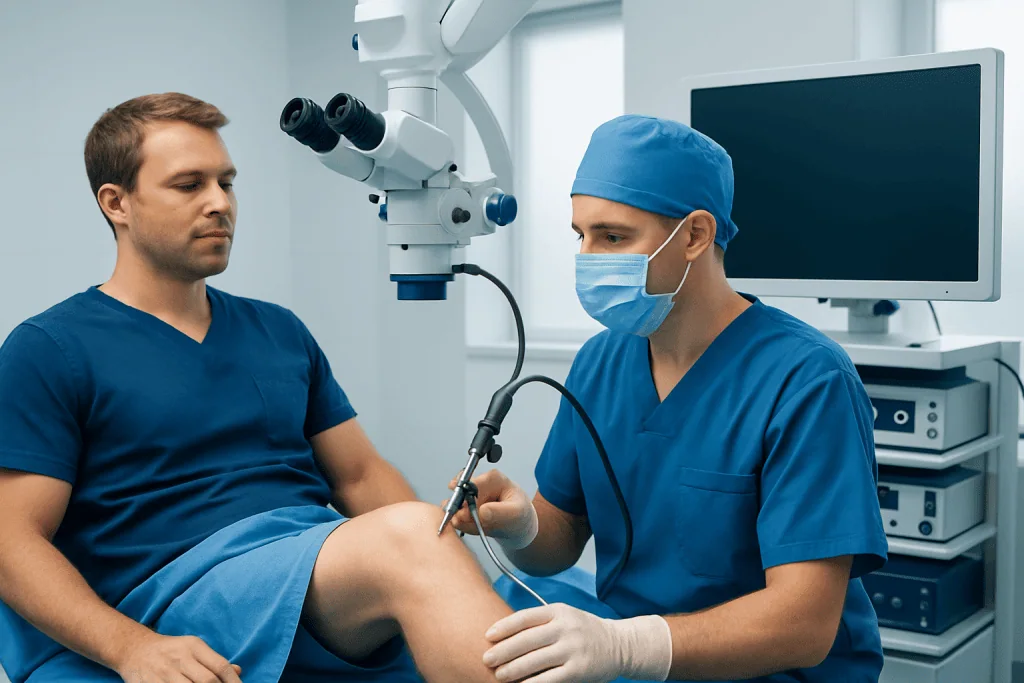
A meniscus tear can cause different symptoms depending on its size, location, and whether it also affects other knee structures. Common symptoms include knee pain, swelling, stiffness, and difficulty bending or straightening the joint fully. Some people also notice clicking or a feeling that the knee is not moving smoothly.
One of the more important symptoms is mechanical locking or catching. This means the knee may get stuck during movement, sometimes because a torn piece of cartilage interferes with normal joint motion. Instability or a sense that the knee may give way can also occur, although this may happen with other knee injuries too.
Symptoms are not always severe at first. In some cases, a person can walk after the injury and only later develops swelling, pain during squatting, or discomfort when turning in bed or climbing stairs. Degenerative tears may appear more gradually, often with recurring knee pain during everyday activities.
Because similar symptoms can happen with ligament injuries, arthritis, or other knee problems, it is important to have the knee assessed properly rather than assuming all knee pain is caused by a meniscus tear.
Who may need meniscus tear surgery
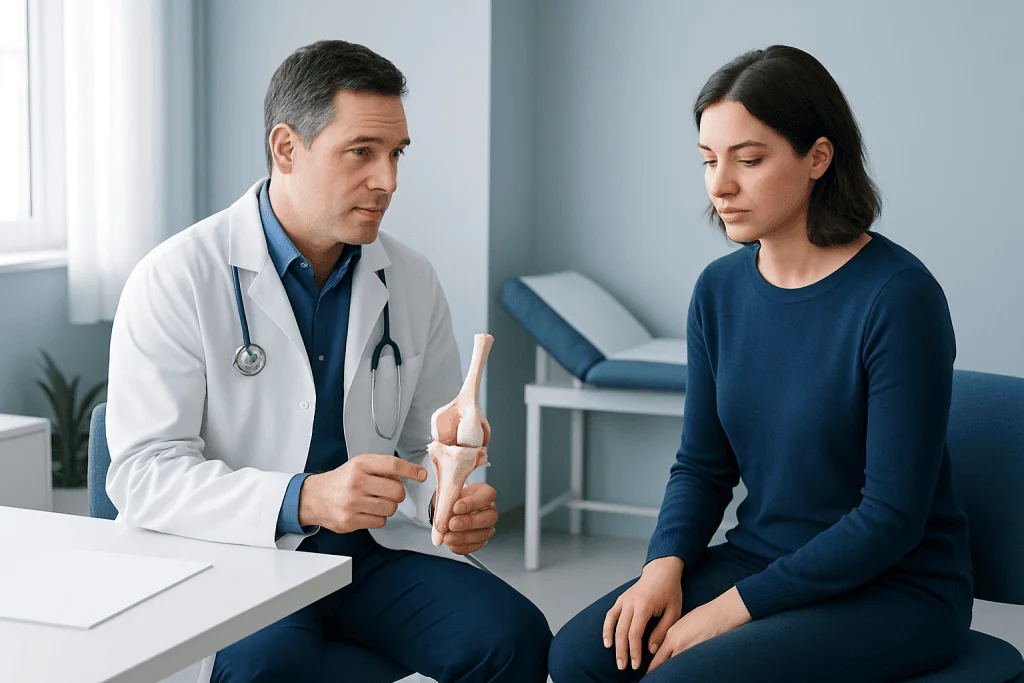
Surgery may be recommended when symptoms continue despite a reasonable period of non-surgical treatment. This often includes activity modification, targeted exercises, physiotherapy, and measures to reduce pain and swelling. If pain, swelling, or limited movement still interferes with daily life, work, or sports, an operation may be considered.
Some tear patterns are more likely to need surgery than others. A larger tear, a flap tear, or a bucket-handle tear that causes locking is less likely to settle with rest alone. Younger and more active patients, especially those with an acute sports injury, may be offered repair when the tissue quality and tear location are suitable for healing.
The decision also depends on where the tear is located. The outer part of the meniscus has a better blood supply than the inner part, so tears closer to the outer rim are more likely to heal if repaired. Tears in areas with poor blood flow may not heal well, even after repair, which can affect the choice of procedure.
Age, activity level, knee alignment, arthritis, and other injuries also matter. For example, a person with a meniscus tear plus a ligament injury may need a broader treatment plan. In patients with more advanced knee osteoarthritis, symptoms may come from both cartilage wear and a meniscus tear, so surgery is considered carefully.
How doctors diagnose a meniscus tear
Diagnosis begins with a medical history and physical examination. The doctor asks how the injury happened, where the pain is felt, whether swelling appeared quickly or gradually, and whether the knee locks, catches, or feels unstable. During the examination, the doctor checks range of motion, tenderness along the joint line, swelling, and special tests that can suggest meniscus damage.
Imaging is often used to confirm the diagnosis and to look for other knee problems. X-rays do not show the meniscus itself, but they can help identify arthritis, fractures, or other bony changes. Magnetic resonance imaging, or MRI, is the test most commonly used to assess the meniscus and surrounding structures in detail.
It is important to remember that MRI findings are only one part of the picture. Some people have meniscus tears visible on MRI but little or no pain, especially as they get older. For this reason, doctors combine scan results with symptoms and examination findings before recommending surgery.
In uncertain cases, or when several knee problems may be contributing to symptoms, an orthopedic specialist can help clarify the cause and discuss the most appropriate treatment path. This may include conservative care first or, if needed, knee arthroscopy for both diagnosis and treatment.
Treatment options: repair, partial removal, and non-surgical care
Initial treatment for many meniscus tears is non-surgical. This may include relative rest, ice, compression, elevation, temporary activity changes, pain-relief measures, and physiotherapy to improve strength and control around the knee. These approaches can be especially helpful for small tears, stable tears, and degenerative tears without locking.
If surgery is needed, the preferred option is often to preserve the meniscus whenever possible. A meniscus repair involves stitching or fixing the torn tissue back together so it can heal. This option is more common in tears with good healing potential, such as recent tears near the outer edge of the meniscus.
When a tear cannot be repaired, the surgeon may perform a partial meniscectomy. In this procedure, only the damaged part of the meniscus is removed while the healthy tissue is kept. Preserving as much meniscus as possible is important because it helps protect the knee joint over time.
In some cases, other problems in the knee also need attention, such as ligament injury or cartilage damage. The treatment plan is individualized based on the person’s age, symptoms, goals, and overall knee health. A specialist can explain the likely benefits, limitations, and recovery expectations of each approach.
What recovery is like after meniscus tear surgery
Recovery after meniscus tear surgery depends mainly on the type of operation. After partial meniscectomy, many people can put weight on the leg relatively soon and return to normal daily activities faster. After meniscus repair, recovery usually takes longer because the repaired tissue needs time to heal and may require temporary restrictions on bending, weight-bearing, or both.
Immediately after surgery, it is common to have swelling, soreness, and stiffness. The care team usually provides advice about wound care, pain control, icing, elevation, and safe movement. Some patients use crutches for a period of time, and some may need a knee brace, especially after repair.
Physiotherapy plays a central role in recovery. Early rehabilitation focuses on reducing swelling, regaining gentle motion, and reactivating the muscles around the knee. As healing progresses, exercises are advanced to improve strength, balance, walking pattern, and eventually sport-specific or work-related movement.
Return to sports or physically demanding work varies widely. A person who has had a partial meniscectomy may return sooner than someone who has had a repair, but the timing should be guided by the surgeon and physiotherapist. Recovery is safest when pain, swelling, movement, strength, and confidence have improved sufficiently for the demands of the activity.
Risks, long-term outlook, and protecting the knee
Meniscus surgery is commonly performed and is generally considered safe, but all operations carry some risks. These may include infection, bleeding, stiffness, blood clots, persistent pain, or the possibility that symptoms do not improve as much as hoped. In repaired tears, there is also a chance that the meniscus may not heal fully.
The long-term outlook depends on several factors, including the size and location of the tear, the amount of healthy meniscus that remains, the presence of arthritis, and how well rehabilitation goes. In general, preserving the meniscus is preferred when possible because removing too much tissue can increase stress on the knee joint over time.
Protecting the knee after treatment is important. This includes maintaining a healthy body weight, building strength in the quadriceps, hamstrings, and hip muscles, and increasing activity gradually rather than too quickly. Good movement technique during sports and exercise may also help reduce strain on the knee.
People with ongoing knee symptoms should not ignore them, especially if there is repeated swelling or reduced function. An evaluation can help identify whether the issue is a meniscus tear, an overuse problem, or another condition such as an ACL tear that may need a different treatment plan.
When to see a doctor
A doctor should assess knee pain that follows a twisting injury, causes swelling, or makes it difficult to walk, bend, or straighten the knee. Medical attention is especially important if the knee locks, gives way, or remains painful despite rest and simple home care.
Urgent assessment may be needed if the knee is very swollen, cannot bear weight, looks deformed, or if there are signs of infection after surgery such as fever, increasing redness, or drainage from the wound. New calf pain or shortness of breath also needs prompt medical attention.
People who have already tried non-surgical treatment but still have limiting symptoms may benefit from an orthopedic review. A specialist can explain whether continued rehabilitation is reasonable or whether surgery may offer a better chance of improvement.
For patients seeking expert evaluation, Acibadem International’s multidisciplinary specialists in JCI-accredited hospitals diagnose and treat knee conditions, including meniscus injuries, for international patients with individualized care plans.
Frequently asked questions
Does every meniscus tear need surgery?
No. Many meniscus tears improve with non-surgical treatment such as rest, physiotherapy, and activity modification. Surgery is more likely to be considered when symptoms persist, the knee locks, or the tear pattern is unlikely to heal on its own.
What is the difference between meniscus repair and partial meniscectomy?
Meniscus repair aims to stitch or fix the torn cartilage so it can heal, which helps preserve the meniscus. Partial meniscectomy removes only the damaged piece when repair is not suitable. Repair usually has a longer recovery period because the tissue needs time to heal.
How long does recovery take after meniscus tear surgery?
Recovery time varies based on the procedure, the tear, and the individual’s overall health and activity goals. People who have partial meniscectomy often recover faster than those who have meniscus repair. The treating surgeon and physiotherapist give the safest timeline for walking, work, exercise, and sports.
Can a meniscus tear heal without surgery?
Some tears can improve without surgery, especially small or stable tears and certain degenerative tears. Healing potential depends partly on the tear’s location because the outer edge of the meniscus has a better blood supply. Even when the tear does not fully heal, symptoms may still settle with proper rehabilitation.
Will surgery prevent arthritis in the future?
Surgery does not guarantee that arthritis will be prevented. However, preserving as much healthy meniscus as possible may help protect the knee joint better than removing more tissue than necessary. Long-term knee health also depends on factors such as weight, muscle strength, alignment, and any existing cartilage damage.
When can someone return to sports after meniscus surgery?
Return to sports depends on healing, strength, knee control, and the type of sport. It is usually quicker after partial meniscectomy than after meniscus repair. A gradual, supervised return is important to lower the risk of re-injury.
References
- American Academy of Orthopaedic Surgeons
- National Institute for Health and Care Excellence
- NHS
- OrthoInfo
- American Orthopaedic Society for Sports Medicine
This article is for general information only and is not a substitute for professional medical advice. Please consult a qualified doctor about your individual situation.
Joint and spine care in Turkey — expert assessment & treatment
JCI-accredited · board-certified surgeons · reply within 24h
Add us as a Preferred Source to see more of our trusted health content across Google Search, AI Overviews and Discover.

More from the Health Library



Related Specialists
Canberk Altan
Physical Medicine & Rehabilitation
Prof. Dr. Serap Gençer
Infectious Diseases & Clinical Microbiology
Prof. Dr. İsmail Cinel
Anesthesiology
Prof. Dr. Ahmet Onur Odabaşı
Ear Nose & Throat