Mos Surgery: Procedure, Recovery and Results
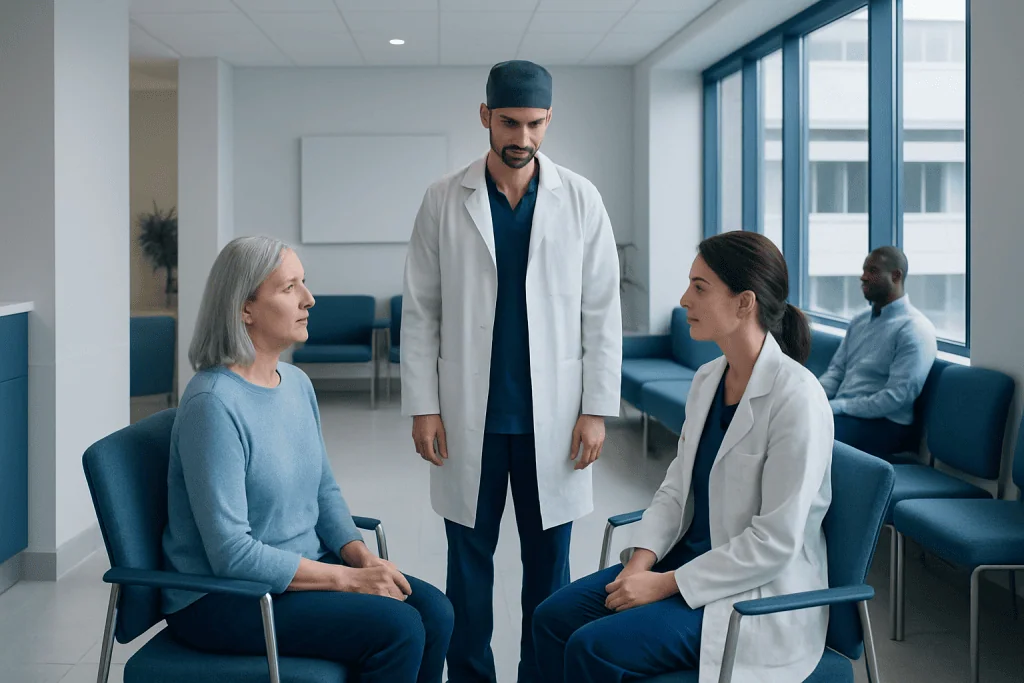
Mohs surgery combines tumour removal and immediate microscopic examination of tissue margins. It is commonly considered for basal cell carcinoma and squamous cell carcinoma in high-risk or cosmetically sensitive areas.
Key Takeaways
- Mohs surgery combines tumour removal and immediate microscopic examination of tissue margins.
- It is commonly considered for basal cell carcinoma and squamous cell carcinoma in high-risk or cosmetically sensitive areas.
- Most people go home the same day, but healing time depends on the wound size, location and repair method.
- Careful wound care, activity adjustments and scheduled skin checks support safe healing and future skin-cancer surveillance.
- Mohs surgery has high cure rates for appropriate cancers, but ongoing follow-up remains important because new skin cancers can develop.
Mohs surgery is a precise outpatient procedure used mainly for selected skin cancers, especially in areas where preserving healthy skin is important. The surgeon removes thin layers of tissue and examines each one during the visit until no cancer cells are seen at the edges.
Overview: how Mohs surgery works
Mohs surgery, also called Mohs micrographic surgery, is a specialized technique for removing certain skin cancers. It is designed to remove the cancer completely while saving as much nearby healthy skin as possible. This can be particularly valuable when a tumour is on the nose, eyelid, ear, lip, scalp, fingers, genital area or another location where tissue preservation matters.
During the procedure, the surgeon removes a visible tumour along with a very thin layer of surrounding tissue. That layer is mapped, processed and examined under a microscope while the patient waits. If cancer cells are found at an edge, the surgeon removes another small layer only from the area where cells remain. The process continues until the examined edges are clear.
This method differs from standard excision, in which a tumour and a planned margin of normal-looking skin are removed and sent for laboratory analysis after the procedure. Mohs surgery provides detailed, same-day margin assessment and may allow a smaller final wound for cancers that have irregular or hard-to-see extensions.
Who may be a candidate for Mohs surgery
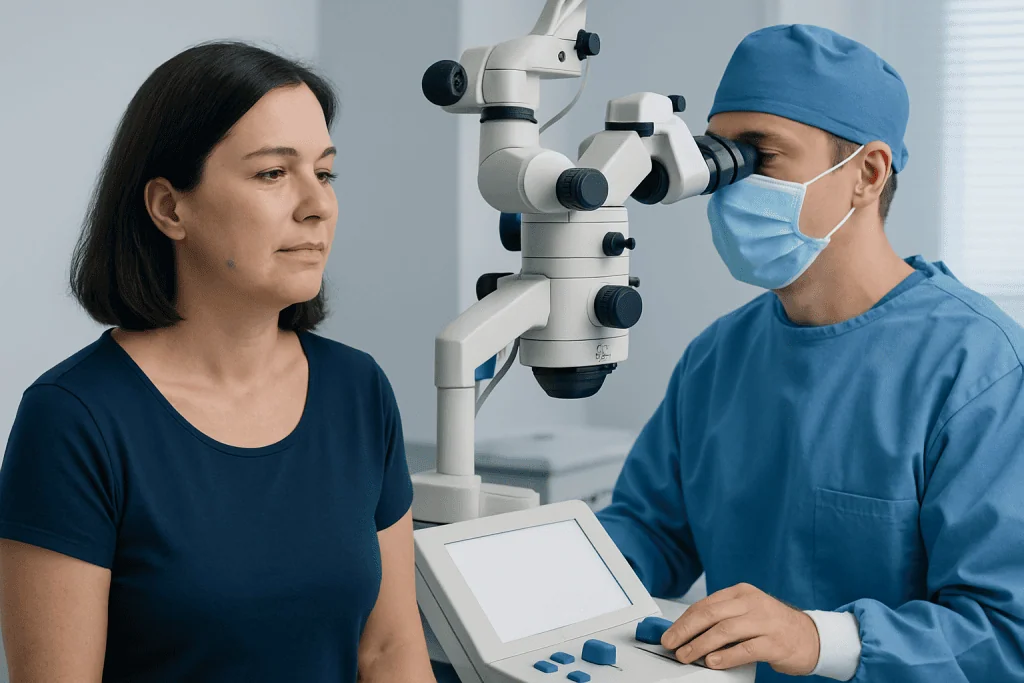
Mohs surgery is most often used for basal cell carcinoma and squamous cell carcinoma of the skin. It may also be considered for some less common skin cancers when their features, location or previous treatment history make precise margin control useful. A dermatologist or Mohs surgeon decides whether the technique is appropriate after reviewing the biopsy result and examining the lesion.
Features that can make Mohs surgery more suitable include a cancer on the face or another functionally important site, a large tumour, a cancer with poorly defined borders, a recurrent cancer, or a tumour with aggressive microscopic features. People with a weakened immune system may also need individualized assessment because some skin cancers behave more aggressively in this setting.
Not every skin cancer requires Mohs surgery. Small, low-risk tumours in lower-risk body areas may be effectively treated with standard surgical excision, topical treatment, cryotherapy, curettage and electrodesiccation, or other approaches. The best option depends on the cancer type, depth, size, location, medical history and personal priorities.
- A biopsy is generally needed before Mohs surgery is planned.
- Patients should tell the care team about blood-thinning medicines, allergies, implanted devices and previous reactions to local anaesthetic.
- Medication changes should only be made with guidance from the prescribing clinician and surgical team.
What happens during the procedure
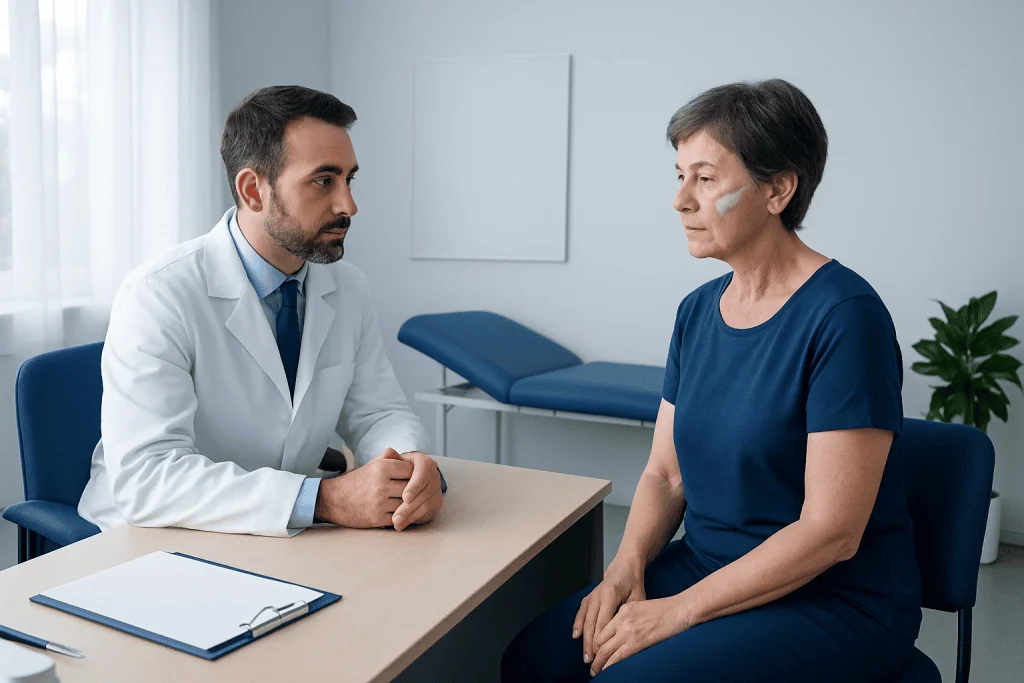
Mohs surgery is usually performed as an outpatient procedure under local anaesthetic. Patients are awake, but the treatment area is numbed. Depending on the body area and clinical circumstances, a person may be advised to arrange transport home, especially if they feel anxious, have received medication that affects alertness, or will have a larger repair.
First, the surgeon confirms the treatment site, cleans the skin and injects local anaesthetic. The visible cancer and a narrow rim of tissue are removed. A temporary bandage is placed while the removed tissue is processed in an on-site laboratory and examined microscopically. This waiting period may take an hour or longer for each stage.
If the margins are clear, no further cancer removal is needed. If cancer remains, the surgeon uses the tissue map to identify its location and removes another targeted layer. There is no reliable way to predict beforehand how many stages will be required, so patients should keep the day as free as possible.
Once clearance is confirmed, the wound may be allowed to heal naturally, closed with stitches, repaired with a skin flap or graft, or referred for reconstruction when needed. Repair choices are based on wound size and depth, body location, skin tension, expected function and cosmetic considerations. Mohs surgery planning includes discussion of the likely repair and follow-up care.
Benefits, limitations and downsides of Mohs surgery
The central benefit of Mohs surgery is comprehensive microscopic examination of the outer edges and underside of each removed layer. This precision can help maximize cancer removal while limiting removal of healthy tissue. For properly selected basal cell and squamous cell cancers, it is associated with very high cure rates.
However, Mohs surgery is still surgery. The appointment may take several hours, and the final wound can be larger than the visible spot because skin cancers may extend beneath the surface. There can be bleeding, bruising, swelling, tenderness, infection, delayed healing, numbness, itching, noticeable scarring or changes in skin contour or colour. A flap or graft can add its own healing needs.
Rarely, surgery near a nerve may cause temporary or lasting weakness or altered sensation. Some people find the waiting between stages tiring or emotionally difficult. A clear discussion with the surgeon about the cancer, expected defect, repair plan and scar management can help set realistic expectations.
Mohs surgery treats the identified cancer but does not prevent future skin cancers elsewhere. Regular full-skin examinations and sun-protection habits remain important after treatment.
Mohs surgery recovery timeline and care
Most people return home shortly after the procedure. In the first 24 to 48 hours, mild discomfort, swelling, oozing or bruising can occur. Swelling is often more noticeable around the eyes, forehead or nose and may peak during the first few days. The surgeon will provide individualized mohs surgery recovery instructions, including how to clean the area, change the dressing and manage discomfort safely.
Mohs surgery recovery time varies considerably. A small wound that is allowed to heal naturally may close over several weeks, while stitches are commonly removed within about one to two weeks depending on the location. A larger repair, flap or graft may require more frequent checks and a longer healing period. Scar remodeling continues gradually for months, so the early appearance is not the final result.
During the early mohs surgery recovery period, patients are commonly advised to protect the wound from friction and avoid strenuous exercise, heavy lifting, bending or activities that may increase bleeding or pull on stitches. The length of restriction depends on the surgical site and reconstruction. Gentle daily activity may be appropriate, but the surgeon’s instructions should take priority.
Keeping the wound covered as directed, washing hands before wound care and avoiding smoking can support healing. Once the area has healed, protecting it from sun exposure can reduce darkening of the scar. A clinician may recommend scar care such as silicone-based products or massage only after the wound is adequately healed.
What I wish I knew before Mohs surgery?
Many patients find it helpful to know that Mohs surgery is not usually a short, fixed-length appointment. Although the tissue removal itself may be brief, preparation, laboratory processing and possible additional stages can make the visit last much of the day. Bringing a snack, water, reading material and a support person when permitted may make the waiting time easier.
It is also useful to expect that the wound may look more noticeable than the original lesion. This does not necessarily mean the cancer was large; it can reflect the need to remove tissue with clear margins, the shape of the cancer beneath the skin and the repair required for safe healing. The surgeon can explain what type of closure is likely, although the final plan may only be clear once margins are negative.
Before the appointment, patients should ask how to take regular medicines, whether they need someone to drive them, how long to limit work or exercise, and when stitches may be removed. They should also confirm whom to contact after hours if bleeding, pain or a dressing concern occurs. A written care plan is especially useful for the first days of recovery.
What not to do after Mohs surgery?
Patients should not remove or disturb the initial dressing earlier than instructed, pick at scabs, scratch the wound or use unapproved creams and antiseptics. These actions can irritate healing tissue, introduce bacteria or interfere with the planned repair. If the dressing becomes loose, soaked or uncomfortable, the surgical team can advise on the correct next step.
It is generally important to avoid strenuous activity, heavy lifting, vigorous exercise, swimming and contact sports until the surgeon says it is safe. These activities can raise blood pressure, increase bleeding, loosen stitches or strain a flap, graft or wound edge. Alcohol and tobacco can also impair healing or increase bleeding risk for some people, so individualized guidance is sensible.
Patients should not stop prescribed blood thinners or other regular medicines without medical advice. If bleeding occurs, firm, continuous pressure with clean gauze is often recommended, but the patient should follow their surgical team’s specific instructions. Persistent bleeding, a rapidly enlarging swelling or a wound that opens should be assessed promptly.
How often does cancer come back after Mohs surgery? When to seek medical care
For appropriately selected skin cancers, Mohs surgery has high cure rates and is among the most effective treatments for many high-risk basal cell and squamous cell carcinomas. The chance of recurrence depends on factors such as the cancer type, whether it has been treated before, its location, size, microscopic pattern, depth and the person’s immune status. A clinician can give the most meaningful estimate based on the individual pathology report.
Even after successful treatment, a person who has had one skin cancer has a higher chance of developing another in the future. Follow-up schedules vary, but regular skin examinations are commonly recommended. Between visits, patients can report a new non-healing sore, persistent scaly patch, pearly bump, changing spot or change in a previous surgical scar.
Medical advice should be sought urgently for bleeding that does not stop after sustained pressure, severe or worsening pain, rapidly increasing swelling, fever, spreading redness, pus-like drainage, a foul smell, or a wound that separates. These symptoms do not always indicate a serious problem, but prompt assessment can protect healing.
Acibadem International’s multidisciplinary specialists and JCI-accredited hospitals can assess and treat skin cancer for international patients, including coordinated dermatology, pathology and reconstructive care when required. Ongoing skin surveillance and dermatology care can help address new or changing lesions early.
Frequently asked questions
Is Mohs surgery painful?
Local anaesthetic is used to numb the treatment area, so patients should not feel sharp pain during tissue removal. They may notice pressure, movement or brief discomfort from anaesthetic injections. Soreness after the procedure is common and is usually managed according to the surgeon’s advice.
How long does Mohs surgery take?
The total visit often lasts several hours because each tissue layer must be processed and examined before the next step is decided. The number of stages cannot be known in advance. Patients are usually advised not to schedule important commitments for the rest of the day.
What are the downsides of Mohs surgery?
Mohs surgery can involve a long appointment, a wound larger than the visible lesion and a period of wound care or activity restriction. Possible complications include bleeding, infection, pain, scarring, numbness and delayed healing. The balance of benefits and risks depends on the cancer and its location.
How long is the Mohs procedure recovery time?
Initial healing often takes days to weeks, but the exact mohs procedure recovery time depends on the wound location, size and closure method. Stitches may be removed within one to two weeks in many cases, while a scar can continue to mature for several months. A flap, graft or larger wound may require a longer recovery plan.
Can I work after Mohs surgery?
Some people can return to desk-based work quickly, while others need time off because of swelling, discomfort, dressing care or restrictions on movement. Jobs involving physical exertion, heat, dust or risk of impact may require more time away. The surgical team can advise based on the repair and work duties.
Will I have a scar after Mohs surgery?
Any surgery that removes skin can leave a scar, although its final appearance varies. Mohs surgery aims to preserve as much healthy tissue as possible, and careful repair can support a good functional and cosmetic outcome. Scars often improve gradually over months, and the clinician can discuss suitable scar-care options.
References
- American Academy of Dermatology
- American College of Mohs Surgery
- National Cancer Institute
- Skin Cancer Foundation
- National Health Service
This article is for general information only and is not a substitute for professional medical advice. Please consult a qualified doctor about your individual situation.
Hair transplant in Turkey — costs, graft counts & a free assessment
JCI-accredited · board-certified surgeons · reply within 24h
Add us as a Preferred Source to see more of our trusted health content across Google Search, AI Overviews and Discover.

More from the Health Library
Related Specialists

Prof. Dr. Taner Güneş
Orthopedic Surgery & Traumatology
Fzt. Perihan Yıldız
Physical Medicine & Rehabilitation
Prof. Dr. Hakan Murat Göksel
Neurosurgery
Prof. Dr. A. Çağrı Büke
Infectious Diseases & Clinical Microbiology