Nasal Cancer: Early Signs, Risk Factors, and How It Is Treated

Nasal cancer often causes symptoms on one side of the nose, especially blockage or repeated nosebleeds. Many early symptoms can resemble sinusitis, allergies, or nasal polyps, so persistent symptoms should be checked.
Key Takeaways
- Nasal cancer often causes symptoms on one side of the nose, especially blockage or repeated nosebleeds.
- Many early symptoms can resemble sinusitis, allergies, or nasal polyps, so persistent symptoms should be checked.
- Diagnosis usually involves nasal examination, imaging, and a biopsy to confirm the cancer type.
- Treatment is individualized and may include surgery, radiation therapy, chemotherapy, or combined care.
- Earlier diagnosis can improve treatment planning and may help preserve breathing, speech, smell, and facial structures.
Nasal cancer is a rare cancer that starts in the nasal cavity or nearby sinus tissues, and it may first appear as persistent one-sided nasal blockage, nosebleeds, or facial pressure. Treatment depends on the exact location, stage, and tumor type, and often involves surgery, radiation therapy, chemotherapy, or a combination of these.
Overview: what nasal cancer is
Nasal cancer is a cancer that develops in the tissues of the nasal cavity, the space behind the nose where air passes on the way to the throat. Closely related cancers can also begin in the paranasal sinuses, the air-filled spaces around the nose. Because these areas are small and close to the eyes, mouth, nerves, and skull base, symptoms can vary depending on exactly where the tumor starts.
Although uncommon, nasal cancer is important to recognize because it can look like more familiar problems such as sinus infections, allergies, or a deviated septum. A symptom that lasts, keeps returning, or affects mainly one side of the nose deserves medical attention. The term is often used broadly, but doctors may distinguish between nasal cavity cancer and sinus cancer because their location can affect both treatment and outlook.
Several tumor types can occur in this region. The most common are forms of squamous cell carcinoma, but other less common tumors include adenocarcinoma, melanoma, lymphoma, and tumors of the salivary-type glands. Knowing the exact cell type matters because it guides treatment decisions and helps specialists estimate how the cancer may behave.
Early signs and symptoms
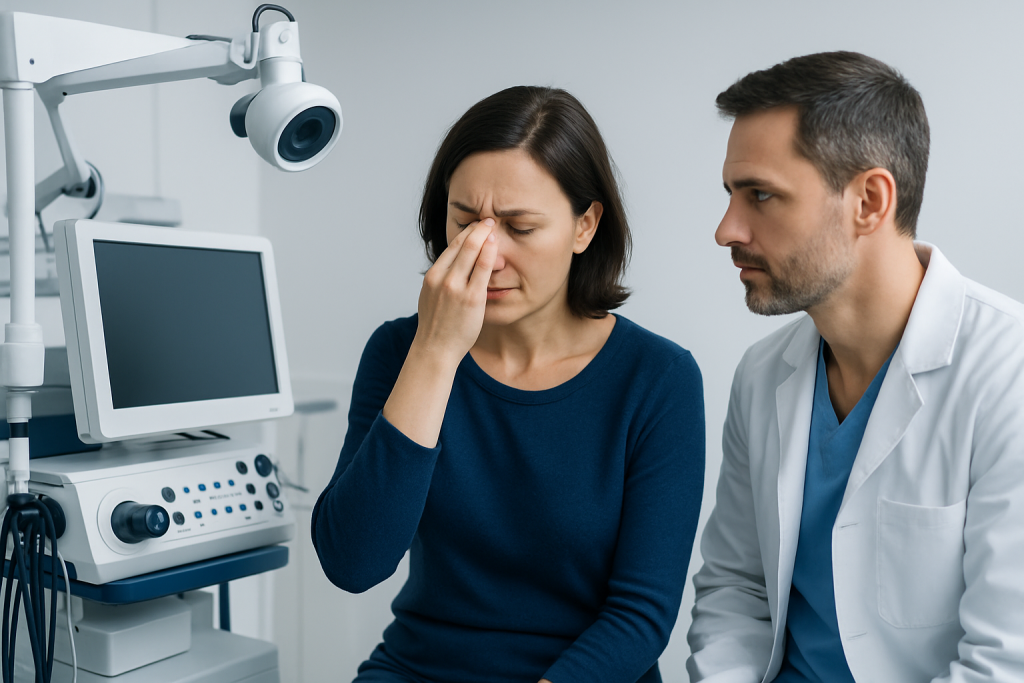
The early signs of nasal cancer are often subtle. Many people first notice a blocked nose that does not improve, especially if the blockage is mostly on one side. Recurrent nosebleeds, facial pressure, a reduced sense of smell, or ongoing nasal discharge can also occur. These symptoms do not automatically mean cancer, but they should not be ignored if they persist.
As a tumor grows, it may cause more noticeable effects. Pain, swelling around the nose or cheek, loosening of teeth, a lump inside the nose, numbness in part of the face, or a change in the way dentures fit can occur in some cases. If the area near the eye is involved, a person may develop watery eyes, double vision, bulging of one eye, or reduced vision.
Other possible symptoms include headaches, ear pressure, hearing changes on one side, or a swollen lymph node in the neck. Because these signs can overlap with benign ENT conditions, the pattern often matters more than a single symptom. Doctors tend to pay particular attention to symptoms that are one-sided, persistent, or progressively worsening.
- One-sided nasal blockage
- Repeated nosebleeds
- Persistent facial pain or pressure
- Loss of smell or reduced smell
- Swelling near the nose, cheek, or eye
- Double vision or other eye symptoms
Causes and risk factors

Like many cancers, nasal cancer develops when cells in the nasal cavity or sinus lining acquire changes that allow them to grow abnormally. In many people, there is no single clear cause. Still, specialists recognize several factors that can increase risk, especially long-term workplace exposure to certain dusts and chemicals.
Occupational exposure is one of the most established risk factors. People who work around wood dust, leather dust, flour dust, nickel, chromium, formaldehyde, or some industrial fumes may have a higher risk over time. Protective equipment and proper workplace ventilation are important because repeated inhalation of irritants may contribute to harmful cellular changes.
Tobacco use is also associated with some cancers of the nasal cavity and sinuses. In addition, previous radiation exposure to the head and neck and certain infections or inflammatory conditions may be relevant in selected cases. Having a risk factor does not mean a person will develop cancer, and many people with nasal symptoms have noncancerous problems such as nasal polyps or chronic sinus inflammation. A clinician can help distinguish these possibilities through examination and testing.
How doctors diagnose nasal cancer
Diagnosis begins with a detailed history and examination by an ear, nose, and throat specialist or head and neck cancer team. The doctor asks about symptoms, smoking history, workplace exposures, and how long the problem has been present. A focused head and neck exam checks the inside of the nose, the mouth, the eyes, and the lymph nodes in the neck.
A key test is nasal endoscopy, in which a thin flexible camera is used to look inside the nasal passages. This can help identify a suspicious mass, bleeding area, or blockage. Imaging tests such as CT and MRI scans are commonly used to show the size of the tumor and whether nearby structures are involved. Depending on the case, PET-CT may also be used to look for spread elsewhere in the body.
The diagnosis is confirmed with a biopsy. During a biopsy, a sample of tissue is removed and examined under a microscope to determine whether cancer is present and what type it is. This step is essential because treatment differs among tumor types. If cancer is confirmed, doctors then assign a stage, which describes the extent of disease and supports treatment planning. In some cases, care overlaps with pathways used for head and neck cancer more broadly.
Treatment options and how care is planned
Treatment for nasal cancer is highly individualized. Doctors consider the tumor type, its stage, the exact area involved, whether nearby structures such as the eye or skull base are affected, and the person’s general health. Care is often planned by a multidisciplinary team that may include ENT surgeons, head and neck surgeons, medical oncologists, radiation oncologists, radiologists, pathologists, and reconstructive specialists.
Surgery is a common treatment when the tumor can be safely removed. Depending on the location and extent, surgery may be performed through the nostrils using endoscopic techniques or through an external approach when wider access is needed. The goal is to remove the tumor while preserving important functions whenever possible. Some people may also need reconstructive procedures after surgery. In suitable cases, care may involve endoscopic sinus surgery as part of tumor access or removal.
Radiation therapy is often used after surgery to reduce the chance of the cancer returning, or as the main treatment when surgery is not the best option. Chemotherapy may be combined with radiation in selected situations, especially for more advanced disease or certain tumor types. A broader cancer treatment plan may include radiation oncology services and medical oncology support. Some people with advanced or recurrent disease may also be considered for targeted therapy or immunotherapy, depending on the pathology and specialist recommendations.
Treatment can affect breathing, swallowing, smell, speech, or appearance, so supportive care is important. Nutrition support, pain control, dental evaluation, eye care, speech and swallowing therapy, and emotional support can all play a role. The best plan balances cancer control with quality of life and long-term function.
Recovery, follow-up, and self-care
Recovery depends on the treatment used and the extent of the disease. After surgery, there may be temporary swelling, congestion, crusting, and fatigue. After radiation therapy or chemotherapy, people may experience dryness, changes in taste or smell, skin irritation, soreness, or reduced energy. The care team explains what to expect and how to manage symptoms safely.
Follow-up is a key part of care because specialists monitor healing, manage side effects, and check for signs that the cancer has returned. Follow-up visits may include repeat nasal endoscopy and imaging at intervals recommended by the treating team. These appointments also help address practical issues such as nasal hygiene, nutrition, sleep, and returning to normal daily activities.
Self-care can support recovery, though it does not replace medical treatment. Avoiding smoking and secondhand smoke is especially important. People should take medications exactly as prescribed, keep follow-up appointments, and ask before using over-the-counter nasal sprays or supplements. Gentle nasal care, hydration, balanced nutrition, and rest may all help during recovery.
For international patients who need coordinated evaluation and treatment, Acibadem International’s multidisciplinary specialists and JCI-accredited hospitals provide care for complex ENT and oncology conditions, including nasal and sinus cancers.
When to seek medical care
A person should arrange a medical evaluation if nasal symptoms last more than a few weeks, keep recurring, or affect mainly one side of the nose. This is especially important for one-sided blockage, repeated nosebleeds, facial numbness, swelling near the eye, or a lump in the neck. Most persistent nasal symptoms are not caused by cancer, but it is sensible to have them assessed rather than assume they are due to allergies or infection.
More urgent assessment is appropriate for significant bleeding, rapidly worsening facial swelling, new double vision, sudden change in vision, severe pain, or breathing difficulty. These symptoms do not always mean cancer, but they warrant prompt attention. An ENT specialist can determine whether the problem is due to infection, inflammation, a benign growth, or a condition that needs cancer evaluation.
Frequently asked questions
Is nasal cancer common?
Nasal cancer is considered uncommon compared with many other cancers. Because it is rare and its symptoms can mimic sinus or allergy problems, diagnosis may be delayed unless persistent symptoms are checked by a specialist.
What is the first symptom of nasal cancer?
There is no single first symptom in every person, but one-sided nasal blockage is a common early complaint. Repeated nosebleeds or persistent facial pressure can also be early signs, especially when symptoms do not improve as expected.
Can nasal cancer feel like sinusitis?
Yes. Nasal cancer can resemble sinusitis because both may cause congestion, facial pressure, or discharge. The difference is that cancer-related symptoms are often persistent, may affect one side more than the other, and may be accompanied by bleeding, swelling, or eye symptoms.
How is nasal cancer confirmed?
Doctors usually use a combination of nasal endoscopy, imaging, and a biopsy. The biopsy is the definitive test because it shows whether cancer cells are present and what specific type of tumor it is.
Is nasal cancer treatable?
Many cases are treatable, but the approach depends on the tumor type, location, and stage. Treatment often includes surgery, radiation therapy, chemotherapy, or a combination of these, planned by a multidisciplinary team.
Does treatment always involve surgery?
Not always. Some people are treated with radiation therapy alone or with chemotherapy and radiation, particularly if surgery would not be the best option or if the tumor type responds well to nonsurgical treatment.
When should someone see a doctor about possible nasal cancer?
A doctor should evaluate symptoms that persist for several weeks, keep coming back, or mainly affect one side of the nose. Prompt review is especially important for repeated nosebleeds, facial numbness, eye changes, or swelling in the face or neck.
References
- National Cancer Institute
- American Cancer Society
- National Health Service
- American Society of Clinical Oncology
- National Comprehensive Cancer Network
This article is for general information only and is not a substitute for professional medical advice. Please consult a qualified doctor about your individual situation.
Oncology care in Turkey — second opinion and treatment plan
JCI-accredited · board-certified surgeons · reply within 24h
Add us as a Preferred Source to see more of our trusted health content across Google Search, AI Overviews and Discover.

More from the Health Library



Related Specialists

Prof. Dr. Ali Arican
Medical Oncology
Assoc. Prof. Dr. Barış Görgün
Orthopedic Surgery & Traumatology
Dr. Nesibe Sönmez Demiryoğuran
Emergency Service
Dr. İlkay Değerli
Pediatrics