Neurodegenerative Disease: Definition, Types, and What Progressive Nerve Damage Means

Neurodegenerative disease describes progressive damage to neurons over time. Different conditions affect different parts of the nervous system, so symptoms vary widely.
Key Takeaways
- Neurodegenerative disease describes progressive damage to neurons over time.
- Different conditions affect different parts of the nervous system, so symptoms vary widely.
- Common examples include Alzheimer’s disease, Parkinson’s disease, ALS, and Huntington’s disease.
- Diagnosis often involves a neurological exam, imaging, lab tests, and cognitive or movement assessments.
- Treatment usually focuses on symptom control, rehabilitation, safety, and long-term support.
Neurodegenerative disease refers to conditions in which nerve cells in the brain, spinal cord, or peripheral nervous system gradually lose function and die. These disorders can affect movement, memory, speech, behavior, and independence, but early evaluation and supportive care can help people manage symptoms and plan treatment.
Overview
Neurodegenerative disease is a broad term for disorders that cause gradual damage to nerve cells, also called neurons. These cells are essential for sending messages throughout the body, helping with memory, movement, sensation, behavior, and many automatic functions. When neurons stop working properly or die over time, the body can begin to lose some of these abilities.
The phrase “progressive nerve damage” means that changes often develop slowly and may become more noticeable as time passes. In many cases, symptoms begin subtly, such as mild forgetfulness, slight balance problems, slower movement, or changes in speech. Because these signs can be mistaken for normal aging or stress, diagnosis may take time.
Neurodegenerative diseases are not all the same. Some mainly affect thinking and memory, while others mainly affect movement, coordination, muscle strength, or behavior. A person’s experience depends on which parts of the nervous system are involved and how quickly the condition progresses.
Although many neurodegenerative disorders cannot yet be cured, treatment can still play an important role. Medicines, rehabilitation, lifestyle support, and careful monitoring may improve quality of life, ease symptoms, and help patients and families plan ahead with confidence.
Types of Neurodegenerative Disease
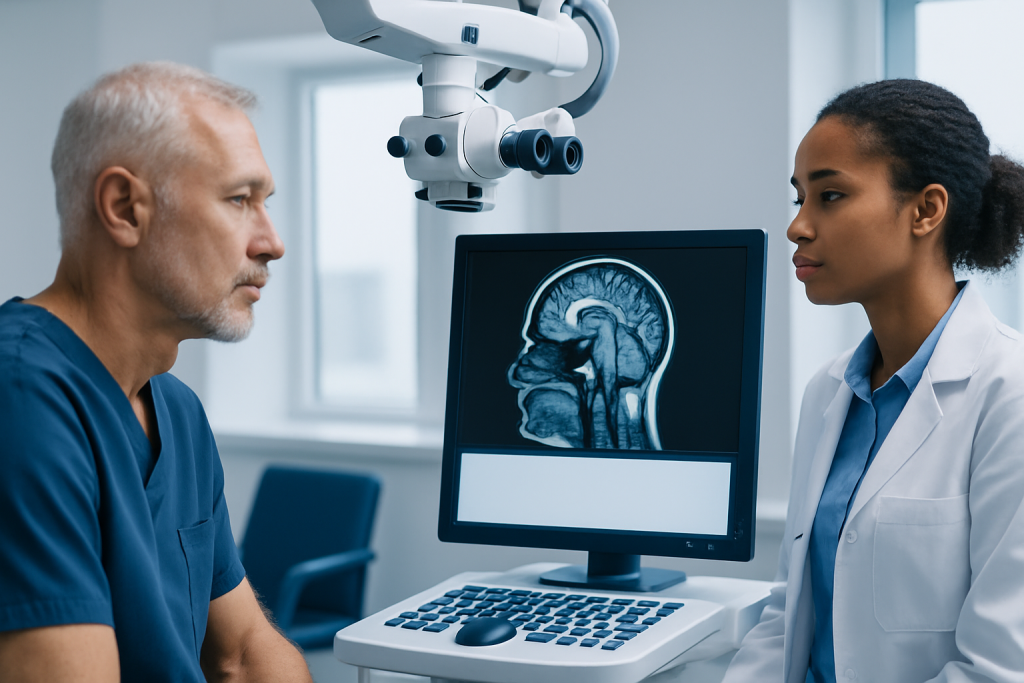
There are many types of neurodegenerative disease, and they are usually grouped by the main problems they cause. Some primarily affect memory and thinking, some affect movement, and others lead to muscle weakness or coordination problems. A neurologist often considers the pattern of symptoms to guide further testing.
Examples include:
- Alzheimer’s disease: mainly affects memory, thinking, orientation, and daily functioning.
- Parkinson’s disease: commonly causes tremor, stiffness, slowness of movement, and balance problems.
- Amyotrophic lateral sclerosis (ALS): affects motor neurons and can lead to progressive muscle weakness, speaking and swallowing difficulty, and breathing problems.
- Huntington’s disease: an inherited disorder that may cause involuntary movements, mood changes, and cognitive decline.
- Frontotemporal dementia: often causes early changes in personality, behavior, judgment, or language.
- Multiple system atrophy, progressive supranuclear palsy, and other atypical parkinsonian disorders: less common conditions affecting movement and autonomic function.
Some diseases have overlapping symptoms. For example, memory loss can occur in more than one condition, and stiffness or walking problems are not unique to Parkinson’s disease. This overlap is one reason a detailed specialist evaluation is important.
In some cases, doctors also consider whether symptoms may be related to other neurological conditions that are not classically neurodegenerative but can mimic them. A careful workup helps distinguish degenerative disease from potentially treatable causes.
Symptoms and How Progressive Nerve Damage Appears

Symptoms of neurodegenerative disease depend on which neurons are affected. When the brain areas involved in memory and judgment are damaged, a person may develop forgetfulness, confusion, difficulty planning, or changes in behavior. When movement-related pathways are involved, symptoms may include tremor, stiffness, slowness, poor balance, or involuntary movements.
Progressive nerve damage can also affect speech, swallowing, coordination, or muscle strength. Some people notice that their handwriting becomes smaller, their face looks less expressive, or they begin to trip more often. Others may have trouble finding words, following conversations, or performing familiar daily tasks.
Common symptom patterns may include:
- Memory loss or difficulty learning new information
- Slower thinking or reduced concentration
- Tremor, stiffness, or changes in walking
- Muscle weakness, cramps, or twitching
- Balance problems or frequent falls
- Speech or swallowing difficulties
- Mood, personality, or behavior changes
- Sleep disturbances or autonomic symptoms, such as constipation or low blood pressure
Symptoms usually develop gradually, but the speed of progression varies. Some conditions change slowly over many years, while others may advance more quickly. Because early signs can be mild, keeping track of when symptoms started and how they have changed can be very helpful during medical evaluation.
Causes and Risk Factors
The exact cause of many neurodegenerative diseases is not fully understood. In general, these disorders involve the gradual breakdown of neurons due to complex biological processes. These may include abnormal protein buildup, inflammation, oxidative stress, mitochondrial dysfunction, and problems with how cells clear waste or repair damage.
Age is one of the most important risk factors for several neurodegenerative disorders, especially those involving memory decline. However, these conditions are not considered a normal part of aging. Many older adults do not develop dementia, Parkinsonism, or major neurological disability.
Genetics can also play a role. Some diseases, such as Huntington’s disease, have a strong inherited pattern. In others, family history may increase risk without guaranteeing that a person will become ill. Environmental exposures, head trauma, vascular health, and overall medical history may also contribute in some cases, although the relationship is not always straightforward.
Doctors often evaluate for conditions that can resemble neurodegeneration or worsen symptoms, such as vitamin deficiencies, thyroid disease, medication side effects, sleep disorders, depression, stroke-related changes, or infection. Identifying these factors is important because some may be treatable or reversible.
How Diagnosis Is Made
Diagnosis usually begins with a detailed medical history and neurological examination. The doctor asks about symptoms, when they began, how quickly they have changed, family history, current medications, and how daily life has been affected. Input from a family member or caregiver is often useful, especially when memory or behavior has changed.
A neurological exam may assess strength, reflexes, coordination, walking, balance, eye movements, speech, sensation, and thinking. Depending on the symptoms, the doctor may use memory screening tools, movement assessments, or language testing. More formal neuropsychological testing can provide a clearer picture of attention, memory, executive function, and mood.
Tests are used to support the diagnosis and rule out other causes. These may include blood tests, brain imaging such as MRI or CT, and sometimes functional imaging or specialized studies. In selected cases, doctors may recommend genetic testing, spinal fluid analysis, nerve studies, or swallowing and sleep evaluations.
The diagnostic process can take time, especially when symptoms overlap between conditions. In specialized centers, neurologists may work closely with radiologists, rehabilitation physicians, psychiatrists, speech therapists, and other experts. For some patients, advanced evaluation may include high-resolution MRI imaging to look more closely at structural brain changes.
Treatment Options and Long-Term Management
Treatment depends on the specific neurodegenerative disease, the symptoms it causes, and the person’s general health. In many cases, the main goals are to reduce symptoms, preserve independence, support safety, and maintain quality of life. Some medicines can improve certain symptoms, such as tremor, stiffness, memory problems, mood changes, or sleep difficulties, even though they may not stop the underlying disease.
Rehabilitation is often an essential part of care. Physical therapy can help with balance, mobility, flexibility, and fall prevention. Occupational therapy may support dressing, bathing, writing, and home safety. Speech and language therapy can help with communication and swallowing. When weakness or mobility problems are significant, an individualized physical therapy and rehabilitation plan may be recommended.
Some patients need nutritional support, breathing assessment, or assistive devices such as walkers, communication tools, or home adaptations. Cognitive support strategies, structured routines, and caregiver education are especially important for conditions affecting memory or judgment. Emotional health also matters, and treatment may include counseling or support for anxiety, depression, or caregiver strain.
In complex cases, care is often multidisciplinary. Patients may benefit from evaluation by movement disorder specialists, dementia specialists, rehabilitation teams, nutrition experts, and mental health professionals. Near the end of the care pathway, some people may need more intensive support planning, including neurology care and community-based services. Acibadem International’s multidisciplinary specialists and JCI-accredited hospitals also diagnose and treat neurodegenerative diseases for international patients.
Prevention, Self-care, and Daily Living
There is no guaranteed way to prevent every neurodegenerative disease, but healthy habits may support long-term brain and nerve health. Managing blood pressure, diabetes, cholesterol, and sleep problems can help protect overall neurological function. Regular physical activity, a balanced diet, social engagement, and mentally stimulating activities are generally encouraged as part of healthy aging.
For people already diagnosed with a neurodegenerative disorder, self-care focuses on maintaining function and safety. Keeping a regular sleep schedule, taking medicines as prescribed, staying physically active within safe limits, and attending follow-up appointments can all make daily life more manageable. Caregivers often play an important role in observing changes and helping organize routines.
Home safety is especially important if there are balance problems, weakness, or memory changes. Helpful steps may include removing tripping hazards, improving lighting, using handrails, and considering bathroom supports. If swallowing becomes difficult, a speech and swallowing assessment may help reduce the risk of choking.
It can also help to plan ahead. Written medication lists, advance care discussions, financial planning, and support groups may reduce stress for both patients and families. Although progression can be challenging, many people live meaningfully with these conditions when they receive consistent medical care and practical support.
When to See a Doctor
A doctor should be consulted if there are persistent changes in memory, walking, balance, speech, coordination, behavior, or muscle strength. Early assessment is important because not every neurological symptom is caused by neurodegenerative disease, and some conditions that look similar may be treatable. A timely evaluation can also help start supportive therapies sooner.
Medical attention is especially important if symptoms begin to interfere with work, self-care, driving, medication use, or household responsibilities. Family members are often the first to notice changes, such as confusion, repeated questions, personality shifts, or frequent falls. These observations should be shared with a healthcare professional.
Urgent medical care is needed for sudden neurological symptoms, such as abrupt weakness, facial drooping, a sudden severe headache, sudden confusion, or loss of speech, because these may suggest a stroke or another emergency rather than a slowly progressive degenerative condition. Breathing difficulty, repeated choking, or rapid decline in function also deserve prompt attention.
If diagnosis is uncertain or symptoms are complex, referral to a neurologist can be very helpful. In some cases, doctors may also assess related neurological concerns, including conditions such as Parkinson’s disease or other movement and memory disorders, to better understand the cause of progressive nerve damage.
Frequently asked questions
What does neurodegenerative disease mean?
Neurodegenerative disease means that nerve cells in the brain, spinal cord, or other parts of the nervous system gradually lose function over time. This progressive damage can affect memory, movement, speech, behavior, or muscle strength depending on the condition.
Is neurodegenerative disease the same as dementia?
No. Dementia is a syndrome that affects memory, thinking, and daily function, while neurodegenerative disease is a broader category. Some neurodegenerative diseases cause dementia, but others mainly affect movement, coordination, or muscle control.
Can progressive nerve damage be reversed?
In many neurodegenerative diseases, the underlying nerve cell loss cannot currently be reversed. However, treatment may ease symptoms, improve daily functioning, and help people live more safely and comfortably. It is also important to rule out treatable conditions that can mimic degeneration.
Who is at risk for neurodegenerative disorders?
Risk often increases with age, but these conditions are not simply a normal part of aging. Genetics, family history, vascular health, environmental factors, and certain medical conditions may also influence risk depending on the specific disorder.
How are neurodegenerative diseases diagnosed?
Diagnosis usually involves a medical history, neurological exam, and tests such as blood work and brain imaging. Some patients also need cognitive testing, genetic counseling, or other specialized assessments to clarify the cause of symptoms.
What are the early signs of neurodegenerative disease?
Early signs may include forgetfulness, slower movement, tremor, balance problems, speech changes, weakness, or subtle behavior changes. These symptoms often start gradually, which is why they may be overlooked at first.
References
- World Health Organization
- National Institute of Neurological Disorders and Stroke
- National Institute on Aging
- Alzheimer's Association
- Parkinson's Foundation
This article is for general information only and is not a substitute for professional medical advice. Please consult a qualified doctor about your individual situation.
Joint and spine care in Turkey — expert assessment & treatment
JCI-accredited · board-certified surgeons · reply within 24h
Add us as a Preferred Source to see more of our trusted health content across Google Search, AI Overviews and Discover.
Check your numbers in seconds
BMI, calories, due date, blood pressure and 30+ more clinical calculators — free, instant, doctor-reviewed ranges.

More from the Health Library



Related Specialists

Dr. Cüneyt Altunay
Otorhinolaryngology
Prof. Dr. Sefa Müezzinoğlu
Orthopedic Surgery & Traumatology
Prof. Dr. Ozan Kocakaya
Internal Medicine
Dr. Hakan Kutlu
Infectious Diseases & Clinical Microbiology