Neuromodulation for Tremor, Pain, and Spasticity: How Treatment Is Chosen

Neuromodulation can help when medicines, rehabilitation, or other standard treatments do not give enough relief. Treatment choice depends on the symptom pattern, the underlying diagnosis, and whether the problem involves the brain, spinal cord, or peripheral nerves.
Key Takeaways
- Neuromodulation can help when medicines, rehabilitation, or other standard treatments do not give enough relief.
- Treatment choice depends on the symptom pattern, the underlying diagnosis, and whether the problem involves the brain, spinal cord, or peripheral nerves.
- Common options include deep brain stimulation, spinal cord stimulation, peripheral nerve stimulation, and intrathecal medication pumps.
- Careful testing, imaging, and specialist evaluation help identify who is most likely to benefit.
- Most people still need follow-up care, device adjustments, and rehabilitation after treatment.
Neuromodulation is a group of treatments that changes nerve activity to reduce symptoms such as tremor, chronic pain, and spasticity. The best option depends on the condition being treated, symptom severity, prior treatments, overall health, and the goals of the patient and care team.
Overview: What neuromodulation means
Neuromodulation refers to treatments that change the activity of nerves or specific parts of the nervous system in a controlled way. The goal is to reduce symptoms by interrupting abnormal signaling, improving helpful signaling, or delivering medication directly where it is needed. Depending on the condition, neuromodulation may involve an implanted device that sends electrical impulses, or a pump that delivers medicine into the fluid around the spinal cord.
These therapies are used most often for symptoms that are difficult to control with standard treatment alone. In neurological care, that may include disabling tremor, long-lasting pain, and muscle stiffness or spasms known as spasticity. Neuromodulation does not cure every underlying disease, but it can improve daily function, comfort, sleep, and quality of life for carefully selected patients.
Choosing among neuromodulation options is individualized. Doctors consider what symptom is most bothersome, what diagnosis is causing it, how severe it is, what treatments have already been tried, and whether the expected benefits outweigh the risks. A multidisciplinary team may include neurologists, neurosurgeons, pain specialists, rehabilitation doctors, physiotherapists, and psychologists.
Which symptoms and conditions can it help?
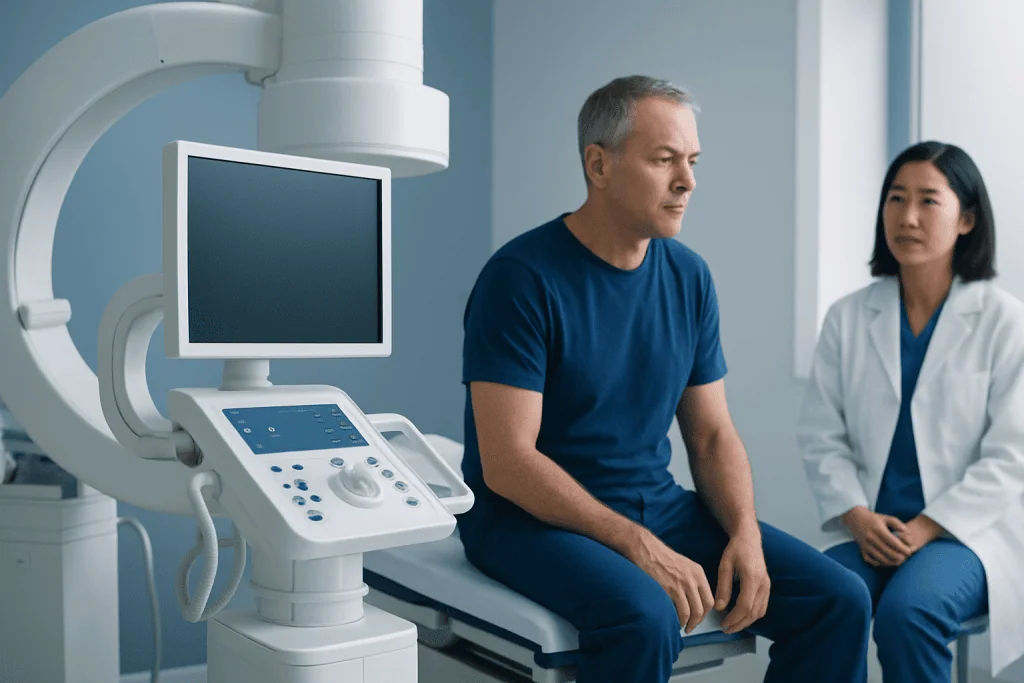
Neuromodulation is not one single treatment. Different techniques are used for different problems. For tremor, the best-known option is usually deep brain stimulation, which targets brain circuits involved in movement. It may be considered for some people with essential tremor or Parkinson-related tremor when medication does not provide enough control or causes side effects.
For chronic pain, neuromodulation may be used when pain continues despite medication, physical therapy, injections, or surgery. Spinal cord stimulation and peripheral nerve stimulation are examples. These treatments may be considered for certain nerve-related pain conditions, failed back surgery syndrome, complex regional pain syndrome, and other selected chronic pain disorders. They are generally chosen after a careful assessment to define the type and source of pain.
For spasticity, treatment may involve an intrathecal baclofen pump that delivers medication directly to the spinal fluid. This can be helpful when severe muscle stiffness or spasms interfere with comfort, positioning, mobility, or caregiving. Spasticity can happen in people with cerebral palsy, multiple sclerosis, spinal cord injury, stroke, or other neurological disorders. In some cases, neuromodulation is part of a broader care plan for Parkinson’s disease or multiple sclerosis.
How treatment is chosen
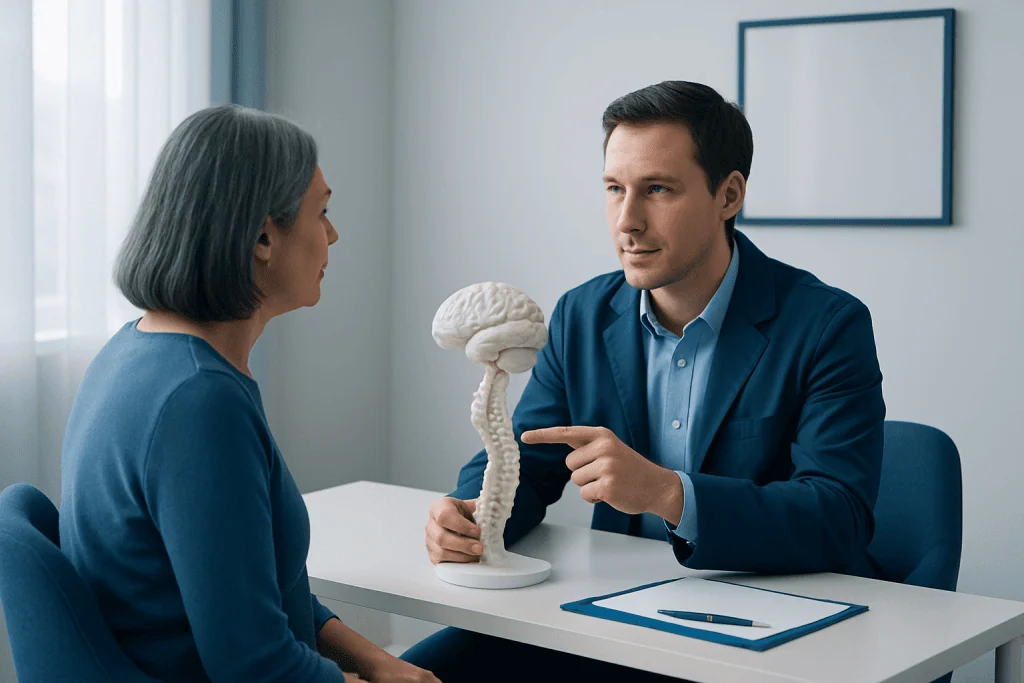
The first step is to identify the main target symptom. Some people live with several symptoms at the same time, such as tremor and stiffness, or pain and spasticity. The treatment plan usually focuses first on the symptom causing the greatest disability. For example, a person whose main challenge is hand tremor may be evaluated very differently from someone whose main issue is widespread muscle stiffness after a spinal cord injury.
Doctors then look at the underlying cause. Tremor from essential tremor, Parkinson’s disease, medication side effects, or another movement disorder does not always respond the same way. Chronic pain is also not one condition; it may be neuropathic, musculoskeletal, mixed, localized, or widespread. Spasticity may be focal or generalized, stable or progressive, and may affect comfort, walking, speech, hand use, or hygiene. Understanding the pattern helps determine which neuromodulation method, if any, is appropriate.
Response to previous treatment matters as well. Neuromodulation is often considered after reasonable trials of medicines, rehabilitation, and other less invasive treatments. At the same time, it does not have to be the very last option in every case. In some people, especially when symptoms are severe and clearly match a well-established indication, earlier referral can be helpful.
Finally, the team considers practical issues such as age, overall health, cognition, mood, support at home, ability to attend follow-up visits, and expectations about results. These therapies often require programming, monitoring, battery checks, refill visits, or rehabilitation. A good candidate is not only someone with the right diagnosis, but also someone who can participate safely in long-term care.
Main neuromodulation options
Deep brain stimulation, often called DBS, involves placing thin electrodes in carefully selected areas of the brain and connecting them to a small pulse generator implanted under the skin. The device sends electrical stimulation to reduce abnormal activity in movement circuits. DBS is most commonly used for selected movement disorders, especially disabling tremor. It is adjustable and reversible, which makes it different from older lesioning procedures.
Spinal cord stimulation places electrodes near the spinal cord to modify pain signals before they are perceived as strongly. It is mainly used for certain chronic pain conditions rather than tremor or spasticity. In many centers, a trial period is performed before permanent implantation so the patient and team can judge whether meaningful relief is achieved. For some patients, spinal cord stimulation can improve pain control and reduce the impact of pain on daily life.
Peripheral nerve stimulation targets a specific nerve or nerve region outside the brain and spinal cord. It may be useful when pain is relatively localized and linked to a known nerve distribution. Compared with broader approaches, it can offer a more focused option in selected cases, although it is not appropriate for all pain types.
Intrathecal therapy uses a small pump and catheter to deliver medicine directly into the spinal fluid. This allows very small amounts of medication to act close to the spinal cord. It is most often used for severe spasticity, and sometimes for selected chronic pain situations. Compared with oral medication, targeted delivery may improve symptom control while limiting some whole-body side effects, but it requires ongoing refill visits and device monitoring.
Evaluation and diagnosis before treatment
Before neuromodulation is recommended, a thorough evaluation is needed. This usually begins with a detailed medical history and neurological examination. Doctors assess when symptoms began, how they affect daily activities, which treatments have already been tried, and whether symptoms fluctuate over time. For pain, the team also looks at location, triggers, nerve involvement, sleep effects, and emotional impact.
Imaging and other tests may help confirm the diagnosis or guide planning. Brain MRI may be used before DBS. Spinal imaging may be important in pain or spasticity cases. Some patients also need movement assessments, gait evaluation, medication review, or rehabilitation assessment. In certain situations, neuropsychological testing is recommended, particularly before brain procedures, to look at memory, attention, mood, and decision-making capacity.
For spasticity, doctors often determine whether it is focal or generalized and whether weakness, contractures, or orthopedic problems are also present. A test dose may be used before an intrathecal baclofen pump to see whether the person responds in a useful way. For spinal cord stimulation, a trial stimulation period is commonly part of the process. These steps help avoid unnecessary procedures and improve the chances of selecting the right treatment.
Shared decision-making is essential. The care team explains the likely benefits, limitations, risks, follow-up needs, and realistic goals. Some people hope for a cure, but neuromodulation usually aims for symptom reduction and better function rather than complete elimination of symptoms. Clear expectations are one of the most important parts of a successful outcome.
Benefits, risks, and recovery
The potential benefits depend on the condition and the treatment chosen. For tremor, neuromodulation may improve hand control and make tasks such as eating, drinking, dressing, and writing easier. For chronic pain, the aim is often to reduce pain intensity and improve activity, sleep, and quality of life rather than to make pain disappear completely. For spasticity, benefits may include easier movement, better positioning, less discomfort, and simpler daily care.
All procedures also have risks. These may include infection, bleeding, pain at the implant site, lead movement, hardware malfunction, and the need for future revision or replacement. Brain procedures carry additional neurological risks, although patients are carefully screened to reduce them. Intrathecal pumps may have medication-related complications, catheter problems, or refill-related issues if follow-up is missed. The exact risk profile differs by procedure and by the person’s overall health.
Recovery varies. Some people go home relatively quickly after implantation, while others need more observation or rehabilitation. It is important to understand that symptom improvement may not be immediate. Many devices require programming and fine-tuning over several visits. In DBS, for example, settings may be adjusted gradually to balance benefit and side effects. Ongoing partnership with the care team is part of the treatment.
Even after successful implantation, other treatments often remain important. Medication changes, physiotherapy, occupational therapy, stretching programs, psychological support, or assistive devices may still be needed. Neuromodulation usually works best as part of a broader care plan rather than as a stand-alone solution.
Prevention, self-care, and living with a neuromodulation device
Neuromodulation is not usually a preventive treatment, but good self-care can improve results and support long-term health. Patients are encouraged to take medicines as directed, attend rehabilitation sessions, keep follow-up appointments, and tell their doctor if symptoms change. For people with pain or spasticity, regular movement, stretching, posture support, and skin care may remain important even after a procedure.
Living with an implanted device also means learning how to care for it. Patients receive instructions on wound care after surgery, activity restrictions during healing, and how to use any controller or charger if relevant. They should carry device information and tell other healthcare professionals about the implant before imaging or procedures, since some devices have special safety rules.
Emotional adjustment matters too. Some people feel relieved after treatment, while others need time to adapt to the device and the process of gradual programming. Ongoing communication with the care team helps address concerns early. Near the end of the treatment pathway, some international patients choose centers such as Acibadem International, where multidisciplinary specialists in JCI-accredited hospitals evaluate and treat complex neurological conditions.
When to see a doctor
A doctor should be consulted when tremor, pain, or spasticity starts interfering with daily life, sleep, work, walking, self-care, or safety. Medical review is also important if symptoms are worsening, if medicines are no longer helping enough, or if treatment side effects are becoming hard to manage. Earlier assessment can be especially helpful for symptoms that are clearly progressive or disabling.
People who already have a neuromodulation device should seek medical advice if they notice redness, swelling, fever, drainage from the incision, sudden loss of symptom control, unusual sensations, or device-related alarms. Sudden severe weakness, confusion, a new seizure, chest symptoms, or major changes in consciousness require urgent medical attention.
Because these symptoms can have different causes, specialist evaluation is important before deciding on treatment. Neurology, pain medicine, rehabilitation, and neurosurgery teams may work together to decide whether neuromodulation is suitable and which approach offers the best balance of benefit, safety, and long-term support.
Frequently asked questions
Is neuromodulation the same as surgery?
Neuromodulation often involves a procedure to place a device, but it is not always the same as major surgery in the usual sense. Some methods are minimally invasive, and many are adjustable after placement. The exact approach depends on whether the target is the brain, spinal cord, peripheral nerves, or intrathecal space.
Who is a good candidate for neuromodulation?
A good candidate is someone with a clearly defined condition or symptom pattern that may respond to a specific neuromodulation therapy. Doctors also consider overall health, previous treatment response, emotional wellbeing, and ability to attend follow-up care. Careful selection is important because these treatments are not right for everyone.
Can neuromodulation cure tremor, pain, or spasticity?
Neuromodulation usually helps control symptoms rather than cure the underlying disease. Many people experience meaningful improvement, but results vary and some symptoms may remain. The main goal is better function, comfort, and quality of life.
How long does it take to see results?
Some people notice improvement soon after treatment, while others improve more gradually over several visits. Devices such as deep brain stimulators and spinal cord stimulators often need programming adjustments to find the best settings. This means the full benefit may take time.
Are the effects permanent?
The benefit can last for years, but neuromodulation usually requires ongoing management. Batteries may need replacement or recharging, device settings may need adjustment, and the underlying condition can change over time. Regular follow-up helps maintain the best possible results.
What are the most common risks?
Possible risks include infection, bleeding, discomfort at the implant site, lead movement, hardware problems, and the need for revision. Brain procedures and intrathecal pumps also have more specific risks that the team will explain in detail. The overall risk depends on the treatment type and the person’s medical condition.
References
- National Institute of Neurological Disorders and Stroke
- National Institute for Health and Care Excellence
- International Parkinson and Movement Disorder Society
- American Association of Neurological Surgeons
- World Health Organization
This article is for general information only and is not a substitute for professional medical advice. Please consult a qualified doctor about your individual situation.
Neuromodulation in Turkey — costs, top hospitals & a free quote
JCI-accredited · board-certified surgeons · reply within 24h
Add us as a Preferred Source to see more of our trusted health content across Google Search, AI Overviews and Discover.