Neurotologist vs Otologist: Key Differences in Training and Treatment

An otologist specializes in ear diseases, hearing problems, and ear surgery. A neurotologist is an otologist with additional advanced training in inner ear, balance, facial nerve, and skull base conditions.
Key Takeaways
- An otologist specializes in ear diseases, hearing problems, and ear surgery.
- A neurotologist is an otologist with additional advanced training in inner ear, balance, facial nerve, and skull base conditions.
- Patients with dizziness, vertigo, tinnitus, hearing loss, or recurrent ear infections may start with an ENT and then be referred as needed.
- The right specialist depends on symptoms, test results, and whether the problem involves the middle ear, inner ear, nerves, or nearby skull base structures.
- Diagnosis often includes hearing tests, balance testing, imaging, and a detailed medical history.
- Early evaluation may help prevent complications and improve quality of life.
Understanding the difference between a neurotologist and an otologist can help patients choose the right specialist for ear, hearing, and balance concerns. Both are highly trained ENT-focused doctors, but a neurotologist has additional expertise in complex inner ear, skull base, hearing, and vestibular disorders.
Overview: What Is the Difference?
Many people use the terms otologist and neurotologist interchangeably, but they are not exactly the same. Both doctors focus on disorders of the ear and usually come from an ear, nose, and throat (ENT) background. The key difference is that a neurotologist has additional advanced training in complex conditions involving the inner ear, hearing and balance systems, facial nerve, and parts of the skull base.
An otologist typically evaluates and treats diseases of the ear, including chronic ear infections, eardrum problems, hearing loss, ear drainage, and some structural problems of the middle and inner ear. An otologist often performs ear surgery and works closely with audiologists to assess hearing and recommend treatment.
A neurotologist is a subspecialist who goes further into conditions where ear problems overlap with the nervous system or nearby anatomy. This may include severe vertigo, Ménière’s disease, acoustic neuroma, cerebrospinal fluid leaks from the ear, complex hearing loss, cochlear implantation, or disorders involving the facial nerve and temporal bone.
For patients, the most practical message is simple: both specialists are experts in ear-related care, but a neurotologist may be the better fit when symptoms are complex, involve balance, or suggest a deeper inner ear or skull base problem.
Training and Areas of Expertise
Both otologists and neurotologists begin with medical school and residency training in otolaryngology, also called ENT. During this stage, they learn to diagnose and treat a wide range of ear, nose, throat, head, and neck conditions. After residency, some doctors complete further fellowship training focused specifically on ear disease and surgery.
An otologist specializes in medical and surgical problems of the ear. This can include treatment for recurrent ear infections, cholesteatoma, perforated eardrum, hearing loss, otosclerosis, and problems related to the middle ear bones. Otologists may also manage hearing rehabilitation and certain implantable hearing devices.
A neurotologist completes additional fellowship training in advanced ear and lateral skull base disorders. This training usually includes complex vestibular disorders, inner ear disease, tumors affecting hearing and balance pathways, facial nerve disorders, and advanced microsurgery. Neurotologists often work in multidisciplinary teams with neurologists, neurosurgeons, radiologists, and audiologists.
In everyday care, the distinction matters most when a patient has symptoms such as unexplained dizziness, one-sided hearing loss, persistent tinnitus, or signs of a more complex structural condition. In these cases, deeper neuro-otologic evaluation may be helpful.
Conditions Each Specialist May Treat

There is some overlap between the two specialties, and both may treat common ear symptoms. An otologist often sees patients with chronic ear infections, ear fullness, conductive hearing loss, perforated eardrum, fluid behind the eardrum, or complications from longstanding middle ear disease. Surgical procedures such as eardrum repair or treatment of cholesteatoma may fall within this area of care.
A neurotologist commonly evaluates conditions involving the inner ear and balance system. These may include vertigo, vestibular neuritis, Ménière’s disease, sudden sensorineural hearing loss, complex tinnitus, acoustic neuroma, and facial nerve problems. They may also assess patients with dizziness that does not improve with initial treatment or symptoms that suggest nerve-related involvement.
Some patients need hearing restoration or advanced devices. In those situations, a specialist may discuss options such as cochlear implant treatment or other implantable hearing solutions, depending on the cause and severity of hearing loss. For certain middle ear or eardrum disorders, a doctor may also recommend ear surgery.
The choice between specialists is not always rigid. In many hospitals, otologists and neurotologists collaborate closely, and a patient may be referred from one to the other if testing shows that the condition is more complex than first suspected.
Symptoms That May Point to a Neurotologist or Otologist
Many ear-related symptoms can begin with a visit to a primary care doctor or a general ENT specialist. If symptoms are persistent, recurring, or more complicated, referral to an otologist or neurotologist may follow. Important symptoms include hearing loss, ringing in the ears, ear pain, recurrent infections, discharge from the ear, pressure, dizziness, imbalance, spinning sensations, or facial weakness.
Symptoms that often fit otology care include chronic ear infections, hearing changes linked to middle ear disease, a perforated eardrum, or suspected problems with the tiny hearing bones. These conditions may require detailed ear examination, imaging, and surgical planning if medical treatment alone is not enough.
Symptoms that may suggest neurotology care include severe or repeated vertigo, one-sided or sudden hearing loss, persistent tinnitus in one ear, unexplained imbalance, facial nerve symptoms, or concern for an inner ear or skull base condition. Patients with complex dizziness may benefit from evaluation for causes such as Ménière’s disease or other vestibular disorders.
Because these symptoms can have more than one cause, patients should not try to self-diagnose based on symptoms alone. A careful exam and appropriate testing are the safest way to identify the right specialist and the right treatment plan.
How Diagnosis Is Made
Diagnosis usually starts with a detailed medical history. The specialist will ask when symptoms started, whether they are constant or episodic, what makes them better or worse, and whether they affect one or both ears. Dizziness, hearing loss, and tinnitus are especially important to describe clearly because timing and pattern can provide useful clues.
A physical examination may include inspection of the ear canal and eardrum, evaluation of eye movements, balance, facial nerve function, and basic neurologic signs. Hearing tests performed by an audiologist are often central to the workup. These may help distinguish conductive hearing loss from sensorineural hearing loss and show whether one ear is affected more than the other.
Additional testing may include vestibular assessment for balance disorders, blood tests in selected cases, or imaging such as MRI or CT scans. MRI may be used when a doctor needs to look for inner ear or nerve-related causes, while CT can help assess chronic ear disease or bone anatomy. Some patients may also be assessed for rehabilitation needs such as hearing devices or balance disorder treatment.
Accurate diagnosis matters because similar symptoms can come from very different conditions. For example, dizziness may result from a benign inner ear problem, migraine, medication effects, or a more complex neurologic process. This is one reason specialized evaluation can be so valuable.
Treatment Options and Specialist Roles
Treatment depends on the underlying diagnosis rather than the title of the specialist alone. Both otologists and neurotologists may use medications, office-based procedures, rehabilitation, hearing support, or surgery. The goal is not only to treat disease but also to improve hearing, balance, communication, and day-to-day comfort.
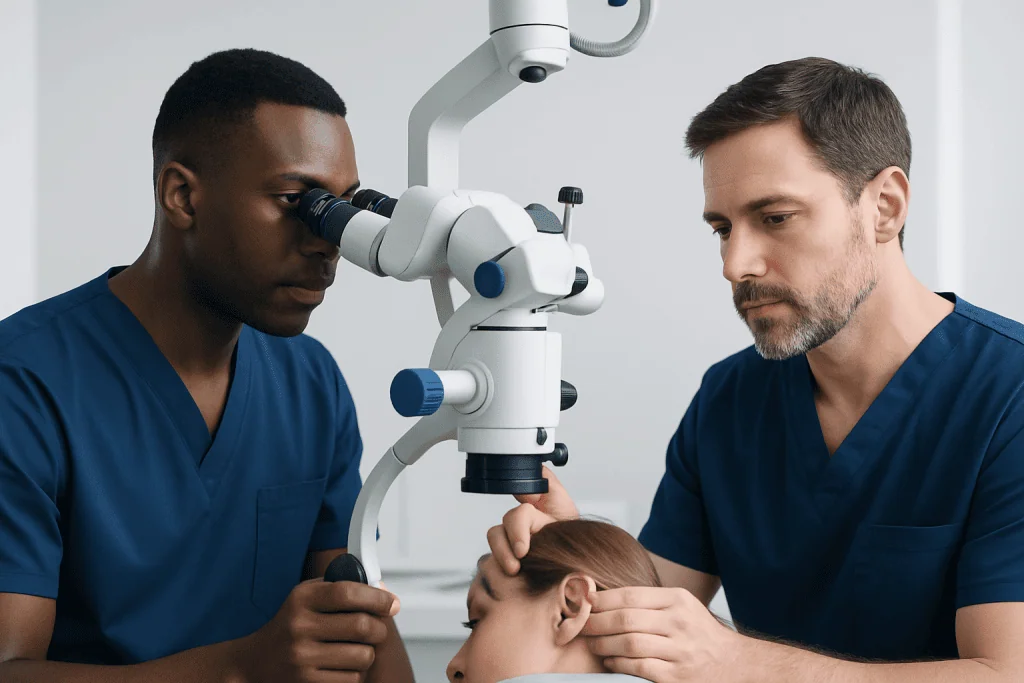
Otologic treatment may include ear cleaning under microscopy, treatment of infection, management of eardrum perforation, surgical reconstruction of the middle ear, or procedures to improve conductive hearing. For patients with chronic middle ear disease, surgery can help remove diseased tissue and preserve or restore function where possible.
Neurotologic treatment may include advanced care for inner ear and vestibular disorders, sudden hearing loss, skull base lesions, or tumors affecting hearing and balance pathways. Some patients may need surgery, while others benefit more from vestibular therapy, hearing rehabilitation, sound therapy for tinnitus, or monitoring over time. In selected cases, a specialist may coordinate care related to acoustic neuroma treatment.
Care is often multidisciplinary. Audiologists, vestibular therapists, neurologists, radiologists, and neurosurgeons may all play a role, especially for complex symptoms. Near the end of the care pathway, international patients may also seek assessment at centers such as Acibadem International, where multidisciplinary specialists in JCI-accredited hospitals diagnose and treat ear, hearing, and balance disorders.
How to Choose the Right Specialist
Choosing the right specialist usually starts with the main symptom. A patient with recurrent infections, eardrum damage, or suspected middle ear disease may be well served by an otologist. A patient with severe vertigo, unexplained one-sided hearing loss, persistent imbalance, facial nerve symptoms, or concern about an inner ear or skull base disorder may benefit from a neurotologist.
Referral patterns also matter. Primary care doctors, pediatricians, neurologists, and general ENTs often guide patients to the most suitable subspecialist after initial evaluation. In some centers, the distinction may be less visible to patients because neurotologists also manage general otologic problems and work within the same ear specialty teams.
Patients may find it helpful to ask practical questions before an appointment, such as whether the doctor treats balance disorders, performs ear microsurgery, manages hearing implants, or evaluates skull base conditions. It is also reasonable to ask what tests may be needed and whether an audiologist or vestibular therapist will be involved.
The best choice is the one that matches the patient’s symptoms and the doctor’s expertise. If there is uncertainty, a general ENT can often provide a starting point and refer onward if a more specialized opinion is needed.
When to Seek Medical Attention
Patients should arrange medical evaluation for hearing loss, repeated ear infections, persistent tinnitus, ongoing dizziness, imbalance, or ear drainage that does not improve. Symptoms may be gradual or sudden, but either pattern deserves attention if it affects daily activities, communication, safety, or quality of life.
Prompt assessment is especially important for sudden hearing loss, severe spinning sensations, new facial weakness, or significant symptoms affecting one side more than the other. These findings do not always mean a serious condition, but they do deserve timely specialist review to guide diagnosis and treatment.
People living with chronic ear or balance symptoms should also seek follow-up if treatments stop working, attacks become more frequent, or new symptoms appear. Keeping a simple symptom diary can be useful, especially for episodic vertigo or tinnitus patterns.
Early and appropriate evaluation can make treatment more effective and may help protect hearing and balance function. If symptoms are unclear, starting with a qualified doctor and asking whether otology or neurotology care is most appropriate can be a practical next step.
Frequently asked questions
Is a neurotologist the same as an otologist?
No. A neurotologist is an ear specialist with additional advanced training in complex inner ear, balance, facial nerve, and skull base conditions. An otologist also specializes in ear disease and surgery, but a neurotologist typically manages more complex hearing and vestibular disorders.
Should a patient see an otologist or a neurotologist for dizziness?
It depends on the cause and severity of the dizziness. Brief or straightforward dizziness may first be assessed by a general ENT or another doctor, but persistent vertigo, imbalance, or unexplained vestibular symptoms may be better evaluated by a neurotologist. Proper testing is often needed to determine the source.
Who treats hearing loss: an otologist or a neurotologist?
Both may treat hearing loss. An otologist often manages hearing problems related to middle ear disease or structural ear conditions, while a neurotologist may be more involved in complex inner ear hearing loss, implantable hearing devices, and disorders affecting hearing nerves.
Can a general ENT doctor help before referral to a subspecialist?
Yes. Many patients start with a general ENT, who can perform an initial exam and order basic tests. If the condition appears more specialized, the patient may then be referred to an otologist or neurotologist.
What tests might be done during evaluation?
Common tests include hearing assessments, examination of the ear under magnification, balance testing, and imaging such as MRI or CT when needed. The exact tests depend on whether the symptoms suggest middle ear disease, inner ear problems, nerve involvement, or another cause.
When is a neurotologist especially important?
A neurotologist may be especially helpful for sudden or one-sided hearing loss, recurring vertigo, persistent imbalance, facial nerve problems, or suspected inner ear and skull base disorders. These conditions often need more advanced diagnostic skills and multidisciplinary care.
References
- American Academy of Otolaryngology–Head and Neck Surgery
- National Institute on Deafness and Other Communication Disorders
- National Health Service
- Mayo Clinic
- Merck Manual
This article is for general information only and is not a substitute for professional medical advice. Please consult a qualified doctor about your individual situation.
Explore treatments in Turkey — costs, top hospitals & a free quote
JCI-accredited · board-certified surgeons · reply within 24h
Add us as a Preferred Source to see more of our trusted health content across Google Search, AI Overviews and Discover.