

Ocular Prosthetics: What to Expect After Eye Loss

An ocular prosthesis is a custom artificial eye that improves appearance but does not bring back vision. Treatment after eye loss often includes surgery, healing time, and later fitting of the prosthesis.
Key Takeaways
- An ocular prosthesis is a custom artificial eye that improves appearance but does not bring back vision.
- Treatment after eye loss often includes surgery, healing time, and later fitting of the prosthesis.
- A well-fitted prosthesis should feel comfortable, look natural, and move to some degree with the other eye.
- Regular cleaning, polishing, and specialist follow-up help protect the socket and keep the prosthesis in good condition.
- Pain, discharge, poor fit, or changes in the socket should be assessed by an eye specialist.
Ocular prosthetics are custom-made artificial eyes designed to restore the appearance of an eye after eye loss. While they do not restore vision, they can support comfort, confidence, and facial symmetry when paired with appropriate surgical care and regular follow-up.
Overview: What Ocular Prosthetics Are
Ocular prosthetics are artificial eyes made to replace the visible appearance of an eye after eye loss. They are usually created for people who have had an eye removed because of severe injury, painful blind eye, infection, tumor, or congenital differences. The prosthesis is custom painted and shaped to match the remaining eye as closely as possible.
It is important to know that an ocular prosthesis does not restore sight. Its main purpose is cosmetic and rehabilitative: to support facial balance, help the eyelids maintain normal shape, and improve confidence in everyday life. Many people are able to return to work, school, and social activities after fitting.
In most cases, the prosthesis is placed over an orbital implant or within a healed eye socket. This creates volume so the face does not appear hollow and may allow some coordinated movement with the natural eye. The final result depends on the reason for eye loss, the condition of the eyelids and socket, and the quality of the fitting process.
What Happens After Eye Loss
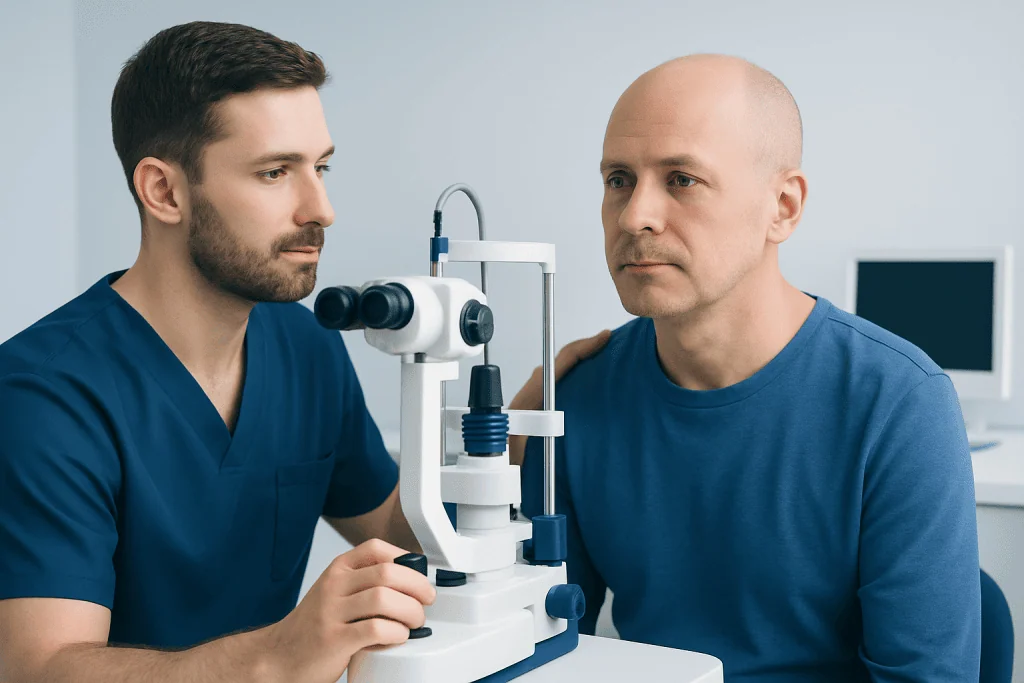
After eye loss, care usually happens in stages. If an eye must be removed, the surgeon may perform enucleation, in which the whole eye is removed, or evisceration, in which the contents of the eye are removed while some outer structures remain. The choice depends on the medical reason, anatomy, and overall treatment goals.
At the time of surgery, many patients receive an orbital implant to replace lost volume inside the socket. A clear conformer is often placed temporarily to preserve the shape of the socket while healing takes place. Over the following weeks, swelling gradually improves, and the tissues settle into a more stable form.
Once healing is sufficient, a specialist called an ocularist measures the socket and makes a custom prosthesis. This period can feel emotionally demanding as well as physically unfamiliar. Support from family, counseling, and clear communication with the surgical team can make adjustment easier.
When eye loss follows trauma, especially facial trauma, treatment may also involve repair of the eyelids, bones, or surrounding soft tissues. In these situations, the appearance and comfort of the final prosthesis often depend on coordinated care between ophthalmology, reconstructive surgeons, and prosthetic specialists.
Symptoms, Recovery, and Emotional Adjustment

In the early recovery period, it is common to have swelling, bruising, mild discomfort, tearing, and a sensation of fullness in the socket area. These symptoms usually improve as healing progresses. The medical team may recommend pain relief, antibiotic ointment, and temporary activity restrictions to support recovery.
Many people worry about how they will look and whether others will notice the prosthesis. Modern ocular prosthetics are carefully designed to match iris color, eye size, and the small blood vessel patterns seen in the natural eye. Although perfect symmetry is not always possible, most patients achieve a natural appearance in everyday interactions.
Emotional adjustment is also part of recovery. Eye loss can affect self-image, confidence, and practical daily habits such as depth perception and side awareness. It may take time to adapt to having vision in one eye, especially after recent loss. Occupational guidance, vision rehabilitation, and emotional support can be helpful during this transition.
People should also understand that a prosthetic eye may not move exactly like the healthy eye. Some movement is common, especially when an implant is used, but the degree of motion varies. Mild differences in gaze, lid opening, or blinking can occur and do not always mean something is wrong.
Who May Need an Ocular Prosthesis
Ocular prosthetics may be recommended for both children and adults. Common reasons include severe eye injury, a painful blind eye, congenital absence or malformation of the eye, uncontrolled infection, or diseases that make the eye nonfunctional. In some patients, removal is advised to relieve chronic pain or to manage a serious condition that threatens surrounding tissues.
Children born with eye differences may need long-term follow-up because the face and socket continue to grow. In these cases, staged prosthetic care can help support socket expansion and facial symmetry over time. A child may need periodic adjustments or replacement as they grow.
Adults may need an ocular prosthesis after surgery related to trauma or complex eye disease. If there is significant eyelid or socket damage, reconstructive procedures may be needed before a prosthesis can fit well. Specialists in oculoplastic care and reconstructive ophthalmology often work together to improve the anatomy of the socket and eyelids.
Sometimes the need for reconstruction is influenced by scar formation, burns, or tissue loss. For example, people with facial burns or problematic scarring such as keloid scars may need careful planning to achieve comfort and a stable cosmetic result.
Diagnosis, Fitting, and Follow-Up
Before fitting an ocular prosthesis, the specialist examines the socket, eyelids, tear film, and surrounding facial tissues. The goal is to confirm that healing is complete enough for prosthetic fitting and to identify issues such as inflammation, lid laxity, socket contraction, or implant exposure. If problems are present, they may need treatment first.
The fitting process usually involves taking an impression or detailed measurements of the socket. A wax model or trial shape may be used to refine size, contour, and eyelid support. The ocularist then paints the iris and sclera to match the fellow eye, aiming for a balanced and natural look in different lighting conditions.
After fitting, follow-up visits help fine-tune comfort and appearance. Minor adjustments may be needed if the prosthesis rubs, rotates, causes excess discharge, or does not support the eyelids evenly. Children and some adults may require periodic refitting as the socket changes over time.
Long-term review is important because the socket can gradually change with age. Dryness, tissue shrinkage, or implant-related issues may develop years after the original surgery. Regular specialist assessment helps detect problems early and preserve the best possible fit.
Treatment Options and Socket Reconstruction
Treatment after eye loss is not only about the prosthesis itself. Some people need additional procedures to improve the socket, eyelids, or implant before an artificial eye can sit comfortably and look natural. This may include surgery to deepen the fornices, correct lid position, manage scarring, or replace exposed implants.
Orbital implants can be made from different materials, and the choice depends on surgical preference, anatomy, and clinical needs. In some cases, a motility peg or other technique may be considered to improve movement, but not every patient is a candidate. The benefits and risks should be discussed with an experienced ophthalmic surgeon.
If the socket has contracted or the lower eyelid is unstable, reconstruction may be necessary to create a better base for the prosthesis. This may involve grafts or staged operations. Patients benefit from understanding that a good cosmetic result can take time and sometimes more than one intervention.
For patients seeking comprehensive care, teams experienced in reconstructive ophthalmology and oculoplastic surgery can evaluate both function and appearance. Near the end of the care pathway, centers such as Acibadem International offer multidisciplinary assessment and treatment for international patients in JCI-accredited hospitals.
Daily Care, Cleaning, and Prevention of Problems
Daily care of an ocular prosthesis is usually simple. Many people do not need to remove the prosthesis every day unless advised by their specialist. Over-handling can sometimes irritate the socket. Gentle cleaning of the eyelids and lashes with a clean cloth or recommended solution is often enough for routine care.
When removal is advised, the prosthesis should be handled carefully with clean hands. Harsh chemicals, abrasive cleaning products, or hot water should be avoided because they can damage the surface. The ocularist or eye care team can explain the safest cleaning method for the specific prosthesis material.
Professional polishing at intervals recommended by the ocularist helps keep the surface smooth and comfortable. Replacement may be needed if the prosthesis becomes scratched, discolored, or no longer fits well. Children generally need more frequent review because their facial structures are still developing.
Good general eye safety also matters. Protecting the remaining eye is especially important after vision loss on one side. Helpful habits include wearing protective eyewear for sports or hazardous work, attending routine eye exams, and seeking prompt care for any injury or infection affecting the seeing eye.
- Avoid rubbing the socket excessively.
- Keep follow-up appointments with the ocularist and ophthalmologist.
- Report increased discharge, bleeding, or pain promptly.
- Use protective eyewear to safeguard the remaining eye.
When to See a Doctor
Regular check-ups are recommended even when the prosthesis feels comfortable. However, some symptoms need earlier assessment. Pain is not considered a normal long-term feature of a well-healed, well-fitted socket, so new or worsening discomfort should be evaluated.
Medical review is also important for redness, swelling, persistent discharge, bleeding, unpleasant odor, or a prosthesis that suddenly feels loose or difficult to insert. These symptoms may suggest infection, inflammation, poor fit, tissue breakdown, or implant problems. Early care can often prevent more complicated treatment later.
Changes in eyelid position, increasing facial asymmetry, or a shrinking socket are additional reasons to seek specialist advice. Children should be assessed promptly if the prosthesis seems too small, falls out easily, or no longer supports normal facial growth. Any concern about the healthy eye should be treated as a priority.
People do best when they maintain long-term follow-up with an ophthalmologist and ocularist familiar with anophthalmic socket care. A personalized plan helps protect comfort, appearance, and overall quality of life over time.
Frequently asked questions
Can an ocular prosthesis restore vision?
No. An ocular prosthesis is designed to restore the appearance of the eye and support facial symmetry, but it does not provide sight. Its benefits are mainly cosmetic, emotional, and structural.
How long does it take to get an artificial eye after surgery?
The timing depends on healing, but fitting usually happens several weeks after eye removal surgery. The socket needs time for swelling to settle and tissues to stabilize before a custom prosthesis can be made.
Will a prosthetic eye move like a natural eye?
A prosthetic eye often has some movement, especially when connected indirectly to an orbital implant and surrounding tissues. However, it usually does not move exactly the same way as the natural eye, and a small difference is common.
Is wearing an ocular prosthesis painful?
A well-fitted ocular prosthesis should generally be comfortable. Mild awareness is possible at first, but ongoing pain, rubbing, or discharge may mean the fit or socket needs medical review.
How often should an ocular prosthesis be cleaned or polished?
Cleaning routines vary by patient, socket condition, and specialist advice. Many people need only gentle routine eyelid hygiene and periodic professional polishing by an ocularist to keep the prosthesis smooth and comfortable.
How long does an ocular prosthesis last?
A prosthesis can last for years, but it may need adjustment, repolishing, or replacement over time. Children usually need more frequent changes because the socket and face continue to grow.
What signs suggest there may be a problem with the prosthesis or socket?
Warning signs include pain, redness, swelling, bleeding, persistent discharge, bad odor, or a prosthesis that suddenly fits poorly. These symptoms should be assessed by an ophthalmologist or ocularist rather than managed at home.
References
- American Academy of Ophthalmology
- National Eye Institute
- American Society of Ocularists
- Royal College of Ophthalmologists
- American Association for Pediatric Ophthalmology and Strabismus
This article is for general information only and is not a substitute for professional medical advice. Please consult a qualified doctor about your individual situation.
Ocular Prosthetics in Turkey — costs, top hospitals & a free quote
JCI-accredited · board-certified surgeons · reply within 24h
Add us as a Preferred Source to see more of our trusted health content across Google Search, AI Overviews and Discover.

Related Treatments
Related Conditions
More from the Health Library



Related Specialists

Prof. Dr. Şükrü Yazar
Aesthetic Plastic & Reconstructive Surgery
Assoc. Prof. Dr. Erdem Güven (m)
Aesthetic Plastic & Reconstructive Surgery
Prof. Dr. Hakan Ağır
Aesthetic Plastic & Reconstructive Surgery
Prof. Dr. Bülent Saçak
Aesthetic Plastic & Reconstructive Surgery