

Oculoplastic Surgery for Ptosis: Signs, Diagnosis, and Treatment Options

Ptosis means the upper eyelid sits lower than normal and can affect one or both eyes. Causes range from age-related muscle stretching to nerve, muscle, congenital, or injury-related problems.
Key Takeaways
- Ptosis means the upper eyelid sits lower than normal and can affect one or both eyes.
- Causes range from age-related muscle stretching to nerve, muscle, congenital, or injury-related problems.
- Diagnosis includes an eye examination, eyelid measurements, and evaluation of vision and eye muscle function.
- Treatment depends on the cause and severity and may include monitoring, treating an underlying condition, or surgery.
- Ptosis surgery aims to raise the eyelid to improve vision, comfort, and eyelid symmetry.
Ptosis is a drooping upper eyelid that may affect appearance, comfort, and sometimes vision. Oculoplastic surgery for ptosis is one treatment option, but care begins with identifying the cause and choosing the safest, most effective approach for each person.
Overview: What ptosis is
Ptosis is the medical term for a drooping upper eyelid. It happens when the eyelid sits lower than usual because the muscle that lifts the lid, or the structures connected to it, do not work as they should. Ptosis can affect one eye or both eyes, and it may be present from birth or develop later in life.
For some people, ptosis is mainly a cosmetic concern. For others, it can block part of the pupil and interfere with daily activities such as reading, driving, or using digital screens. Children with significant ptosis may also be at risk of visual development problems if the eyelid covers the visual axis.
Oculoplastic surgery for ptosis focuses on restoring a more normal eyelid position while protecting eye health and preserving natural blinking. Because ptosis can have different causes, treatment is individualized. A thorough assessment helps determine whether surgery is appropriate and which technique is most likely to give a safe, functional result.
Signs and symptoms of ptosis
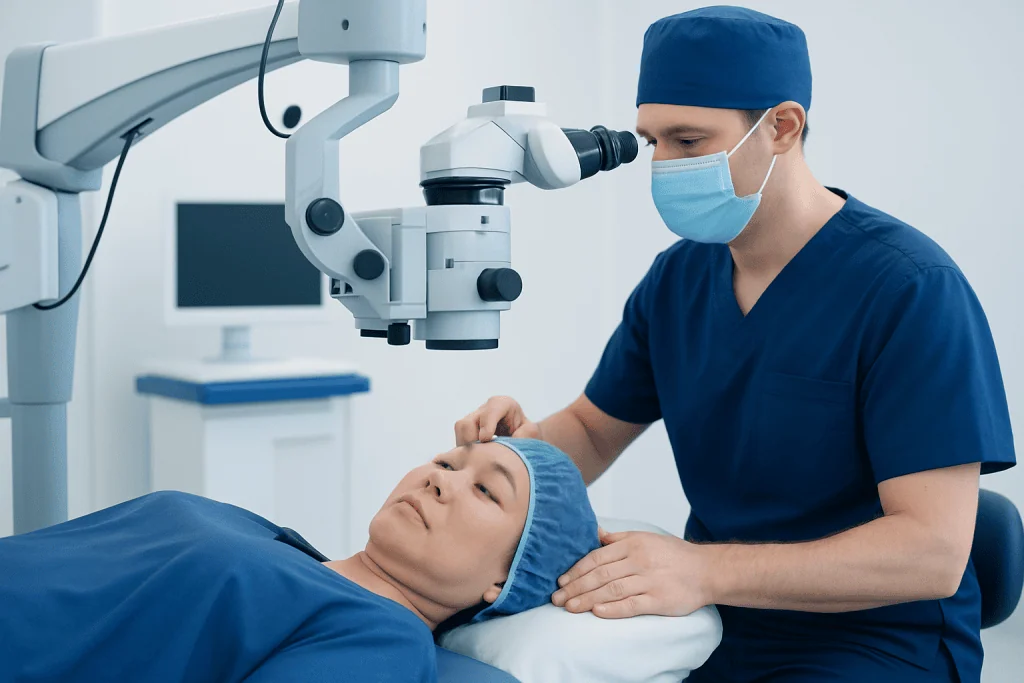
The most obvious sign of ptosis is a visibly drooping upper eyelid. Some people notice that one eye appears smaller than the other, or that they need to raise their eyebrows to keep the eye more open. In photographs, the eyelids may look uneven even when the face is otherwise relaxed.
Symptoms vary depending on how much the eyelid droops. Mild ptosis may cause little more than asymmetry, while moderate or severe ptosis can narrow the field of vision. Some people tilt their head back or lift their chin to see more clearly, especially when reading signs or looking straight ahead.
Other symptoms may include eye strain, forehead fatigue from constantly raising the brows, and difficulty with tasks that require sustained focus. If the eyelid does not move normally, there may also be dryness, irritation, or incomplete blinking. Ptosis itself is not always painful, so new eyelid drooping without discomfort should still be checked by an eye specialist.
- Drooping of one or both upper eyelids
- Blocked or reduced upper field of vision
- Uneven eyelid height
- Frequent brow raising or forehead tension
- Head tilting to improve sight
- Eye fatigue or irritation
Causes and risk factors

Ptosis can develop for several reasons. The most common type in adults is involutional or age-related ptosis. In this form, the tendon of the levator muscle gradually stretches or thins over time, often leading to a higher eyelid crease and a lid that sits lower than before. This may happen naturally with aging or after long-term contact lens use, previous eye surgery, or repeated eyelid rubbing.
Some cases are congenital, meaning present at birth. Congenital ptosis usually occurs because the levator muscle did not develop normally. In children, the degree of drooping and its effect on vision are especially important because early treatment may help prevent amblyopia, sometimes called lazy eye.
Ptosis can also be caused by nerve or muscle disorders, trauma, swelling, tumors, or scarring of the eyelid. In some people, the eyelid droops because the brow has descended, which can make true ptosis appear worse. Evaluation may also consider related eyelid and facial problems after injuries such as facial trauma. In complex cases, care may involve specialists in reconstructive ophthalmology as well as oculoplastic surgery.
Less commonly, a sudden drooping eyelid can be linked to a neurological problem. When ptosis appears quickly, especially with double vision, unequal pupils, weakness, or headache, urgent medical assessment is important to identify the cause and guide treatment.
How ptosis is diagnosed
Diagnosis starts with a detailed medical history and eye examination. The specialist asks when the drooping began, whether it changes during the day, and if there are related symptoms such as double vision, dry eye, headaches, injury, or prior surgery. Family history and childhood photographs may help when congenital ptosis is suspected.
During the examination, the eyelids are measured carefully. The doctor assesses how low the eyelid sits, the strength of the levator muscle, the height of the eyelid crease, brow position, and whether the eyelid closes fully. Vision is also checked to see whether the lid is obstructing the pupil or contributing to visual strain.
The eye surface and tear film may be examined because dryness can affect treatment planning. In some cases, the clinician also tests eye movements, pupil reactions, and facial nerve function to look for a neurological or muscular cause. Additional imaging or blood tests are not needed for every patient, but they may be recommended if the pattern of ptosis suggests an underlying medical condition.
Accurate diagnosis is essential because not all droopy eyelids are treated in the same way. For example, some people mainly have excess upper eyelid skin, while others have weakness in the eyelid-lifting mechanism itself. Distinguishing among these possibilities helps the specialist choose the right treatment and set realistic expectations.
Treatment options, including oculoplastic surgery
Treatment depends on the cause, severity, and impact on vision or comfort. Mild ptosis that does not interfere with sight may sometimes be monitored. If an underlying disorder is responsible, treatment focuses first on that condition. In selected cases, non-surgical support such as adjusting glasses or managing dry eye symptoms may improve comfort, though these measures do not correct the lid position itself.
When the eyelid droop affects vision, causes compensatory brow strain, or is cosmetically significant, surgery may be recommended. Oculoplastic surgery for ptosis aims to raise the eyelid to a more functional and balanced height. The exact procedure depends on how well the levator muscle works and whether the droop is mild, moderate, or severe.
Common surgical approaches include tightening or advancing the levator tendon, shortening the lifting muscle, or using a frontalis sling in cases where the levator is very weak, as can happen in some congenital ptosis. If drooping is partly due to a low brow, a brow lift may occasionally be discussed as part of the overall plan. The surgeon considers eyelid symmetry, blink function, corneal protection, and facial anatomy before recommending a procedure.
Ptosis surgery is often performed under local anesthesia with sedation or under general anesthesia, depending on the patient and the type of repair. The goal is not just a more open eye, but a result that allows comfortable blinking and protects the eye surface. As with any surgery, possible risks include undercorrection, overcorrection, asymmetry, dry eye symptoms, scarring, infection, or the need for revision surgery, although these risks are discussed in detail before treatment.
Recovery and self-care after surgery
Recovery after ptosis surgery is usually gradual over days to weeks. Swelling, bruising, mild tightness, and temporary asymmetry are common in the early period. Many people can return to light daily activities relatively soon, but the eyelids often continue to settle for some time before the final result is clear.
After surgery, patients are usually advised to keep the area clean, use prescribed eye drops or ointments if recommended, and avoid rubbing the eyes. Cold compresses may help reduce swelling in the first days. Strenuous exercise, swimming, and heavy lifting may need to be limited for a period based on the surgeon’s advice.
It is important to follow follow-up appointments so the surgeon can check healing, eyelid height, and corneal protection. Temporary dryness or a sensation of the eyes being more exposed can happen while the eyelids adjust. Prompt review is recommended if there is worsening pain, marked redness, fever, sudden vision changes, or concern that the eye is not closing fully.
In comprehensive eye and facial care settings, specialists may combine functional and aesthetic planning to achieve a natural result while protecting vision. Acibadem International’s multidisciplinary specialists in JCI-accredited hospitals diagnose and treat ptosis for international patients, including advanced reconstructive ophthalmology and oculoplastic care when appropriate.
When to see a doctor
Any new or persistent drooping eyelid should be assessed by a qualified doctor, especially if it affects vision or daily function. Evaluation is also important when ptosis is present in a child, because early treatment may help protect visual development.
Urgent medical care is recommended if ptosis starts suddenly or is accompanied by double vision, unequal pupils, severe headache, eye movement problems, weakness, numbness, or recent significant injury. These features can point to causes that need prompt attention. People with prior eyelid surgery or complex eye surface disease should also seek specialist review if drooping develops.
Not every case requires surgery, but every case benefits from a clear diagnosis. Early assessment helps determine whether the problem is mechanical, muscular, neurological, congenital, or related to changes in the brow or eyelid skin. With the right evaluation, treatment can be planned in a way that supports both visual function and appearance.
Frequently asked questions
What is the difference between ptosis and excess eyelid skin?
Ptosis is a drooping of the upper eyelid margin itself, usually because the lifting muscle or its tendon is not working normally. Excess eyelid skin, often called dermatochalasis, means there is extra skin folding over the lid. Some people have both, which is why a specialist examination is important before treatment.
Can ptosis go away on its own?
It depends on the cause. Temporary ptosis related to swelling or certain short-term problems may improve, but many cases do not resolve without treatment. A doctor can help determine whether observation, medical treatment, or surgery is the best option.
Is ptosis surgery only cosmetic?
No. Ptosis surgery is often functional because it can improve a blocked field of vision, reduce forehead strain, and make daily activities easier. It may also improve eyelid symmetry and appearance, but treatment planning is based on both function and aesthetics.
How long does recovery from ptosis surgery take?
Initial swelling and bruising often improve over the first one to two weeks, but final eyelid position may take longer to settle. Recovery time varies with the surgical technique, the severity of ptosis, and individual healing. The surgeon gives personalized guidance on activity restrictions and follow-up care.
Can children have surgery for ptosis?
Yes, children can have ptosis surgery when it is needed. Timing depends on how severe the drooping is and whether it threatens normal vision development. Pediatric cases are assessed carefully to protect vision and choose the most suitable repair.
Will ptosis surgery leave a scar?
Incisions are usually placed in natural eyelid creases or in areas where scars tend to heal discreetly. While all surgery involves some scarring, eyelid skin often heals very well. The appearance of any scar depends on the surgical approach, skin type, and healing process.
References
- American Academy of Ophthalmology
- National Eye Institute
- American Association for Pediatric Ophthalmology and Strabismus
- Mayo Clinic
- Merck Manual
This article is for general information only and is not a substitute for professional medical advice. Please consult a qualified doctor about your individual situation.
Oculoplastic Surgery in Turkey — costs, top hospitals & a free quote
JCI-accredited · board-certified surgeons · reply within 24h
Add us as a Preferred Source to see more of our trusted health content across Google Search, AI Overviews and Discover.

Related Treatments
Related Conditions
More from the Health Library



Related Specialists

Assoc. Prof. Dr. Erdem Güven (m)
Aesthetic Plastic & Reconstructive Surgery
Prof. Dr. Şükrü Yazar
Aesthetic Plastic & Reconstructive Surgery
Prof. Dr. Hakan Ağır
Aesthetic Plastic & Reconstructive Surgery
Prof. Dr. Bülent Saçak
Aesthetic Plastic & Reconstructive Surgery