Pain Under Right Breast Explained: Common Triggers and Red Flags

Pain under right breast is a symptom, not a diagnosis, and it can start in muscles, ribs, the gallbladder, lungs, liver area, or breast tissue. Common non-emergency causes include muscle strain, costochondritis, trapped gas, acid reflux, and gallbladder irritation.
Key Takeaways
- Pain under right breast is a symptom, not a diagnosis, and it can start in muscles, ribs, the gallbladder, lungs, liver area, or breast tissue.
- Common non-emergency causes include muscle strain, costochondritis, trapped gas, acid reflux, and gallbladder irritation.
- Clues such as fever, shortness of breath, pain after fatty meals, rash, or breast changes can help point to the source.
- Emergency care is important for chest pressure, trouble breathing, fainting, blue lips, or pain spreading to the arm, jaw, or back.
- Diagnosis may involve a physical exam, blood tests, ultrasound, ECG, or imaging depending on the suspected cause.
Pain under right breast can come from the chest wall, ribs, lungs, digestive organs, gallbladder, or the breast itself. Many causes are minor and short-lived, but persistent, severe, or sudden pain should be assessed by a doctor to rule out urgent conditions.
Overview: what pain under the right breast can mean
Pain under right breast is a common complaint, and in many people it is linked to a strained muscle, irritated rib cartilage, indigestion, or a gallbladder problem. The area beneath the right breast sits over the chest wall and ribs, but it is also close to the lungs, diaphragm, liver, and gallbladder, so pain felt there may come from more than one body system.
The pattern of pain often gives useful clues. Sharp pain that worsens with movement or pressing on the area may point to the muscles or ribs. Cramping or burning after meals can suggest a digestive cause. Pain with cough, fever, or breathing may relate to the lungs or the lining around them. Because a few serious heart, lung, and abdominal conditions can also be felt on the right side, new or intense pain should not be ignored.
This symptom-focused guide looks at the most likely triggers, the warning signs that need faster evaluation, and the tests doctors may use to find the cause. The goal is not to self-diagnose, but to help patients recognize patterns and know when medical advice is appropriate.
Common triggers and likely causes
One of the most common reasons for pain under right breast is a problem in the chest wall. This includes muscle strain after exercise, lifting, coughing, or awkward movement. Inflammation where the ribs join the breastbone, called costochondritis, can also cause localized tenderness and pain that becomes worse when twisting, reaching, or taking a deep breath.
Digestive causes are also frequent. Acid reflux, indigestion, bloating, or trapped gas can produce pressure or burning in the upper abdomen and lower chest. Gallbladder pain is especially important on the right side. It often appears in the upper right abdomen or under the right breast, sometimes after a heavy or fatty meal, and may spread toward the back or right shoulder. Patients with symptoms suggestive of gallstones may notice nausea or a sense of fullness along with the pain.
Lung-related causes can include a chest infection, inflammation of the lining around the lungs, or, less commonly, a blood clot in the lung. These causes are more likely when pain becomes sharper during breathing and is linked with cough, fever, or shortness of breath. Skin and nerve conditions can also be involved. For example, shingles may start with burning pain or tingling before a blistering rash appears.
The breast itself can be the source. Hormonal breast tenderness, cysts, or infection may cause discomfort felt beneath or within the right breast. Although breast pain alone is not usually a sign of cancer, a new lump, skin dimpling, nipple discharge, or persistent one-sided symptoms should be assessed. Less often, pain in this area may be referred from the liver, diaphragm, or even the heart, especially in older adults or people with risk factors.
How symptoms help narrow down the cause

Doctors often begin by asking exactly how the pain feels. A stabbing pain that can be reproduced by pressing on the ribs may suggest a musculoskeletal cause. A burning sensation after eating or when lying down can fit acid reflux. Colicky or gripping pain after fatty food raises concern for gallbladder irritation, especially when it comes in episodes.
Associated symptoms matter just as much as the pain itself. Fever may suggest infection. Cough or wheezing may indicate a respiratory cause. Nausea, vomiting, bloating, or pain that spreads to the back may point toward digestive organs. A rash, tingling, or skin sensitivity can indicate shingles. Breast redness, warmth, or swelling may suggest inflammation or infection.
Timing is another clue. Pain that starts after exercise or a strain is different from pain that wakes someone from sleep or comes on suddenly at rest. Symptoms that are fleeting and improve quickly are less concerning than pain that is severe, keeps returning, or steadily worsens. In women, it can also help to note whether the pain changes with the menstrual cycle, as cyclical breast tenderness often follows a hormonal pattern.
- Pain with movement or pressure: often chest wall or rib related
- Pain after meals, especially fatty foods: may suggest gallbladder or indigestion
- Pain with breathing or cough: may suggest lung or pleural irritation
- Pain with rash or tingling: may suggest shingles
- Pain with breast lump or skin changes: needs breast evaluation
Red flags and when to seek medical care
Most cases of pain under right breast are not emergencies, but some symptoms need prompt medical attention. Emergency evaluation is important if pain is sudden and severe, comes with shortness of breath, fainting, confusion, blue lips, heavy sweating, or a feeling of pressure or tightness in the chest. Pain that spreads to the arm, jaw, shoulder, or upper back should also be treated urgently, even if it is felt more on the right side.
Same-day or prompt medical review is also wise when there is fever, repeated vomiting, a new breast lump, jaundice, persistent cough, coughing up blood, or pain that does not improve after a day or two of rest. People with a history of heart disease, blood clots, lung disease, liver disease, or recent surgery should be especially cautious. Pregnancy is another reason to seek timely advice for unexplained chest or upper abdominal pain.
For persistent or recurrent digestive-type pain under the right breast, especially after meals, doctors may look for gallbladder disease or other upper abdominal conditions. If the symptom pattern suggests a structural problem, evaluation may include tests used in general surgery assessment or imaging-focused care. The most important point is that severe, unexplained, or worsening pain deserves professional evaluation rather than repeated self-treatment.
How doctors diagnose the cause
Diagnosis begins with a careful history and physical examination. A doctor will ask where the pain is located, how long it lasts, what it feels like, and what makes it better or worse. They may gently press on the chest wall to look for tenderness, listen to the lungs, examine the abdomen, and assess the breast if symptoms suggest a breast-related cause.
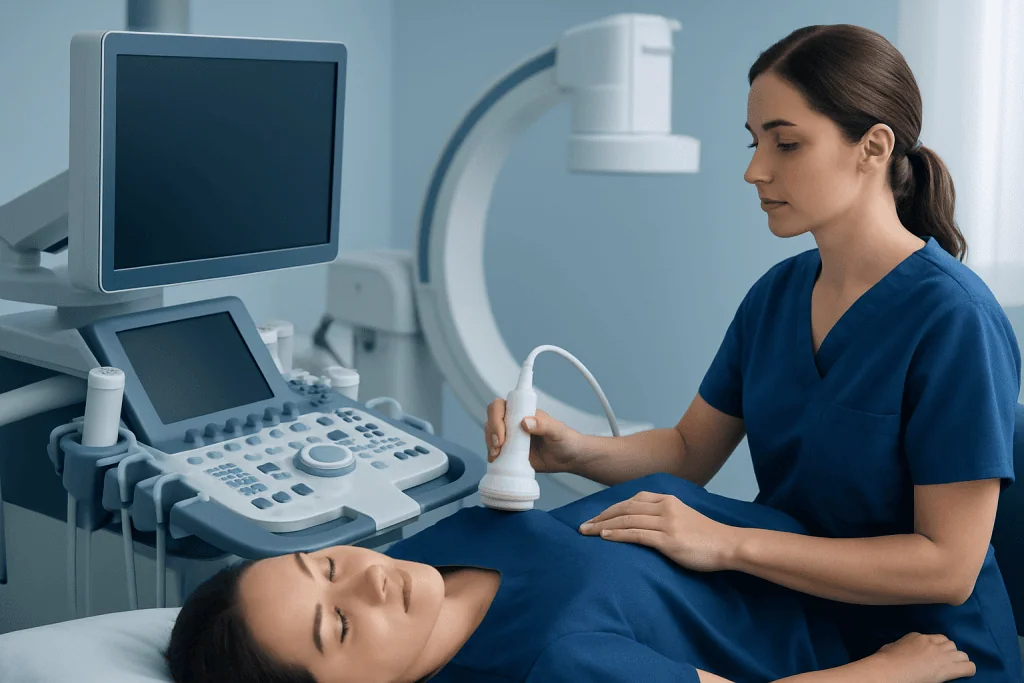
Testing depends on the suspected source of the pain. Blood tests may help check for infection, liver irritation, or inflammation. An electrocardiogram may be done if there is any concern about the heart. A chest X-ray can help identify pneumonia or other chest conditions. Ultrasound is commonly used to assess the gallbladder and liver area, and it can also help with some breast concerns. In selected cases, CT or MRI may be needed for a clearer picture.
When breast symptoms are part of the picture, doctors may recommend targeted imaging and specialist review. Depending on age and findings, this may involve breast ultrasound or other breast imaging. If digestive symptoms dominate, evaluation may focus on the gallbladder, liver, stomach, or acid reflux. The exact combination of tests is guided by the symptom pattern and the physical exam rather than by the location of pain alone.
Treatment options depend on the underlying cause
Because pain under right breast has many possible causes, treatment is aimed at the source. Muscle strain and chest wall pain often improve with rest, gentle stretching, heat or ice, and doctor-approved pain relief. If coughing triggered the strain, the underlying cough should also be treated. Costochondritis may take time to settle, but symptoms usually improve with conservative care.
Digestive causes are managed differently. Reflux and indigestion may improve with smaller meals, avoiding trigger foods, not lying down soon after eating, and using appropriate medicines if advised by a doctor. Gallbladder disease may need a more structured evaluation. When pain is caused by recurrent gallstones or inflammation, treatment may include monitoring, medication in selected cases, or gallbladder surgery after specialist review.
Lung infections, shingles, and breast conditions each require their own approach. Pneumonia or pleurisy may need prescription treatment and follow-up. Shingles is usually treated early to reduce discomfort and complications. Breast infection, cysts, or lumps should be assessed by a clinician so that imaging and treatment can be tailored to the cause.
If symptoms suggest a digestive condition beyond the gallbladder, doctors may investigate for ulcers, severe reflux, or other upper gastrointestinal disorders. In some cases, patients may benefit from endoscopy to examine the upper digestive tract. Treatment works best when based on a clear diagnosis, so repeated pain should not be managed with home remedies alone for long periods.
Self-care, prevention, and daily habits
Simple self-care steps may help when the pain is mild, short-lived, and not linked to warning signs. Resting the area, avoiding heavy lifting, and keeping good posture can reduce chest wall strain. Gentle movement is often better than prolonged stiffness once acute pain starts to settle. For many people, a record of when the pain appears can be useful, especially if it happens after exercise, certain foods, or around the menstrual cycle.
Digestive symptoms may improve with practical habits. Eating smaller meals, limiting greasy or highly spicy foods, and staying upright after eating can reduce reflux and upper abdominal discomfort. Maintaining a healthy weight and avoiding smoking also support both digestive and overall chest health. Hydration and regular physical activity can help reduce bloating and improve general well-being.
Breast awareness is also important. People should become familiar with what is normal for their own breasts and report new lumps, skin changes, nipple inversion, or persistent one-sided pain. Vaccination and prompt treatment of respiratory infections may help lower the risk of some lung-related causes. Prevention cannot stop every episode, but healthy daily habits can reduce common triggers and help doctors spot patterns more quickly.
A practical next step
If pain under right breast is mild and clearly linked to a recent strain or a single heavy meal, it may be reasonable to monitor it briefly while resting and avoiding obvious triggers. However, if the pain keeps returning, interrupts sleep, interferes with normal activity, or comes with other symptoms, a medical review is the safer next step. A clinician can decide whether the problem is musculoskeletal, digestive, breast-related, or something that needs faster treatment.
Patients should seek immediate care for any chest pain that feels crushing, causes breathlessness, or is associated with collapse, severe weakness, or sudden worsening. For non-emergency but unexplained ongoing symptoms, evaluation may involve primary care, gastroenterology, breast specialists, or surgery, depending on the likely cause. Clear symptom tracking, including timing, food triggers, and associated symptoms, can make that visit more productive.
For international patients who need evaluation, Acibadem International’s multidisciplinary specialists and JCI-accredited hospitals diagnose and treat chest, breast, and digestive conditions with coordinated care. What matters most is not guessing the cause from the location alone, but matching the symptom pattern with the right assessment and timely treatment.
Frequently asked questions
Is pain under right breast usually serious?
Often it is not serious and may be caused by a muscle strain, indigestion, or irritation of the ribs. Even so, severe, persistent, or unexplained pain should be checked by a doctor because the same area can reflect problems from the lungs, gallbladder, or other organs.
Can gallbladder problems cause pain under the right breast?
Yes. Gallbladder pain is commonly felt in the upper right abdomen and may extend under the right breast, into the back, or toward the right shoulder. It often appears after fatty meals and may come with nausea, bloating, or vomiting.
How can someone tell if the pain is muscular?
Muscle or chest wall pain often becomes worse with movement, twisting, coughing, or pressing on the sore spot. It may begin after exercise, lifting, or repetitive activity. A doctor can help confirm this and rule out other causes if the pain does not improve.
Can breast pain be felt underneath the breast rather than inside it?
Yes. Breast-related discomfort can sometimes feel like it is coming from beneath the breast, especially with hormonal tenderness, cysts, or inflammation. Because chest wall and upper abdominal problems can feel similar, persistent one-sided pain or any new breast change should be assessed.
When should pain under right breast be treated as an emergency?
Emergency care is needed if the pain is sudden, severe, or accompanied by shortness of breath, fainting, sweating, confusion, or pain spreading to the arm, jaw, or back. Coughing up blood, blue lips, or severe weakness are also urgent warning signs.
What tests might be needed for pain under the right breast?
The tests depend on the suspected cause. A doctor may use an examination, blood tests, ECG, chest X-ray, abdominal ultrasound, or breast imaging. More advanced scans are sometimes needed if the diagnosis is unclear or if serious conditions must be ruled out.
References
- Mayo Clinic
- National Health Service
- American College of Gastroenterology
- American College of Radiology
- Centers for Disease Control and Prevention
This article is for general information only and is not a substitute for professional medical advice. Please consult a qualified doctor about your individual situation.
Persistent digestive symptoms? Get evaluated in Turkey
JCI-accredited · board-certified surgeons · reply within 24h
Add us as a Preferred Source to see more of our trusted health content across Google Search, AI Overviews and Discover.