Pediatric EEG: How Brain Wave Testing Is Done and How to Prepare
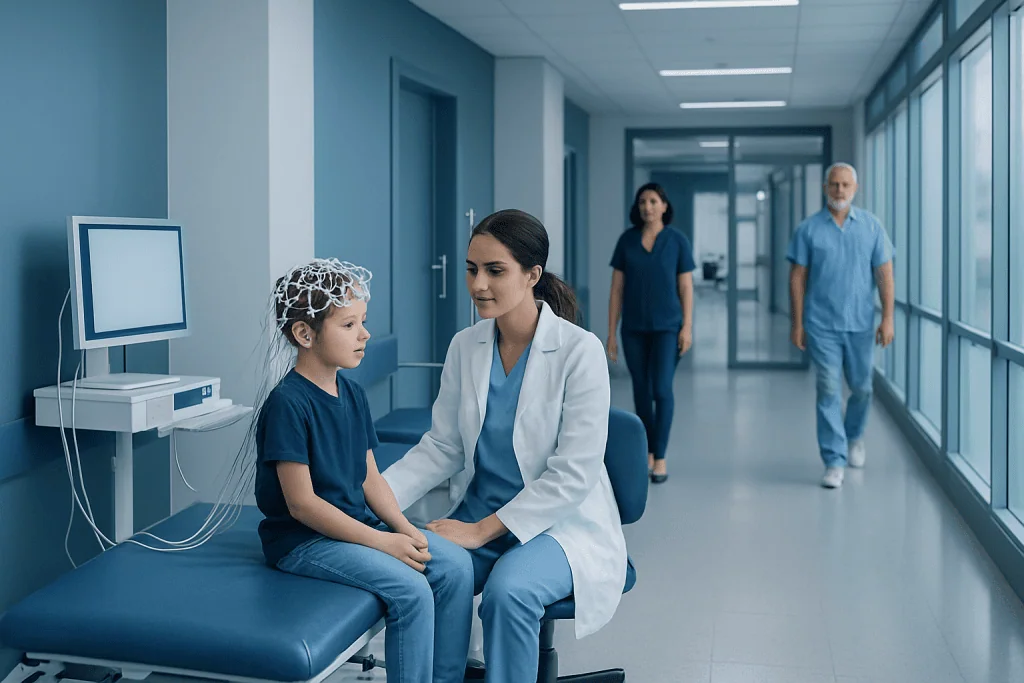
A pediatric EEG is a safe, noninvasive test that records electrical activity naturally produced by the brain. Children may need a routine, sleep-deprived, ambulatory or video EEG depending on the symptoms being evaluated.
Key Takeaways
- A pediatric EEG is a safe, noninvasive test that records electrical activity naturally produced by the brain.
- Children may need a routine, sleep-deprived, ambulatory or video EEG depending on the symptoms being evaluated.
- Preparation usually includes clean, dry hair, following medication instructions and sometimes adjusting sleep before the test.
- The EEG itself is painless; the most uncomfortable part for some children is sitting still or having sensors removed afterward.
- A normal EEG does not always rule out epilepsy, and an abnormal EEG must be interpreted together with the child’s history and examination.
A pediatric EEG records a child’s brain wave activity using small sensors placed on the scalp. The test is painless, does not send electricity into the brain, and helps doctors evaluate seizures, fainting episodes, unusual movements, sleep-related events and other neurologic concerns.
Overview: What Is a Pediatric EEG?
A pediatric EEG, or electroencephalogram, is a test that records the brain’s electrical activity in babies, children and teenagers. The brain naturally produces tiny electrical signals all the time. During an EEG, small sensors called electrodes are placed on the scalp with a soft paste or special adhesive so these signals can be recorded and displayed as brain wave patterns.
The test is noninvasive and painless. It does not put electricity into the child’s brain, and it does not read thoughts or feelings. Instead, it helps pediatric neurologists look for patterns that may explain symptoms such as seizures, staring spells, fainting-like episodes, unusual movements, developmental concerns or certain sleep-related events.
An EEG is often one part of a broader evaluation. The doctor also considers the child’s medical history, description of events, physical and neurologic examination, and sometimes other tests such as blood tests or brain imaging. In this way, the EEG supports diagnosis and treatment planning rather than acting as a standalone answer.
Why a Child May Need an EEG
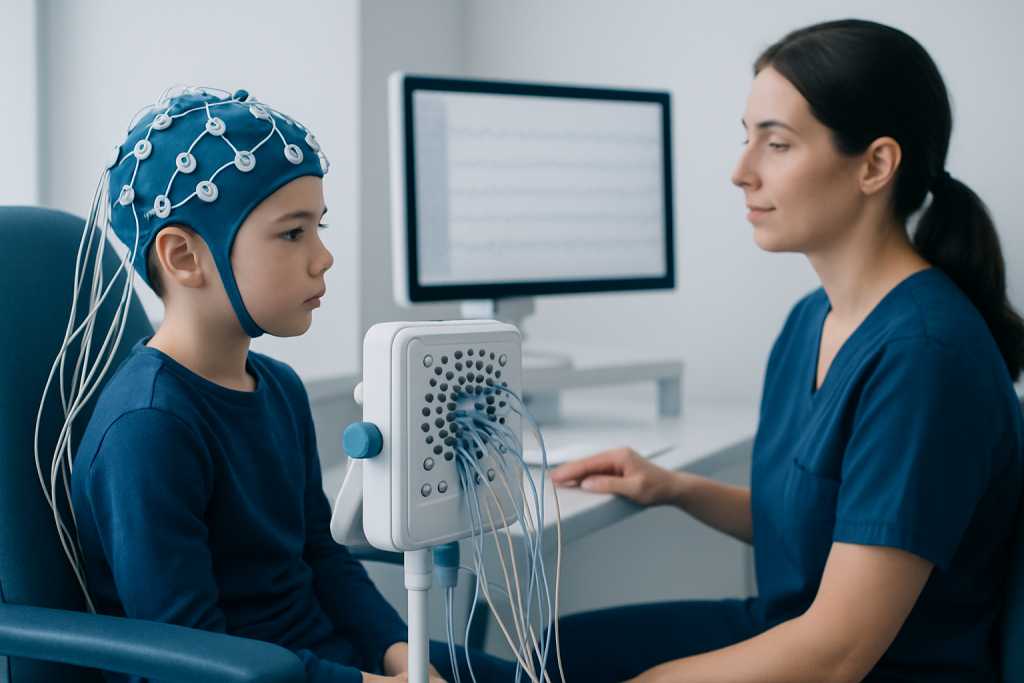
Doctors may recommend a pediatric EEG when a child has symptoms that could be related to changes in brain electrical activity. The most common reason is to evaluate possible seizures or epilepsy. However, an EEG may also be helpful when a child has episodes that are difficult to classify, especially if they involve altered awareness, repeated unusual movements or events during sleep.
Common reasons for requesting an EEG include:
- Staring spells or brief episodes of unresponsiveness
- Convulsions, jerking movements or sudden stiffening
- Unexplained fainting-like events, especially if seizure is a possibility
- Episodes of confusion, unusual behavior or altered awareness
- Sleep-related events, such as unusual movements or behaviors at night
- Follow-up of a known seizure disorder or response to treatment
- Assessment after certain neurologic injuries or infections, when clinically appropriate
Parents and caregivers can help the medical team by describing the episodes in detail. Useful information includes the child’s activity before the event, what the episode looked like, how long it lasted, whether the child responded, and how the child behaved afterward. A video recorded safely on a phone can be very helpful if it captures the event clearly.
Types of Pediatric EEG Tests
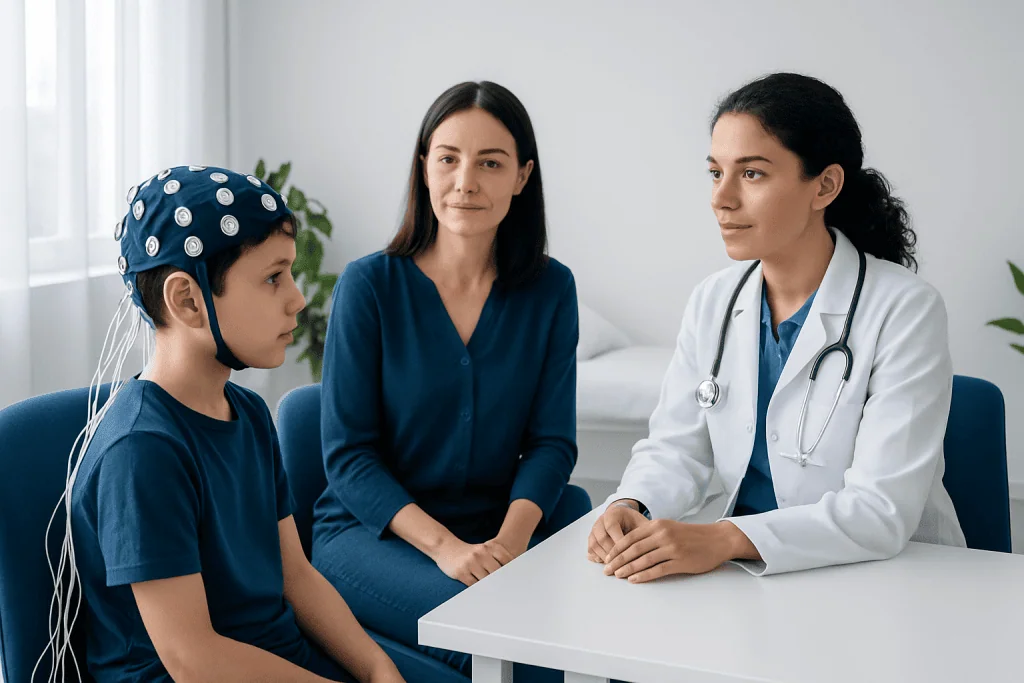
There are several types of EEG tests for children. The best type depends on the child’s age, symptoms and how often the episodes occur. A routine EEG is the most common. It is usually performed in a clinic or hospital EEG laboratory and often takes about 20 to 40 minutes of recording time, although the full appointment is longer because of preparation and electrode placement.
A sleep-deprived EEG may be requested when sleep is important for capturing certain brain wave patterns. In this case, the family may be asked to keep the child awake later, wake the child earlier or reduce naps before the test. These instructions should be followed only as provided by the medical team, because sleep needs vary by age and medical condition.
An ambulatory EEG records brain activity for a longer period while the child goes about many normal daily activities, often at home. A video EEG combines brain wave recording with video, allowing doctors to compare the child’s behavior or movements with the EEG pattern at the same time. Longer video EEG monitoring may be recommended when events are infrequent or when the diagnosis remains unclear after initial testing.
How the Test Is Done
At the start of the appointment, the EEG technologist explains the process in child-friendly language and measures the child’s head so electrodes can be placed in standard locations. The scalp may be gently cleaned in small areas, and the electrodes are attached with paste, gel or an adhesive. For most children, this feels like having hair parted and touched; it should not hurt.
During the recording, the child may be asked to rest quietly, open and close the eyes, breathe deeply for a short period or look at flashing lights. These activation techniques can help bring out certain EEG patterns. They are used only when appropriate for the child’s age and medical situation, and the child is monitored throughout the test.
Many children are allowed to watch a calm video, listen to a story or hold a comfort item, depending on the laboratory’s policy and the purpose of the recording. If sleep is needed, the room is usually dimmed and quiet. For infants, feeding just before the sleep portion may help them settle, if this matches the instructions given by the care team.
After the recording is complete, the electrodes are removed and the child can usually return to normal activities. Some paste or gel may remain in the hair until it is washed out. The EEG technologist does not usually provide the final interpretation during the appointment; a qualified physician, often a pediatric neurologist or neurophysiologist, reviews the tracing and sends a report to the referring doctor.
How to Prepare a Child for an EEG
Good preparation can make a pediatric EEG easier and more useful. Families should follow the specific instructions provided by the hospital or clinic, because preparation may differ depending on whether the test is routine, sleep-deprived, ambulatory or video-based. If the child has special medical needs, sensory sensitivities or anxiety, it is helpful to tell the EEG team in advance.
General preparation often includes washing the child’s hair the night before or the morning of the test and avoiding hair oils, sprays, gels or heavy conditioners. Clean, dry hair helps the electrodes make good contact with the scalp. Children may usually eat before the test unless instructed otherwise, and bringing a snack, bottle or comfort item can help younger children feel more relaxed.
Medication instructions are important. Families should not stop anti-seizure medicines or other prescribed medications unless the child’s doctor specifically tells them to do so. If a sleep-deprived EEG is planned, caregivers should follow the exact sleep schedule provided and arrange safe transportation, because a tired child may need extra supervision after the appointment.
It can help to explain the test in simple, reassuring words. For example, a parent might say, “The technologist will put small stickers on your head to listen to your brain waves. It does not hurt, and I will stay with you.” Practicing lying still for a few minutes, reading a picture book about medical visits or allowing the child to bring a favorite toy may reduce stress.
Understanding EEG Results
EEG results are interpreted by a physician trained in brain wave analysis. The report may describe normal background activity for the child’s age, sleep patterns if sleep was recorded, and whether there are any unusual waveforms. Some patterns may suggest a tendency toward seizures, while others may point to a specific type of epilepsy or another neurologic condition.
A normal EEG is reassuring, but it does not always rule out epilepsy. Brain wave changes can come and go, and a short recording may not capture them. If the child’s symptoms remain concerning, the doctor may recommend a repeat EEG, a sleep-deprived study, longer monitoring or additional tests.
An abnormal EEG also needs careful interpretation. Some children may have EEG findings that do not match their symptoms, and treatment decisions should be based on the whole clinical picture. The doctor will explain what the findings mean, whether they change the diagnosis and whether any treatment or follow-up is needed.
Safety, Comfort and Self-Care After the Test
A pediatric EEG is considered a safe test. The electrodes only record activity; they do not deliver electrical current. Some children may feel bored, tired or mildly bothered by the paste in their hair, but these effects are temporary. If flashing lights or deep breathing are used, the child is observed closely and the activity can be stopped if needed.
After a routine EEG, most children can go back to school, play and normal meals unless the doctor gives different instructions. If the child was sleep-deprived, families may plan a quiet day and allow rest afterward. Hair can be washed at home to remove any remaining paste or gel.
For ambulatory EEG, families receive instructions on how to care for the recording equipment, keep a diary and respond if an electrode loosens. They may be asked to note symptoms, sleep times, meals and medications. Accurate notes help the doctor compare events with the brain wave recording.
When to See a Doctor
Families should contact a pediatrician or pediatric neurologist if a child has repeated episodes of staring, unresponsiveness, unexplained falls, unusual movements, confusion after an event or symptoms that occur during sleep. Medical advice is also important if episodes change in frequency, appearance or recovery time. Early evaluation can help identify the cause and guide safe daily activities.
Urgent medical care is needed if a seizure-like event lasts longer than the emergency plan provided by the child’s doctor, if breathing is difficult, if the child is injured, if this is the first seizure-like episode, or if the child does not return to their usual state as expected. Families of children with known seizures should follow their individualized seizure action plan.
For international families seeking evaluation, Acibadem International’s multidisciplinary specialists and JCI-accredited hospitals can diagnose and treat pediatric neurologic conditions, including those requiring EEG assessment. The most appropriate care plan should always be individualized by a qualified physician after reviewing the child’s symptoms, history and test results.
Frequently asked questions
Does a pediatric EEG hurt?
No. A pediatric EEG is painless because the electrodes only record brain wave activity from the scalp. Some children may dislike the feeling of the paste, the scalp cleaning or sitting still, but the test itself should not hurt.
Can an EEG cause a seizure?
An EEG does not send electricity into the brain and does not cause seizures in most children. Certain parts of the test, such as flashing lights or deep breathing, may bring out seizure-related patterns in susceptible children, which is one reason the test is done under supervision. The team monitors the child and can stop an activity if needed.
How long does a pediatric EEG take?
A routine EEG often records brain waves for about 20 to 40 minutes, but the full visit is usually longer because of check-in, measuring the head and placing electrodes. Sleep-deprived, ambulatory or video EEG tests can take longer. The care team will explain the expected length before the appointment.
Should a child stop seizure medicine before an EEG?
Families should not stop or change any prescribed medicine unless the child’s doctor specifically instructs them to do so. Medication changes can affect symptoms and safety. Parents should bring an up-to-date medication list to the EEG appointment.
What if the EEG is normal but the child still has episodes?
A normal EEG does not always rule out seizures or epilepsy because abnormal brain wave activity may not appear during a short recording. If the episodes continue, the doctor may recommend a repeat EEG, sleep-deprived EEG, longer video EEG monitoring or other evaluations. A clear description or safe video of the event can be very helpful.
How can parents help a nervous child before the test?
Parents can explain that the test uses small stickers to listen to brain waves and that it does not hurt. Bringing a comfort item, planning a calm morning and practicing lying still may help. If the child has sensory sensitivities or significant anxiety, the EEG team should be informed in advance.
This article is for general information only and is not a substitute for professional medical advice. Please consult a qualified doctor about your individual situation.
Hair transplant in Turkey — costs, graft counts & a free assessment
JCI-accredited · board-certified surgeons · reply within 24h
Add us as a Preferred Source to see more of our trusted health content across Google Search, AI Overviews and Discover.

More from the Health Library
Ultrasound-Guided vs CT-Guided Procedures: What Is the Difference?

Diagnostic Mammogram: Why It Is Done and What to Expect

Can You Get Lab Testing Without an Appointment?
What Is an MRI Scan and How Should You Prepare?

Evoked Potential Tests: How Nerve Pathways Are Evaluated