Peeling Eyelids: An Evidence-Based Guide for Patients

Peeling eyelids may be linked to irritant or allergic contact dermatitis, eczema, blepharitis, dry skin, or less commonly infection. New cosmetics, eye drops, nail products, hair dye, and skincare products can trigger eyelid irritation even when they are not applied directly to the eyelids.
Key Takeaways
- Peeling eyelids may be linked to irritant or allergic contact dermatitis, eczema, blepharitis, dry skin, or less commonly infection.
- New cosmetics, eye drops, nail products, hair dye, and skincare products can trigger eyelid irritation even when they are not applied directly to the eyelids.
- Gentle cleansing, avoiding suspected triggers, and protecting the skin barrier can help while a cause is being identified.
- Steroid creams and medicated eye products should only be used near the eyes with medical guidance.
- Urgent assessment is important for eye pain, vision changes, marked swelling, fever, blisters, or a rapidly spreading rash.
Peeling eyelids commonly result from dry, irritated, allergic, or inflamed skin around the eyes. Because eyelid skin is thin and the eyes are sensitive, persistent or severe symptoms should be assessed by a qualified clinician rather than treated with strong over-the-counter products.
Overview: why eyelids may peel
Peeling eyelids describe flaking, scaling, or shedding skin on the upper or lower eyelids. The area may also feel dry, itchy, sore, tight, or mildly swollen. In many cases, the cause is irritation or inflammation of the delicate eyelid skin rather than a serious eye problem.
The eyelids have very thin skin and are frequently exposed to products, airborne particles, rubbing, tears, and oils from the skin. This makes them particularly prone to dermatitis, a broad term for skin inflammation. Peeling can also occur with eyelid-margin inflammation, known as blepharitis, or with skin conditions such as eczema or psoriasis.
Although most cases can be managed safely once the cause is identified, it is important not to self-treat aggressively. Products that are appropriate elsewhere on the face may sting, worsen inflammation, or enter the eye when used on the eyelids.
What peeling eyelids can look and feel like
Symptoms vary according to the cause. Some people notice fine dry flakes and mild tightness, while others develop red, thickened, rough, or cracked skin. The skin may itch, burn, or feel sensitive when water, makeup, or skincare products touch it.
When inflammation involves the eyelid margins, crusting or dandruff-like scales may collect near the eyelashes. The eyes can feel gritty, watery, or dry, and lashes may stick together on waking. These features can occur with blepharitis, which affects the edges of the eyelids and often follows a long-term, fluctuating pattern.
Peeling on one eyelid or both eyelids can occur. A one-sided rash may still be caused by a product or rubbing, but a clinician may look more closely for local infection, an insect bite, an injury, or another skin condition if it does not settle.
- Dry flakes, rough patches, or small cracks
- Itching, burning, tenderness, or a stinging sensation
- Redness or mild puffiness of the eyelids
- Crusting at the lash line or lashes sticking together
- Watery, irritated, gritty, or dry-feeling eyes
Common causes and triggers
Irritant contact dermatitis is a frequent cause of peeling eyelids. It happens when the skin reacts to something that disrupts its protective barrier, such as cleansers, fragrances, makeup removers, retinoid-containing products, exfoliating acids, or frequent rubbing. Even products used on the scalp, face, hands, or nails can reach the eyelids through touch, pillowcases, or airborne droplets.
Allergic contact dermatitis can look similar but is caused by an immune reaction to a substance. Common triggers include eye makeup, false-eyelash adhesives, preservatives in cosmetics or eye drops, fragrances, hair dye, sunscreen, and nail polish. Symptoms may begin hours to days after exposure, so the responsible product is not always obvious.
Atopic eczema can affect the eyelids, particularly in people with a personal or family history of eczema, asthma, hay fever, or generally sensitive skin. Seborrheic dermatitis, which is associated with flaky skin in oilier areas such as the scalp and eyebrows, may also contribute to eyelid scaling. Psoriasis is less common around the eyes but may be considered when there are well-defined scaly patches elsewhere on the body.
Blepharitis, dry eye disease, and meibomian gland dysfunction can cause scale at the lash line and eye discomfort. Less commonly, bacterial or viral infections can affect the eyelids. Infection is more likely when there is significant pain, warmth, pus-like discharge, blisters, or worsening swelling.
How clinicians identify the cause
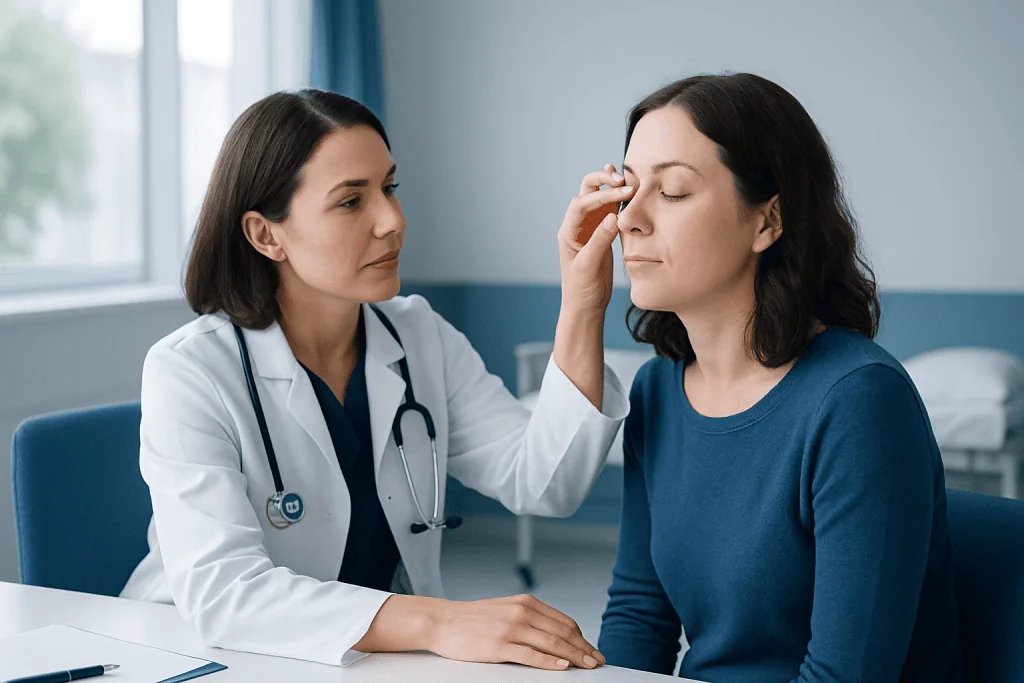
A doctor, dermatologist, or eye specialist will usually begin by asking when the peeling started, whether it affects one or both eyelids, and what symptoms occur alongside it. Information about cosmetics, eye drops, facial products, nail treatments, hair products, contact lenses, workplace exposures, and recent changes in routine can be especially useful.
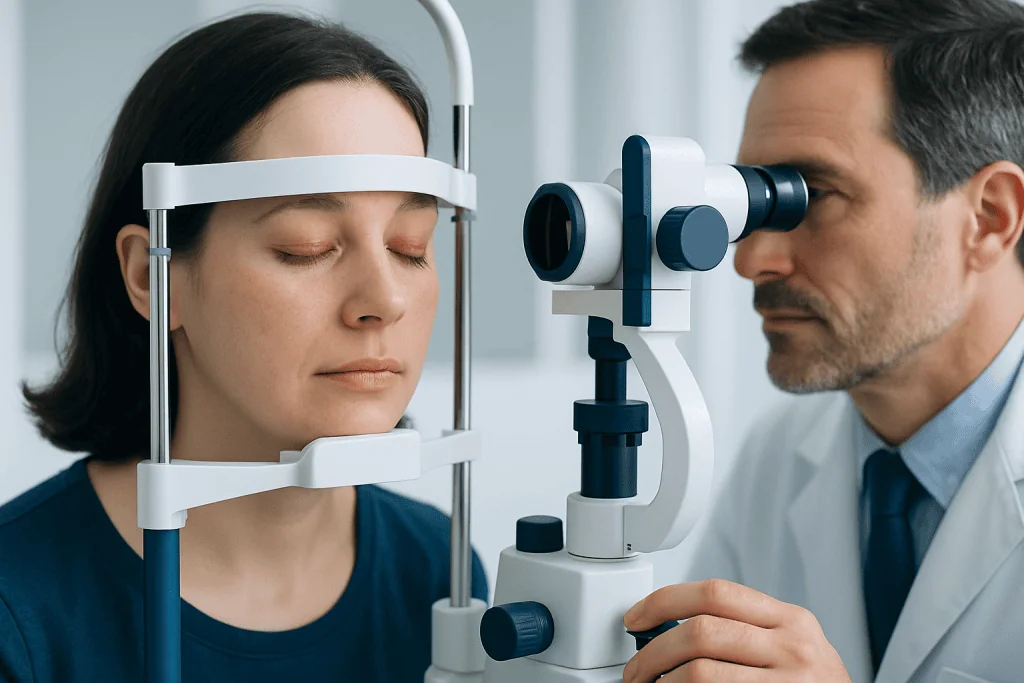
The examination includes the eyelid skin, lash line, eye surface, and surrounding facial skin. The clinician may check for signs of eczema, allergy, blepharitis, dry eye, infection, or another inflammatory condition. In many cases, testing is not needed and the pattern of symptoms, examination findings, and response to avoiding triggers guide care.
If allergic contact dermatitis is suspected and symptoms keep returning, patch testing by a dermatologist or allergy specialist may help identify the responsible allergen. An eye examination is particularly important if there is ongoing redness of the eye itself, light sensitivity, eye pain, discharge, or any change in vision.
Treatment options and safe eyelid care
Treatment depends on the underlying cause. For irritant or allergic dermatitis, the main step is to stop suspected products and simplify the routine. A clinician may recommend a bland, fragrance-free moisturizer that is suitable for use around the eyes. It is generally best to avoid eye makeup, false lashes, fragranced products, scrubs, and active skincare ingredients until the skin has recovered.
Prescription treatments may be appropriate for inflammation that is persistent, widespread, or uncomfortable. Clinicians sometimes use carefully selected anti-inflammatory medicines for a short period near the eyelids. These should not be started without advice because the eyelid area is sensitive and some medicines can pose risks if used incorrectly or for too long.
For blepharitis, regular eyelid hygiene may be advised. This often includes applying a clean warm compress with closed eyes, followed by gentle cleansing of the eyelid margins using a clinician-recommended approach. Artificial tears or other eye treatments may be considered if dry eye symptoms are present. Assessment and individualized care for an eye examination can clarify whether the skin, eyelid margins, or eye surface is the main source of symptoms.
If infection is diagnosed, treatment may include medicine targeted to the suspected cause. Antibiotics do not help eczema, allergies, or most cases of simple irritation, so it is important to avoid using leftover medication or sharing eye products.
Prevention and self-care between flare-ups
Once symptoms settle, a simple routine can reduce the chance of another flare. Choose fragrance-free, hypoallergenic products where possible, introduce only one new product at a time, and stop using an item if it causes itching, burning, or redness. Replacing old eye makeup and avoiding shared cosmetics can also reduce irritation and contamination.
Hands should be washed before touching the eye area, removing contact lenses, or applying eye products. Rubbing the eyes can worsen inflammation and may transfer allergens or irritants from the hands. People who wear contact lenses should follow their eye-care professional’s guidance and avoid lenses during significant eyelid or eye irritation.
For dry or eczema-prone skin, regular use of a gentle moisturizer may support the skin barrier. It is safer to keep moisturizers out of the eyes and use only a small amount on the external eyelid skin. Strong exfoliants, harsh soaps, essential oils, and unprescribed steroid creams are best avoided around the eyes.
When to seek medical care
Medical advice is appropriate when peeling eyelids lasts longer than a few days despite stopping possible triggers, recurs often, spreads beyond the eyelids, or interferes with daily comfort. A clinician can help distinguish dermatitis from blepharitis, dry eye disease, infection, and other conditions that may need different care.
Urgent medical assessment is needed for eye pain, reduced or blurred vision, marked sensitivity to light, rapidly increasing swelling or redness, fever, severe headache, blisters near the eye, or difficulty opening the eye. These symptoms do not necessarily indicate a serious problem, but they should not be managed with home care alone.
Acibadem International’s multidisciplinary specialists and JCI-accredited hospitals can assess eyelid and eye symptoms for international patients, coordinating dermatology and ophthalmology care when needed.
Frequently asked questions
Can dry skin cause peeling eyelids?
Yes. Dry skin can cause fine flaking, tightness, and mild irritation on the eyelids, particularly in dry weather or after using harsh cleansers. However, persistent peeling may also reflect eczema, contact dermatitis, or blepharitis, so medical advice can be helpful if symptoms continue.
Can eye makeup cause peeling eyelids?
Yes. Makeup, makeup removers, eyelash adhesives, and cosmetic preservatives can irritate eyelid skin or cause an allergic reaction. It is sensible to stop all eye cosmetics during a flare, then discuss a cautious reintroduction plan with a clinician if needed.
Is it safe to put steroid cream on peeling eyelids?
Steroid creams should only be used on eyelids when recommended by a qualified clinician. The eyelid skin is thin, and medication can enter the eye or cause unwanted effects if the wrong product is used or treatment continues too long.
Are peeling eyelids contagious?
Peeling caused by dryness, eczema, allergy, or irritation is not contagious. Some infections that affect the eyes or eyelids can spread, particularly when there is discharge, so good hand hygiene and avoiding shared towels or cosmetics are sensible precautions.
How long do peeling eyelids take to heal?
Mild irritation may improve within several days after the trigger is avoided and gentle care is used. Recovery can take longer when eczema, allergy, blepharitis, or ongoing exposure is involved. A clinician should review symptoms that do not improve or repeatedly return.
Should contact lenses be worn with peeling eyelids?
It is often best to pause contact lens wear if the eyelids are significantly inflamed or the eyes feel painful, red, or dry. An eye-care professional can advise when lenses can be worn again safely and whether lens products may be contributing to irritation.
This article is for general information only and is not a substitute for professional medical advice. Please consult a qualified doctor about your individual situation.
Explore treatments in Turkey — costs, top hospitals & a free quote
JCI-accredited · board-certified surgeons · reply within 24h
Add us as a Preferred Source to see more of our trusted health content across Google Search, AI Overviews and Discover.

More from the Health Library

Fear of Snakes: An Evidence-Based Guide for Patients

Forteo Injection: What Patients Need to Know

Entomophobia: What Patients Need to Know

Vq Scan: An Evidence-Based Guide for Patients

Renin: A Complete Medical Overview