Polymorphic Ventricular Tachycardia Treatment: How It Works, Results and What to Expect

Polymorphic ventricular tachycardia is a potentially life-threatening abnormal rhythm arising from the heart’s lower chambers. Emergency treatment depends on whether the person has a pulse, is stable and has a prolonged QT interval.
Key Takeaways
- Polymorphic ventricular tachycardia is a potentially life-threatening abnormal rhythm arising from the heart’s lower chambers.
- Emergency treatment depends on whether the person has a pulse, is stable and has a prolonged QT interval.
- Correcting low potassium or magnesium, stopping triggering medicines and treating heart ischemia can be essential.
- Some people need longer-term treatment such as beta-blockers, catheter ablation or an implantable cardioverter-defibrillator.
- Fainting, chest pain, severe breathlessness or collapse with a fast heartbeat requires emergency medical help.
Polymorphic ventricular tachycardia treatment is urgent because this fast, changing-pattern heart rhythm can reduce blood flow and may progress to cardiac arrest. Care focuses first on restoring a safe rhythm and correcting reversible causes, then on preventing future episodes through tailored cardiac treatment and follow-up.
Overview: How polymorphic ventricular tachycardia treatment works
Polymorphic ventricular tachycardia treatment works by rapidly protecting circulation, stopping the dangerous rhythm when necessary and identifying why it occurred. Polymorphic ventricular tachycardia (VT) is a fast rhythm from the ventricles, the lower pumping chambers of the heart. On an electrocardiogram (ECG), the QRS complexes change in shape or direction from beat to beat.
This condition is managed as a medical emergency when it is sustained or causes symptoms. The immediate approach may include electrical cardioversion or defibrillation, intravenous medicines, correction of electrolyte abnormalities and treatment of reduced blood flow to the heart. The plan changes depending on the person’s blood pressure, consciousness, pulse, ECG findings and underlying heart condition.
One important subtype is torsades de pointes, which usually occurs with a prolonged QT interval. Its management differs from polymorphic VT associated with acute coronary ischemia and a normal QT interval. For this reason, clinicians use the ECG, laboratory tests and the clinical setting to guide safe treatment rather than relying on a single approach for every patient.
How serious is polymorphic ventricular tachycardia?
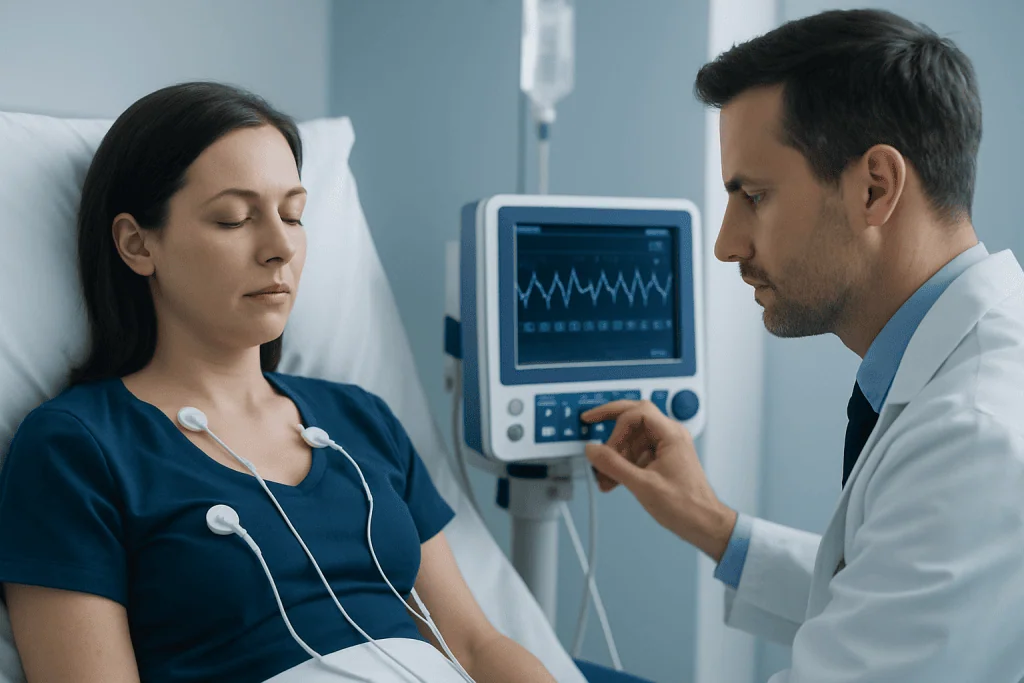
Polymorphic ventricular tachycardia can be very serious because the heart may beat too rapidly and inefficiently to deliver enough blood to the brain and other organs. It may cause palpitations, dizziness, fainting, chest discomfort, breathlessness or sudden collapse. Sustained episodes can deteriorate into ventricular fibrillation, a rhythm that causes cardiac arrest.
Risk varies substantially. A brief, self-terminating episode in a monitored setting may have a different outlook from recurrent sustained VT in a person with heart muscle disease, prior heart attack or inherited rhythm disorder. Even so, polymorphic VT should always receive prompt medical assessment because a seemingly short episode can signal a reversible but urgent problem, such as electrolyte imbalance, medication-related QT prolongation or myocardial ischemia.
Emergency clinicians assess circulation first. A person who is unresponsive, has no normal breathing or no pulse needs immediate emergency services, cardiopulmonary resuscitation by trained bystanders when appropriate and prompt defibrillation with an automated external defibrillator if available.
Causes, triggers and candidacy for longer-term treatment

Polymorphic VT may occur because of acute reduced blood flow to the heart muscle, structural heart disease, inherited electrical conditions or acquired factors that lengthen the QT interval. Potential contributors include low potassium, magnesium or calcium; severe bradycardia; certain prescription or non-prescription medicines; and drug interactions. A careful medication review is particularly important when torsades de pointes is suspected.
People may be considered for longer-term preventive treatment after sustained VT, recurrent episodes, a cardiac arrest that was not fully explained by a reversible cause, or evidence of an ongoing high-risk heart condition. The decision is individualized. It considers the heart’s pumping function, coronary artery status, ECG findings, imaging results, family history, genetic evaluation when appropriate and the likely benefit of each option.
Assessment may also identify related conditions such as coronary artery disease, cardiomyopathy or long QT syndrome. Treating the underlying cause can reduce future risk. Not every person with a brief rhythm finding needs an implanted device or an invasive procedure; a heart rhythm specialist weighs the overall clinical picture and preferences carefully.
Diagnosis and the treatment pathway: what happens step by step
In an acute episode, the first priority is to determine whether the person is stable. Clinicians check consciousness, breathing, pulse, blood pressure and oxygen level while obtaining an ECG or cardiac monitor tracing. Unstable VT with a pulse, such as VT causing low blood pressure, shock, ongoing chest pain, heart failure symptoms or altered consciousness, generally requires urgent synchronized cardioversion. Pulseless VT is treated with immediate defibrillation and advanced cardiac life support.
If the person is stable, the team still evaluates urgently. Blood tests commonly assess potassium, magnesium, calcium, kidney function and markers of possible heart injury. Serial ECGs can identify QT prolongation or ischemic changes. Echocardiography evaluates heart structure and pumping ability, while coronary imaging or angiography may be needed when reduced coronary blood flow is suspected.
For torsades de pointes, clinicians typically stop QT-prolonging triggers where possible, correct electrolytes and use intravenous magnesium under monitored care. In selected situations, increasing the heart rate with temporary pacing or specific medicines may help prevent recurrent pause-dependent episodes. For polymorphic VT linked to acute ischemia, restoring coronary blood flow and treating the ischemic trigger are central parts of care.
After stabilization, a cardiologist or electrophysiologist may recommend ambulatory rhythm monitoring, cardiac magnetic resonance imaging, stress testing, coronary assessment or genetic counseling. These tests help distinguish a temporary trigger from an ongoing arrhythmia risk and guide prevention planning.
Treatment options, benefits and possible risks
Medication may be used to correct a trigger, suppress recurrent arrhythmias or manage an underlying heart condition. The specific medicine depends on the rhythm mechanism and QT interval. Some antiarrhythmic medicines can prolong the QT interval or worsen certain rhythm disorders, so they should be selected and monitored by experienced clinicians rather than started independently.
An implantable cardioverter-defibrillator (ICD) may be advised for some people at ongoing risk of life-threatening ventricular rhythms. The device continuously monitors the heartbeat and can deliver pacing or a shock to stop a dangerous rhythm. Its major benefit is protection against sudden cardiac death; possible drawbacks include procedure-related infection or bleeding, lead complications, device shocks and the need for continuing device checks.
Catheter ablation may be considered when VT is recurrent, when a triggering focus or scar-related circuit can be targeted, or when medicines are not tolerated or effective. During this procedure, catheters are guided through blood vessels to map the heart’s electrical activity and deliver energy to selected tissue. Benefits can include fewer episodes and fewer ICD therapies, although ablation may not be suitable for every type of polymorphic VT and carries risks such as bleeding, blood vessel injury, heart perforation, stroke or recurrent arrhythmia.
For patients traveling for cardiac care, Acibadem International’s multidisciplinary specialists and JCI-accredited hospitals can assess ventricular arrhythmias and coordinate individualized emergency, electrophysiology and follow-up care.
Recovery timeline, monitoring and daily self-care
Recovery depends on the cause and treatment. After an episode caused by a correctable electrolyte problem or medication effect, monitoring may continue until the ECG and laboratory results are stable, followed by outpatient review. Recovery after cardioversion is often brief, although the reason for the arrhythmia still needs investigation. Following an ICD implantation or catheter procedure, the care team provides specific wound, activity and follow-up instructions.
Patients should take prescribed medicines exactly as directed and should not stop heart medicines abruptly without medical guidance. They should tell every clinician and pharmacist about their history of QT prolongation or ventricular arrhythmia, including before taking a new medicine or supplement. A doctor can advise whether an updated medication list or medical alert information would be useful.
General heart-health measures support, but do not replace, medical treatment. These include avoiding recreational stimulant drugs, limiting alcohol if advised, maintaining hydration during illness, following recommendations for potassium and magnesium intake, and attending scheduled cardiology visits. Patients with an ICD should understand what to do after a shock and when device symptoms need urgent review.
When to seek medical care
Call local emergency services immediately for collapse, loss of consciousness, no normal breathing, severe chest pain, severe shortness of breath, or a persistent rapid heartbeat accompanied by dizziness, weakness or confusion. People should not drive themselves to hospital during these symptoms. If someone collapses and is not breathing normally, bystanders should call emergency services, begin CPR if trained and use an automated external defibrillator if one is available.
Urgent same-day medical advice is appropriate for new palpitations with light-headedness, a fainting episode, an ICD shock, or symptoms that occur after starting or changing a medicine. An ICD shock can successfully treat an arrhythmia, but it still requires contact with the person’s cardiac team; repeated shocks or shocks with ongoing symptoms are an emergency.
People with known long QT syndrome, cardiomyopathy, prior ventricular arrhythmia or a family history of unexplained sudden death should maintain regular specialist follow-up. Seeking care early allows clinicians to check for treatable triggers and update the prevention plan before another serious episode occurs.
Frequently asked questions
How serious is polymorphic ventricular tachycardia?
Polymorphic ventricular tachycardia is potentially life-threatening because it can impair the heart’s ability to pump blood and can progress to ventricular fibrillation or cardiac arrest. Its seriousness depends on the duration, symptoms, underlying cause and whether it recurs, but it always needs prompt medical evaluation.
Can I live a long life with ventricular tachycardia?
Many people with ventricular tachycardia live for many years, particularly when the underlying cause is identified and treated. Outlook varies with heart function, coronary disease, inherited conditions and response to treatment. Regular follow-up, medication adherence and devices such as an ICD when indicated can reduce risk.
How many beats of VT is concerning?
Three or more consecutive ventricular beats at a fast rate are generally considered ventricular tachycardia. A short run may end on its own, but it can still be clinically important, especially if it causes symptoms or occurs in someone with structural heart disease. Sustained VT, usually lasting 30 seconds or requiring treatment sooner because of instability, is particularly concerning.
What is the first thing to do in ventricular tachycardia?
The first step is to assess whether the person is conscious, breathing normally and has a pulse, then call emergency services if there are serious symptoms or collapse. Pulseless VT requires immediate CPR and defibrillation when available. A person who is awake but has chest pain, fainting, severe breathlessness or persistent palpitations should receive urgent emergency assessment.
Is torsades de pointes the same as polymorphic ventricular tachycardia?
Torsades de pointes is a specific form of polymorphic ventricular tachycardia that occurs in the setting of a prolonged QT interval. It has a characteristic twisting pattern on ECG and is often associated with medicines, electrolyte abnormalities, slow heart rates or inherited long QT syndrome. Its treatment therefore includes correcting QT-related triggers.
Can polymorphic ventricular tachycardia be prevented?
Prevention depends on the cause. It may involve treating coronary artery disease or heart failure, correcting electrolyte problems, avoiding QT-prolonging medicines when possible and managing inherited rhythm conditions. Some people also benefit from antiarrhythmic therapy, catheter ablation or an ICD after specialist assessment.
References
- American Heart Association
- American College of Cardiology
- Heart Rhythm Society
- European Society of Cardiology
- National Heart, Lung, and Blood Institute
This article is for general information only and is not a substitute for professional medical advice. Please consult a qualified doctor about your individual situation.
Heart care in Turkey — expert evaluation and treatment
JCI-accredited · board-certified surgeons · reply within 24h
Add us as a Preferred Source to see more of our trusted health content across Google Search, AI Overviews and Discover.
Check your numbers in seconds
BMI, calories, due date, blood pressure and 30+ more clinical calculators — free, instant, doctor-reviewed ranges.