Proton Therapy for Childhood Pediatric Cancers: How It Works, Results and What to Expect
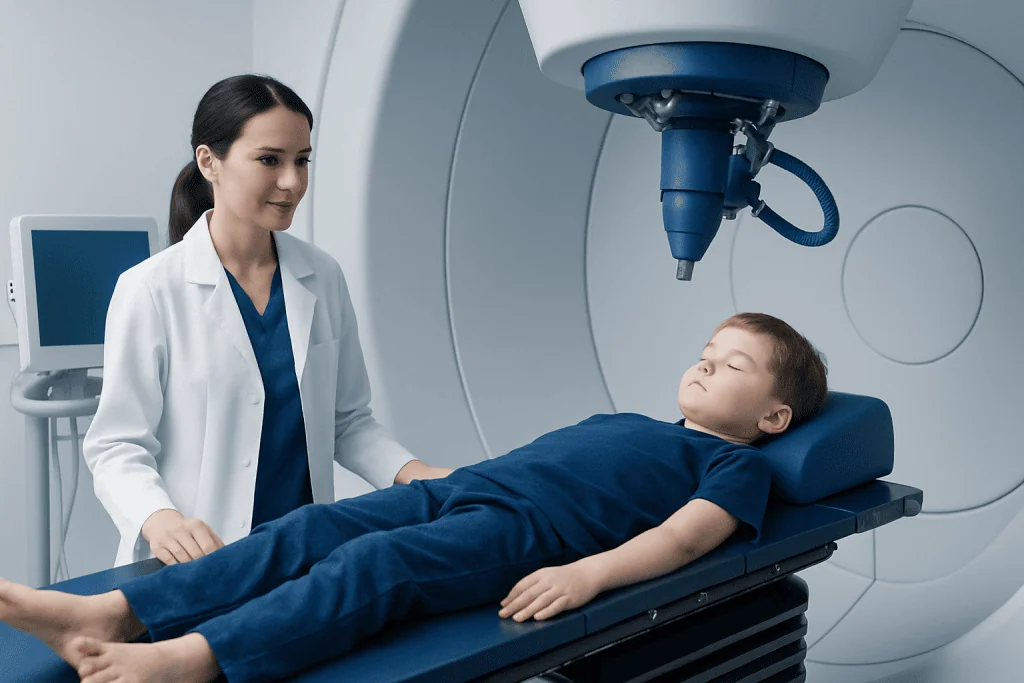
Proton therapy is an external radiation treatment that can reduce radiation reaching tissues beyond the tumor. It is often considered for tumors near the brain, spinal cord, eyes, heart, lungs, kidneys, or reproductive organs.
Key Takeaways
- Proton therapy is an external radiation treatment that can reduce radiation reaching tissues beyond the tumor.
- It is often considered for tumors near the brain, spinal cord, eyes, heart, lungs, kidneys, or reproductive organs.
- Treatment planning is individualized and commonly involves pediatric oncology, radiation oncology, surgery, imaging, and supportive-care specialists.
- Proton therapy does not guarantee better cancer control than standard radiation for every childhood cancer, but it may lower some long-term radiation risks.
- Children usually return home after each treatment session, with follow-up continuing for years after therapy.
Proton therapy for childhood pediatric cancers is a form of radiation treatment that uses protons to deliver energy mainly within the tumor, limiting radiation beyond it. It may be particularly useful when a child’s tumor is close to developing organs or other sensitive structures, although suitability depends on the cancer type, location, and overall treatment plan.
Overview: Proton Therapy for Childhood Pediatric Cancers
Proton therapy for childhood pediatric cancers is a highly planned type of external-beam radiation therapy. It uses positively charged particles called protons rather than the X-rays used in conventional photon radiation. Protons can be directed to release most of their energy at a chosen depth in the body, helping clinicians reduce the radiation dose delivered beyond the target.
This feature can be valuable for children because their organs, bones, brain, and other tissues are still developing. When radiation is needed, the care team aims to control the cancer while protecting healthy tissue as much as possible. Proton therapy is not appropriate for every child or every tumor, and it is usually one part of a broader plan that may also include surgery, chemotherapy, targeted therapy, immunotherapy, or observation.
The decision is made by a multidisciplinary pediatric cancer team after reviewing pathology results, imaging, the child’s age, expected growth, previous treatment, and the position of the tumor. Families should be reassured that a recommendation for radiation reflects careful consideration of both short-term cancer control and long-term health.
How Proton Therapy Works
A proton therapy system accelerates protons and shapes the beam to match the planned treatment area. Unlike conventional X-ray beams, which continue depositing radiation as they travel through and leave the body, protons slow down and release most of their energy near a specific depth. This is often called the Bragg peak.
Before treatment begins, specialists create a detailed map of the tumor and nearby organs using imaging such as CT and MRI scans. Radiation oncologists, medical physicists, and dosimetrists then calculate how to deliver the prescribed dose across the tumor while respecting dose limits for healthy structures. The plan is checked repeatedly before the first session.
Precision does not mean that all normal tissue receives no radiation. Some healthy tissue near or in front of the tumor may still receive a dose, and tumors can move slightly with breathing or normal body changes. The team uses positioning devices, image guidance, and quality checks to make treatment as accurate and reproducible as possible.
Which Children May Be Candidates?
Proton therapy may be considered when a tumor is close to organs that are especially sensitive to radiation. Examples can include certain brain and spinal cord tumors, tumors of the eye or skull base, head and neck cancers, selected chest tumors, pelvic tumors, and some sarcomas. It can also be considered when reducing radiation to the heart, lungs, kidneys, bowel, ovaries, testes, or growth plates is an important treatment goal.
Common childhood cancers treated with radiation are varied. For example, proton therapy may be part of care for selected brain tumors, ependymoma, medulloblastoma, craniopharyngioma, rhabdomyosarcoma, Ewing sarcoma, neuroblastoma, lymphoma, and rare tumors. The exact benefit differs substantially between diagnoses and cannot be determined from the cancer name alone.
Candidacy depends on whether proton therapy can safely cover the full target area, including any microscopic cancer cells that may be present around the visible tumor. The team also considers whether surgery or systemic treatment is needed first, whether the child has received radiation before, and whether travel and daily attendance are feasible for the family.
- Location of the tumor and nearby organs
- Cancer type, stage, and treatment goal
- Child’s age, growth, and ability to remain still
- Need for anesthesia or sedation during sessions
- Previous surgery, chemotherapy, or radiation treatment
What Cancers Respond Best to Proton Therapy?
Proton therapy is most helpful when radiation is an established part of treatment and reducing dose to nearby healthy tissue is likely to matter. This often includes tumors in or near the brain, spine, head and neck, eye region, chest, abdomen, or pelvis. Children with long expected survival may have particular potential to benefit from lower radiation exposure to normal tissues because late effects can emerge years after treatment.
However, proton therapy is not a separate cancer medicine that makes every tumor more sensitive to radiation. If the same effective radiation dose reaches the tumor, proton and photon therapy are generally expected to have similar ability to damage cancer cells. The potential advantage of protons is primarily how the radiation dose is distributed through the body.
For some diagnoses, strong clinical evidence supports proton therapy as a reasonable option; for others, evidence is still developing. A pediatric radiation oncologist can compare proton and photon plans for an individual child and explain whether there is a meaningful expected reduction in radiation to normal organs.
What Happens During Proton Therapy?
Planning starts with a consultation and simulation appointment. The child has imaging scans in the exact treatment position and may be fitted with a customized mask, head support, body mold, or other device that helps maintain the same position each day. If a young child cannot stay still comfortably, the team may arrange anesthesia or sedation, following pediatric safety procedures.
After planning is complete, treatment is usually delivered on weekdays over several weeks, although the schedule varies by diagnosis and treatment purpose. Each visit may take some time for positioning and image checks, while the actual beam delivery is usually brief. Proton therapy is painless: the child does not feel the beam, see it, or become radioactive afterward.
Parents may not stay in the treatment room during beam delivery, but staff monitor the child continuously using cameras and two-way communication. The care team checks symptoms regularly and may adjust supportive medicines, nutrition advice, skin care, or the treatment plan if anatomy changes during the course.
For children who need radiation as part of a combined cancer plan, treatment may be coordinated with surgery, chemotherapy, or other therapies. Families can discuss proton therapy planning, treatment-day routines, and supportive services with their treating center.
Benefits, Risks, and What to Expect After Treatment
The main potential benefit of proton therapy is lower radiation exposure beyond the tumor. Depending on tumor location, this may reduce the dose to developing brain tissue, hearing structures, endocrine glands, heart, lungs, kidneys, bowel, or reproductive organs. Lower normal-tissue dose may help lower the likelihood of certain late effects, but it cannot eliminate them.
Short-term side effects depend mainly on the area treated and whether chemotherapy is given at the same time. Fatigue is common and often builds gradually during treatment. Other possible effects include temporary skin redness or irritation, hair loss in the treated area, nausea, appetite changes, sore throat or swallowing difficulty, diarrhea, or urinary symptoms. The team provides guidance for managing expected effects and watches for less common complications.
Long-term risks also depend on the dose, treated body area, age at treatment, and other cancer therapies. These may include effects on growth, hormone function, learning and memory, hearing, fertility, heart or lung health, or a small risk of a future radiation-related cancer. Proton therapy may reduce some of these risks in selected situations, but ongoing follow-up remains essential.
Most children go home after each session. Energy, appetite, skin reactions, and other temporary effects can take several weeks to improve after the final treatment. Follow-up visits, imaging, rehabilitation, school support, and survivorship care are arranged according to the child’s diagnosis and individual needs.
What Is the Success Rate of Proton Therapy for Cancer?
There is no single success rate for proton therapy because outcomes vary by cancer type, stage, tumor biology, location, whether surgery was possible, and the treatments used alongside radiation. Proton therapy is usually selected to deliver a prescribed radiation dose safely; it is not automatically more effective than modern photon radiation at controlling every tumor.
For many childhood cancers, the expected tumor-control outcome with proton therapy is intended to be comparable to carefully planned conventional radiation, while reducing unnecessary dose to nearby normal tissues. In some situations, its ability to protect critical structures may allow clinicians to deliver radiation more safely or more completely.
Families should ask the treating team about outcomes for their child’s specific diagnosis rather than relying on a general percentage. The most useful discussion includes the goal of treatment, expected chance of local control, possible need for additional therapies, and the likely short- and long-term effects of each radiation option.
What Is the Downside of Proton Therapy?
Proton therapy has limitations as well as benefits. It requires highly specialized equipment and careful planning, and access may involve travel or temporary relocation for families. Daily treatment visits can be demanding, especially when a child needs anesthesia, has other medical appointments, or is receiving chemotherapy at the same time.
It can still cause radiation side effects because some normal tissue must receive radiation to treat the tumor safely. In addition, proton dose distribution can be sensitive to changes in body position, weight, bowel filling, breathing, or tumor size. Regular imaging and plan review help the team respond to meaningful changes during treatment.
Not every tumor has a clear dosimetric or clinical advantage with protons. In some cases, advanced photon techniques may provide an appropriate plan with similar expected outcomes. A balanced discussion should compare the likely benefits, uncertainties, practical requirements, and alternatives for the individual child.
What Happens to the Tumor After Proton Therapy?
Proton radiation damages the DNA of cancer cells, making it difficult for them to continue dividing. Tumor cells may die gradually over days, weeks, or months, so the tumor does not always disappear immediately after treatment. The timing and pattern of response depend on the cancer type and whether treatment also includes surgery or systemic therapy.
Imaging after radiation can be complex. Treated tissue may temporarily look swollen or inflamed, and some tumors remain visible as inactive scar tissue or shrink slowly. For this reason, clinicians interpret follow-up scans alongside symptoms, examination findings, laboratory results, and the expected behavior of that particular cancer.
The follow-up schedule is individualized. Families should contact the oncology team if new or worsening symptoms develop between planned appointments rather than waiting for the next scan. The care team can decide whether the change is expected, needs supportive treatment, or requires earlier assessment.
When to Seek Medical Care
A child receiving proton therapy should have clear instructions for contacting the oncology team, including an after-hours number. Families should seek prompt medical advice for fever, repeated vomiting, inability to drink, signs of dehydration, severe or rapidly worsening pain, breathing difficulty, unusual sleepiness, confusion, a seizure, uncontrolled diarrhea, heavy bleeding, or a new concerning rash.
Urgent assessment is particularly important for children receiving chemotherapy or medicines that may lower infection-fighting blood cells. Parents and caregivers should not give new medicines, supplements, or herbal products without checking with the child’s cancer team, because these may affect treatment or interact with prescribed medicines.
Acibadem International’s multidisciplinary specialists and JCI-accredited hospitals support international patients who need coordinated pediatric cancer assessment and radiation treatment planning. Families should work with qualified pediatric oncology and radiation oncology professionals to choose the safest, most appropriate care pathway.
Frequently asked questions
Is proton therapy safe for children?
Proton therapy is an established radiation technique that is used for selected childhood cancers. Safety depends on detailed planning, accurate daily positioning, and monitoring by an experienced pediatric radiation oncology team. It may reduce radiation exposure to certain nearby healthy tissues, but it still has possible short- and long-term side effects.
Does proton therapy hurt?
The proton beam itself is painless and children do not feel it entering or leaving the body. A treatment position may feel uncomfortable at times because it must be held still, but supportive measures are available. Some young children need sedation or anesthesia so they can remain safely motionless during treatment.
How long does pediatric proton therapy take?
The overall course commonly involves weekday sessions for several weeks, but the exact number depends on the diagnosis, treatment goal, and whether radiation is given before or after surgery. Daily appointments include positioning and imaging checks, while beam delivery is often shorter. The radiation oncology team provides an individualized schedule before treatment begins.
Can a child go to school during proton therapy?
Some children can continue schoolwork or attend school part-time, depending on their energy level, travel demands, symptoms, and other treatments. Fatigue may increase over the course of radiation, and infection precautions may be needed if chemotherapy affects blood counts. Hospital education teams can often help families plan for learning during treatment.
Will proton therapy cause hair loss?
Hair loss occurs only in areas where radiation passes through the scalp or skin. For brain or head treatments, hair loss in the treated area is common and may be temporary or permanent depending on dose and location. The care team can explain what is likely for the child’s planned treatment field.
Is proton therapy better than conventional radiation for every child?
No. Proton therapy can offer an important reduction in radiation dose to normal tissues for some tumors, especially those near sensitive organs. However, the best option depends on the individual treatment plan, and advanced conventional photon radiation may be suitable in other situations. Comparing personalized radiation plans is often the most informative approach.
References
- National Cancer Institute
- American Cancer Society
- Children's Oncology Group
- American Society for Radiation Oncology
- International Atomic Energy Agency
This article is for general information only and is not a substitute for professional medical advice. Please consult a qualified doctor about your individual situation.
Pediatric Cancers in Turkey — costs, top hospitals & a free quote
JCI-accredited · board-certified surgeons · reply within 24h
Add us as a Preferred Source to see more of our trusted health content across Google Search, AI Overviews and Discover.

More from the Health Library

Testicular Cancer Treatment Los Angeles: How It Works, Results and What to Expect
Top 10 Hospitals for Bone Marrow Transplant Usa: Procedure, Recovery and Results