Red Spot on Eye: An Evidence-Based Guide for Patients

A red spot on eye is commonly a subconjunctival hemorrhage, which is usually harmless and temporary. Most cases do not affect vision and improve gradually over one to two weeks.
Key Takeaways
- A red spot on eye is commonly a subconjunctival hemorrhage, which is usually harmless and temporary.
- Most cases do not affect vision and improve gradually over one to two weeks.
- Pain, discharge, light sensitivity, trauma, or blurred vision suggest a different problem and need medical review.
- Blood thinners, high blood pressure, diabetes, coughing, straining, or eye rubbing can increase the chance of this happening.
- Lubricating eye drops may help surface irritation, but the blood itself does not need to be treated directly.
A red spot on eye is most often caused by a subconjunctival hemorrhage, which is a small broken blood vessel on the surface of the eye. It usually looks alarming but commonly clears on its own, although pain, vision changes, or recent injury should be assessed by a doctor.
What a red spot on eye usually means
A red spot on eye is usually a subconjunctival hemorrhage. This happens when a tiny blood vessel breaks under the clear membrane that covers the white of the eye, called the conjunctiva. Because the blood is trapped on the surface, it can look bright red and noticeable even when the problem itself is minor.
In many people, there is no pain, no discharge, and no change in eyesight. The eye may feel normal, or there may be a mild scratchy sensation. Although the appearance can be unsettling, the body usually reabsorbs the blood over time without leaving damage.
It helps to know that not every red eye is the same. A red spot that stays sharply defined on the white of the eye is different from widespread redness, severe irritation, or redness combined with pain and blurred vision. Those features can point to other eye conditions and should not be assumed to be a simple broken blood vessel.
How to recognize typical symptoms
The classic sign is a bright red patch on the white part of one eye. It may be small, or it may spread across a larger area over the first day before it starts to fade. The color can change as it heals, sometimes becoming darker, yellowish, or brownish, much like a bruise.
Most people with a simple subconjunctival hemorrhage do not have serious symptoms. Vision is usually normal, the pupil looks unchanged, and there is no pus-like discharge. Some notice a mild awareness of the eye, dryness, or a slight foreign-body sensation, but significant pain is not typical.
- Common features: a well-defined red patch, normal vision, little or no discomfort
- Less typical features: marked pain, light sensitivity, swelling, discharge, headache, or nausea
- Important clue: if the whole eye looks red rather than having one clear spot, another cause may be present
If redness is accompanied by severe symptoms, the issue may be something other than a simple surface bleed, such as glaucoma, infection, inflammation, or injury. That is why the full symptom picture matters more than the color alone.
Why it happens: common causes and risk factors

A red spot on eye can appear after a brief rise in pressure inside small blood vessels. This may happen with coughing, sneezing, vomiting, constipation, heavy lifting, or straining. In other cases, a person may wake up with the spot and not know exactly when it developed.
Minor surface irritation can also play a role. Eye rubbing, contact lens use, or a small accidental scratch may trigger a tiny bleed. Sometimes it appears after medical procedures, including injections around the eye or eye surgery, where a doctor has already explained that temporary surface bleeding can occur.
Certain health factors make a subconjunctival hemorrhage more likely. These include high blood pressure, diabetes, blood-clotting disorders, and medicines that affect bleeding, such as anticoagulants or antiplatelet therapy. Age can also increase fragility of blood vessels, making these spots more common over time.
Not every red eye is a subconjunctival hemorrhage. Eye allergy, dryness, infection such as conjunctivitis, inflammation, or trauma can also cause redness. The difference is that these conditions often bring itching, tearing, discharge, pain, or changes in vision, which are not expected in a simple surface blood spot.
When a blood spot may point to something more serious
Most isolated blood spots are benign, but context is important. If the red spot appears after a blow to the eye, face, or head, a doctor may need to look for deeper injury. Trauma can affect structures inside the eye even when the outside finding seems small.
A red spot should also be taken more seriously if it happens repeatedly or in both eyes, especially without a clear trigger. Recurrent bleeding can lead doctors to review blood pressure, medications, diabetes control, or clotting problems. In children, repeated episodes may also require closer evaluation to identify irritation, injury, or underlying illness.
Surface redness with significant pain, blurred vision, light sensitivity, headache, or nausea is not typical of a simple subconjunctival hemorrhage. These symptoms can occur in conditions that may threaten sight if treatment is delayed. In some situations, an urgent eye exam and eye examination is the safest next step.
How doctors diagnose the cause
Diagnosis usually begins with a medical history and a close look at the eye. A clinician will ask when the spot appeared, whether there was injury or strain, and whether symptoms such as pain, discharge, or blurred vision are present. Medication use, especially blood thinners, is also relevant.
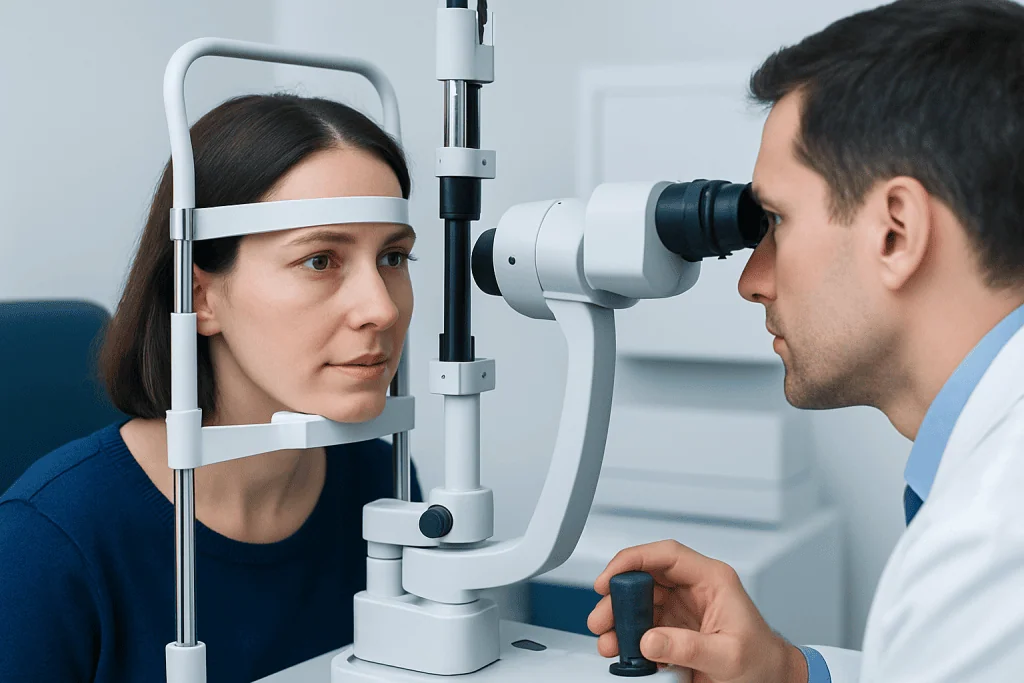
For a straightforward subconjunctival hemorrhage, the diagnosis is often made during a routine exam. The doctor checks visual acuity, pupil reactions, and the surface of the eye to confirm that the blood is limited to the conjunctiva. If another condition is suspected, the assessment may become more detailed.
Additional tests are not needed for every patient. However, recurrent episodes or unusual findings may lead to blood pressure measurement, blood tests, or a broader eye assessment. If internal eye disease needs to be ruled out, the doctor may recommend a more comprehensive ophthalmology evaluation.
When redness is linked to possible retinal problems, diabetes, or vascular disease, examination of the back of the eye may be important. Depending on the situation, related testing can sometimes include retinal examination to assess eye health more fully.
Treatment, healing time, and what to do at home
In a typical subconjunctival hemorrhage, the blood does not need to be removed. The body gradually clears it on its own, and treatment focuses on comfort rather than the red spot itself. Many cases improve within one to two weeks, though larger spots can take longer.
Artificial tears or lubricating eye drops may help if the eye feels dry or slightly irritated. It is usually wise to avoid rubbing the eye, wearing contact lenses until comfortable again, or using redness-relief drops unless a clinician advises them. Ice or warm compresses are not usually necessary, though a cool compress may feel soothing for mild irritation.
People should not stop prescribed blood thinners on their own just because a red spot appears. If medication may be contributing, the prescribing doctor can decide whether any change is needed. Self-adjusting these medicines can carry serious risks.
If the red spot is due to another problem, treatment depends on the cause. For example, dryness, allergy, infection, inflammation, or trauma may each need different care. This is why pain, discharge, vision changes, or repeated episodes should be medically assessed rather than treated as a routine broken vessel.
Prevention and self-care
Not every case can be prevented, but a few practical steps may lower the chance of another episode. Managing blood pressure, controlling diabetes, and attending routine medical care are important for overall vessel health. Taking medicines exactly as prescribed also matters.
Protecting the eyes from minor injury is another useful step. Safety eyewear can help during sports, home repairs, or work with dust and debris. People who wear contact lenses should use them as directed and avoid sleeping in them unless specifically approved.
- Avoid forceful eye rubbing
- Treat constipation or heavy straining when possible
- Use lubricating drops if dryness leads to rubbing or irritation
- Check with a doctor if blood spots keep coming back
People with frequent nose blowing, severe coughing, or recurrent vomiting may wish to discuss symptom control with a clinician, since repeated pressure changes can contribute. Prevention is often about reducing triggers and identifying health factors that make blood vessels more fragile.
When to seek medical care
A doctor should assess a red spot on eye promptly if it follows an injury, if vision is blurred, or if there is significant pain. Medical care is also important for light sensitivity, thick discharge, swelling around the eye, headache with nausea, or a feeling that something is seriously wrong. These features suggest the redness may not be a simple subconjunctival hemorrhage.
Non-urgent review is reasonable if the spot keeps returning, if both eyes are affected, or if there are frequent bruises or bleeding elsewhere in the body. People taking blood thinners or those with uncontrolled high blood pressure should mention the episode to their clinician, especially if it happens more than once.
If the red area is not starting to improve after about two weeks, or if new symptoms develop during healing, follow-up is sensible. Acibadem International’s multidisciplinary specialists and JCI-accredited hospitals diagnose and treat eye conditions for international patients when more detailed evaluation is needed.
Frequently asked questions
Is a red spot on eye usually serious?
Usually not. In many cases it is a subconjunctival hemorrhage, which is a tiny broken blood vessel on the surface of the eye and often heals on its own. It becomes more concerning if there is pain, blurred vision, injury, or repeated episodes.
How long does a red spot on eye take to go away?
Many improve within one to two weeks, although larger spots can take longer. The color may change as the blood is reabsorbed, similar to a bruise. If it is not improving or if symptoms appear, a doctor should review it.
Can high blood pressure cause a red spot on eye?
High blood pressure can make small blood vessels more likely to break, so it can be a contributing factor. One isolated red spot does not by itself diagnose hypertension, but recurrent episodes are a good reason to have blood pressure checked.
Should someone use eye drops for a blood spot in the eye?
Lubricating artificial tears can help if the eye feels dry or mildly irritated. They do not remove the blood faster, but they may improve comfort. Redness-relief drops are usually not necessary unless a clinician recommends them.
Can contact lenses cause a red spot on eye?
They can contribute if they irritate the surface of the eye or lead to rubbing. If a red spot appears, it is often best to avoid contact lenses until the eye feels comfortable again and to seek advice if there is pain or discharge.
When should a red spot on eye be checked urgently?
Urgent assessment is appropriate after trauma or when redness comes with pain, light sensitivity, reduced vision, severe headache, nausea, or pus-like discharge. These symptoms may indicate a different eye problem that needs prompt treatment.
References
- American Academy of Ophthalmology
- National Eye Institute
- Merck Manual Consumer Version
- Mayo Clinic
- NHS
This article is for general information only and is not a substitute for professional medical advice. Please consult a qualified doctor about your individual situation.
Explore treatments in Turkey — costs, top hospitals & a free quote
JCI-accredited · board-certified surgeons · reply within 24h
Add us as a Preferred Source to see more of our trusted health content across Google Search, AI Overviews and Discover.
Check your numbers in seconds
BMI, calories, due date, blood pressure and 30+ more clinical calculators — free, instant, doctor-reviewed ranges.

More from the Health Library

Healthy Snacks for Weight Loss: What Patients Need to Know

Key Lime Juice: An Evidence-Based Guide for Patients

Blood When I Wipe: An Evidence-Based Guide for Patients

Tiger Balm: A Complete Medical Overview

When a Sudden Black Spot on Skin Needs Assessment