Sciatic Endometriosis Treatment: How It Works, Results and What to Expect

Sciatic endometriosis is an uncommon form of endometriosis involving tissue near or affecting the sciatic nerve. Symptoms may follow a menstrual pattern at first, often causing deep buttock pain that travels down one leg.
Key Takeaways
- Sciatic endometriosis is an uncommon form of endometriosis involving tissue near or affecting the sciatic nerve.
- Symptoms may follow a menstrual pattern at first, often causing deep buttock pain that travels down one leg.
- MRI can help identify deep endometriosis and nerve involvement, although a normal scan does not always exclude the condition.
- Hormonal treatment may control active disease and symptoms, while surgery may be considered for significant nerve compression, weakness or uncontrolled pain.
- Prompt medical review is important for new leg weakness, foot drop, bladder or bowel changes, or severe escalating pain.
Sciatic endometriosis treatment is individualized and may include hormonal medicines, pain management, physical rehabilitation and surgery when endometriosis affects or compresses the sciatic nerve. Early assessment by an experienced multidisciplinary team is important because persistent nerve involvement can lead to worsening pain, weakness or loss of function.
Sciatic Endometriosis Treatment: How It Works
Sciatic endometriosis treatment aims to reduce inflammation and pain, suppress hormonally active endometriosis tissue, and protect the sciatic nerve from ongoing irritation or compression. The most appropriate approach depends on symptoms, imaging findings, plans for pregnancy, the extent of disease and whether there are signs of nerve damage. Care is usually planned jointly by gynecology specialists, radiologists, pain clinicians, physiotherapists and, when needed, peripheral nerve, neurosurgical or orthopedic specialists.
Endometriosis occurs when tissue similar to the lining of the uterus grows outside the uterus. In sciatic endometriosis, lesions may occur close to the sciatic nerve in the pelvis or, less often, involve the nerve itself. The sciatic nerve runs from the lower back through the buttock and down the leg, so irritation can produce symptoms that resemble common sciatica from a spinal disc problem.
First-line care may include hormonal treatment to reduce cyclical activity of endometriosis and non-opioid pain-relief strategies tailored by a clinician. If symptoms remain severe, imaging indicates substantial nerve involvement, or there is progressive weakness, carefully planned surgery may be recommended. Treatment for the wider condition may be discussed alongside care for endometriosis.
How Serious Is Sciatic Endometriosis?
Sciatic endometriosis can be serious when it causes sustained inflammation, scarring or compression around the nerve. The condition is not usually life-threatening, but untreated or progressive nerve involvement may result in chronic pain, altered sensation, weakness in the leg or foot, and difficulty walking. Symptoms deserve assessment rather than being assumed to be routine back pain or ordinary menstrual discomfort.
At an early stage, pain may occur mainly before or during menstruation. Over time, some people develop pain that lasts between periods as well. The pattern can vary, and not every case is clearly cyclical, especially if scar tissue or nerve injury has developed.
Urgent assessment is appropriate for rapidly worsening weakness, a new inability to lift the front of the foot, numbness in the saddle area, or changes in bladder or bowel control. These symptoms can have several causes, including serious spinal conditions, and require prompt medical evaluation.
What Does Endo Nerve Pain Feel Like?

Endometriosis-related nerve pain is often described as burning, electric, shooting, stabbing or deep aching pain. With sciatic nerve involvement, pain may start in the lower back, pelvis or buttock and travel down the back or side of one leg. It may be accompanied by tingling, numbness, sensitivity to touch, cramps or a feeling of weakness.
A clue that can support suspicion of endometriosis is a recurring relationship between symptoms and the menstrual cycle. Pain may increase in the days before bleeding or during periods, sometimes alongside pelvic pain, painful periods, pain during sex, bowel symptoms or urinary symptoms. However, symptom timing alone cannot confirm the diagnosis.
Similar symptoms can arise from disc disease, spinal stenosis, hip conditions, pelvic floor dysfunction and other nerve problems. A clinician will consider the full history and perform an examination to distinguish among possible causes. Keeping a symptom and menstrual diary can make patterns easier to identify during an appointment.
Does Sciatic Endometriosis Show on MRI?
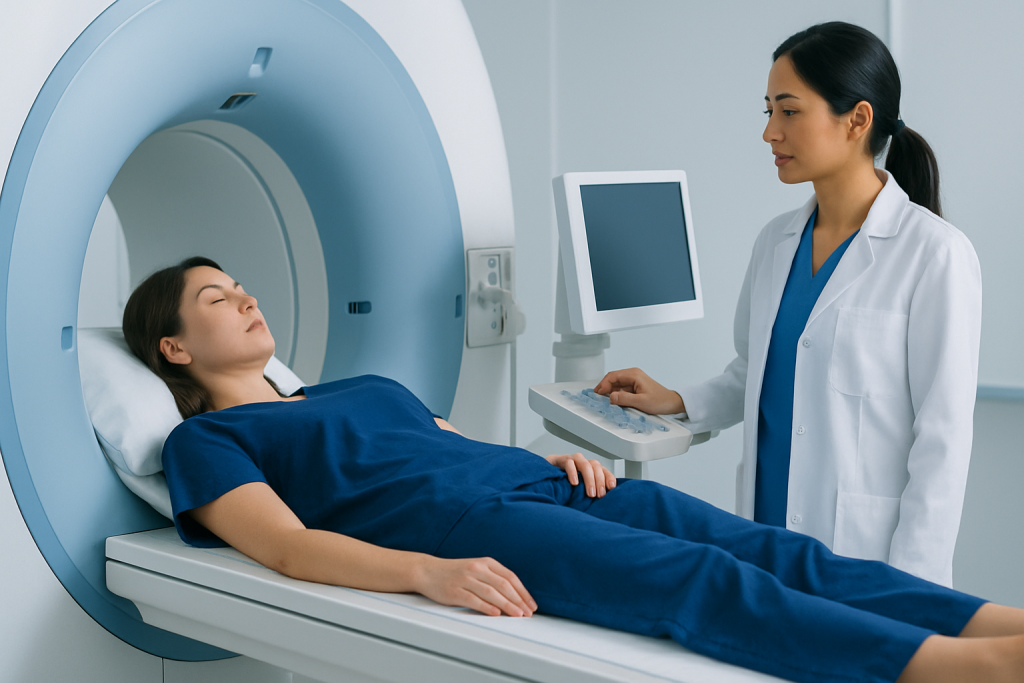
MRI is one of the most useful imaging tests for suspected deep endometriosis, including possible involvement near the sciatic nerve. A dedicated pelvic MRI interpreted by a radiologist familiar with endometriosis may show endometriosis lesions, fibrosis, changes around the sciatic notch, muscle involvement or changes affecting the nerve pathway. The scan may be performed using a protocol designed for deep infiltrating endometriosis.
However, MRI does not identify every case. Small lesions, superficial disease and certain forms of nerve involvement can be difficult to see, and image quality and interpretation experience matter. A normal MRI therefore does not always completely rule out sciatic endometriosis when the clinical history and examination remain strongly suggestive.
Assessment may also include pelvic examination when appropriate, neurological examination, ultrasound for associated pelvic disease, and imaging of the lumbar spine or hip if other causes of sciatica need consideration. Laparoscopy can confirm and treat some endometriosis, but it is not automatically the first diagnostic step for every person with sciatic-type pain.
Who May Be a Candidate for Surgery?
Surgery is not necessary for everyone with suspected or confirmed sciatic endometriosis. It may be considered when symptoms significantly affect daily life despite suitable medical treatment, when imaging suggests a lesion compressing or infiltrating the nerve, or when there is objective weakness, muscle wasting or progressive sensory loss. The decision should balance the potential benefit of removing disease against the complexity and risks of operating close to major nerves and blood vessels.
People who are trying to conceive may have different priorities because some hormonal medicines prevent ovulation while being used. A specialist can explain how symptom control, fertility plans and the location of disease influence the treatment sequence. Other pelvic endometriosis, adhesions, bowel involvement or urinary tract involvement may also affect the surgical plan.
Before surgery, the team typically reviews symptoms, prior treatments, MRI findings and physical examination results. In selected cases, additional input from pain medicine, neurology, urology, colorectal surgery or rehabilitation is valuable. This coordinated planning helps ensure that treatment addresses both pelvic disease and nerve-related symptoms.
What Happens During Sciatic Endometriosis Surgery?
When surgery is advised, it is usually performed under general anesthesia in a hospital setting. Many procedures use laparoscopy, also called keyhole surgery, in which a camera and fine instruments are introduced through small abdominal incisions. The surgeon examines the pelvis and carefully identifies endometriosis, scar tissue and the relationship of lesions to the sciatic nerve and nearby structures.
The procedure may involve releasing scar tissue, removing visible endometriosis lesions and freeing the nerve from external compression, a process sometimes called nerve decompression or neurolysis. If disease extends beyond the pelvis or directly involves the nerve, the operation can be more complex and may require combined expertise. The goal is complete and safe removal where feasible, while avoiding unnecessary injury to nerve tissue.
Not all surgery follows the same steps, and the exact approach is based on anatomy and disease extent. Patients should ask their surgical team about the anticipated procedure, possible need for additional specialist involvement, expected hospital stay and the plan if findings differ from preoperative imaging. Where appropriate, endometriosis treatment may include a combination of surgery and ongoing medical management.
Benefits, Risks and Recovery Timeline
Potential benefits of successful treatment include less cyclical or constant pain, improved mobility, reduced reliance on pain medicines and protection of remaining nerve function. Hormonal therapy can reduce endometriosis activity and may help prevent or delay symptom recurrence after surgery. Nerve recovery is often gradual; pain can improve before numbness or weakness, and symptoms that have been present for a long time may not fully resolve.
Risks depend on the chosen treatment. Hormonal medicines can cause side effects that should be reviewed with the prescribing clinician. Surgical risks include bleeding, infection, blood clots, injury to nearby pelvic organs, persistent pain, recurrence of endometriosis and nerve-related complications such as numbness or weakness. These risks are particularly important to discuss when disease is close to or within the nerve.
After minimally invasive surgery, many people begin short walks soon after the procedure and return to light activities over the following days to weeks, according to their surgeon’s instructions. More extensive operations can require a longer recovery. Follow-up commonly includes pain review, wound assessment, a gradual return to activity, pelvic or neurological physiotherapy when indicated, and discussion of postoperative hormonal suppression.
At Acibadem International, multidisciplinary specialists in JCI-accredited hospitals can assess and treat endometriosis-related pelvic and nerve symptoms for international patients, with care coordinated according to individual clinical needs.
When to Seek Medical Care
Medical review is advisable for recurring buttock or leg pain that worsens around menstruation, particularly when it occurs with pelvic pain, heavy or painful periods, pain during sex, or known endometriosis. A gynecologist or clinician experienced in endometriosis can determine whether symptoms may reflect nerve involvement or another cause of sciatica.
Seek urgent medical care for sudden or worsening leg weakness, foot drop, loss of sensation around the genitals or inner thighs, new difficulty controlling urine or stool, fever with severe pain, or pain after significant injury. These symptoms are not specific to endometriosis and need timely evaluation.
While awaiting assessment, gentle movement within comfort, sleep support, heat for muscular discomfort and a symptom diary may help some people manage symptoms. It is best to avoid pushing through activities that clearly worsen nerve pain, and to discuss all medicines, supplements and fertility goals with a qualified healthcare professional.
Frequently asked questions
Is sciatic endometriosis curable?
There is no guaranteed permanent cure for endometriosis, including sciatic endometriosis, because lesions and symptoms can recur after treatment. However, hormonal therapy, surgery and rehabilitation can provide substantial symptom control and may protect nerve function. The outlook depends on the extent of disease, response to treatment and whether nerve damage was present before care began.
Can hormonal therapy treat sciatic endometriosis?
Hormonal therapy may reduce the activity of endometriosis lesions and improve cyclical pain for many people. It does not remove existing scar tissue or reliably reverse significant nerve compression. A specialist may recommend surgery instead of, or in addition to, hormones when there is progressive weakness or substantial nerve involvement.
How is sciatic endometriosis different from ordinary sciatica?
Ordinary sciatica commonly results from irritation of a spinal nerve root, such as from a disc problem. Sciatic endometriosis is related to endometriosis affecting tissues around the sciatic nerve or its pelvic pathway. A menstrual pattern and accompanying pelvic symptoms can raise suspicion, but assessment is needed because symptoms overlap.
Will surgery reverse nerve damage from sciatic endometriosis?
Surgery can remove endometriosis and relieve pressure on the nerve when this is safely possible, which may prevent further damage and improve pain. Nerves heal slowly, and recovery of sensation or strength may take months. Long-standing or severe nerve damage may not fully reverse.
Can sciatic endometriosis affect both legs?
It more often causes symptoms on one side, but symptoms can vary depending on the location and extent of disease. Pain affecting both legs does not exclude endometriosis, but it also increases the importance of evaluating spinal, neurological and other possible causes. A clinician can guide appropriate imaging and referral.
What specialist treats sciatic endometriosis?
Care is often led by a gynecologist with expertise in deep endometriosis. Depending on symptoms and imaging, the team may also include a radiologist, pain medicine specialist, neurologist, physiotherapist and surgeons experienced in pelvic nerves. Multidisciplinary planning is particularly helpful when surgery is being considered.
References
- American College of Obstetricians and Gynecologists
- European Society of Human Reproduction and Embryology
- National Institute for Health and Care Excellence
- World Health Organization
This article is for general information only and is not a substitute for professional medical advice. Please consult a qualified doctor about your individual situation.
Endometriosis in Turkey — costs, top hospitals & a free quote
JCI-accredited · board-certified surgeons · reply within 24h
Add us as a Preferred Source to see more of our trusted health content across Google Search, AI Overviews and Discover.

Gynecology & Obstetrics
Women’s health across pregnancy, gynecologic surgery and high-risk pregnancy care.
187 specialists in this unit