Spermatocele: Benign Testicular Cysts and When to Treat

A spermatocele is typically a benign cyst arising from the epididymis, not a cancerous growth in the testicle. Many spermatoceles cause no symptoms and are found during self-examination or a routine physical exam.
Key Takeaways
- A spermatocele is typically a benign cyst arising from the epididymis, not a cancerous growth in the testicle.
- Many spermatoceles cause no symptoms and are found during self-examination or a routine physical exam.
- Scrotal ultrasound is commonly used to confirm the diagnosis and distinguish a spermatocele from other causes of scrotal swelling.
- Treatment is usually only considered if the cyst causes discomfort, becomes large, or affects daily activities.
- Sudden severe testicular pain, fever, redness, or rapidly increasing swelling should be assessed urgently.
A spermatocele is a usually harmless, fluid-filled cyst that develops near the epididymis, the small coiled tube behind the testicle. Most spermatoceles do not need treatment, but medical evaluation is important to confirm the diagnosis and decide whether observation or treatment is appropriate.
Overview
A spermatocele is a fluid-filled cyst that forms in or near the epididymis, the tube located at the back and upper part of each testicle where sperm mature and are transported. The fluid inside a spermatocele may be clear or milky and can contain sperm cells. Although it is often described as a testicular cyst, it usually develops outside the testicle itself.
Spermatoceles are generally benign and noncancerous. They are common in adult men and may be discovered by chance during a shower, self-examination, fertility assessment, or a medical checkup. Many remain small and stable for years without causing pain or interfering with sexual function.
The term spermatocele is sometimes used alongside epididymal cyst. The two conditions are very similar; an epididymal cyst contains fluid, while a spermatocele contains fluid that may include sperm. In everyday care, the distinction often matters less than confirming that the lump is benign and not another condition that needs different treatment.
Symptoms
Most spermatoceles do not cause symptoms. A man may notice a smooth, rounded, pea-sized or larger lump above or behind the testicle. It is often separate from the testicle and may feel soft or slightly firm. The lump is usually not painful when touched, although awareness of the area can make some men feel anxious.
When a spermatocele grows, it may cause a feeling of heaviness, fullness, or dull discomfort in the scrotum. Some men report that the scrotum feels uneven or that one side appears larger than the other. Discomfort may be more noticeable after exercise, long periods of standing, or sexual activity, but many men have no limitation at all.
Symptoms that are less typical for a simple spermatocele include sudden severe pain, marked redness, fever, nausea, or rapidly increasing swelling. These symptoms can occur with other conditions, such as infection, inflammation, or testicular torsion, and should be checked promptly. Any new scrotal lump should be evaluated by a qualified clinician, even when it feels painless.
Causes and Risk Factors

The exact cause of a spermatocele is not always known. It may develop when one of the tiny ducts in the epididymis becomes blocked, allowing fluid to collect and form a cyst. This blockage does not necessarily reflect poor hygiene, sexual activity, or a serious underlying disease.
Spermatoceles are more often seen in adult men, particularly from middle age onward, but they can occur at different ages. A history of inflammation, minor injury, or prior scrotal surgery may be associated with cyst formation in some cases. However, many men with a spermatocele have no clear risk factor.
A spermatocele is not contagious and is not a sexually transmitted infection. It does not turn into testicular cancer. However, because several conditions can create lumps or swelling in the scrotum, proper assessment is important rather than assuming that every lump is a benign cyst.
Diagnosis
Diagnosis usually begins with a medical history and physical examination. The doctor may ask when the lump was first noticed, whether it has changed in size, and whether there is pain, urinary discomfort, fever, prior injury, or fertility concern. During the examination, the clinician gently feels the scrotum to assess the location, texture, and relationship of the lump to the testicle.
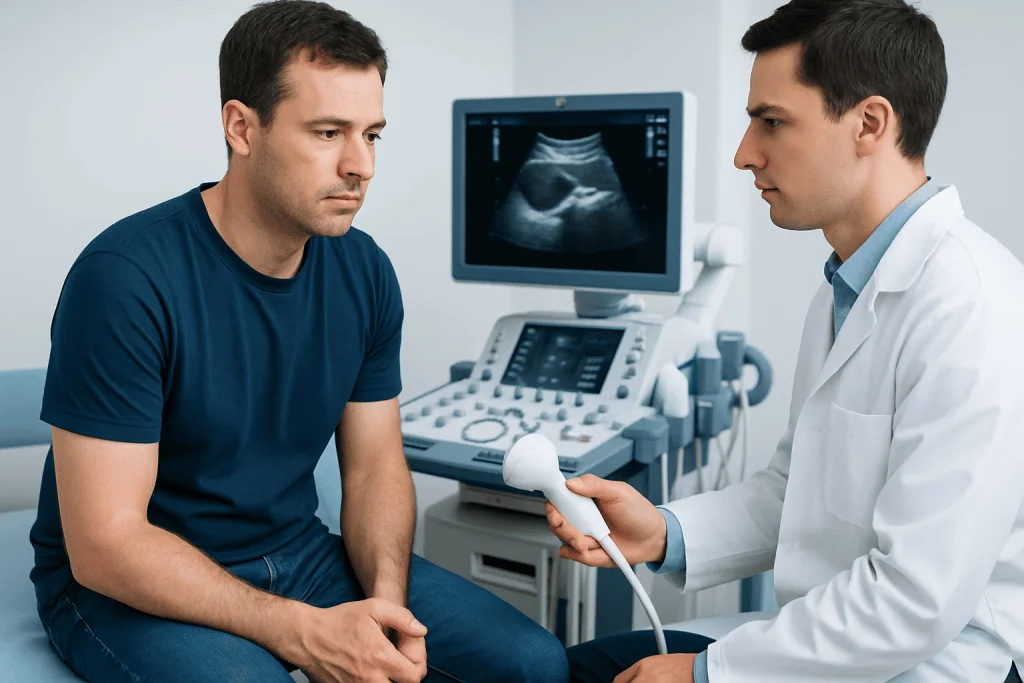
A scrotal ultrasound is the most common imaging test used to confirm a spermatocele. Ultrasound uses sound waves to create images of the testicles and surrounding structures. It can show whether a lump is fluid-filled or solid, whether it arises from the epididymis, and whether the testicle itself appears normal.
In some cases, a clinician may also use transillumination, in which a light is shone through the scrotum. Fluid-filled cysts often allow light to pass through more easily than solid masses. Ultrasound remains more informative and is especially useful when the examination is unclear or when the patient has pain, swelling, or multiple findings.
Other tests are not usually needed for a typical spermatocele. If infection is suspected, urine testing or sexually transmitted infection testing may be recommended. If fertility is a concern, semen analysis may be discussed, particularly before any procedure near the epididymis.
Treatment Options
Most spermatoceles do not need treatment. If the cyst is small, painless, and clearly benign on examination and ultrasound, observation is often the safest approach. The patient may be advised to monitor for changes in size, new pain, or other symptoms, and to return for follow-up if concerns develop.
For mild discomfort, conservative measures may help. These can include supportive underwear, avoiding activities that worsen symptoms for a short time, and using over-the-counter pain relief if appropriate for the patient. Men should ask a doctor or pharmacist before using pain medicines if they have kidney disease, stomach ulcers, bleeding problems, take blood thinners, or have other medical conditions.
Surgery may be considered when a spermatocele is large, uncomfortable, cosmetically bothersome, or affects daily life. The usual operation is called spermatocelectomy, in which the cyst is removed while the surgeon aims to preserve the testicle and surrounding structures. It is commonly performed by a urologist, and the decision should include discussion of benefits, recovery, and risks.
Potential risks of spermatocelectomy include bleeding, infection, recurrence, chronic discomfort, and injury to the epididymis or vas deferens. Because these structures are involved in sperm transport, surgery can sometimes affect fertility, especially if both sides are involved or if a man already has fertility challenges. Aspiration or sclerotherapy may be considered in selected cases, but these are less commonly used because cysts can recur and there may be irritation or damage to nearby structures.
Fertility, Sexual Health, and Daily Life
A spermatocele itself usually does not reduce testosterone levels, erections, libido, or the ability to have sex. Many men with spermatoceles remain fully active and do not notice any effect on sexual performance. If discomfort occurs during activity or intercourse, a clinician can help determine whether the cyst is the cause or whether another condition is present.
Most spermatoceles do not cause infertility. However, the epididymis is part of the reproductive pathway, so any procedure in this area must be planned carefully in men who want future children. Men who are trying to conceive, have a history of low sperm count, or have cysts on both sides should discuss fertility considerations before choosing surgery.
Daily self-care is usually simple. Men can become familiar with the normal feel of their testicles and scrotum so they notice changes early. Self-examination should not replace medical assessment, but it can help a person recognize a new lump, enlargement, or tenderness and seek timely advice.
Prevention and Self-Care
There is no proven way to prevent most spermatoceles because they often develop from small duct blockages without a clear cause. Good general health, prompt attention to scrotal infections or injuries, and safe sexual practices may support overall urogenital health, but they cannot guarantee prevention of cysts.
Self-care focuses on comfort and monitoring. Supportive underwear can reduce pulling or heaviness. If the area becomes temporarily sore after exercise, rest and gentle support may help. A patient should avoid repeatedly squeezing or manipulating the cyst, as this may increase tenderness and anxiety without improving the condition.
It is helpful to keep track of changes. A simple note about when the lump was noticed, whether it is growing, and what symptoms occur can support a more accurate conversation with the doctor. Patients should not attempt to drain or puncture a scrotal cyst at home, as this can cause infection, injury, and scarring.
When to See a Doctor
A medical appointment is recommended for any new lump, swelling, or persistent discomfort in the scrotum. Even when a spermatocele is suspected, a clinician should confirm the diagnosis and rule out other causes, including hydrocele, varicocele, hernia, infection, inflammation, or a testicular mass. Early evaluation is usually straightforward and reassuring.
Urgent care is needed for sudden or severe testicular pain, pain with nausea or vomiting, fever, significant redness, trauma, or rapidly increasing swelling. These symptoms may indicate conditions that require prompt treatment. Men should not wait for these symptoms to settle on their own before seeking care.
Patients may also want specialist review if the cyst is enlarging, interfering with exercise or sexual activity, or creating anxiety. A urologist can explain whether monitoring, imaging follow-up, or treatment is appropriate. Acibadem International’s multidisciplinary specialists and JCI-accredited hospitals evaluate and treat urological conditions, including spermatoceles, for international patients as part of individualized care planning.
Frequently asked questions
Is a spermatocele the same as testicular cancer?
No. A spermatocele is a benign fluid-filled cyst that usually forms in the epididymis, outside the testicle. Testicular cancer typically arises within the testicle and has different features. Because a person cannot reliably tell the difference by touch alone, any new scrotal lump should be checked by a doctor.
Can a spermatocele go away on its own?
Some spermatoceles remain the same size for years, and small cysts may occasionally become less noticeable. However, many do not fully disappear. If it is painless and confirmed as benign, it can often be safely observed without treatment.
Does a spermatocele affect fertility?
Most spermatoceles do not affect fertility. The main fertility concern is related to surgery or procedures near the epididymis, because this area helps transport sperm. Men who want future children should discuss fertility goals with a urologist before treatment.
When is spermatocelectomy recommended?
Spermatocelectomy may be recommended when the cyst is large, painful, bothersome, or affecting daily activities. It is not usually done for a small, painless spermatocele. The decision should balance symptom relief with possible risks, including recurrence and effects on nearby reproductive structures.
Is scrotal ultrasound painful?
Scrotal ultrasound is noninvasive and usually painless. A gel is placed on the skin, and a handheld probe is moved gently over the scrotum to create images. It is commonly used to confirm that a lump is fluid-filled and to assess the testicle and epididymis.
Can exercise or sex make a spermatocele worse?
Exercise or sexual activity does not usually cause a spermatocele to become dangerous. Some men may notice temporary heaviness or discomfort if the cyst is large or if the scrotum is not well supported. If pain is persistent, increasing, or sudden, medical assessment is recommended.
References
- Mayo Clinic
- Cleveland Clinic
- European Association of Urology
- American Urological Association
- National Health Service
This article is for general information only and is not a substitute for professional medical advice. Please consult a qualified doctor about your individual situation.
Explore treatments in Turkey — costs, top hospitals & a free quote
JCI-accredited · board-certified surgeons · reply within 24h
Add us as a Preferred Source to see more of our trusted health content across Google Search, AI Overviews and Discover.