Squinting: A Complete Medical Overview

Squinting is commonly linked to blurred vision, glare, eye strain, or dry and irritated eyes. Occasional squinting is common, but persistent squinting may suggest an underlying eye problem.
Key Takeaways
- Squinting is commonly linked to blurred vision, glare, eye strain, or dry and irritated eyes.
- Occasional squinting is common, but persistent squinting may suggest an underlying eye problem.
- Children who squint often should have a prompt eye examination because vision development can be affected.
- Treatment depends on the cause and may include glasses, eye drops, managing dry eye, or treating an eye condition.
- Sudden squinting with pain, redness, vision loss, or headache needs timely medical attention.
Squinting usually happens when a person narrows the eyes to improve focus or reduce discomfort from bright light. It is often temporary and harmless, but frequent or persistent squinting can point to vision problems, eye irritation, or other eye conditions that benefit from medical evaluation.
What squinting means
Squinting means partially closing the eyelids or narrowing the eyes to see more clearly or to reduce discomfort. In many cases, it is the eye’s automatic way of sharpening focus for a moment, especially when vision is blurry or lighting is harsh. A person may not even notice they are doing it until it becomes frequent.
From a medical perspective, squinting is a symptom rather than a disease. It may happen because the eyes are trying to improve focus, because the surface of the eye feels dry or irritated, or because bright light is uncomfortable. It can occur at any age and may be temporary, recurrent, or persistent.
Many people associate the word “squint” with crossed eyes, but these are not the same thing. In everyday language, squinting often refers to narrowing the eyes. Crossed or misaligned eyes are a separate condition called strabismus, which needs its own evaluation and treatment approach.
Common symptoms that may come with squinting
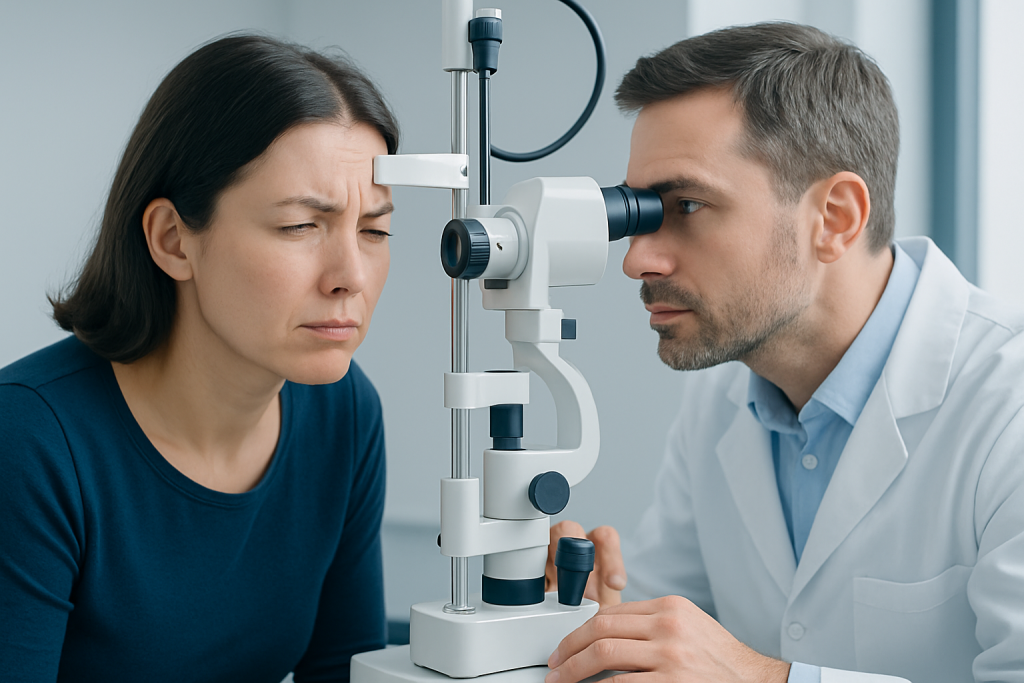
Squinting often appears together with other visual or eye-related symptoms. Someone may notice that they squint more when reading signs, looking at a screen, driving, or moving from dim to bright environments. The pattern can offer clues about the underlying cause.
Associated symptoms may include:
- Blurred vision at near or far distances
- Eye strain or tired eyes
- Headaches, especially after reading or screen use
- Sensitivity to sunlight or indoor glare
- Dryness, burning, stinging, or a gritty feeling
- Excess tearing
- Redness or irritation
- Double vision or difficulty focusing
In children, squinting may be subtle. A child may sit very close to screens, tilt the head, close one eye in bright light, or rub the eyes often. Parents and teachers may notice these signs before the child can describe blurred vision clearly.
Why people squint: causes and risk factors

The most common reason for squinting is blurred vision. When the eyelids narrow, less scattered light enters the eye, which can temporarily make an image seem sharper. This is why uncorrected refractive errors such as nearsightedness, farsightedness, and astigmatism often lead to frequent squinting. In these situations, an eye examination may show that vision could improve with laser vision correction or prescription glasses, depending on the person’s needs and suitability.
Another frequent cause is light sensitivity. Bright sunlight, reflective surfaces, strong indoor lighting, or eye inflammation can make the eyes uncomfortable and trigger squinting. Dry eye is especially common, because an unstable tear film can blur vision and irritate the eye surface at the same time. Conditions such as dry eye may therefore cause both discomfort and repeated squinting.
Eye fatigue can also play an important role. Long periods of reading, computer work, and phone use may reduce blinking, dry the eye surface, and strain focusing muscles. In some cases, the problem is not on the eye surface but deeper in the eye. For example, a lens opacity such as cataract may scatter light and make vision worse, leading a person to squint in an attempt to see more clearly.
Risk factors include older age, prolonged screen use, previous eye disease, poor lighting, spending time outdoors in bright sun without eye protection, and a family history of refractive error or other eye conditions. Some neurological or muscular problems can also affect how the eyes align or focus, although these are less common causes of simple squinting.
How doctors evaluate squinting
Evaluation begins with a careful history. A doctor or eye specialist will usually ask when squinting happens, whether it affects one or both eyes, and whether it is associated with blurred vision, pain, headaches, redness, or light sensitivity. It is also helpful to know whether symptoms are new or longstanding and whether they appear mostly during reading, screen use, driving, or outdoor activities.
The eye examination may include checking visual acuity, eye alignment, focusing ability, and the health of the eye surface. The specialist may look for dry eye, eyelid problems, inflammation, or signs of infection. If vision is not clear, refraction testing can identify whether glasses or contact lenses are needed. A child who squints often may need a pediatric eye assessment to make sure both eyes are developing normal vision.
Additional tests depend on the suspected cause. These may include a slit-lamp examination to inspect the cornea and lens, tear film testing for dryness, or pressure measurement when glaucoma is a concern. If a structural eye problem is suspected, imaging or more specialized ophthalmic testing may be recommended. The goal is to identify not only why the person is squinting, but also whether there is any condition that could worsen without treatment.
Treatment options for squinting
Treatment focuses on the underlying cause rather than the act of squinting itself. If squinting is related to refractive error, corrective glasses or contact lenses often help quickly. Some adults who are appropriate candidates may also discuss refractive procedures such as SMILE laser eye surgery or other vision correction options with an ophthalmologist.
When dry eye or irritation is the main problem, treatment may include lubricating drops, improving blinking habits, reducing screen-related strain, and addressing environmental triggers such as air conditioning, wind, or smoke. If inflammation, infection, or allergy is present, a doctor may prescribe targeted treatment. For people who squint because of glare, sunglasses with proper UV protection can be useful outdoors.
If the cause is a condition like cataract, treatment may involve monitoring at first and later surgical management if vision becomes limited. In selected cases, cataract surgery can restore clearer vision and reduce symptoms such as glare and the urge to squint. When squinting is linked to eye misalignment, treatment depends on the diagnosis and may include glasses, exercises in some cases, or specialized ophthalmic care.
Self-treatment should be cautious. It is reasonable to rest the eyes, improve lighting, and use simple comfort measures, but persistent squinting should not be ignored or repeatedly blamed on fatigue alone. Professional assessment helps rule out conditions that need more specific care.
Prevention and everyday self-care
Not all squinting can be prevented, but everyday eye care can reduce common triggers. Good visual habits are especially helpful for people who spend long hours on screens or who work in bright or dry environments. Preventive steps are meant to support eye comfort, not replace medical assessment when symptoms continue.
Helpful habits include:
- Having routine eye examinations, especially if vision seems to be changing
- Using prescribed glasses or contact lenses as recommended
- Taking regular breaks during reading and screen use
- Blinking often and using lubricating eye drops if advised
- Adjusting screen brightness and reducing glare
- Wearing sunglasses with UV protection outdoors
- Keeping rooms well lit for reading and detailed tasks
For children, prevention mainly means early detection. Regular vision screening and attention to signs such as sitting too close to a screen, frequent eye rubbing, or covering one eye can make a meaningful difference. Early treatment of vision problems supports learning, comfort, and normal visual development.
When to seek medical care
Medical advice is appropriate if squinting happens often, lasts for days or weeks, or seems to be getting worse. It is also a good idea to arrange an eye examination if squinting is paired with blurred vision, repeated headaches, poor school or work visual performance, or discomfort in bright light. In children, regular squinting deserves prompt attention because untreated vision problems can affect development.
Urgent evaluation is needed if squinting begins suddenly and is accompanied by severe eye pain, sudden vision loss, new double vision, significant redness, injury, flashes of light, or a severe headache with nausea. These symptoms do not always indicate a serious emergency, but they do require timely assessment to protect vision and overall health.
For people seeking specialist assessment, Acibadem International’s multidisciplinary teams and JCI-accredited hospitals diagnose and treat eye conditions for international patients. A qualified ophthalmologist can help determine whether squinting is a simple response to eye strain or a sign of an underlying disorder that needs treatment.
Frequently asked questions
Is squinting always a sign of bad eyesight?
No. Squinting often happens when vision is blurry, but it can also be caused by bright light, dry eyes, eye irritation, or fatigue. If it happens frequently, an eye examination can help identify the reason.
Can children squint even if they do not complain of vision problems?
Yes. Children may not realize their vision is different from normal, so they may show signs such as squinting, sitting close to screens, or tilting the head instead of describing blur. That is why regular vision checks are important.
Does screen time cause squinting?
Screen time can contribute to squinting by causing eye strain, reduced blinking, and dry eye symptoms. It may also make blurred vision more noticeable during prolonged focusing. Breaks, better lighting, and proper vision correction often help.
When is squinting considered urgent?
Squinting needs urgent medical attention if it appears suddenly with severe pain, vision loss, double vision, eye injury, marked redness, or a strong headache. These symptoms can point to conditions that should be assessed quickly.
Can squinting go away with glasses?
If squinting is caused by an uncorrected refractive error, glasses or contact lenses may reduce it significantly. This is because clear focus removes the need to narrow the eyes to sharpen vision. The effect depends on the underlying cause.
Is squinting the same as strabismus?
No. Squinting usually means narrowing the eyelids, while strabismus means the eyes are not properly aligned. The two can sometimes be confused in everyday language, but they are medically different issues.
This article is for general information only and is not a substitute for professional medical advice. Please consult a qualified doctor about your individual situation.
Explore treatments in Turkey — costs, top hospitals & a free quote
JCI-accredited · board-certified surgeons · reply within 24h
Add us as a Preferred Source to see more of our trusted health content across Google Search, AI Overviews and Discover.

More from the Health Library

Hemorrhage: What Patients Need to Know

Heartburn Remedies: A Complete Medical Overview

Hypertension: What Patients Need to Know

Bladderwrack — Explained by Medical Evidence, Not Myths

Calcitriol: A Complete Medical Overview