Sudden Eyelid Drooping: Eye Problem, Nerve Problem, or Medical Emergency?

Sudden eyelid drooping can result from problems in the eyelid muscle, the nerves controlling it, or the brain. A drooping eyelid with double vision, headache, unequal pupils, weakness, or speech changes may be a medical emergency.
Key Takeaways
- Sudden eyelid drooping can result from problems in the eyelid muscle, the nerves controlling it, or the brain.
- A drooping eyelid with double vision, headache, unequal pupils, weakness, or speech changes may be a medical emergency.
- Doctors diagnose the cause through a careful eye and neurological examination and sometimes blood tests or imaging.
- Treatment depends on the underlying cause and may involve medicines, monitoring, or surgery.
- Any new, unexplained eyelid drooping should be evaluated by a qualified doctor.
Sudden eyelid drooping, also called ptosis, may be caused by a local eyelid problem, a nerve disorder, or a more serious medical condition. Because the cause can range from mild to urgent, new or sudden drooping should be assessed promptly, especially if it appears with other neurological or eye symptoms.
Overview: What Sudden Eyelid Drooping Means
Sudden eyelid drooping is the unexpected lowering of the upper eyelid over one or both eyes. Doctors often use the term ptosis to describe this finding. In some people, the eyelid only droops slightly, while in others it can partly or fully cover the pupil and interfere with vision.
This symptom is not a diagnosis on its own. It can happen because the eyelid muscle has weakened, the tendon that lifts the lid has stretched, or the nerve signals to that muscle are not working properly. Less commonly, a brain or blood vessel problem may be responsible.
Because the eyelid sits close to important eye muscles and cranial nerves, sudden drooping deserves attention. A person may simply have an eyelid issue, but the same symptom can also appear with conditions affecting the nervous system, such as stroke or a problem involving the third cranial nerve. The key question is not only whether the lid is drooping, but also whether there are other symptoms that point to an urgent cause.
Symptoms That May Happen Alongside a Drooping Eyelid
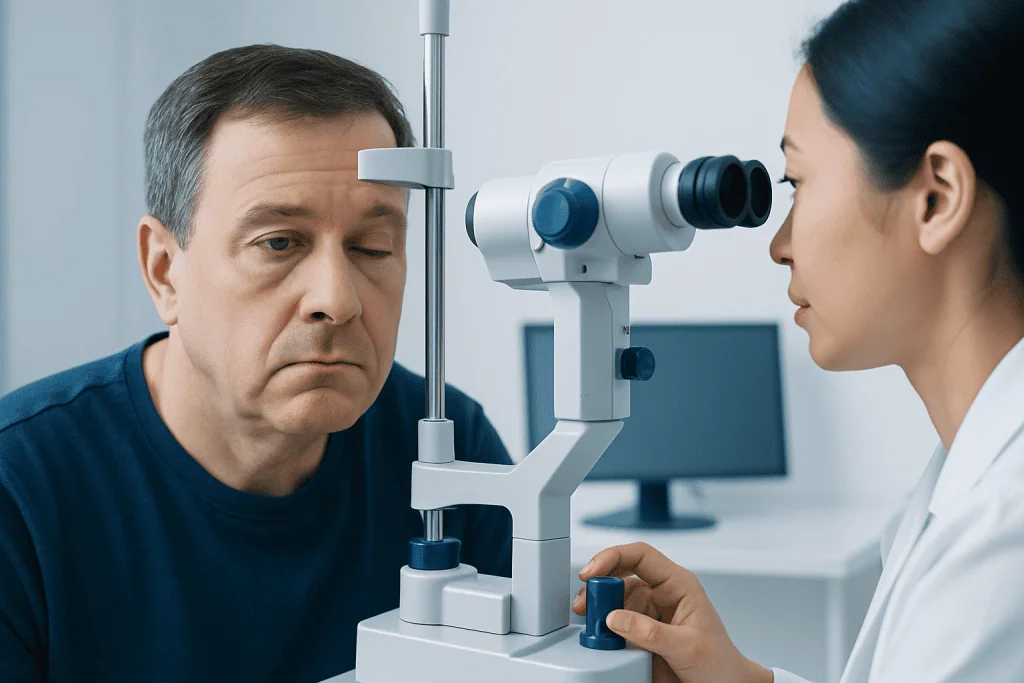
The main symptom is a noticeable lowering of the upper eyelid. It may affect one eye or both eyes and may be constant or fluctuate over the course of the day. Some people notice that they raise their eyebrows, tilt their head back, or feel eye strain as they try to see under the lid.
Other eye-related symptoms can help narrow down the cause. These include blurred vision, double vision, trouble moving the eye, eye pain, sensitivity to light, a smaller or larger pupil on one side, or a feeling of heaviness around the eye. In children and older adults alike, reduced vision from a drooping eyelid can interfere with daily activities.
Certain associated symptoms are especially important because they may suggest a neurological emergency rather than a simple eyelid problem. Warning features include:
- Sudden severe headache
- Double vision that starts abruptly
- Weakness or numbness in the face, arm, or leg
- Difficulty speaking or understanding speech
- Loss of balance or dizziness
- Unequal pupil size
- New facial pain or neck pain
If any of these occur with sudden eyelid drooping, urgent medical assessment is important.
Causes and Risk Factors

Sudden eyelid drooping can come from several different mechanisms. One group of causes involves the eyelid itself, such as age-related stretching of the levator tendon, swelling, trauma, or a mass that makes the lid heavy. These causes may be uncomfortable or visually bothersome, but they are not always dangerous.
Another group involves the nerves and muscles that lift the eyelid. The levator muscle is controlled mainly by the third cranial nerve, and a small supportive muscle is influenced by sympathetic nerves. If these pathways are affected, the lid may drop suddenly. Examples include third nerve palsy, Horner syndrome, and neuromuscular junction disorders such as myasthenia gravis. In myasthenia gravis, drooping may worsen with fatigue and improve with rest.
Brain and blood vessel conditions are particularly important to exclude. A stroke, aneurysm, or other neurological disorder can present with ptosis, especially when it occurs together with double vision, abnormal pupils, or limb weakness. Conditions such as diabetes may also affect cranial nerves. In some cases, infection, inflammation, or recent surgery around the eye can play a role.
Risk factors depend on the cause but may include older age, diabetes, high blood pressure, autoimmune disease, eye trauma, recent eye procedures, smoking, and vascular disease. Still, sudden eyelid drooping can also occur in people without obvious risk factors, which is why symptoms and examination findings matter more than age alone.
When Sudden Eyelid Drooping May Be a Medical Emergency
Not every drooping eyelid is an emergency, but some situations require immediate care. A particularly important example is sudden ptosis with a new enlarged pupil, eye movement problems, or double vision. This pattern may suggest compression of the third cranial nerve, sometimes by an aneurysm, and it needs urgent evaluation.
Another emergency concern is ptosis occurring with signs of stroke. If drooping appears together with facial asymmetry, arm weakness, numbness, confusion, speech difficulty, or trouble walking, emergency services should be contacted right away. Rapid assessment is essential because early treatment can improve outcomes in some causes of stroke.
Sudden ptosis can also be urgent if it follows head or neck trauma, is associated with severe headache or neck pain, or appears with sudden vision loss. These features can point to vascular or neurological problems that should not be monitored at home. Even when symptoms seem mild, new-onset ptosis is best assessed promptly by an eye specialist, neurologist, or emergency physician depending on the situation.
How Doctors Diagnose the Cause
Diagnosis begins with a careful medical history. The doctor will ask when the drooping started, whether it is constant or fluctuating, and whether there are symptoms such as double vision, pain, headache, weakness, recent trauma, or recent illness. Any personal history of diabetes, autoimmune disease, migraines, or prior eye surgery may also be relevant.
A detailed examination follows. This usually includes checking visual acuity, pupil size and reactions, eyelid position, eye movements, facial strength, and general neurological function. The pattern of ptosis often gives important clues. For example, a small pupil on the same side can suggest Horner syndrome, while limited eye movements may suggest a third nerve problem.
Depending on findings, additional tests may be needed. These can include blood tests for autoimmune or metabolic causes, imaging such as MRI, CT, or vascular imaging, and specialized testing when a neuromuscular disorder is suspected. If doctors are concerned about stroke or an aneurysm, urgent brain and blood vessel imaging may be arranged. In some patients, evaluation by specialists in neuroophthalmology, neurology evaluation, or neurosurgical assessment helps guide the next steps.
Treatment Options
Treatment for sudden eyelid drooping depends entirely on the cause. If the problem is due to swelling, inflammation, infection, or a temporary nerve irritation, treatment focuses on that underlying issue. If the drooping reflects a systemic disease such as myasthenia gravis or diabetes-related nerve palsy, managing the broader condition is the priority.
When ptosis is linked to a neurological emergency, treatment may be urgent and hospital-based. A stroke, aneurysm, or other acute brain or blood vessel condition is treated according to its specific diagnosis. In such cases, the drooping eyelid itself is a clue rather than the main problem. Imaging, monitoring, and specialist treatment are often needed without delay.
If the lid remains droopy after the underlying cause has stabilized, procedures to improve eyelid position may be considered. These are usually planned rather than emergency treatments and are chosen based on how well the eyelid muscle still functions. In selected patients, doctors may discuss oculoplastic surgery or other supportive measures to improve vision and comfort. Temporary self-treatment is not a substitute for a proper diagnosis, especially when the onset is sudden.
Prevention, Self-care, and Recovery
There is no single way to prevent all cases of sudden eyelid drooping because the causes vary widely. However, managing general vascular health can reduce the risk of some nerve and brain-related causes. Good control of blood pressure, blood sugar, and cholesterol, along with not smoking, supports both neurological and eye health.
Self-care should focus mainly on safety until a diagnosis is made. If the eyelid blocks vision, a person should avoid driving or operating machinery. If double vision is present, limiting activities that require precise depth perception may help prevent falls or accidents. It is also sensible to note whether symptoms worsen with fatigue, because that information may help the doctor.
Recovery depends on the underlying problem. Some causes improve over days to weeks, while others may require long-term treatment or surgery. Follow-up is important, especially if symptoms change, spread to the other eye, or come with new neurological signs. Near the end of the care pathway, some patients may benefit from coordinated input from eye, neurology, and surgical teams; Acibadem International’s multidisciplinary specialists in JCI-accredited hospitals also diagnose and treat patients with neuroophthalmic conditions when international care is needed.
When to See a Doctor
Any sudden, unexplained eyelid drooping should be evaluated by a doctor. Even if there is no pain, the symptom can be the first sign of a nerve or brain condition. Early assessment is especially important when the change is new, noticeable, and different from the person’s usual appearance.
Emergency care is needed if the drooping is accompanied by double vision, unequal pupils, severe headache, trouble speaking, weakness, numbness, loss of balance, or sudden vision changes. These symptoms should not be watched at home. Prompt emergency evaluation can help identify serious causes quickly.
Non-emergency medical review is still appropriate if the eyelid drooping fluctuates, causes visual interference, or keeps returning. An ophthalmologist, neuroophthalmologist, or neurologist can determine whether the cause is local, neuromuscular, or neurological and advise on the safest next steps. Early diagnosis often makes treatment more straightforward and helps protect vision and overall health.
Frequently asked questions
Is sudden eyelid drooping always serious?
Not always. Some cases come from a local eyelid problem or a temporary issue with the muscles or tendons. However, because sudden eyelid drooping can also signal a nerve, blood vessel, or brain problem, it should be assessed promptly.
Can a drooping eyelid be a sign of stroke?
Yes, it can be, especially if it appears with weakness, numbness, speech difficulty, imbalance, or other sudden neurological symptoms. On its own, ptosis does not confirm a stroke, but it should not be ignored. Emergency care is important when stroke symptoms are present.
What is the difference between ptosis and a tired-looking eyelid?
Ptosis is a true drooping of the upper eyelid caused by a problem with the lid structure, muscle, or nerve supply. A tired-looking eyelid may simply reflect fatigue, swelling, or normal facial anatomy. A doctor can tell the difference by examining eyelid position, pupil reactions, and eye movements.
Can myasthenia gravis cause sudden eyelid drooping?
Yes. Myasthenia gravis commonly affects the muscles that lift the eyelids and move the eyes. The drooping may fluctuate during the day and often worsens with activity or fatigue.
Will a drooping eyelid go away on its own?
Sometimes it can, depending on the cause. For example, some temporary nerve problems or inflammatory causes may improve over time. But because treatment and urgency vary greatly, it is safest not to assume it will resolve without medical advice.
What tests might be needed for sudden eyelid drooping?
Doctors often begin with a detailed eye and neurological examination. Depending on the findings, they may order blood tests, MRI or CT scans, or specialized tests for neuromuscular disorders. The exact testing depends on whether the suspected cause is in the eyelid, nerve pathway, or brain.
References
- American Academy of Ophthalmology
- National Eye Institute
- National Institute of Neurological Disorders and Stroke
- Mayo Clinic
- Merck Manual
This article is for general information only and is not a substitute for professional medical advice. Please consult a qualified doctor about your individual situation.
Joint and spine care in Turkey — expert assessment & treatment
JCI-accredited · board-certified surgeons · reply within 24h
Add us as a Preferred Source to see more of our trusted health content across Google Search, AI Overviews and Discover.
Check your numbers in seconds
BMI, calories, due date, blood pressure and 30+ more clinical calculators — free, instant, doctor-reviewed ranges.