Surgical Pupil: Procedure, Recovery and Results

A surgical pupil may be irregular, enlarged, displaced or slow to react to light because the iris has been affected. Not every changed-looking pupil needs treatment; symptoms, eye health and the underlying cause guide care.
Key Takeaways
- A surgical pupil may be irregular, enlarged, displaced or slow to react to light because the iris has been affected.
- Not every changed-looking pupil needs treatment; symptoms, eye health and the underlying cause guide care.
- Pupilloplasty is a microsurgical procedure that can reshape the pupil in selected patients.
- Recovery commonly involves prescription eye drops, protective measures and follow-up visits over several weeks.
- Sudden pupil changes, eye pain, vision loss or new neurological symptoms need urgent medical assessment.
A surgical pupil is a pupil whose size, shape or function has changed because of eye surgery, injury, inflammation or an iris condition. When symptoms such as glare, light sensitivity or blurred vision are significant, an ophthalmologist may consider pupilloplasty or another individualized treatment to improve pupil shape and visual comfort.
Overview: What Does Surgical Pupil Mean?
The term surgical pupil generally describes a pupil that has changed in size, shape, position or reaction to light after an eye procedure. The pupil is the dark opening in the center of the iris, the colored part of the eye. It controls how much light enters the eye, so changes to the iris or pupil can sometimes affect vision as well as appearance.
A surgical pupil may be round but unusually large, or it may look oval, peaked, off-center or irregular. It can occur after cataract surgery, glaucoma surgery, retinal surgery or surgery for an eye injury. In some situations, the term may also be used when surgeons deliberately alter or reconstruct the pupil during an operation.
Many people have a mild pupil change without troublesome symptoms. Others notice glare, halos, reduced contrast in bright settings, light sensitivity or double vision in one eye. An ophthalmologist can determine whether the pupil is the source of these symptoms and whether observation, optical support or a reconstructive procedure is appropriate.
How a Surgical Pupil Develops: Causes and Candidacy for Repair
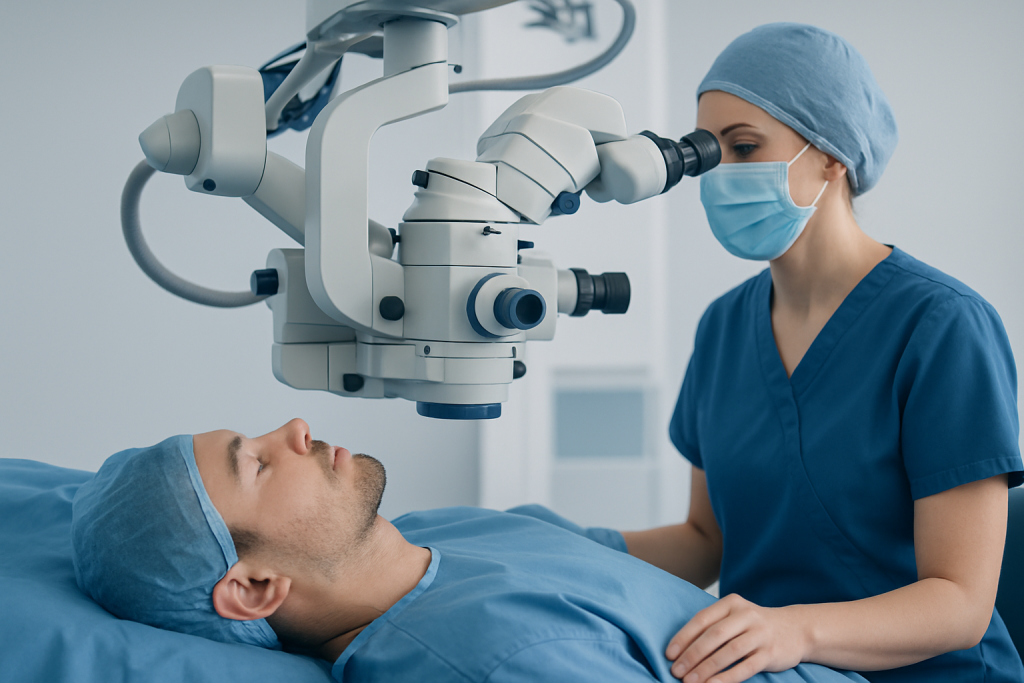
A surgical pupil after cataract surgery may develop when the iris is stretched, weakened, displaced or caught during the operation. Cataract surgery is usually highly successful, but the eye can be more complex when there is prior trauma, a small pupil, pseudoexfoliation, inflammation, previous eye surgery or weakness in the structures supporting the lens. In rare cases, postoperative inflammation or adhesions can also alter pupil shape.
Other causes include blunt or penetrating eye injury, uveitis, iris prolapse, congenital iris differences, previous glaucoma procedures and complications involving an intraocular lens. A fixed, enlarged pupil can also result from damage to the iris sphincter muscle, which normally constricts the pupil in bright light.
People may be candidates for pupil reconstruction when an irregular or enlarged pupil causes persistent glare, disabling light sensitivity, visual distortion, monocular double vision or a significant cosmetic concern. Candidacy depends on a detailed assessment of the cornea, retina, optic nerve, intraocular lens, eye pressure and the amount of healthy iris tissue available. A pupil change alone does not automatically mean surgery is needed.
Before recommending repair, the eye specialist also considers whether symptoms may instead come from dry eye, residual refractive error, posterior capsule clouding, corneal disease or retinal conditions. Identifying the true cause helps avoid unnecessary procedures and supports realistic expectations.
How Pupilloplasty Works: Step-by-Step Procedure

Pupilloplasty is a microsurgical technique used to repair or reshape the pupil. The aim may be to make the pupil smaller, more central or more circular, improving how light enters the eye. It can sometimes be performed as a standalone procedure, while in other cases it is combined with lens, corneal or retinal surgery.
After numbing the eye with local anesthesia, sometimes with sedation depending on the person and planned surgery, the surgeon creates very small openings at the edge of the cornea. Fine instruments are used to carefully place sutures through the iris tissue. The sutures bring the iris edges closer together and create a more functional pupil opening. Several methods may be used, including a slip-knot technique often called the Siepser knot.
The surgeon checks that the reconstructed pupil is centered as much as possible and that it provides an appropriate opening for vision. If a damaged intraocular lens, scar tissue or other eye problem is contributing to symptoms, this may need to be managed during the same operation or separately. The procedure is tailored to the anatomy and goals of the individual eye.
Following surgery, prescribed anti-inflammatory and antibiotic eye drops are commonly used. People should ask their ophthalmologist for specific instructions about eye shielding, bathing, lifting, exercise, driving and returning to work, as recommendations vary with the procedure and other eye conditions.
Benefits, Limits and Possible Risks
The potential benefit of pupilloplasty is improved visual comfort. By reducing excessive light entry and restoring a more regular pupil shape, the procedure may lessen glare, photophobia, halos and monocular double vision. Some people also feel more comfortable with the appearance of the eye after reconstruction.
Results depend on the underlying cause and the health of the rest of the eye. Pupilloplasty cannot reverse retinal, optic nerve or corneal damage, and it may not fully eliminate glare if there are several contributing causes. A careful preoperative discussion should cover the likely benefits, the uncertainties and alternative options, such as tinted lenses, prescription glasses, contact lenses or observation.
As with any intraocular surgery, there are risks. These include infection, bleeding, inflammation, temporary or persistent pressure changes inside the eye, corneal swelling, additional iris damage, cataract-related concerns where a natural lens remains, retinal problems and the need for further treatment. Sutures can occasionally loosen or the pupil can remain somewhat irregular.
Prompt follow-up helps the care team detect and manage complications early. New severe pain, rapidly worsening redness, decreasing vision, flashes, a curtain-like shadow, nausea with eye pain or marked light sensitivity should be assessed without delay.
Recovery Timeline and Everyday Care
Pupilloplasty recovery time varies according to the extent of iris repair and whether other eye procedures were performed. In the first few days, mild irritation, tearing, light sensitivity, blurred vision and awareness of the eye are common. Vision may fluctuate while the cornea clears, inflammation settles and the eye adjusts to the reconstructed pupil.
Many people can resume quiet daily activities within several days, but healing continues for weeks. Follow-up appointments allow the ophthalmologist to check the wound sites, pupil position, eye pressure and inflammation. Visual recovery may take longer when the person has had combined cataract, corneal, retinal or glaucoma surgery.
During recovery, patients are usually advised not to rub or press on the eye, to use drops exactly as prescribed, and to avoid swimming or exposing the eye to unclean water until their surgeon says it is safe. Protective eyewear outdoors can improve comfort, particularly if bright light remains bothersome. Sunglasses may also help reduce glare while the eye heals.
Long-term results are commonly judged after inflammation has resolved and vision has stabilized. If refractive correction is needed, the clinician may reassess glasses or contact lens requirements after the eye has recovered sufficiently.
How Long Does It Take to Recover From Pupil Dilation?
Temporary pupil dilation from diagnostic eye drops is different from a surgical pupil. Dilating drops widen the pupil so an eye professional can examine the retina and optic nerve. In most adults, the effects lessen within several hours, although blurred near vision and light sensitivity can sometimes last until the next day.
The exact duration depends on the type and strength of the drops, eye color, age and individual response. Children and people given stronger dilating medications may notice effects for longer. Driving may be uncomfortable or unsafe while vision is blurred or glare is significant, so it is sensible to follow the clinic’s advice and arrange support if needed.
If one pupil remains unusually large after drops should have worn off, or if dilation is accompanied by severe eye pain, headache, nausea, confusion, weakness or vision loss, urgent medical evaluation is important. These symptoms may not be related to routine dilation and should not be ignored.
What Is the Biggest Complaint After Cataract Surgery?
There is no single complaint that affects every person after cataract surgery. In the early recovery period, common concerns include temporary blurred vision, dry or scratchy sensations, light sensitivity and fluctuations in vision. These often improve as the eye heals and postoperative drops are used as directed.
In the weeks or months after otherwise successful surgery, some people notice clouding of vision due to posterior capsule opacification, sometimes called a secondary cataract. This is not a new cataract; it is a clouding of the membrane behind the implanted lens. It can often be treated with a brief laser procedure when clinically appropriate.
Glare and halos are also important concerns, particularly at night or in bright light. They may relate to normal adaptation, dry eye, residual prescription, lens-related optical effects or a pupil/iris issue. Persistent symptoms deserve a review with an ophthalmologist rather than self-treatment, as the best solution depends on the cause.
How Long Does It Take for Blepharoplasty to Heal?
Blepharoplasty is eyelid surgery and is not a treatment for a surgical pupil. However, people sometimes ask about it alongside eye procedures because bruising, swelling and temporary eye irritation can affect comfort around the eyes. Initial swelling and bruising commonly improve substantially over one to two weeks, while finer healing and scar maturation continue for several months.
The timeline depends on whether the upper eyelids, lower eyelids or both were treated, as well as the person’s skin healing, medications and any additional procedures. Dryness, tearing or light sensitivity can occur temporarily and should be discussed with the operating surgeon.
A person considering eyelid surgery should first have an eye and eyelid assessment, particularly if they have dry eye, prior eye surgery, glaucoma, thyroid eye disease or difficulty closing the eyelids. Blepharoplasty does not correct iris damage, an irregular pupil or visual symptoms caused by a surgical pupil.
Will My Pupil Go Back to Normal After Cataract Surgery?
In many cases, a pupil that looks slightly different soon after cataract surgery improves as swelling and inflammation settle. A temporary irregularity can occur from surgical manipulation, dilation drops or mild postoperative inflammation. The ophthalmologist will monitor pupil appearance and function during follow-up visits.
However, a pupil may not return completely to its previous shape if the iris sphincter muscle has been damaged, the iris was significantly stretched, adhesions formed or there was pre-existing eye disease or trauma. Even when the pupil remains irregular, it may cause no meaningful visual problem and may not require treatment.
If light sensitivity, glare, blurred vision or an abnormal appearance persists, the eye specialist can assess options. These can range from lubricating treatment for associated dry eye and optical aids to surgical reconstruction in suitable cases. The decision is based on symptoms and overall eye health, not appearance alone.
Acibadem International’s multidisciplinary eye specialists and JCI-accredited hospitals assess complex pupil and iris concerns for international patients, including when reconstructive care may be appropriate.
When to Seek Medical Care
A planned follow-up with an ophthalmologist is important after cataract surgery, pupilloplasty or any procedure involving the iris. Patients should contact their eye team promptly if discomfort or vision seems to be worsening rather than gradually improving, or if they have concerns about medications or recovery instructions.
Urgent assessment is needed for sudden loss of vision, severe or increasing eye pain, significant redness, a sudden increase in floaters, flashes of light, a dark curtain or shadow in vision, nausea or vomiting with eye pain, or an uneven pupil accompanied by new weakness, speech difficulty, confusion or severe headache. These symptoms can have several causes and require timely evaluation.
People with a longstanding surgical pupil who develop new glare, light sensitivity or vision changes should arrange a non-urgent eye examination. A comprehensive review can identify whether the pupil, ocular surface, lens, retina or another part of the visual system is responsible.
Frequently asked questions
What is a surgical pupil definition?
A surgical pupil is a pupil whose shape, size, position or response to light has changed after eye surgery. It usually reflects an effect on the iris, which is the colored tissue that controls the pupil opening. The change may be mild and symptom-free or may cause glare and light sensitivity.
Can a surgical pupil affect vision?
It can affect vision when an irregular or enlarged opening allows excess or uneven light into the eye. Possible symptoms include glare, halos, reduced contrast, light sensitivity and double vision in one eye. Other eye conditions can cause similar symptoms, so a professional examination is important.
Is pupilloplasty painful?
Pupilloplasty is performed with anesthesia so patients should not feel surgical pain during the procedure. Mild soreness, grittiness, tearing or light sensitivity can occur during early recovery. Severe pain is not expected and should be reported promptly to the eye care team.
How long does pupilloplasty recovery take?
Basic comfort may improve within days, but the eye often takes several weeks to settle. Vision can fluctuate during this period, especially if pupilloplasty was combined with cataract, corneal, retinal or glaucoma surgery. The ophthalmologist can give a more personal timeline after examining the eye.
Can an irregular pupil after cataract surgery be repaired?
Yes, in selected cases an irregular pupil can be reconstructed with pupilloplasty or another iris repair technique. Treatment is usually considered when symptoms are persistent and the potential benefits outweigh the risks. Some mild irregularities do not need surgery.
Are surgical pupils always caused by cataract surgery?
No. Surgical pupils can occur after several types of eye surgery and may also follow eye trauma, inflammation or previous iris disease. The appearance of the pupil alone does not establish the cause, so an ophthalmologist should evaluate any persistent or new change.
References
- American Academy of Ophthalmology
- National Eye Institute
- American Society of Cataract and Refractive Surgery
- Royal College of Ophthalmologists
This article is for general information only and is not a substitute for professional medical advice. Please consult a qualified doctor about your individual situation.
Explore treatments in Turkey — costs, top hospitals & a free quote
JCI-accredited · board-certified surgeons · reply within 24h
Add us as a Preferred Source to see more of our trusted health content across Google Search, AI Overviews and Discover.

More from the Health Library


Related Specialists

Prof. Dr. Metin Çakmakçı
General Surgery
Prof. Dr. Ahmet Keskinoğlu
Pediatric Nephrology
Fzt. Ömür Akgül
Physical Medicine and Rehabilitation
Dr. Fatih Pehlivan
Inpatient Clinic Physicians