Thyroid Gland Colloid Cyst: A Complete Medical Overview

Most thyroid colloid cysts are benign and do not affect thyroid hormone levels. Ultrasound is the main test used to assess a cyst’s size, fluid content, and any solid components.
Key Takeaways
- Most thyroid colloid cysts are benign and do not affect thyroid hormone levels.
- Ultrasound is the main test used to assess a cyst’s size, fluid content, and any solid components.
- Small cysts without concerning features often require observation rather than immediate treatment.
- A fine-needle aspiration may be used to drain a symptomatic cyst or evaluate nodules with suspicious features.
- Rapid neck swelling, breathing difficulty, swallowing difficulty, or persistent voice changes require prompt medical assessment.
A thyroid gland colloid cyst is a usually benign fluid-containing area within the thyroid, often caused by changes in a common thyroid nodule. Many cause no symptoms and only need ultrasound monitoring, while larger, recurrent, or uncertain cysts may need further assessment or treatment.
What Is a Thyroid Gland Colloid Cyst?
A thyroid gland colloid cyst is a fluid-filled space in the thyroid gland that contains colloid, a gel-like material naturally produced by thyroid cells. It is commonly part of a thyroid nodule rather than a separate disease. Thyroid nodules are very common, particularly with increasing age, and the large majority are noncancerous.
Some nodules are almost entirely cystic, meaning they contain mostly fluid. Others are partially cystic and have both fluid and solid tissue. The term “colloid cyst” generally suggests a benign process, but the exact appearance on ultrasound is important because it helps a clinician distinguish a simple cyst from a nodule that needs closer evaluation.
The thyroid is a small butterfly-shaped gland at the front of the lower neck. It makes hormones that support metabolism, temperature regulation, heart rate, and many other body functions. A colloid cyst usually does not change thyroid hormone production, although thyroid blood tests may be checked as part of a complete assessment.
How a Colloid Cyst May Feel or Be Found
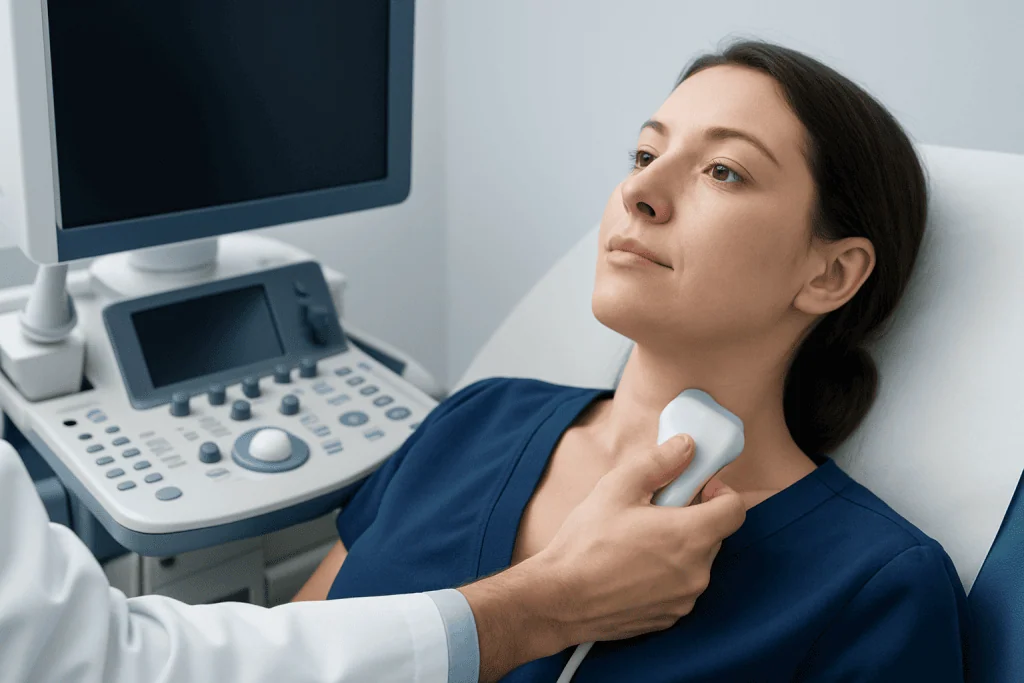
Most thyroid colloid cysts cause no noticeable symptoms. They are often found incidentally during a routine neck examination, a carotid ultrasound, CT scan, or other imaging performed for an unrelated reason. Many people first learn about a thyroid cyst after feeling a small lump in the lower front of the neck.
When a cyst becomes larger, it may create a sense of pressure, fullness, or a visible neck swelling. Some people notice mild discomfort when swallowing or when turning the neck. These symptoms do not by themselves indicate cancer; they more often relate to the size and position of the cyst.
A cyst can occasionally enlarge relatively quickly if bleeding occurs into it. This may cause sudden tenderness or swelling, which can be unsettling but is often still benign. Persistent hoarseness, ongoing swallowing difficulty, or breathing symptoms should not be attributed to a cyst without a medical evaluation.
- A painless lump or fullness in the lower neck
- Pressure or discomfort in the neck
- A sensation of something catching when swallowing
- Sudden swelling or soreness after bleeding into a cyst
- No symptoms at all, which is the most common situation
Why Thyroid Colloid Cysts Develop

Colloid cysts usually develop as part of the natural growth and change of thyroid follicles, the tiny structures that store thyroid hormone material. A benign thyroid nodule may gradually accumulate colloid and fluid, or a previously solid nodule may undergo degeneration and become partly cystic. In many cases, there is no single identifiable cause.
Factors associated with thyroid nodules in general include older age, a family history of thyroid nodules or thyroid disease, and previous exposure to radiation to the head or neck, especially during childhood. Iodine intake can influence thyroid health at a population level, but individuals should not start iodine supplements to treat a thyroid cyst unless a clinician recommends this.
Having a colloid cyst does not necessarily mean a person has an underactive or overactive thyroid. Autoimmune thyroid conditions, including Hashimoto’s thyroiditis, can coexist with nodules in some people, but they are not the cause of every cyst. Blood tests and ultrasound findings help clarify the broader thyroid picture.
How Doctors Evaluate a Thyroid Cyst
Assessment begins with a medical history and examination of the neck. A clinician may ask about the timing of swelling, neck discomfort, prior radiation exposure, family history of thyroid cancer, changes in voice, swallowing concerns, and symptoms of thyroid hormone imbalance. They will also assess whether nearby neck lymph nodes seem enlarged.
Thyroid ultrasound is the most useful first imaging test. It can show whether a nodule is purely cystic, predominantly cystic, or contains solid areas. It also evaluates the cyst wall, margins, calcifications, blood flow, and lymph nodes. A simple cyst with no concerning features is generally reassuring, whereas a nodule with a meaningful solid component may need more structured follow-up.
Blood tests commonly include thyroid-stimulating hormone (TSH), with additional tests when indicated. These tests assess thyroid function but cannot determine whether a nodule is benign or malignant. If TSH is low, a thyroid uptake scan may sometimes be considered to identify a hormone-producing, or “hot,” nodule.
A fine-needle aspiration biopsy may be advised for selected cystic or mixed nodules based on their ultrasound appearance and size. During this procedure, a thin needle collects fluid or cells for laboratory analysis; it can also reduce pressure by draining fluid. Cyst fluid alone may not provide enough cells for a definite result, so repeat sampling or follow-up imaging is occasionally needed.
Treatment and Monitoring Options
Management depends on the cyst’s ultrasound features, size, symptoms, laboratory findings, and biopsy results when performed. A small, simple cyst that is not causing symptoms often needs no active treatment. A clinician may recommend a repeat ultrasound after an appropriate interval to confirm that it remains stable.
If a cyst causes pressure, discomfort, cosmetic concern, or swallowing symptoms, fine-needle aspiration can drain the fluid. This often improves symptoms quickly, but fluid may reaccumulate over time. Recurrent cysts can be assessed for additional options, including ethanol ablation in appropriately selected cases, which aims to shrink the cyst by treating its lining.
Surgery is not routinely needed for a benign colloid cyst. It may be considered when a cyst repeatedly returns and remains troublesome, when it is very large, when testing is indeterminate, or when there are suspicious imaging or biopsy findings. Decisions about thyroid surgery are individualized and should include a discussion of expected benefits, alternatives, and possible effects on thyroid function.
Medication is generally not used simply to make a benign thyroid cyst disappear. Thyroid hormone treatment is appropriate only when there is a separate clinical reason, such as hypothyroidism. Suppression therapy solely to shrink benign nodules is not routinely recommended because its potential risks may outweigh benefits for many patients.
Everyday Care and Follow-Up
There is no proven home treatment that safely removes a thyroid colloid cyst. People should avoid pressing, massaging, or trying to drain a neck lump themselves. Herbal products and high-dose iodine supplements can affect thyroid function or interact with medicines, so they should be discussed with a qualified clinician before use.
Keeping scheduled follow-up appointments is the most useful form of self-care. If monitoring is recommended, the purpose is to check for meaningful changes in size or ultrasound appearance, not to create unnecessary concern. Many benign cysts remain stable, shrink, or fluctuate in size without causing health problems.
A person can keep a brief record of new symptoms, such as increasing neck pressure, changes in voice, or difficulty swallowing. They should also tell their care team about previous thyroid biopsy results, neck radiation treatment, and family history of thyroid cancer. Acibadem International’s multidisciplinary specialists at JCI-accredited hospitals can assess thyroid nodules and coordinate imaging, endocrinology, biopsy, and surgical care for international patients when needed.
When to Seek Medical Care
A new lump in the thyroid area should be assessed by a doctor, even though most thyroid nodules and colloid cysts are benign. Medical review is particularly important when the lump is growing, causing persistent discomfort, or has not previously been evaluated with an examination and ultrasound.
Prompt medical attention is appropriate for rapid neck swelling, significant pain, trouble breathing, trouble swallowing saliva, or a new persistent change in the voice. These symptoms may have several causes, and timely assessment helps identify whether the thyroid cyst is involved and whether treatment is needed.
People should also arrange review if a previously drained cyst refills, if follow-up imaging shows growth or new solid features, or if they have a history of childhood head or neck radiation or a close relative with thyroid cancer. A clinician can explain the individual level of risk and recommend the most appropriate next step.
Frequently asked questions
Is a thyroid gland colloid cyst cancerous?
A thyroid gland colloid cyst is usually benign. A simple fluid-filled cyst on ultrasound is generally reassuring, but any thyroid lump should be assessed according to its imaging features, size, and clinical context. A biopsy may be recommended when a cyst also contains suspicious solid tissue or has other concerning features.
Can a thyroid colloid cyst go away on its own?
Some cysts become smaller over time, particularly after fluid is naturally reabsorbed or after aspiration. Others remain stable or can refill after drainage. Follow-up ultrasound helps a clinician understand how the cyst is changing.
Does a colloid cyst affect thyroid hormone levels?
Most colloid cysts do not affect thyroid hormone production. A blood test, usually TSH, may be used to check thyroid function because thyroid nodules and hormone conditions can sometimes occur together. Symptoms alone cannot reliably determine thyroid hormone status.
What happens during thyroid cyst aspiration?
During fine-needle aspiration, a clinician uses a thin needle, usually guided by ultrasound, to remove fluid or collect cells from the nodule. Local discomfort is usually brief, and the procedure may reduce pressure from a large cyst. The sample is examined when sufficient cells are present.
Can a thyroid cyst come back after it is drained?
Yes. Fluid can reaccumulate because the cyst lining remains after aspiration. If a benign cyst repeatedly returns and causes symptoms, a clinician may discuss repeat drainage, ethanol ablation, or, less commonly, surgery.
Should a person avoid certain foods with a thyroid colloid cyst?
No specific diet has been shown to eliminate a thyroid colloid cyst. A balanced diet that meets usual nutritional needs is appropriate for most people. Iodine or thyroid supplements should not be started without medical advice, as excess iodine can disrupt thyroid function.
References
- American Thyroid Association
- National Institute of Diabetes and Digestive and Kidney Diseases
- Mayo Clinic
- Radiological Society of North America
- National Cancer Institute
This article is for general information only and is not a substitute for professional medical advice. Please consult a qualified doctor about your individual situation.
Explore treatments in Turkey — costs, top hospitals & a free quote
JCI-accredited · board-certified surgeons · reply within 24h
Add us as a Preferred Source to see more of our trusted health content across Google Search, AI Overviews and Discover.
Check your numbers in seconds
BMI, calories, due date, blood pressure and 30+ more clinical calculators — free, instant, doctor-reviewed ranges.

More from the Health Library

My Ear Won’t Pop and I’ve Tried Everything: A Complete Medical Overview

Lice Bites — Explained by Medical Evidence, Not Myths

Seropositive: An Evidence-Based Guide for Patients

Deep Breathing for Anxiety Attack: What Patients Need to Know

Asthenia: What Patients Need to Know