

Thyroid Nodules: When ENT Evaluation, Ultrasound, or Biopsy Is Needed

Most thyroid nodules are benign and may not cause symptoms. Ultrasound is the main test used to assess a thyroid nodule.
Key Takeaways
- Most thyroid nodules are benign and may not cause symptoms.
- Ultrasound is the main test used to assess a thyroid nodule.
- A biopsy is usually considered when a nodule has suspicious features or reaches a certain size.
- ENT specialists, endocrinologists, radiologists, and surgeons may work together in evaluation and treatment.
- Prompt medical review is important for a growing neck lump, voice change, swallowing difficulty, or enlarged lymph nodes.
Thyroid nodules are common and often discovered during a neck exam or imaging test. Most are not cancer, but some need evaluation with ultrasound, blood tests, or biopsy to clarify the cause and guide treatment.
Overview of Thyroid Nodules
Thyroid nodules are solid or fluid-filled growths that form within the thyroid gland, a butterfly-shaped gland at the front of the neck. They are very common, especially with increasing age, and many are found by chance during a routine examination or an imaging test done for another reason. In most cases, thyroid nodules are benign, meaning they are not cancer.
Some nodules are too small to feel, while others may appear as a visible lump in the lower neck. A person may have one nodule or several. The main goal of medical evaluation is to determine whether the nodule is affecting thyroid function, causing pressure symptoms, or showing any features that raise concern for cancer.
Although the thyroid is part of the endocrine system, thyroid nodules are often first assessed in head and neck practice because they can present as a neck mass, voice change, or swallowing discomfort. An ENT specialist may be involved, especially if the nodule is large, causes local symptoms, or needs a procedure or surgery.
Symptoms and Signs to Watch For
Many thyroid nodules do not cause symptoms. They may only be noticed when a clinician feels the neck during an examination or when an ultrasound, CT scan, or MRI is done for an unrelated reason. When symptoms do occur, they often relate to the size or position of the nodule rather than to the nodule itself.
A larger nodule may cause a visible swelling in the front of the neck, a sensation of pressure, trouble swallowing, throat discomfort, or awareness of a lump when turning the head. In some cases, a nodule can affect the voice if it irritates or presses near structures involved in speaking. Breathing symptoms are less common but may occur if the thyroid becomes very enlarged.
Some nodules produce excess thyroid hormone and can lead to symptoms of an overactive thyroid, such as palpitations, heat intolerance, tremor, nervousness, unexplained weight loss, or frequent bowel movements. Less often, thyroid disease can be linked to underactive thyroid symptoms such as fatigue, dry skin, constipation, or feeling unusually cold.
- A new or enlarging lump in the lower neck
- Difficulty swallowing or a choking sensation
- Hoarseness or a persistent change in voice
- Neck pressure, fullness, or discomfort
- Symptoms of overactive or underactive thyroid function
Causes and Risk Factors

Thyroid nodules can develop for several reasons. Common causes include benign overgrowth of normal thyroid tissue, cysts filled with fluid, inflammation of the thyroid, and nodules related to iodine deficiency in some parts of the world. Some are part of a multinodular goiter, in which the gland contains several nodules of varying size.
A smaller number of nodules are associated with thyroid cancer. Risk does not depend only on size, and many small nodules are harmless. Doctors look at the overall pattern, including ultrasound appearance, growth over time, family history, prior exposure to radiation, and whether there are abnormal lymph nodes in the neck.
Factors that may increase the need for careful evaluation include a personal history of childhood or adolescent radiation to the head and neck, a family history of thyroid cancer or certain inherited syndromes, rapid growth of a neck mass, persistent hoarseness, and enlarged neck lymph nodes. Autoimmune thyroid conditions may also coexist with nodules. In some patients, a nodule may be part of broader thyroid cancer evaluation, although most nodules are not malignant.
When ENT Evaluation, Ultrasound, or Biopsy Is Needed
An ENT evaluation is especially useful when a thyroid nodule presents as a neck lump, causes swallowing or voice symptoms, or is associated with enlarged lymph nodes. During the visit, the specialist usually asks about symptom duration, growth of the lump, prior radiation exposure, thyroid disease, and family history. The neck is examined carefully, and the clinician may assess the voice and nearby structures.
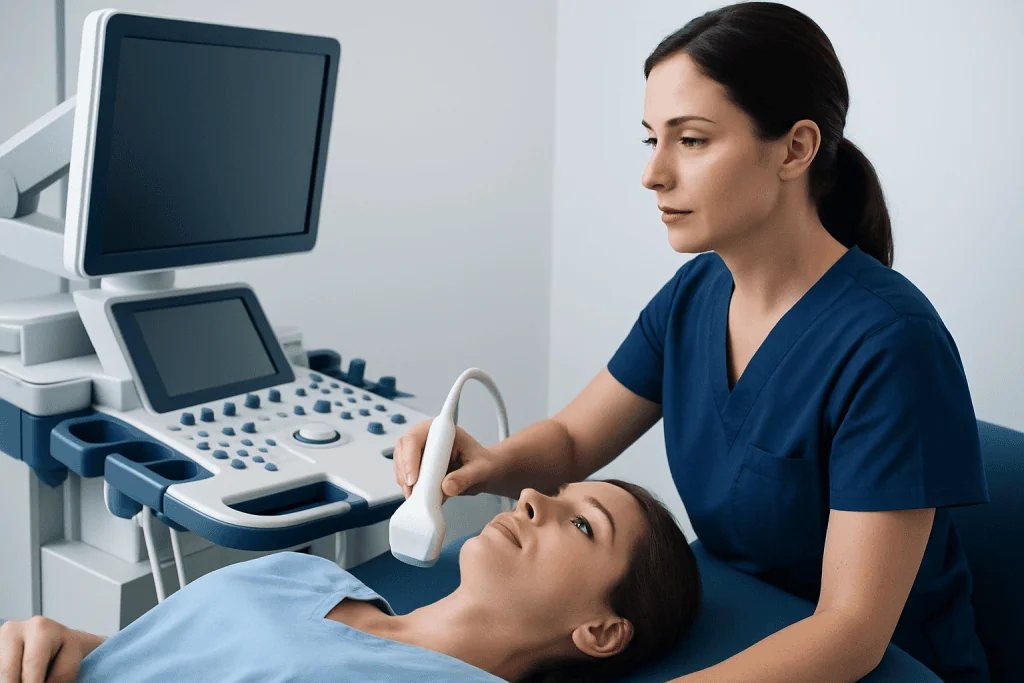
Ultrasound is the most important imaging test for thyroid nodules. It helps confirm the presence of a nodule, measure its size, and describe features such as whether it is solid or cystic, smooth or irregular, wider than tall or taller than wide, and whether calcifications are present. Ultrasound also checks the rest of the thyroid gland and nearby lymph nodes. This information helps estimate risk and decide whether the nodule should simply be monitored or sampled with biopsy.
A biopsy is most often done using fine needle aspiration, a minimally invasive test that removes a small sample of cells for laboratory examination. Not every nodule needs biopsy. The decision usually depends on a combination of the nodule’s ultrasound features and its size. A nodule with suspicious characteristics may be biopsied even if it is relatively small, while a very low-risk nodule may be followed with repeat ultrasound instead.
Blood tests are commonly ordered at the same time. Thyroid-stimulating hormone, and sometimes other thyroid hormone tests, can show whether the gland is overactive or underactive. If the thyroid appears enlarged or the airway or swallowing passage may be affected, additional imaging or examination may be needed. Patients with compressive symptoms or concerning findings may be referred for ENT evaluation and, when appropriate, specialized thyroid ultrasound.
How Thyroid Nodules Are Diagnosed
Diagnosis begins with a medical history and physical examination. A clinician may ask when the lump was first noticed, whether it has changed in size, and whether there are symptoms such as hoarseness, pressure, coughing, trouble swallowing, or signs of altered thyroid hormone levels. Past thyroid disease, radiation exposure, medications, and family history are also relevant.
Ultrasound usually provides the clearest next step because it gives detailed information about the nodule’s shape, borders, internal structure, and blood flow. Depending on the findings, the nodule may be classified as low, intermediate, or higher suspicion. This risk-based approach helps avoid unnecessary procedures while still identifying nodules that need closer attention.
If fine needle aspiration is performed, the sample is reviewed by a pathologist. Results may be benign, suspicious, malignant, non-diagnostic, or indeterminate. A benign result often leads to periodic follow-up rather than immediate treatment. Indeterminate results may require repeat biopsy, molecular testing where available, or surgical consultation, depending on the clinical picture.
In selected cases, further evaluation may include a thyroid scan if blood tests suggest a hyperfunctioning nodule, laryngoscopy to examine the vocal cords when voice change is present, or cross-sectional imaging if the gland extends behind the breastbone. If a nodule is strongly suspicious or biopsy suggests cancer, assessment may continue along the pathway for thyroid nodules or possible malignancy.
Treatment Options and Follow-Up
Treatment depends on the cause of the nodule, test results, symptoms, and patient preference. Many benign nodules do not need immediate treatment and can be monitored with repeat ultrasound at intervals recommended by the treating doctor. Stable nodules may simply be observed over time.
If a nodule causes pressure, swallowing difficulty, cosmetic concerns, overproduction of thyroid hormone, or repeated fluid buildup, treatment may be considered even when cancer is not suspected. Options can include aspiration of certain cystic nodules, medicines for related thyroid dysfunction, and surgery when the nodule is large, symptomatic, or concerning.
When biopsy suggests or confirms cancer, surgery is often the main treatment. Depending on the diagnosis, treatment may involve removal of part or all of the thyroid gland and, in selected cases, additional therapies recommended by the care team. People with confirmed or suspected cancer may need care that includes endocrinology, pathology, radiology, and thyroid cancer treatment planning.
Acibadem International’s multidisciplinary specialists in JCI-accredited hospitals diagnose and treat thyroid conditions for international patients, including assessment by ENT and endocrine teams and access to thyroid surgery when needed.
Prevention and Self-Care
There is no guaranteed way to prevent thyroid nodules, and many occur without a clear cause. However, general thyroid health can be supported by regular medical care, attention to persistent neck changes, and management of known thyroid disorders. Avoiding unnecessary exposure to radiation in the head and neck area is also sensible, although medically necessary imaging should not be skipped when recommended.
Patients who already have a thyroid nodule can help by keeping follow-up appointments and comparing any new symptoms with earlier findings. It is useful to report changes such as a growing lump, increased pressure, or new voice symptoms rather than waiting for the next routine visit. Follow-up ultrasound is important because it helps show whether the nodule remains stable.
Self-care also includes understanding that most nodules are benign and that monitoring is often the safest plan. People should avoid relying on supplements or internet remedies that claim to shrink nodules without medical evidence. Questions about diet, iodine intake, or thyroid support products are best discussed with a qualified doctor.
When to See a Doctor
A doctor should evaluate any new lump in the lower front of the neck, especially if it persists, grows, or feels firm. Medical review is also important if a person develops unexplained hoarseness, swallowing difficulty, neck pressure, or enlarged lymph nodes. These symptoms do not mean cancer is present, but they do deserve proper assessment.
People with symptoms of thyroid hormone imbalance, such as palpitations, tremor, weight change, fatigue, or heat or cold intolerance, should also seek evaluation. If there is a personal history of head or neck radiation, a family history of thyroid cancer, or a previously abnormal thyroid test, the threshold for assessment may be lower.
Urgent care is appropriate if breathing becomes difficult or if swallowing is suddenly much worse. For most patients, however, thyroid nodule evaluation is planned and stepwise, beginning with a clinical exam and ultrasound. Early assessment can provide reassurance, identify benign nodules that simply need monitoring, and ensure that any problem needing treatment is addressed in time.
Frequently asked questions
Are thyroid nodules usually cancer?
No. Most thyroid nodules are benign. The main reason for evaluation is to identify the smaller number that need closer follow-up or treatment.
How is a thyroid nodule usually found?
A thyroid nodule may be found during a routine neck examination or on an imaging test done for another reason. Some people notice a lump themselves, while others have no symptoms at all.
When is a biopsy needed for a thyroid nodule?
A biopsy is usually considered when ultrasound shows suspicious features or when a nodule reaches a size where sampling is recommended. The decision is based on risk patterns, not size alone.
What is a fine needle aspiration biopsy like?
Fine needle aspiration uses a thin needle to collect cells from the nodule, often with ultrasound guidance. It is usually quick, done without major surgery, and well tolerated by most patients.
Can thyroid nodules cause swallowing problems or hoarseness?
Yes, especially if a nodule is large or presses on nearby structures. Hoarseness, throat pressure, or trouble swallowing should be assessed by a doctor, often with ENT input.
If a nodule is benign, does it still need follow-up?
Often yes. Many benign nodules are monitored with repeat ultrasound to make sure they remain stable. The timing of follow-up depends on the nodule's size, appearance, and symptoms.
References
- American Thyroid Association
- National Institute of Diabetes and Digestive and Kidney Diseases
- National Cancer Institute
- Mayo Clinic
- American Academy of Otolaryngology–Head and Neck Surgery
This article is for general information only and is not a substitute for professional medical advice. Please consult a qualified doctor about your individual situation.
Ultrasound in Turkey — costs, top hospitals & a free quote
JCI-accredited · board-certified surgeons · reply within 24h
Add us as a Preferred Source to see more of our trusted health content across Google Search, AI Overviews and Discover.

Check-up & Preventive Medicine
Comprehensive health screenings designed for early detection and prevention.
3 specialists in this unitMore from the Health Library



Related Specialists

Asst. Prof. Dr. Ceren Meriç Özgündüz
Psychiatry
Dr. Birgül Karakoç
Gynecology & Obstetrics
Prof. Dr. Resul Arisoy
Gynecology & Obstetrics
Dr. Bülent Yücel
Orthopedic Surgery & Traumatology