Treatment of Acetabular Fractures: How It Works, Results and What to Expect

An acetabular fracture is a break in the cup-shaped hip socket, commonly caused by high-energy trauma or a fall in older adults. CT imaging helps the orthopedic team understand fracture patterns, joint alignment and whether surgery may be needed.
Key Takeaways
- An acetabular fracture is a break in the cup-shaped hip socket, commonly caused by high-energy trauma or a fall in older adults.
- CT imaging helps the orthopedic team understand fracture patterns, joint alignment and whether surgery may be needed.
- Surgery aims to restore the smooth hip joint surface using plates and screws when fragments are displaced or the joint is unstable.
- Most people need a period of restricted weight-bearing followed by structured rehabilitation.
- Recovery varies, and complications such as arthritis, blood clots or nerve injury require careful prevention and follow-up.
Treatment of acetabular fractures depends on whether the hip socket fracture is stable and well aligned. Some fractures heal with protected weight-bearing and close follow-up, while displaced or unstable fractures often need surgery to restore the joint surface and support safe long-term hip function.
Overview: How Treatment of Acetabular Fractures Works
Treatment of acetabular fractures focuses on restoring a stable, smoothly aligned hip joint while protecting the person from complications of trauma and reduced mobility. The acetabulum is the cup-shaped part of the pelvis that holds the rounded top of the thigh bone (femoral head). Because it carries body weight and helps the hip move in several directions, even a small change in its shape can affect comfort, walking and the risk of later arthritis.
The first decision is whether the fracture is stable and sufficiently aligned to heal without an operation. A nondisplaced fracture, meaning the bone pieces remain in their usual position, may be treated with pain control, mobility support, restricted weight-bearing and repeat imaging. A displaced fracture, hip instability, fragments inside the joint, or an associated hip dislocation may require operative treatment to reconstruct the socket.
Care is usually led by an orthopedic trauma surgeon and may involve emergency medicine, radiology, anesthesia, rehabilitation specialists, physiotherapists and nursing teams. The plan is individualized according to the fracture pattern, skin and soft-tissue condition, other injuries, age, bone quality, health conditions and usual activity level.
How Bad Is an Acetabular Fracture?
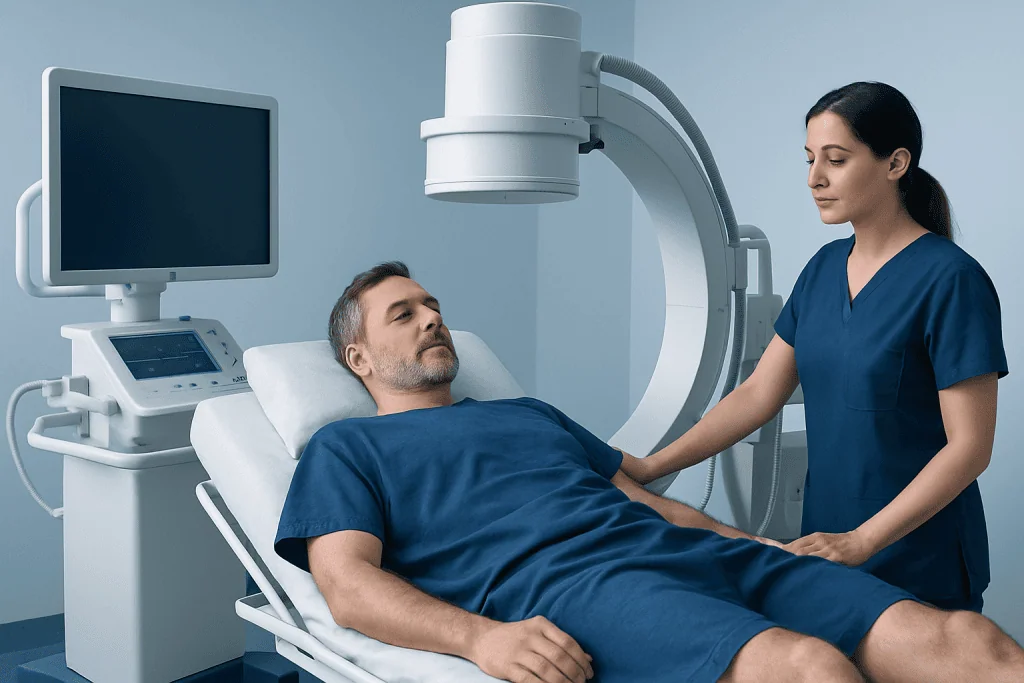
An acetabular fracture is a serious injury because it involves a major weight-bearing joint and is often caused by substantial force, such as a road traffic collision or fall from height. In older adults, a lower-energy fall can cause a fracture when bone is weakened by osteoporosis. The injury can range from a small stable crack to a complex break involving several parts of the pelvic socket.
Severity is not determined by pain alone. Doctors assess whether the femoral head remains centered in the socket, whether the joint surface has been disrupted, and whether nearby nerves, blood vessels, pelvic organs or other bones have been injured. A hip dislocation alongside the fracture requires urgent assessment because prolonged dislocation can threaten the blood supply to the femoral head.
Long-term outlook is often better when the joint surface can be restored as accurately as possible and rehabilitation progresses safely. However, some people develop post-traumatic osteoarthritis, persistent stiffness, leg weakness or hip pain despite appropriate treatment. Regular review allows the care team to identify these concerns early.
Assessment, Imaging and Candidacy for Surgery
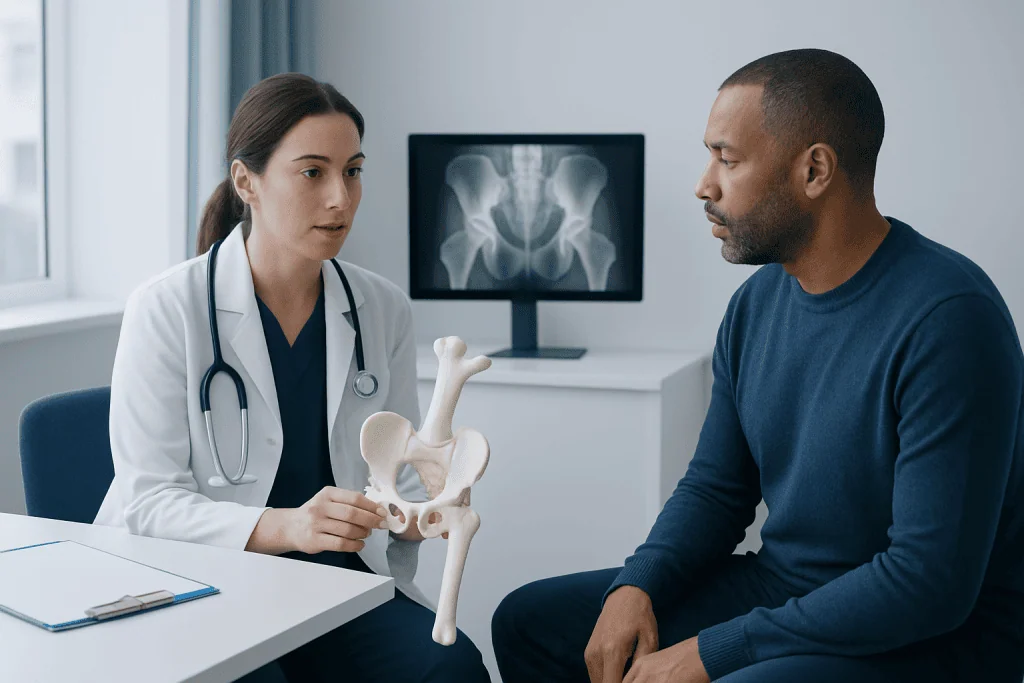
Initial assessment begins with evaluation of pain, the ability to move the leg, circulation and sensation in the foot, and signs of other trauma. X-rays of the pelvis and hip are usually obtained first. A CT scan is particularly important because it shows the fracture in detail, identifies loose fragments and helps the surgeon plan treatment.
Nonoperative care may be appropriate when the hip remains stable, the main weight-bearing portion of the socket is well aligned, or a person’s overall health makes a major operation unsafe. It is also sometimes selected when surgery would not be expected to meaningfully improve function. Follow-up X-rays are used to check that the fracture does not shift during healing.
Acetabular fracture surgery is more often considered for displaced fractures, an unstable hip, an incongruent joint surface, fragments trapped in the joint, or a fracture-dislocation after urgent reduction. In some older adults with severe joint damage and poor bone quality, surgeons may discuss fracture fixation, hip replacement, or a combined approach. These decisions require careful discussion of expected benefits, recovery demands and individual risks.
- Medical history, medications and other injuries are reviewed before surgery.
- Blood tests, anesthesia assessment and planning for blood clot prevention are usually part of preparation.
- Smoking cessation, good nutrition and management of diabetes can support wound and bone healing.
Step by Step: Acetabular Fracture Surgery
When an operation is needed, it is commonly called open reduction and internal fixation, or ORIF. “Open reduction” means the surgeon carefully repositions the broken bone pieces. “Internal fixation” means plates and screws are used to hold them in the correct position while bone healing takes place. The procedure is performed under anesthesia, and the approach is selected according to the parts of the socket involved.
The surgeon makes an incision that allows safe access to the fracture, while protecting important nerves, muscles and blood vessels. Fracture fragments are gently mobilized and aligned, sometimes with the help of real-time X-ray imaging. Plates and screws are then placed to maintain alignment. Any loose bone or cartilage fragments within the joint may be removed or addressed as appropriate.
After surgery, the team monitors pain, blood loss, wound healing, nerve function and circulation in the leg. Early movement in bed and breathing exercises are encouraged when medically appropriate. Medication and mechanical measures may be used to reduce the risk of blood clots. A physiotherapist explains safe transfers, use of crutches or a walker, and the permitted degree of weight-bearing.
In some cases, surgery is delayed briefly to allow swelling to settle or to stabilize other injuries first. Urgent treatment may be needed for a dislocated hip or certain open injuries. The surgical team explains the timing and the reasons for the recommended approach.
Can I Walk After an Acetabular Fracture?
Walking is usually restricted at first, whether treatment is surgical or nonsurgical. Putting full body weight through a healing hip socket too early may cause pain, shift fracture fragments or affect the repair. The exact restriction depends on the fracture pattern, quality of fixation, bone strength and the surgeon’s instructions.
Many people use crutches, a walker or a wheelchair during the early phase. They may be allowed to touch the foot to the ground for balance, or they may be instructed to avoid weight through the leg altogether. It is important not to interpret a reduction in pain as proof that the bone has healed; activity progression should be guided by clinical review and imaging.
Physiotherapy begins with exercises to maintain circulation and preserve movement in the ankle, knee and hip within safe limits. As healing progresses, rehabilitation typically adds muscle strengthening, balance training, gait retraining and gradual return to everyday activities. Occupational therapy can also help with bathing, dressing, stairs and home safety while mobility is limited.
How Long Does a Fractured Acetabulum Take to Heal?
Bone healing often takes at least several months, but recovery after an acetabular fracture continues beyond the point when the bone appears united on imaging. Many people have protected or limited weight-bearing for roughly 6 to 12 weeks, although the exact timeframe differs substantially between individuals. The surgeon adjusts activity based on follow-up examinations and X-rays or CT scans when needed.
Improvement in walking, strength and endurance can continue for 6 to 12 months or longer, especially after a complex fracture or surgery. Stiffness, fatigue and muscle weakness are common during recovery. People who had multiple injuries, complications, pre-existing arthritis, osteoporosis or limited mobility before the injury may need additional time and support.
Keeping follow-up appointments is essential. The clinical team looks for signs of bone healing, maintenance of hip alignment, hardware position and early arthritis. Patients should follow instructions about weight-bearing, wound care, medicines and physical therapy, as these steps help protect the reconstruction and support a steady recovery.
Benefits, Risks and Expected Results
The potential benefit of surgery is improved alignment of the hip joint, which can support pain relief, mobility and joint function. For a displaced fracture, restoring the smooth contour of the socket can reduce the chance of early joint wear compared with leaving a significantly incongruent joint untreated. Nonoperative treatment avoids surgical risks when the fracture is already stable and aligned or when surgery is not suitable.
All treatments carry risks. With surgery, these can include infection, bleeding, blood clots, wound problems, nerve or blood vessel injury, anesthesia-related complications, heterotopic ossification (extra bone formation around the hip), failure of fixation and delayed or incomplete healing. There is also a risk of post-traumatic arthritis or later need for hip replacement, particularly after severe joint-surface damage.
Good results depend on multiple factors, including the original injury, the precision of joint restoration, the timing of treatment, bone health, smoking status and adherence to rehabilitation. Pain and function commonly improve over time, but no treatment can fully remove the effects of every serious hip injury.
Acibadem International’s multidisciplinary specialists and JCI-accredited hospitals assess and treat orthopedic trauma, including acetabular fractures, for international patients. A qualified orthopedic team can explain the available options and help create an appropriate recovery plan.
When to Seek Medical Care
Immediate medical assessment is needed after a significant hip or pelvic injury, especially when there is severe groin, buttock or hip pain; inability to stand or bear weight; a shortened or unusually rotated leg; numbness; weakness; or increasing swelling. Emergency care is also important after a high-energy collision or fall, even if pain initially seems manageable, because pelvic and other injuries may not be obvious.
After diagnosis or surgery, patients should contact their clinical team promptly for increasing pain that is not controlled by the prescribed plan, new numbness or weakness, a cold or pale foot, wound redness or drainage, fever, calf swelling, chest pain or shortness of breath. These symptoms need timely professional assessment and should not be managed alone at home.
Follow-up remains important even when recovery seems to be progressing well. The orthopedic team can confirm healing, guide return to work, driving and sport, and discuss ongoing hip symptoms that may require further evaluation.
Frequently asked questions
What is the success rate of acetabular fracture surgery?
There is no single success rate that applies to every acetabular fracture. Results depend on the fracture pattern, degree of joint damage, whether the hip was dislocated, the quality of bone, other injuries and how closely the joint surface can be restored. The treating surgeon can provide the most meaningful estimate after reviewing imaging and the person’s overall health.
How long does a fractured acetabulum take to heal?
The bone commonly needs several months to heal, and restricted weight-bearing is often required for about 6 to 12 weeks. Recovery of strength, walking confidence and endurance may continue for 6 to 12 months or longer. Follow-up imaging and examinations determine when activity can safely increase.
How bad is an acetabular fracture?
It is considered a serious injury because the acetabulum is the weight-bearing socket of the hip joint. Some fractures are stable and can heal without surgery, while others are complex, displaced or associated with hip dislocation and need operative reconstruction. Prompt specialist assessment helps protect hip function and identify associated injuries.
Can I walk after an acetabular fracture?
Most people cannot safely walk normally immediately after an acetabular fracture. They usually need crutches, a walker or a wheelchair and must follow specific instructions about how much weight can be placed through the injured leg. Walking is advanced gradually when the surgeon confirms that healing and stability allow it.
Is surgery always needed for an acetabular fracture?
No. A stable fracture with good alignment may be managed without surgery using pain management, restricted weight-bearing, mobility support and repeat imaging. Surgery is more likely when the joint is unstable, displaced, incongruent or contains fragments that interfere with normal hip movement.
Will I develop arthritis after an acetabular fracture?
An acetabular fracture can increase the risk of post-traumatic hip arthritis, particularly when the joint cartilage was damaged or the joint surface could not be fully restored. Not everyone develops arthritis, and symptoms may not appear for years. Ongoing pain, stiffness or reduced movement should be discussed with an orthopedic clinician.
References
- American Academy of Orthopaedic Surgeons
- Orthopaedic Trauma Association
- National Institute of Arthritis and Musculoskeletal and Skin Diseases
- National Health Service
- AO Foundation
This article is for general information only and is not a substitute for professional medical advice. Please consult a qualified doctor about your individual situation.
Fractures in Turkey — costs, top hospitals & a free quote
JCI-accredited · board-certified surgeons · reply within 24h
Add us as a Preferred Source to see more of our trusted health content across Google Search, AI Overviews and Discover.

Orthopedics & Spine
Care for bones, joints and the musculoskeletal system, including joint replacement, sports injuries and trauma.
125 specialists in this unit