

Tummy Tuck: Abdominoplasty for Loose Skin and Muscle Separation

A tummy tuck is designed to improve abdominal contour by removing extra skin and, when needed, repairing weakened or separated abdominal muscles. It is not a weight loss operation and is best considered when body weight is relatively stable.
Key Takeaways
- A tummy tuck is designed to improve abdominal contour by removing extra skin and, when needed, repairing weakened or separated abdominal muscles.
- It is not a weight loss operation and is best considered when body weight is relatively stable.
- Common reasons for abdominoplasty include loose skin after pregnancy, weight loss, aging, or previous abdominal surgery.
- Recovery usually requires planned downtime, careful wound care, gradual return to activity, and avoidance of heavy lifting until cleared by the surgeon.
- Like all surgery, abdominoplasty has risks, including bleeding, infection, scarring, fluid collection, changes in sensation, and anesthesia-related risks.
- A qualified plastic surgeon can assess whether a full, mini, extended, or combined approach is most appropriate.
A tummy tuck, medically called abdominoplasty, is a plastic surgery procedure that removes excess abdominal skin and can tighten separated or weakened abdominal muscles. It may help suitable patients after pregnancy, major weight change, or aging when diet and exercise cannot correct loose skin or muscle separation.
Overview
A tummy tuck, or abdominoplasty, is a surgical procedure that reshapes the abdomen by removing loose skin and excess tissue from the lower and middle abdomen. In many patients, the surgeon also tightens the abdominal wall when the rectus muscles have stretched apart, a condition called diastasis recti. The goal is a smoother, firmer abdominal contour that better matches the person’s body shape.
Loose abdominal skin may not improve with exercise because skin elasticity depends on age, genetics, pregnancy history, weight changes, and the degree of stretching. Similarly, abdominal muscle separation is a structural issue; core training may improve strength and posture, but significant separation may require surgical repair if it causes bulging or contour concerns.
Abdominoplasty is considered an aesthetic plastic surgery procedure, but it can also address functional concerns for some patients, such as skin folds that cause irritation or discomfort. It is important to understand that a tummy tuck is not a substitute for weight loss, a healthy lifestyle, or treatment for obesity. The best results are usually seen when a patient is close to a stable, healthy weight and has realistic expectations.
Who May Be a Good Candidate?

Good candidates for tummy tuck surgery are generally adults in good overall health who have excess abdominal skin, abdominal wall laxity, or muscle separation that does not respond to lifestyle measures. Many patients consider the procedure after pregnancy, significant weight loss, or natural aging. A stable body weight is important because future weight changes can affect the result.
Women who plan future pregnancies are often advised to postpone abdominoplasty, because pregnancy can stretch the repaired muscles and skin again. People who are actively losing weight may also be advised to wait until their weight has stabilized. Smoking and nicotine use can increase wound healing problems, so surgeons typically require patients to stop nicotine well before and after surgery.
A careful consultation helps determine whether the procedure is appropriate. The surgeon reviews medical history, previous operations, medications, allergies, pregnancies, weight changes, and personal goals. Patients should discuss any history of blood clots, diabetes, heart disease, bleeding disorders, or problems with anesthesia, as these factors may influence safety and planning.
Types of Tummy Tuck Procedures
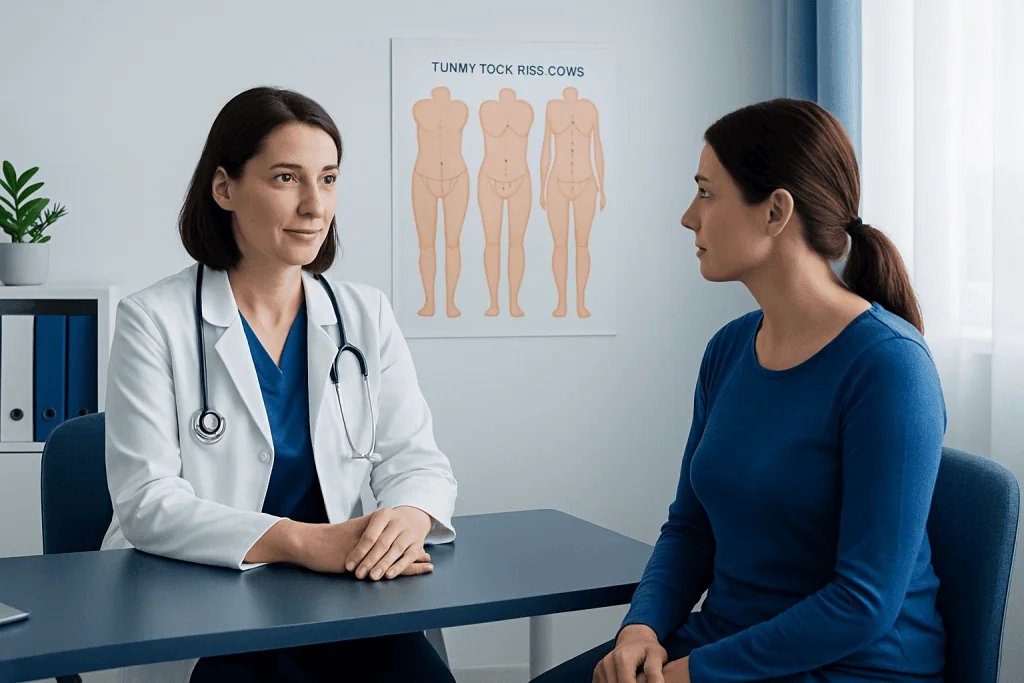
There are several types of abdominoplasty, and the right choice depends on skin excess, muscle separation, scar location, and body shape. A full tummy tuck is commonly used when loose skin and muscle laxity extend above and below the navel. It usually involves an incision low on the abdomen, removal of excess skin, repair of the abdominal muscles if needed, and repositioning of the belly button through a new opening.
A mini tummy tuck may be suitable for selected patients with a small amount of loose skin limited to the lower abdomen and little or no laxity above the navel. It typically uses a shorter incision and may not require repositioning the navel. However, it is not appropriate for everyone, particularly when there is significant upper abdominal looseness or diastasis recti.
An extended tummy tuck may be recommended after major weight loss when excess skin continues around the hips or flanks. In some cases, liposuction is combined with abdominoplasty to refine nearby areas such as the waist or flanks, but liposuction does not remove loose skin or repair separated muscles. The surgeon chooses the safest plan based on anatomy, goals, and medical risk.
How Abdominoplasty Is Performed
Abdominoplasty is usually performed in an operating room under general anesthesia. Before surgery, the surgeon marks the planned incision and skin removal areas while the patient is standing. The incision is typically placed low enough to be hidden by many types of underwear or swimwear, although scar position varies depending on anatomy and the amount of skin removed.
During the operation, the surgeon lifts the abdominal skin and tissue from the underlying muscles. If muscle separation is present, the abdominal wall is tightened with sutures to bring the muscles closer together. Excess skin is then removed, the remaining skin is redraped, and the belly button is positioned in a natural location when required. Drains may be placed temporarily to reduce fluid accumulation.
The operation time varies depending on the complexity of the procedure and whether additional techniques are used. After surgery, the patient is monitored in a recovery area. Some patients go home the same day, while others may stay overnight depending on the extent of surgery, overall health, and the surgeon’s recommendation.
Recovery and Aftercare
Recovery after a tummy tuck requires planning. Swelling, bruising, tightness, and mild to moderate discomfort are expected in the first days and gradually improve. Patients usually wear a compression garment as advised by the surgeon and may need to walk slightly bent at the waist at first to reduce tension on the incision. Gentle walking is encouraged early to support circulation.
Most patients need help at home during the initial recovery period, especially with childcare, housework, and transportation. Heavy lifting, strenuous exercise, and intense core activity must be avoided until the surgeon confirms it is safe. Return to work depends on the type of job, the extent of surgery, and individual healing; desk work may resume earlier than physically demanding work.
Careful wound care is important. Patients should keep follow-up appointments, monitor drain output if drains are used, and follow instructions about showering, garments, medications, and activity. Scars usually fade over time but do not disappear completely. Protecting the incision from sun exposure and avoiding nicotine can support better healing.
- Follow the surgeon’s written recovery instructions closely.
- Walk gently as recommended, but avoid heavy lifting.
- Report increasing pain, unusual swelling, fever, drainage, or shortness of breath promptly.
- Maintain hydration and a balanced diet to support healing.
Benefits, Limits, and Risks
The main benefit of a tummy tuck is improved abdominal contour through removal of loose skin and tightening of the abdominal wall when indicated. Many patients find that clothing fits more comfortably after excess skin is removed. For people with diastasis recti, muscle repair may improve the appearance of abdominal bulging, although it is not a treatment for all causes of abdominal discomfort or back pain.
It is equally important to understand the limits of surgery. A tummy tuck does not prevent future weight gain, does not remove deep internal fat around the organs, and does not replace healthy nutrition or regular physical activity. Stretch marks located on the skin that is removed may be reduced, but stretch marks outside the removed area may remain.
All surgery carries risk. Possible complications include bleeding, infection, delayed wound healing, visible or widened scars, fluid collection called seroma, changes in skin sensation, asymmetry, skin loss, blood clots, and anesthesia-related complications. Choosing a qualified plastic surgeon, sharing complete medical information, and following preoperative and postoperative instructions can help reduce risks, although no procedure can be risk-free.
Preparing for Surgery and When to See a Doctor
Preparation begins with a detailed consultation. Patients should be ready to discuss their goals, medical conditions, previous surgeries, medications, supplements, allergies, smoking or nicotine use, and pregnancy plans. The surgeon may request laboratory tests or medical clearance depending on age and health history. Clear communication helps set realistic expectations about scars, recovery time, and achievable contour improvement.
Before surgery, patients are usually advised to arrange transportation, home support, comfortable clothing, and a recovery space that allows rest and easy walking. It is also wise to prepare meals, organize childcare, and plan time away from work. The surgeon may recommend stopping certain medications or supplements that increase bleeding risk, but this should only be done with medical guidance.
A doctor should be consulted if loose abdominal skin causes recurrent irritation, discomfort, hygiene problems, or significant concern about body contour. After surgery, urgent medical advice is needed for symptoms such as chest pain, shortness of breath, severe calf pain, heavy bleeding, sudden swelling, fever, worsening redness, or foul-smelling drainage. Acibadem International’s multidisciplinary specialists and JCI-accredited hospitals evaluate and treat suitable international patients seeking abdominoplasty and related abdominal contour procedures.
Frequently asked questions
Is a tummy tuck the same as liposuction?
No. A tummy tuck removes loose skin and can repair separated abdominal muscles, while liposuction removes localized fat through small incisions. Some patients benefit from a combination, but liposuction alone cannot tighten significant loose skin.
Can a tummy tuck help diastasis recti?
Yes, abdominoplasty can include repair of diastasis recti by bringing the separated abdominal muscles closer together with sutures. This may improve abdominal contour and reduce bulging in suitable patients. A surgeon must evaluate the degree of separation and any related symptoms.
Will there be a visible scar after abdominoplasty?
Yes, a tummy tuck leaves a permanent scar, usually placed low on the abdomen. The scar typically fades over time but does not disappear completely. Scar quality depends on genetics, surgical technique, tension on the wound, sun protection, and healing habits such as avoiding nicotine.
How long does tummy tuck recovery take?
Early recovery often takes a few weeks, but swelling and firmness can continue to improve for several months. The timeline varies depending on the extent of surgery, the patient’s health, and the type of work or exercise they wish to resume. The surgeon provides the safest schedule for returning to activity.
Can someone get pregnant after a tummy tuck?
Pregnancy after a tummy tuck is possible, but it can stretch the skin and abdominal muscles again and may affect the surgical result. For this reason, patients who plan future pregnancies are often advised to postpone abdominoplasty. This should be discussed during consultation.
Is a tummy tuck a weight loss procedure?
No. A tummy tuck is a body contouring procedure, not a treatment for obesity or a method for major weight loss. It works best when weight is stable and the main concern is loose skin or abdominal wall laxity. Healthy lifestyle habits remain important after surgery.
References
- American Society of Plastic Surgeons
- American Society for Aesthetic Plastic Surgery
- International Society of Aesthetic Plastic Surgery
- U.S. Food and Drug Administration
- Royal College of Surgeons of England
This article is for general information only and is not a substitute for professional medical advice. Please consult a qualified doctor about your individual situation.
Explore treatments in Turkey — costs, top hospitals & a free quote
JCI-accredited · board-certified surgeons · reply within 24h
Add us as a Preferred Source to see more of our trusted health content across Google Search, AI Overviews and Discover.

Related Treatments
Related Conditions
More from the Health Library



Related Specialists

Prof. Dr. Şükrü Yazar
Aesthetic Plastic & Reconstructive Surgery
Assoc. Prof. Dr. Erdem Güven (m)
Aesthetic Plastic & Reconstructive Surgery
Prof. Dr. Hakan Ağır
Aesthetic Plastic & Reconstructive Surgery
Prof. Dr. Bülent Saçak
Aesthetic Plastic & Reconstructive Surgery