Uveitis: Eye Inflammation, Pain, and Vision Risks

Uveitis is inflammation of the uvea, the middle layer of the eye, but it can also affect nearby tissues such as the retina, vitreous, and optic nerve. Common symptoms include eye redness, pain, light sensitivity, blurred vision, floaters, and reduced vision.
Key Takeaways
- Uveitis is inflammation of the uvea, the middle layer of the eye, but it can also affect nearby tissues such as the retina, vitreous, and optic nerve.
- Common symptoms include eye redness, pain, light sensitivity, blurred vision, floaters, and reduced vision.
- Causes may include autoimmune disease, infection, eye injury, inflammatory disorders, or no identifiable cause.
- Diagnosis usually requires a detailed eye examination, and sometimes blood tests, imaging, or consultation with other specialists.
- Treatment depends on the cause and severity and may include steroid eye drops, injections, oral medicines, immune-modulating therapy, or antimicrobial treatment.
- New eye pain, light sensitivity, floaters, or vision changes should be assessed promptly by an ophthalmologist.
Uveitis is inflammation inside the eye that may cause redness, pain, light sensitivity, floaters, or blurred vision. Prompt evaluation by an eye specialist is important because early treatment can help control inflammation and reduce the risk of vision complications.
Overview
Uveitis is a term for inflammation inside the eye. It most often involves the uvea, the eye’s middle layer, which includes the iris, ciliary body, and choroid. However, inflammation may also extend to nearby structures such as the retina, vitreous gel, optic nerve, or blood vessels in the eye. Because these structures are important for clear vision, uveitis needs careful medical evaluation.
Uveitis can affect one eye or both eyes. It may appear suddenly, causing redness, pain, and light sensitivity, or it may develop more gradually with floaters and blurred vision. Some episodes last a short time, while others recur or become chronic. The pattern often gives doctors clues about the type and possible cause.
Doctors classify uveitis by where the inflammation is located. Anterior uveitis affects the front of the eye and is the most common type. Intermediate uveitis affects the vitreous and the area near the retina. Posterior uveitis affects the retina or choroid at the back of the eye. Panuveitis involves multiple parts of the eye. Identifying the type helps guide testing and treatment.
Symptoms of Uveitis
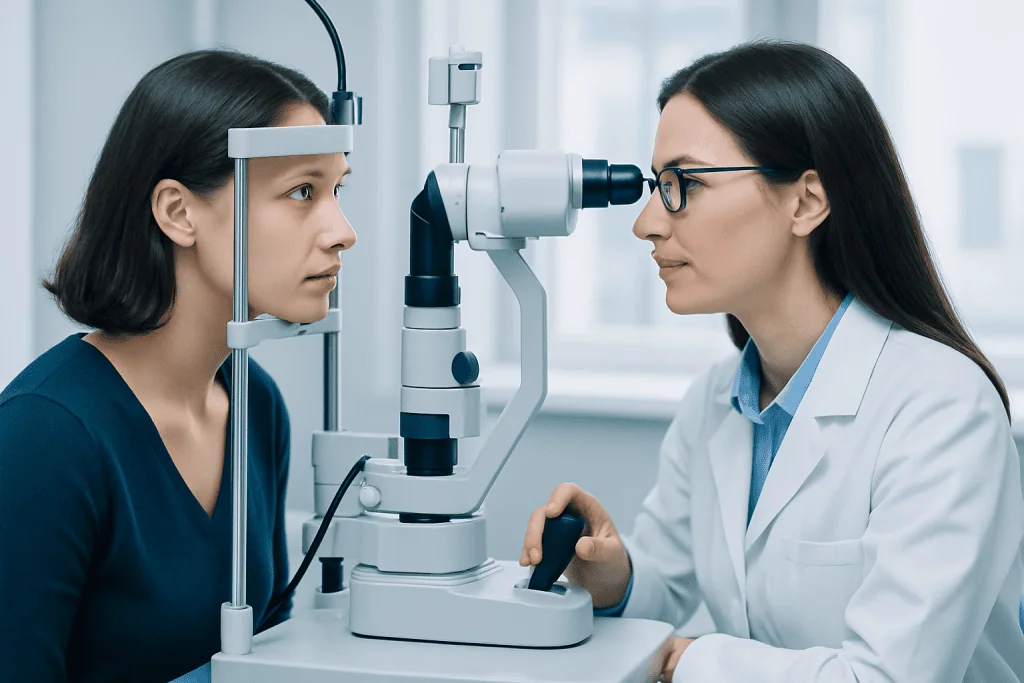
Symptoms can vary depending on the area of the eye involved. Anterior uveitis often causes eye redness, aching pain, and sensitivity to light. Vision may become blurred, and the pupil may appear smaller or irregular. The discomfort can range from mild irritation to significant pain, especially in bright light.
Intermediate and posterior uveitis may be less painful but can affect vision more noticeably. People may see floaters, dark spots, haze, or blurred areas. Some describe a shadow, distortion, or reduced central vision. Because the back of the eye has fewer pain-sensitive structures, inflammation may progress without much discomfort.
Possible symptoms include:
- Redness in one or both eyes
- Eye pain or aching around the eye
- Light sensitivity, also called photophobia
- Blurred, hazy, or reduced vision
- Floaters, spots, or cobweb-like shapes in vision
- Headache or discomfort when focusing
- Changes in pupil shape or size in some cases
Any sudden change in vision should be taken seriously. Uveitis symptoms can resemble conjunctivitis, dry eye, migraine-related visual changes, or retinal problems, so a professional eye examination is needed to confirm the cause.
Causes and Risk Factors
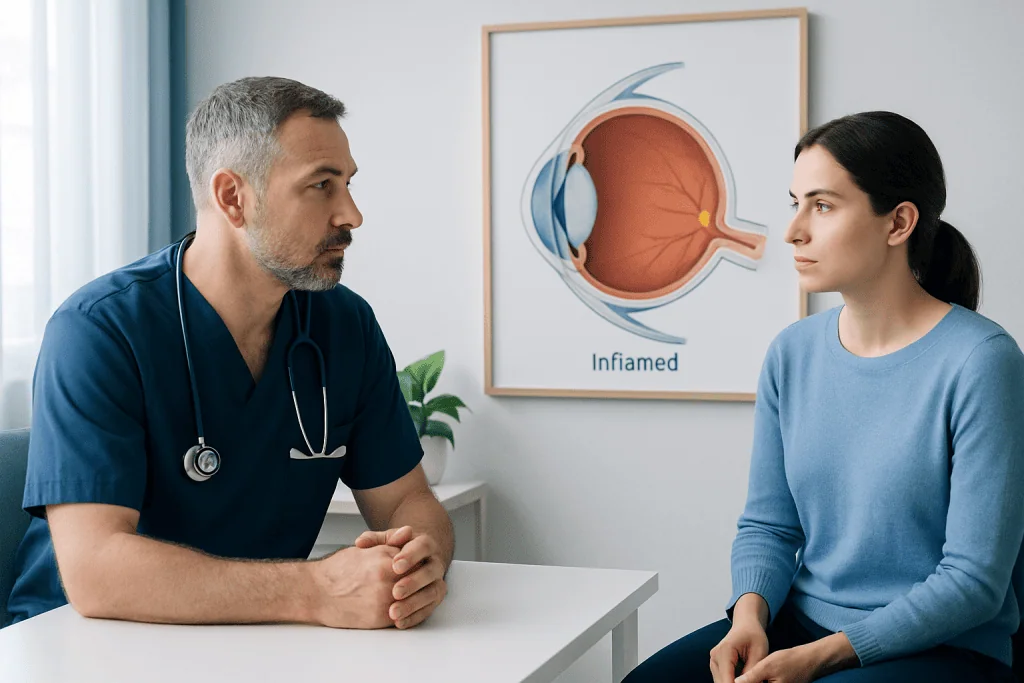
Uveitis can have many causes. In some people, it is linked to an overactive immune response or an autoimmune condition, in which the immune system mistakenly attacks the body’s own tissues. Conditions associated with uveitis can include ankylosing spondylitis, psoriatic arthritis, inflammatory bowel disease, juvenile idiopathic arthritis, sarcoidosis, Behçet’s disease, and certain forms of vasculitis.
Infections can also trigger uveitis. These may include viral infections such as herpes simplex, varicella-zoster, or cytomegalovirus; bacterial infections such as tuberculosis, syphilis, or Lyme disease; and parasitic infections such as toxoplasmosis. The likelihood of a specific infection depends on a person’s medical history, immune status, travel history, exposures, and local disease patterns.
Other possible causes include eye injury, previous eye surgery, medication reactions, or inflammation related to another eye disease. Rarely, inflammation-like findings may be caused by cancer affecting the eye or immune system, which is why persistent or unusual cases require specialist assessment. In many patients, no exact cause is found even after appropriate testing; this is sometimes called idiopathic uveitis.
Risk may be higher in people with known autoimmune disease, recurrent inflammatory symptoms elsewhere in the body, previous episodes of uveitis, certain genetic markers, or a history of significant eye trauma. Smoking has also been associated with several inflammatory eye conditions and may worsen overall eye health. A full medical history helps the ophthalmologist decide which causes are most likely and which tests are useful.
Diagnosis
Diagnosis begins with a detailed eye examination by an ophthalmologist. The doctor will ask about symptoms, timing, previous episodes, general health conditions, medications, infections, injuries, travel, and family history. This information is important because uveitis can be the first sign of an underlying inflammatory or infectious condition.
The eye examination typically includes vision testing, eye pressure measurement, and slit-lamp examination. A slit lamp allows the doctor to see inflammatory cells and flare in the front chamber of the eye. The pupils may be dilated so the retina and optic nerve can be examined. Dilated examination is especially important when floaters, blurred vision, or suspected posterior uveitis are present.
Additional tests may be recommended depending on the findings. Optical coherence tomography, often called OCT, can show swelling in the retina or macula. Fluorescein angiography or indocyanine green angiography may be used to assess inflamed retinal or choroidal blood vessels. Ultrasound may be useful if the view into the eye is cloudy.
Blood tests or imaging of the chest, joints, or other organs may be needed when a systemic cause is suspected. Testing is individualized; not every patient needs every test. In complex cases, the ophthalmologist may work with a rheumatologist, infectious disease specialist, pediatrician, neurologist, or internal medicine specialist to reach a safe and accurate diagnosis.
Treatment Options
Treatment aims to reduce inflammation, relieve pain, protect vision, and address the underlying cause when one is found. The approach depends on the type of uveitis, the severity, whether one or both eyes are affected, and whether infection is present. Because some treatments can worsen certain infections, identifying the likely cause is an important part of safe care.
Corticosteroids are commonly used to control non-infectious inflammation. For anterior uveitis, steroid eye drops may be prescribed, often along with dilating drops that relax the iris, reduce pain, and help prevent scar tissue from forming between the iris and lens. For inflammation deeper in the eye, steroids may be given by injection around or into the eye, by mouth, or in selected cases through longer-acting implants.
If uveitis is caused by infection, treatment may include antiviral, antibiotic, antifungal, or antiparasitic medicines as appropriate. In non-infectious recurrent or chronic uveitis, steroid-sparing immune-modulating medicines may be considered to reduce long-term steroid exposure. These medicines require careful monitoring and are usually coordinated with specialists experienced in inflammatory disease.
Complications may also need treatment. Uveitis can increase the risk of cataract, glaucoma, macular edema, retinal damage, or scar formation. Some patients may need medicines to lower eye pressure, laser treatment, or surgery for complications. Follow-up visits are essential because inflammation can improve before the eye has fully stabilized, and treatment often needs gradual adjustment rather than abrupt stopping.
Prevention and Self-care
Not all cases of uveitis can be prevented, especially when inflammation is related to autoimmune disease or occurs without a known cause. However, people can reduce certain risks by protecting the eyes from injury, managing chronic health conditions, and seeking early care for infections or inflammatory symptoms. Regular eye examinations are especially important for people with conditions known to be associated with uveitis.
Patients being treated for uveitis should use medicines exactly as prescribed and attend follow-up appointments even if symptoms improve. Steroid eye drops and other anti-inflammatory medicines may need to be tapered gradually under medical supervision. Stopping treatment too soon can allow inflammation to return, while using medicines for longer than advised may increase side effects such as raised eye pressure.
Helpful self-care measures include wearing sunglasses for light sensitivity, resting the eyes during active inflammation, avoiding eye rubbing, and using protective eyewear during sports, work, or activities with injury risk. People who smoke may benefit from asking a healthcare professional about support to stop, as smoking can affect vascular and inflammatory health.
It is also helpful for patients to keep a record of uveitis episodes, treatments, test results, and associated symptoms such as joint pain, mouth ulcers, skin rashes, bowel symptoms, fevers, or back stiffness. This information can help the care team identify patterns and choose the most appropriate long-term plan.
When to See a Doctor
A person should see an eye doctor promptly if they develop eye pain, redness with light sensitivity, new floaters, blurred vision, or any unexplained decrease in vision. Uveitis is treatable, but delayed diagnosis can increase the risk of complications. Symptoms in only one eye still require professional assessment, as unilateral inflammation is common.
Urgent evaluation is especially important if vision suddenly worsens, if many new floaters or flashes appear, if there is severe eye pain, or if symptoms occur after an eye injury or surgery. People with weakened immune systems, known autoimmune disease, or a history of uveitis should contact their doctor early when symptoms return.
Patients should avoid self-treating a painful red eye with leftover steroid drops or other prescription medicines. Some infections can become worse if treated with the wrong medication. Over-the-counter lubricating drops may soothe surface irritation, but they do not treat inflammation inside the eye.
For international patients seeking coordinated eye care, Acibadem International’s multidisciplinary specialists and JCI-accredited hospitals diagnose and treat uveitis and related eye conditions. The most important step is timely assessment by a qualified ophthalmologist who can tailor care to the person’s diagnosis and overall health.
Frequently asked questions
Is uveitis the same as conjunctivitis?
No. Conjunctivitis affects the thin surface membrane of the eye, while uveitis is inflammation inside the eye. Both can cause redness, but uveitis is more likely to cause pain, light sensitivity, floaters, or blurred vision and needs an ophthalmologist’s evaluation.
Can uveitis cause permanent vision loss?
Uveitis can threaten vision if inflammation is severe, recurrent, or untreated. Possible complications include glaucoma, cataract, macular edema, and retinal damage. Early diagnosis, appropriate treatment, and regular follow-up help reduce these risks.
Why does uveitis keep coming back?
Recurrent uveitis may be related to an underlying autoimmune or inflammatory condition, infection, or a tendency of the immune system to flare. Sometimes no clear cause is found. If episodes repeat, doctors may recommend additional testing and a long-term treatment plan.
How long does uveitis treatment take?
The duration depends on the type, cause, and severity of inflammation. Some cases of anterior uveitis improve over weeks with eye drops, while deeper or chronic uveitis may require months of treatment and monitoring. Medicines should only be reduced or stopped as directed by the doctor.
Are steroid eye drops safe for uveitis?
Steroid eye drops are commonly used for non-infectious anterior uveitis and can be very effective when prescribed appropriately. They can also raise eye pressure or contribute to cataract formation if used for long periods. This is why monitoring by an ophthalmologist is important.
Can children get uveitis?
Yes, children can develop uveitis, sometimes with few symptoms. It may be associated with conditions such as juvenile idiopathic arthritis. Children at risk may need scheduled eye screening because early inflammation can be difficult to notice at home.
Should someone with uveitis see other specialists?
Sometimes. If uveitis is linked to joint symptoms, skin changes, bowel disease, infection, or immune system problems, the ophthalmologist may coordinate care with other specialists. This team approach can help identify and treat causes beyond the eye.
This article is for general information only and is not a substitute for professional medical advice. Please consult a qualified doctor about your individual situation.
Explore treatments in Turkey — costs, top hospitals & a free quote
JCI-accredited · board-certified surgeons · reply within 24h
Add us as a Preferred Source to see more of our trusted health content across Google Search, AI Overviews and Discover.

Related Treatments
More from the Health Library

When to See an Eye Doctor for Sudden Vision Changes

Toric Intraocular Lenses for Astigmatism: Who May Benefit After Cataract Surgery
Corrective Eye Surgery: LASIK, PRK, SMILE, and More

Types of Eye Surgery for Vision Correction and Eye Health
LASEK Surgery Side Effects: Risks and Recovery Tips