Visual Field Test Cost: What Patients Really Pay

A visual field test measures central and peripheral vision and is commonly used in glaucoma care. The final visual field testing cost may depend on the facility, insurance plan, test type and whether an eye examination is also needed.
Key Takeaways
- A visual field test measures central and peripheral vision and is commonly used in glaucoma care.
- The final visual field testing cost may depend on the facility, insurance plan, test type and whether an eye examination is also needed.
- The test is painless, usually takes only minutes per eye and does not require physical recovery time.
- An abnormal result does not diagnose a condition on its own; repeat testing and other eye examinations are often needed.
- Testing frequency is individualized according to symptoms, risk factors and whether an eye condition is being monitored.
Visual field test cost is not a single fixed amount: it depends on where the test is performed, the reason for testing, the technology used and whether insurance coverage applies. A visual field test is a quick, non-invasive assessment that can help detect or monitor changes in side vision caused by glaucoma, retinal disease or conditions affecting the brain and optic nerve.
Visual Field Test Cost: What Does It Include?
Visual field test cost varies because the test may be performed as part of a routine eye assessment, a glaucoma evaluation or follow-up for a known eye or neurological condition. The amount a patient pays can differ according to the country, clinic or hospital, the type of visual field test, the clinician’s assessment and whether additional examinations are needed on the same day.
For people using insurance, out-of-pocket costs depend on the plan’s benefits, referral requirements, deductible, co-payment or co-insurance rules, and whether the eye specialist and testing facility are in network. For those paying directly, the best way to understand how much a visual field test costs without insurance is to request a written estimate that separates the consultation, the test itself and any related imaging or follow-up appointment.
It is helpful to ask whether the quoted visual field eye test cost includes interpretation by an ophthalmologist, repeat testing if reliability is low, and follow-up care. A clinic’s billing or international patient team can explain local arrangements before an appointment, while the ophthalmologist can clarify why a particular test is medically appropriate.
What Is a Visual Field Test and How Does It Work?
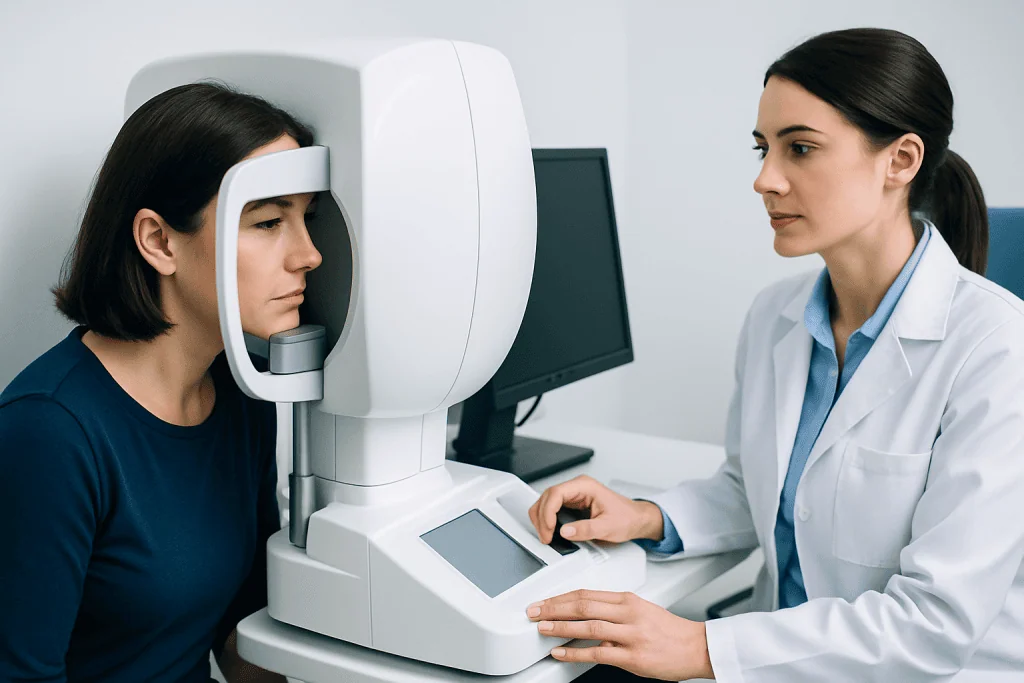
A visual field test checks how well a person sees straight ahead and to the sides while looking at a fixed central target. It maps areas where light targets are seen normally, less clearly or not at all. This information can reveal patterns of vision loss that may not be noticeable in everyday life, especially when changes develop gradually.
The most common method is automated perimetry. The patient sits facing a bowl-shaped instrument, covers one eye and presses a button whenever a small light appears. The lights vary in brightness and appear at different locations. The device compares responses with expected patterns and produces a visual field map for the clinician to review.
Other methods include confrontation visual field testing during an examination and specialized field tests for particular symptoms or eye conditions. Visual field testing is frequently combined with an eye pressure measurement, optic nerve examination and optical coherence tomography (OCT), because no single test provides a complete picture of eye health.
- Central field testing examines vision close to the point of fixation.
- Peripheral field testing assesses side vision, which can be affected early in glaucoma.
- Neurological field testing can help identify patterns related to the optic nerve or visual pathways in the brain.
Who May Need Visual Field Testing?
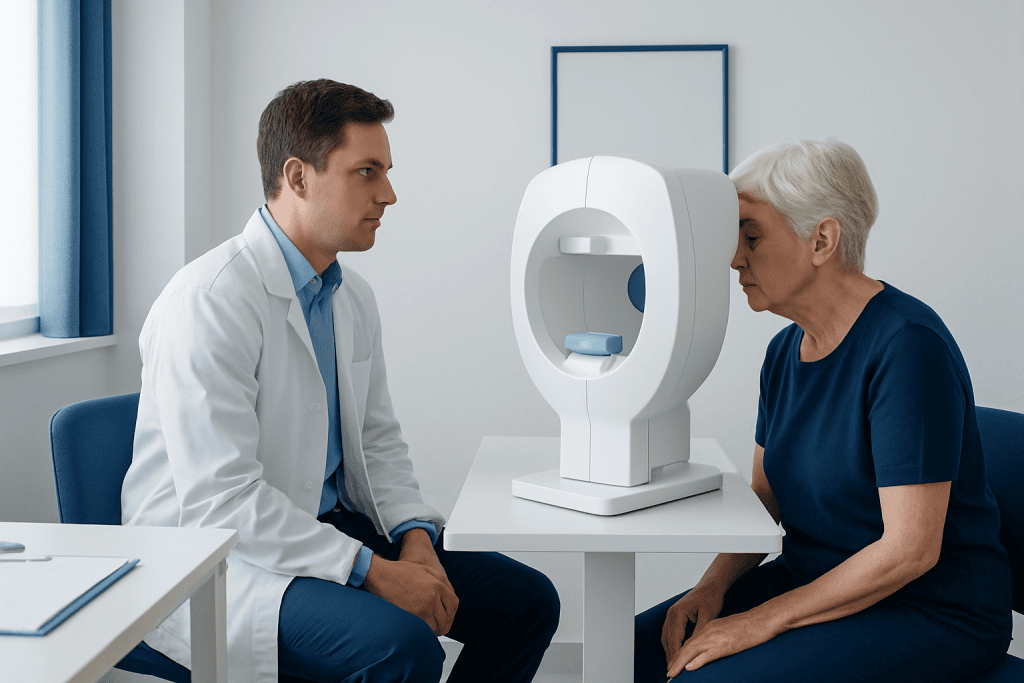
Visual field testing is most often recommended for people with suspected or diagnosed glaucoma. Glaucoma can damage the optic nerve over time, sometimes before a person notices any loss of sight. Serial visual field tests help an eye specialist evaluate whether vision is stable or whether treatment and monitoring need to be adjusted.
The test may also be appropriate for people with optic nerve disorders, retinal conditions, unexplained peripheral vision changes, headaches with concerning visual symptoms, a history of stroke, or conditions that may affect the visual pathways. A clinician considers the person’s symptoms, eye examination findings, medical history and other test results when deciding whether it is needed.
Risk factors that may lead to more frequent assessment include raised eye pressure, a family history of glaucoma, older age, diabetes, significant short-sightedness, previous eye injury and long-term corticosteroid use. A visual field result is interpreted in context; it is not a screening tool that should be self-directed without professional advice.
What Happens During the Procedure?
Before the test, staff explain the equipment and demonstrate how to respond to the light targets. Corrective lenses may be used if needed, and one eye is tested at a time. The patient places their chin on a support, keeps looking at the central fixation point and presses a response button each time a light is seen.
It is normal to miss some lights. The goal is not to respond constantly, but to respond when a target is truly visible. Blinking, fatigue, dry eyes, loss of concentration or looking away from the center can affect reliability. Staff may pause the test or repeat part of it if necessary.
Most automated tests are completed within a short appointment, although timing depends on the protocol and whether both eyes are tested. Pupils are not usually dilated for the visual field test itself. Results are commonly reviewed by an ophthalmologist alongside other findings rather than being treated as a stand-alone diagnosis.
Is a Visual Field Test Worth It?
A visual field test is worth having when an eye specialist recommends it because it provides information that cannot be obtained simply by checking visual sharpness on an eye chart. A person may still read clearly in the center of their vision while having early side-vision loss. Detecting and tracking this change can guide timely care and help preserve useful vision.
Its value is particularly strong in glaucoma monitoring, where changes over time can be more informative than one result alone. The test is non-invasive and does not expose the patient to radiation. It can also help clarify whether visual symptoms follow a pattern that suggests an eye, optic nerve or neurological cause.
However, a visual field test has limitations. Results can be influenced by tiredness, unfamiliarity with the task, eyelid position, refractive error and attention. If a test appears abnormal or unreliable, the clinician may repeat it, compare it with previous tests or arrange further eye and neurological assessment before drawing conclusions.
Benefits, Risks and Recovery Timeline
The main benefit of visual field testing is objective monitoring of functional vision. It can help establish a baseline, identify possible areas of loss and show whether a condition is stable or changing. This supports individualized decisions about observation, medication, laser treatment, surgery or referral to another specialist when appropriate.
The test is painless and carries no significant physical risks. Some people find it tiring or frustrating, especially during their first test, and temporary eye strain may occur from concentrating. There is no sedation, incision or recovery period, and most people can return to work, driving and daily activities immediately unless another part of their eye appointment involved pupil-dilating drops.
For the most reliable result, patients can wear their usual glasses, bring a current prescription if requested, and tell staff about dry eyes, drooping eyelids, poor mobility or difficulties using the response button. Taking brief rests, blinking normally and maintaining focus on the central target can also help.
How Often Will Medicare Pay for a Visual Field Test?
Medicare coverage rules vary by country, program and individual plan. In the United States, Medicare may cover visual field testing when it is medically necessary, such as for evaluating or monitoring glaucoma or another documented eye condition, but coverage is not based on a universal schedule that applies to every person.
How often Medicare will pay depends on the diagnosis, clinical findings, medical necessity and applicable billing requirements. The treating ophthalmologist determines when repeat testing is appropriate and documents the reason. Patients should confirm their expected share of the cost with their Medicare plan, supplemental insurer and the eye care provider before the appointment.
People outside the United States should check with their national health system, private insurer or care provider because eligibility and reimbursement policies differ widely. The most accurate information comes from the insurer and clinic billing office, rather than general online estimates of visual fields test cost.
What Happens When You Fail a Visual Field Test?
There is no simple pass-or-fail outcome for a visual field test. An abnormal result means that the test identified a possible area of reduced sensitivity or that the responses were not consistent enough to interpret confidently. It does not automatically mean that a person has glaucoma, permanent vision loss or a neurological disorder.
The ophthalmologist will review the pattern of findings, the test’s reliability indicators, the eye examination and previous results. They may repeat the test, check eye pressure, examine the optic nerve, perform OCT imaging or request other evaluations. Repeating the test is common, particularly if it was a first test or if fatigue, poor fixation or dry eyes may have affected performance.
If a reproducible defect is found, the next steps depend on its location and likely cause. Some patterns support closer glaucoma assessment, while others may prompt evaluation of the retina, optic nerve or neurological system. Follow-up recommendations are tailored to the individual and should be discussed with a qualified clinician.
How Often Should You Get a Visual Field Test?
The appropriate interval for visual field testing is individualized. People with no symptoms and no concerning eye findings may not need regular field testing, while those with suspected glaucoma, confirmed glaucoma or a condition affecting vision may need periodic monitoring. The interval is based on risk level, test reliability, previous changes and the clinician’s judgment.
When glaucoma is newly suspected or treatment has recently changed, an ophthalmologist may arrange testing more closely together to establish a dependable baseline and identify meaningful trends. If results and eye findings remain stable, testing may be scheduled less often. Someone with progressing changes may need more frequent assessment.
Regular attendance matters because comparing tests over time is often more useful than interpreting one isolated result. Patients should not delay a recommended appointment solely because their vision seems unchanged, as peripheral vision changes may be subtle. Acibadem International’s multidisciplinary specialists and JCI-accredited hospitals can assess eye conditions and coordinate care for international patients.
When to Seek Medical Care
Urgent medical assessment is important for sudden loss of vision, a new shadow or curtain across vision, severe eye pain, a red eye with nausea, sudden double vision, or a sudden new area of missing side vision. These symptoms can have several causes and need prompt evaluation, especially when they develop abruptly.
A non-urgent eye appointment should be arranged for gradual peripheral vision loss, repeated difficulty seeing objects to one side, frequent bumping into objects, new blind spots, or a family history of glaucoma. People already under eye care should contact their clinician if symptoms change or if they are unable to complete a scheduled visual field test.
Visual field testing is one part of a broader eye-health plan. An ophthalmologist can explain whether testing is indicated, what the result means and whether additional examinations or treatment are needed.
Frequently asked questions
How much does a visual field test cost without insurance?
There is no universal self-pay price for a visual field test. The amount can vary by location, facility, test type, specialist interpretation and whether it is performed with a full eye examination. Patients can request an itemized estimate before booking and ask whether follow-up testing is included.
Is a visual field test painful?
No. The test does not involve needles, radiation or contact with the eye. It may feel tiring because the patient must focus on a central point and respond to light targets, but there is no physical recovery period.
Can a visual field test diagnose glaucoma?
A visual field test can identify patterns of vision loss that may occur in glaucoma, but it does not diagnose glaucoma by itself. An ophthalmologist also considers eye pressure, optic nerve appearance, imaging and repeated test results. Early glaucoma may be present even when a visual field test is still normal.
How long does a visual field test take?
The testing portion commonly takes several minutes for each eye, but appointment length varies by the protocol and whether other examinations are scheduled. First-time patients may need extra time for instructions and practice. Staff can usually provide an expected duration when the appointment is arranged.
What can cause an abnormal visual field result?
An abnormal result may be caused by glaucoma, retinal disease, optic nerve conditions or problems affecting visual pathways in the brain. It can also reflect fatigue, dry eyes, incorrect lens correction, poor fixation or difficulty understanding the test. For this reason, clinicians often confirm unexpected findings with repeat testing and other examinations.
Should I drive after a visual field test?
Most people can drive and resume usual activities immediately after a visual field test. If the appointment also includes pupil dilation, temporary blurred vision and light sensitivity may make driving uncomfortable or unsafe. Patients should ask the clinic in advance whether dilation is planned.
References
- American Academy of Ophthalmology
- National Eye Institute
- Centers for Medicare & Medicaid Services
- Glaucoma Research Foundation
This article is for general information only and is not a substitute for professional medical advice. Please consult a qualified doctor about your individual situation.
Explore treatments in Turkey — costs, top hospitals & a free quote
JCI-accredited · board-certified surgeons · reply within 24h
Add us as a Preferred Source to see more of our trusted health content across Google Search, AI Overviews and Discover.