Warts and Skin Tag — Explained by Medical Evidence, Not Myths
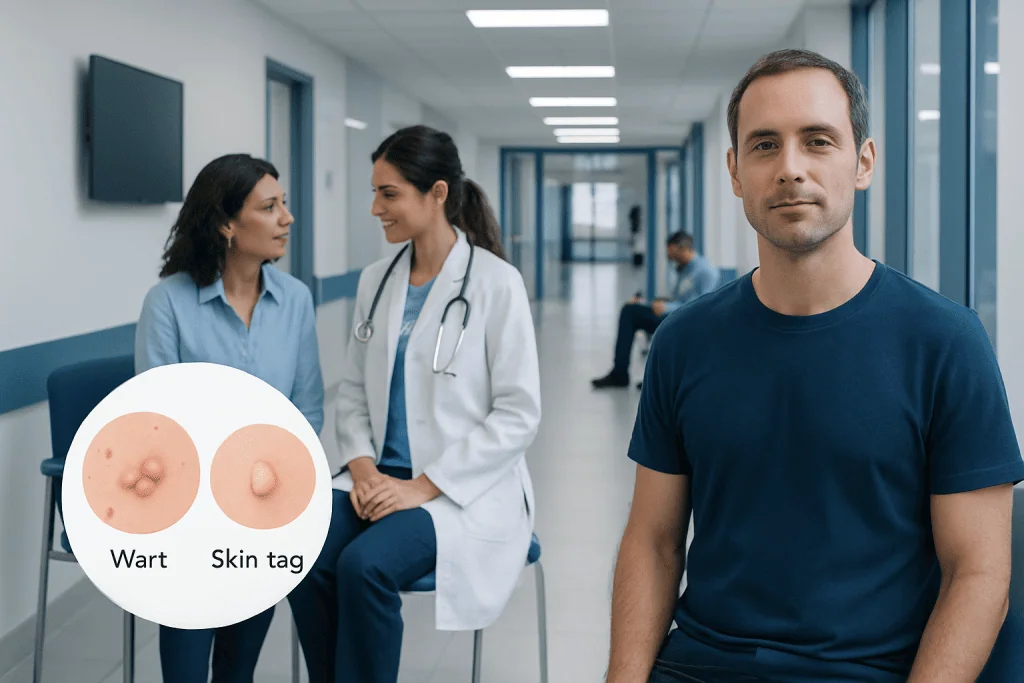
Warts and skin tags may look similar at first, but they have different causes and textures. Warts are linked to HPV and may spread to other areas of skin; skin tags are not contagious.
Key Takeaways
- Warts and skin tags may look similar at first, but they have different causes and textures.
- Warts are linked to HPV and may spread to other areas of skin; skin tags are not contagious.
- Many growths can be identified with a physical examination, but uncertain lesions should be checked by a doctor.
- Treatment depends on the type, size, location, symptoms, and cosmetic concerns.
- Home treatment is not appropriate for every skin lesion, especially around the eyes, genitals, or if the diagnosis is unclear.
Warts and skin tags are both common skin growths, but they are not the same. Warts are usually caused by human papillomavirus (HPV), while skin tags are benign folds of skin that often form where skin rubs together.
Overview: what warts and skin tags are
Warts and skin tag are often mentioned together because both appear as small growths on the skin. However, they are medically different conditions. Warts are rough, virus-related skin growths caused by certain types of human papillomavirus, while skin tags are soft, noncancerous pieces of skin that usually develop in areas of friction such as the neck, armpits, groin, or under the breasts.
Knowing the difference matters because the cause, risk of spread, and treatment are not the same. A wart may pass from one area of skin to another and sometimes from person to person through direct contact. A skin tag does not spread and is not an infection.
Most warts and skin tags are harmless, but not every bump on the skin is one of these. Moles, seborrheic keratoses, cysts, calluses, and some skin cancers can sometimes resemble them. If a lesion is changing, bleeding, painful, or simply uncertain, a dermatologist can help confirm the diagnosis and rule out other causes.
How to tell the difference
The easiest way to distinguish these growths is by texture, shape, and location. Warts often feel rough or grainy and may have a cauliflower-like surface. They can appear on the hands, fingers, feet, face, or around the nails. Plantar warts on the soles of the feet may grow inward because of pressure and can become painful when walking.
Skin tags are usually soft, smooth, and flesh-colored or slightly darker than the surrounding skin. They often hang from the skin on a thin stalk. Unlike warts, they tend to form in skin folds where rubbing is common, and they rarely cause pain unless twisted, irritated by clothing, or repeatedly rubbed.
Some practical clues can help:
- Warts: rough surface, may show tiny black dots, can spread, more common on hands and feet.
- Skin tags: soft, mobile, pedunculated growths, common in the neck and armpits, do not spread.
- Both: usually benign, but unusual features deserve medical review.
Because visual overlap is possible, especially with small or irritated lesions, self-diagnosis is not always reliable. A doctor may also compare them with other common benign growths such as seborrheic keratosis when examining the skin.
Causes and risk factors

Warts develop when HPV enters the skin through tiny breaks. Not everyone exposed to the virus develops visible warts, and different HPV types tend to cause different kinds of warts. Common warts often affect the hands, plantar warts affect the feet, and flat warts may appear on the face or legs. Moist environments, skin trauma, nail biting, shaving, and direct skin contact can increase the chance of developing them.
Skin tags are not caused by a virus. They are thought to arise from repeated friction, local skin irritation, and individual tendency. They are more common in adults and may be seen more often in people with overweight, insulin resistance, or metabolic risk factors, though they can also occur in otherwise healthy people. Pregnancy may also be associated with new skin tags because of hormonal and skin changes.
Immune function plays a role in wart persistence. People with weakened immunity may have more numerous or stubborn warts. In contrast, skin tags are usually a structural skin change rather than an infectious problem. This difference helps explain why wart treatment often aims to clear infected skin cells, while skin tag treatment focuses on safe removal if needed.
Symptoms, appearance, and common concerns
Many warts do not cause major symptoms beyond their appearance, but some become bothersome because they catch on objects, spread, or appear in visible areas. Plantar warts may feel tender, as if stepping on a small pebble. Periungual warts around the nails can interfere with grooming and may distort nail growth. Flat warts are often smaller and smoother than common warts and may occur in clusters.
Skin tags are usually asymptomatic. The most common concerns are cosmetic appearance, snagging on jewelry or clothing, and occasional irritation from friction. If the blood supply to a tag is cut off, it can become darker, swollen, and uncomfortable.
Any lesion that grows rapidly, changes color, ulcerates, bleeds without injury, or does not clearly match the usual look of a wart or skin tag should be professionally assessed. This is especially important for growths on the eyelids, genitals, or areas exposed to repeated trauma. Sometimes what seems like a simple wart may need evaluation within broader skin cancer assessment if features are atypical.
How doctors diagnose them
Diagnosis is often made through a skin examination. A clinician looks at the size, surface, attachment to the skin, location, and whether there are signs of irritation or infection. In many cases, no special testing is required.
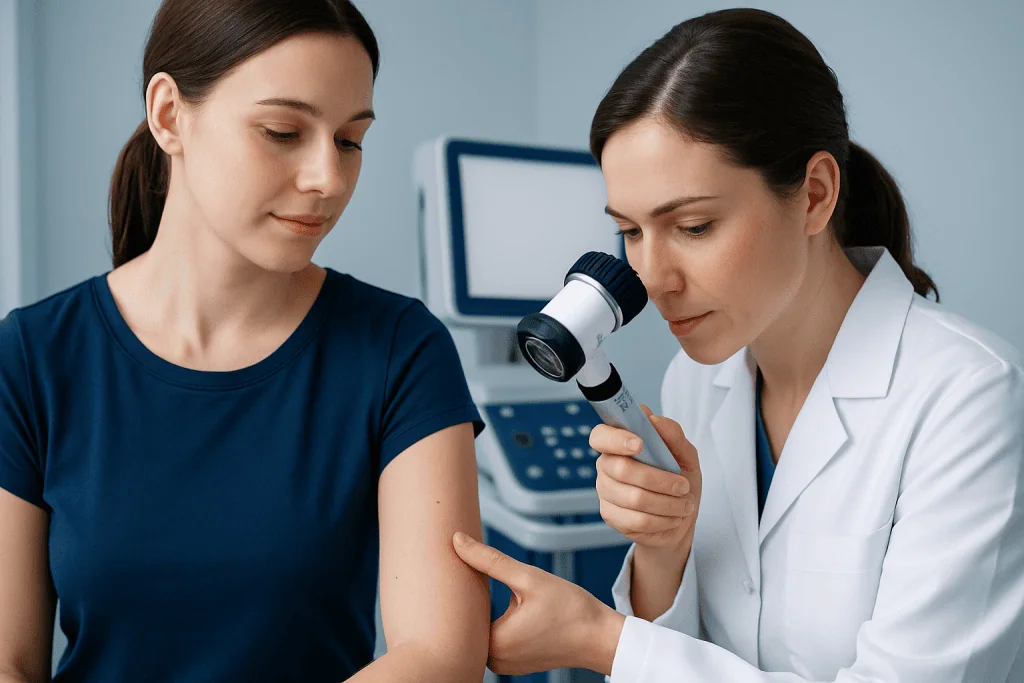
If the diagnosis is uncertain, a dermatologist may use dermoscopy, a magnified lighted device that helps examine surface patterns. This can be helpful when distinguishing warts from calluses, moles, seborrheic keratoses, or other lesions. When a growth has unusual features, a sample may be removed and sent for laboratory analysis.
Accurate diagnosis is important before any removal attempt. Over-the-counter wart products can irritate normal skin and should not be used on an unknown lesion. Medical evaluation is especially helpful for people with diabetes, poor circulation, reduced sensation in the feet, or lesions in sensitive areas such as the face or genitals.
Treatment options and what to expect
Not every wart or skin tag needs treatment. Some warts go away on their own over time, and many skin tags can simply be left alone if they are not causing symptoms. Treatment is usually chosen because of pain, spread, repeated irritation, or cosmetic reasons.
For warts, options may include topical salicylic acid, freezing with liquid nitrogen, or other office-based methods depending on the type and location. Persistent lesions may require a more targeted dermatology plan, especially if they are painful, recurrent, or resistant to treatment. In selected cases, a doctor may recommend procedural removal such as cryotherapy or a minor skin lesion removal approach.
Skin tags are typically removed only if they are irritated, catching on clothing, or cosmetically unwanted. Common medical methods include snipping after preparation, cautery, or freezing. Removal is usually quick, but it should be done with proper diagnosis and sterile technique, particularly in delicate areas.
People should avoid cutting off lesions at home, tying them off, or applying strong chemicals without professional advice. Home methods can lead to bleeding, infection, scarring, and delayed diagnosis if the growth is not actually a wart or skin tag. If there are many lesions, repeated recurrences, or uncertainty, specialist dermatology care can help guide safe treatment.
Prevention and self-care
Because warts are caused by a virus, prevention focuses on reducing skin exposure and limiting spread. It helps to avoid picking at warts, sharing razors or nail tools, and walking barefoot in communal showers or pool areas. Keeping skin clean, dry, and protected from cuts may also reduce the chance of viral entry.
For skin tags, prevention is less direct because they are not infectious. Reducing skin friction, managing weight when appropriate, and wearing comfortable clothing may help some people prone to tags in skin folds. Good skin care can also reduce irritation in areas where tags commonly form.
Self-care should be cautious. Over-the-counter wart treatments may be appropriate for some clearly identified common warts on thicker skin, but they are not suitable for the face, genitals, irritated lesions, or uncertain growths. Skin tags should not be removed at home if they are large, broad-based, inflamed, or located near the eyes.
Near the end of the care journey, some patients prefer evaluation in a center that can assess both routine and complex skin lesions. Acibadem International’s multidisciplinary specialists and JCI-accredited hospitals provide diagnosis and treatment for international patients when assessment or removal is needed.
When to seek medical care
Medical review is sensible when a wart or skin tag is painful, bleeding, repeatedly irritated, or changing in size, shape, or color. Care is also important if the diagnosis is unclear or if the growth is on the eyelid, genitals, face, or soles of the feet. These areas often need tailored treatment to avoid complications.
People with diabetes, weakened immunity, poor circulation, or reduced sensation should ask a doctor before treating a lesion themselves. Warts that spread quickly or do not improve after appropriate treatment also deserve evaluation. In children, pregnancy, or anyone with multiple skin conditions, individual guidance helps ensure the safest plan.
Urgent assessment is appropriate for a lesion that looks infected, becomes very swollen, drains pus, or causes significant pain. A clinician can confirm whether it is a benign skin growth or another condition that needs different care.
Frequently asked questions
Are warts and skin tags the same thing?
No. Warts are usually caused by human papillomavirus and often have a rough surface, while skin tags are soft, benign growths that commonly form in areas of friction. They may look similar from a distance, but their causes and treatment are different.
Can a skin tag turn into a wart?
A skin tag does not turn into a wart. They are separate conditions with different underlying causes. However, an irritated skin growth can be hard to identify without a medical examination.
Are skin tags contagious like warts?
No, skin tags are not contagious. Warts can spread through direct skin contact or by touching contaminated surfaces, especially if the skin has tiny cuts. This is one reason why the two conditions are managed differently.
Is it safe to remove a wart or skin tag at home?
Home care may be reasonable for some clearly identified common warts, but it is not safe for every lesion. Growths on the face, eyelids, genitals, or any lesion with uncertain diagnosis should be checked by a doctor first. Removing skin tags at home can cause bleeding, infection, and scarring.
Why do I keep getting skin tags?
Some people are simply more prone to skin tags, especially in areas where skin rubs together. Friction, age, pregnancy, and metabolic factors may play a role. Recurrent tags are common and do not usually mean anything serious, but a doctor can advise if there are many or if they are bothersome.
When should a wart be checked by a doctor?
A wart should be evaluated if it is painful, spreading, bleeding, infected, or not responding to treatment. Medical review is also important for plantar warts, periungual warts, genital warts, and lesions in people with diabetes or reduced immunity. If there is doubt about what the lesion is, professional assessment is the safest choice.
References
- American Academy of Dermatology
- National Health Service
- Mayo Clinic
- DermNet
- Centers for Disease Control and Prevention
This article is for general information only and is not a substitute for professional medical advice. Please consult a qualified doctor about your individual situation.
Explore treatments in Turkey — costs, top hospitals & a free quote
JCI-accredited · board-certified surgeons · reply within 24h
Add us as a Preferred Source to see more of our trusted health content across Google Search, AI Overviews and Discover.

More from the Health Library



Related Specialists

Dr. Cem Tangay
Orthopedic Surgery & Traumatology
Dr. Memiş Ali Mutlu
Gynecology & Obstetrics
Dr. Mehmet Celal Şen
Pediatric Surgery
Prof. Dr. Yılmaz Büyükuncu
General Surgery