What Happens at a Diagnostic Imaging Consultation?

A diagnostic imaging consultation reviews symptoms, medical history, and the reason for the imaging test. The visit helps determine which imaging method is most suitable, such as X-ray, ultrasound, CT, or MRI.
Key Takeaways
- A diagnostic imaging consultation reviews symptoms, medical history, and the reason for the imaging test.
- The visit helps determine which imaging method is most suitable, such as X-ray, ultrasound, CT, or MRI.
- Safety checks may include questions about pregnancy, allergies, kidney function, implants, and contrast dye.
- Preparation depends on the test and may involve fasting, avoiding metal objects, or drinking water.
- Results are interpreted by a radiologist and then shared by the referring doctor or care team.
A diagnostic imaging consultation helps a patient understand why an imaging test is recommended, how it is performed, and how the results may guide care. It is also a chance to review symptoms, medical history, safety considerations, and any questions before the scan.
Overview
A diagnostic imaging consultation is a medical discussion that takes place before an imaging test such as an X-ray, ultrasound, computed tomography (CT) scan, or magnetic resonance imaging (MRI). Its purpose is to make sure the right test is chosen for the right reason and that the patient understands what will happen. In many cases, the consultation is brief, but it plays an important role in safe, effective care.
During the consultation, the healthcare team reviews the patient’s symptoms, medical history, and any previous test results. They may ask when symptoms began, whether they are getting worse, and what treatments have already been tried. This information helps the radiology team and referring doctor decide whether imaging is needed and which technique is likely to provide the clearest answer.
The consultation is also an opportunity to explain the benefits and limitations of imaging. Some tests are better for bones, while others are more useful for soft tissues, blood vessels, or internal organs. For example, ultrasound may be used for the abdomen or pregnancy-related assessments, while MRI may help evaluate the brain, joints, or spine.
Just as importantly, the visit gives patients time to ask questions. Understanding the process often makes the appointment feel more manageable and helps patients prepare in a practical way.
Why a Diagnostic Imaging Consultation Is Done
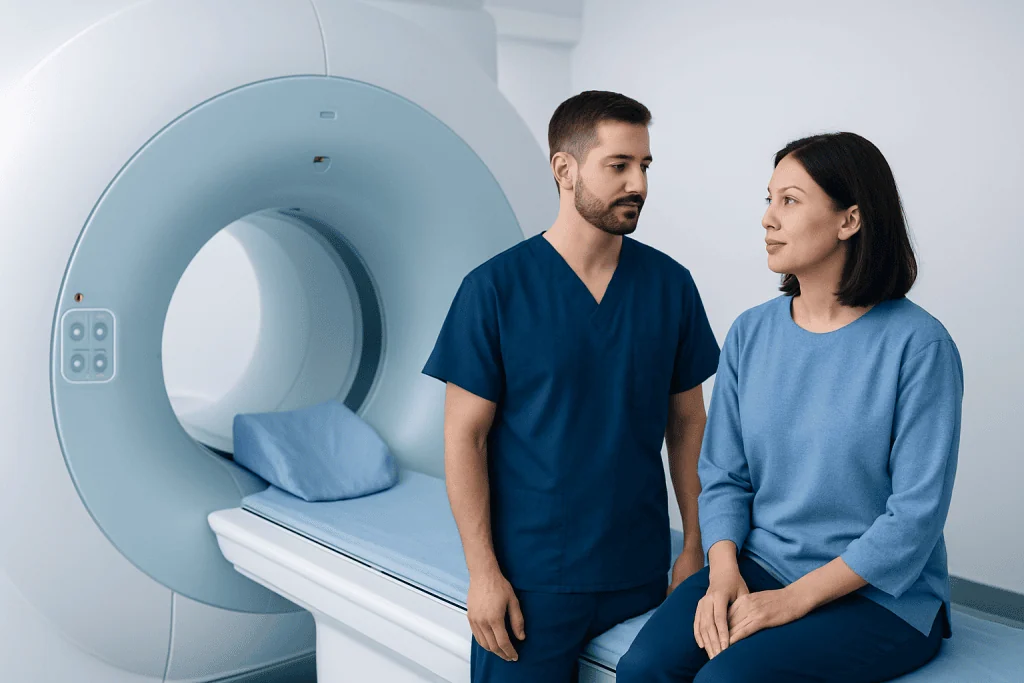
Doctors request imaging for many reasons. It may help confirm a diagnosis, rule out a suspected condition, assess an injury, guide treatment planning, or monitor a known disease over time. The consultation helps connect the patient’s symptoms to the most appropriate imaging study, rather than ordering tests without context.
For example, a patient with sudden back pain may need different imaging than someone with long-standing headaches or abdominal discomfort. In some situations, imaging may not be necessary right away, and the consultation helps determine whether another approach, such as observation or laboratory testing, should come first. This careful decision-making helps avoid unnecessary tests while still supporting timely diagnosis.
The consultation may also clarify whether a more specialized scan is needed. A routine X-ray may be enough for a suspected fracture, while a more detailed test such as an MRI scan or a CT scan may be recommended if doctors need to look more closely at soft tissues, organs, or complex injuries.
In many healthcare settings, the imaging consultation improves communication between the patient, referring physician, and radiology team. This can lead to clearer expectations and a more coordinated care plan.
What Happens During the Appointment

At the appointment, a doctor, radiologist, or radiology staff member usually begins by asking about the patient’s current symptoms and overall health. Questions often include where the problem is located, how severe it feels, whether it comes and goes, and whether there are associated symptoms such as fever, weakness, numbness, or unexplained weight loss. The team may also review past surgeries, existing medical conditions, and earlier imaging studies.
Patients are often asked to bring a list of medications and details about allergies, especially if contrast material might be used. In some cases, blood test results are reviewed, particularly if kidney function is relevant before contrast-enhanced imaging. If the patient has had prior scans at another hospital, bringing those reports can be very helpful for comparison.
The consultation may include a simple physical assessment or a review of referral notes from another specialist. The healthcare team then explains the recommended imaging test, how long it usually takes, whether contrast is needed, and what the patient may feel during the procedure. For example, MRI is noisy and requires lying still in a scanner, while ultrasound is generally quieter and involves a handheld probe on the skin.
If the patient feels anxious or claustrophobic, this is a good time to mention it. The team can then discuss practical adjustments, such as extra explanation, comfort measures, or, when appropriate, options to help the patient complete the exam safely.
Questions About Safety and Preparation
Safety screening is a routine and important part of a diagnostic imaging consultation. The questions asked depend on the type of scan being considered. For MRI, patients are usually asked about pacemakers, metal implants, aneurysm clips, cochlear implants, or metal fragments in the body, because strong magnets may affect some devices or materials. For CT scans and certain other tests, questions may focus more on contrast allergy history and radiation exposure.
Pregnancy should always be discussed if it is possible, especially before tests that use radiation. This does not automatically mean imaging cannot be done, but it may affect which test is preferred. In many cases, ultrasound or MRI may be considered when suitable. The goal is to balance medical need with safety.
Preparation instructions vary by test. Some imaging exams require fasting for several hours, while others may require a full bladder, comfortable clothing, or removal of jewelry and metal accessories. If contrast dye is planned, patients may be advised about eating, drinking, or blood tests beforehand. The team will explain these details clearly in advance.
Common preparation points may include:
- Arriving early to complete screening forms
- Bringing previous imaging reports if available
- Wearing clothing without metal fasteners when possible
- Following fasting or hydration instructions exactly
- Informing staff about implants, allergies, pregnancy, or kidney disease
Different Imaging Tests and What They Show
Not all imaging tests serve the same purpose. X-rays are commonly used to evaluate bones, certain lung conditions, and some joint problems. Ultrasound uses sound waves and is often chosen for the abdomen, pelvis, thyroid, blood vessels, and pregnancy-related imaging. It does not use radiation and is widely used because it is noninvasive and flexible.
CT scans use X-rays combined with computer processing to create detailed cross-sectional images. They are especially useful in emergencies, for assessing injuries, the chest, abdomen, and certain cancers, and for detecting internal bleeding or complications. MRI uses magnetic fields and radio waves to create highly detailed images of soft tissues and is commonly used for the brain, spine, joints, ligaments, and some internal organs.
In some cases, the consultation may include discussion of more specialized imaging, such as PET-CT for selected cancer evaluations or staging, depending on the clinical question. The best test depends on the part of the body being studied and what doctors are trying to learn.
The radiologist’s role is to interpret the images in the context of the patient’s history and symptoms. Sometimes the findings are straightforward, but in other situations they may need to be correlated with blood tests, physical examination, or follow-up imaging. This is why the consultation and the scan itself are both important parts of the diagnostic process.
After the Scan: Results and Next Steps
After the imaging study is completed, the images are reviewed by a radiologist, a doctor trained to interpret imaging findings. The radiologist prepares a report describing what is seen and whether the findings explain the patient’s symptoms. The timing of results varies depending on the urgency of the case, the complexity of the scan, and the healthcare setting.
In many cases, the patient receives the results from the referring physician rather than directly at the scanning appointment. This is because the findings often need to be discussed in the wider context of symptoms, examination, and treatment options. For example, imaging may confirm a simple issue, suggest the need for more tests, or help a specialist decide on a treatment plan.
Sometimes imaging identifies changes that require further evaluation but are not necessarily serious. At other times, the scan may be normal even when symptoms are present, which can still be useful information. A normal result may help rule out certain conditions and guide attention toward other possible causes.
If needed, the next steps may include referral to another specialist, repeat imaging after a period of time, laboratory tests, or treatment planning. For patients being evaluated for problems such as a suspicious lump or changes seen on screening, imaging may also be combined with procedures such as biopsy when tissue diagnosis is necessary.
How Patients Can Prepare and Feel More Comfortable
Good preparation often makes an imaging appointment smoother. Patients can write down their symptoms, bring a medication list, and note any important medical history, such as surgery, cancer treatment, allergies, or implanted devices. If English is not the patient’s first language, asking for language support in advance may help communication during the consultation and scan.
It is also helpful to ask practical questions ahead of time. Patients may want to know how long the test will take, whether they can eat beforehand, if they will need someone to accompany them, and when they should expect results. For children, older adults, or people with mobility limitations, planning transport and arrival time can reduce stress on the day.
Emotional comfort matters too. Some people worry about confined spaces, contrast injections, or what the results might mean. Sharing these concerns with the care team allows them to explain each step and offer reassurance. The consultation is meant to support understanding, not just scheduling.
Acibadem International’s multidisciplinary specialists and JCI-accredited hospitals diagnose and manage conditions that may require imaging for international patients, with consultation and radiology services coordinated according to the individual clinical need.
When to Contact a Doctor Before or After Imaging
Patients should contact their doctor or imaging center before the test if they develop a new illness, believe they may be pregnant, or learn new information about allergies, kidney problems, or implanted medical devices. Updated information can affect whether the scan should go ahead as planned or whether a different test is safer and more suitable.
After imaging, patients should seek medical advice if they have concerning symptoms following contrast administration, such as rash, breathing difficulty, significant swelling, or persistent vomiting. These reactions are uncommon, but prompt assessment is important. Patients should also contact their doctor if they do not receive results within the expected timeframe.
In urgent situations, imaging is only one part of care. Severe chest pain, sudden weakness, difficulty speaking, major trauma, or severe shortness of breath requires immediate medical attention rather than waiting for a routine consultation. The healthcare team can then decide which imaging is needed and how quickly it should be performed.
Overall, a diagnostic imaging consultation is designed to make testing safer, more targeted, and easier to understand. With clear communication and proper preparation, it helps patients move forward with greater confidence and a better sense of what comes next.
Frequently asked questions
Do all imaging tests require a consultation first?
Not always. Some routine imaging tests are scheduled directly from a doctor’s referral, while others need a more detailed pre-scan discussion. A consultation is more likely when the best test is unclear, contrast may be used, or there are important safety considerations.
What should a patient bring to a diagnostic imaging consultation?
It is usually helpful to bring identification, referral information, a medication list, and details about allergies or past surgeries. Previous imaging reports or discs, if available, can also help the radiology team compare old and new findings.
Will the patient get results immediately?
Sometimes urgent findings are communicated quickly, but most results are reviewed first by a radiologist. The final report is often discussed later by the referring doctor, who can explain what the findings mean in the context of symptoms and treatment options.
Is contrast dye always necessary?
No. Contrast is only used when it helps answer a specific medical question more clearly. Whether it is needed depends on the type of scan, the body area being examined, and the condition the doctor is investigating.
What if the patient is claustrophobic or anxious about the scan?
This should be mentioned during the consultation. The healthcare team can explain the procedure in advance and discuss ways to improve comfort, such as extra support, scheduling adjustments, or other practical measures when appropriate.
Are imaging tests safe during pregnancy?
Some are safer than others, so pregnancy or possible pregnancy should always be discussed beforehand. The care team may choose an imaging method that avoids radiation when suitable, while still making sure necessary medical evaluation is not delayed.
This article is for general information only and is not a substitute for professional medical advice. Please consult a qualified doctor about your individual situation.
Explore treatments in Turkey — costs, top hospitals & a free quote
JCI-accredited · board-certified surgeons · reply within 24h
Add us as a Preferred Source to see more of our trusted health content across Google Search, AI Overviews and Discover.

More from the Health Library

Quest Diagnostics Walk-In Visits: What Patients Should Know

When to Get a Second Opinion on Lab Results or Imaging Findings

Neuropsychological Testing: Memory, Attention, and Brain Function Assessment

Labcorp Appointment: How to Book, Prepare, and Avoid Delays

Thyroid Ultrasound: Nodules, Goiter, and When Biopsy Is Needed