

What Is a Dental Bridge? Benefits, Limits, and Care
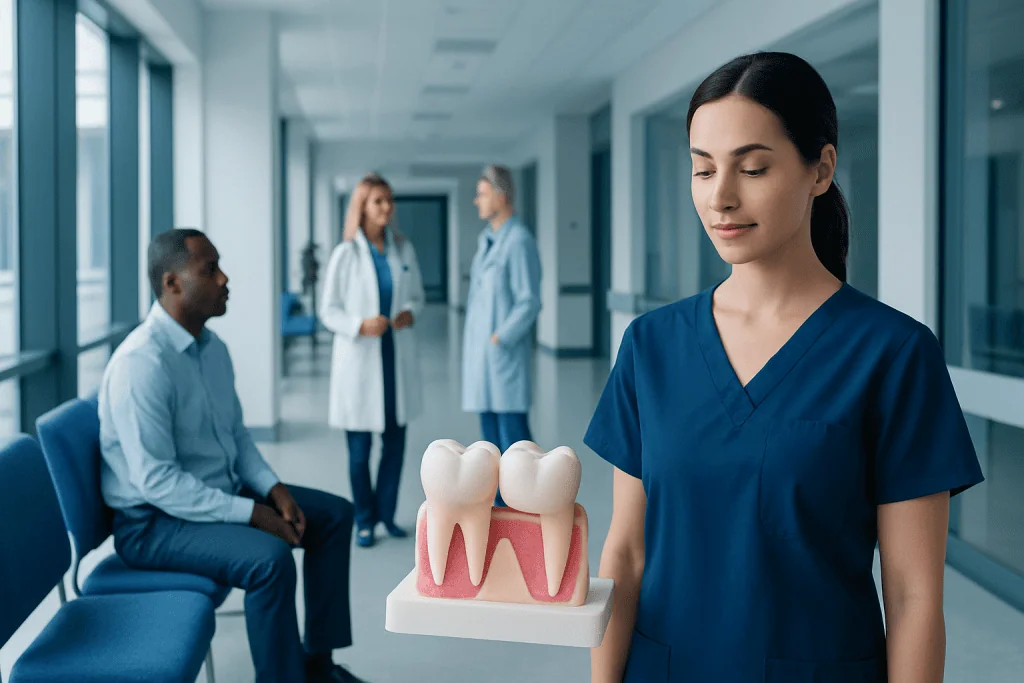
A dental bridge fills the gap left by missing teeth using one or more artificial teeth. Bridges may be supported by natural teeth or dental implants, depending on the situation.
Key Takeaways
- A dental bridge fills the gap left by missing teeth using one or more artificial teeth.
- Bridges may be supported by natural teeth or dental implants, depending on the situation.
- Good oral hygiene and regular dental visits are important for a bridge to last well.
- A bridge can restore function and appearance, but it may not suit every patient.
- The choice between a bridge, implant, or removable option depends on oral health, cost, and long-term goals.
A dental bridge is a fixed way to replace one or more missing teeth. It can improve chewing, speech, and appearance, but the best option depends on the health of the gums, surrounding teeth, and jawbone.
Overview: what a dental bridge is
A dental bridge is a fixed dental restoration used to replace one or more missing teeth. It usually consists of an artificial tooth, called a pontic, held in place by support on either side of the gap. That support may come from natural teeth fitted with crowns or from dental implants placed in the jaw.
The main goal of a bridge is to restore everyday function and appearance. When a tooth is missing, chewing can become less efficient, speech may feel different, and nearby teeth can slowly shift into the empty space. Replacing the missing tooth or teeth can help keep the bite more stable and make the smile look more complete.
Bridges are considered a common and established option in restorative dentistry. They are often discussed alongside dental implants and removable partial dentures. A dentist recommends the most suitable choice based on the number of missing teeth, the strength of neighboring teeth, gum health, bone support, and the patient’s preferences.
Types of dental bridges

There are several types of dental bridges, and each is designed for a different situation. The most familiar type is a traditional bridge. In this design, the teeth on either side of the gap are prepared and covered with crowns, which support the artificial tooth between them.
Another option is a cantilever bridge, which is attached on only one side. This may be used in selected cases, though it is less common because it can place more force on the supporting tooth. A Maryland bridge uses a framework or wings bonded to the back of nearby teeth, often to replace front teeth where biting pressure is lighter.
Some bridges are supported by implants instead of natural teeth. An implant-supported bridge can be especially useful when several teeth are missing in a row and the surrounding teeth are not ideal for crowns. Materials also vary. Dentists may use porcelain, ceramic, metal, zirconia, or combinations of these to balance strength, fit, and a natural appearance.
- Traditional bridge: supported by crowns on teeth next to the gap
- Cantilever bridge: supported on one side only
- Maryland bridge: bonded to the back of adjacent teeth
- Implant-supported bridge: attached to implants instead of natural teeth
Benefits and possible limits

A dental bridge can offer several practical benefits. It can help a person chew more comfortably, pronounce words more clearly, and feel more confident about their smile. It may also reduce the chance of neighboring teeth drifting into the empty space, which can sometimes affect the bite over time.
Another advantage is that a bridge is fixed in place, so it does not need to be removed for cleaning in the way a removable partial denture does. In many cases, treatment can be completed more quickly than implant treatment because a bridge usually does not require healing time after surgery, unless implants are part of the plan.
At the same time, bridges have limits. If a traditional bridge is used, healthy neighboring teeth may need to be reshaped for crowns. Bridges also do not replace the tooth root in the jaw unless they are implant-supported, so they may not prevent bone changes in the same way an implant can. The long-term success of a bridge also depends heavily on gum health, bite forces, and careful home care.
For some people, the best alternative may be a custom dental bridge; for others, implants or another restoration may better protect surrounding teeth. A dentist will weigh the benefits and drawbacks for the individual case rather than recommending one solution for everyone.
Who may need a dental bridge
A bridge may be recommended when one or more teeth are missing and the gap affects chewing, appearance, or the stability of nearby teeth. It may be suitable for adults who have healthy gums and enough support from neighboring teeth or implants. People often consider a bridge after tooth decay, fracture, gum disease, trauma, or tooth extraction has led to tooth loss.
The condition of the surrounding teeth matters a great deal. If the adjacent teeth already have large fillings or need crowns, a traditional bridge may be a practical choice. If the neighboring teeth are healthy and untouched, some patients prefer to avoid reshaping them and may discuss implants instead.
Not everyone is a good candidate immediately. Active gum disease, untreated cavities, severe teeth grinding, or poor oral hygiene may need attention first. Patients with bone loss in the jaw may still have options, but they may need additional assessment or procedures such as dental bone grafts if implant support is being considered.
How dentists diagnose and plan treatment
Planning for a dental bridge starts with a full dental examination. The dentist looks at the missing tooth space, the strength and position of nearby teeth, the health of the gums, and the way the upper and lower teeth come together when biting. This helps determine whether a bridge is likely to function well and last.
Dental X-rays are commonly used to assess roots, bone levels, and hidden decay. In some cases, digital scans, photographs, or impressions are taken to help design the bridge accurately. If implants are being considered, additional imaging may be needed to evaluate bone volume and identify the safest and most stable position for placement.
The dentist also discusses symptoms and habits that could affect treatment, such as clenching, grinding, or previous dental work. If there are signs of gum inflammation, cavities, or other concerns, these are usually treated first through general dentistry care. Careful planning improves the fit, appearance, and long-term health of the bridge and supporting structures.
Treatment process and recovery
The treatment process depends on the type of bridge. For a traditional bridge, the dentist usually prepares the teeth next to the gap by reshaping them to make room for crowns. Impressions or digital scans are then taken, and a dental laboratory creates the final bridge. A temporary bridge may be placed while the permanent one is being made.
At the fitting visit, the dentist checks the bridge for comfort, bite, and appearance before cementing it into place. Mild sensitivity in the supporting teeth can happen at first, especially with hot or cold foods, but this often settles as the mouth adjusts. If the bite feels uneven, a small adjustment may be needed.
Implant-supported bridges involve a different timeline because the implants need time to bond with the bone before the bridge is attached. Recovery may therefore take longer overall, but the support system can be very stable. In all cases, regular review is important to make sure the bridge remains secure and the surrounding gums stay healthy.
If the bridge is part of a broader restorative plan, a dentist may also consider related treatments such as dental crowns for additional support or protection of neighboring teeth. The exact plan should be personalized to the patient’s dental condition and goals.
Caring for a dental bridge
Daily care is one of the most important factors in the success of a bridge. Even though the artificial tooth cannot decay, the supporting teeth and gums can still develop problems. Plaque can collect around the margins of crowns and beneath the pontic, so careful cleaning is essential.
Dentists often recommend brushing twice a day with fluoride toothpaste and cleaning between the teeth every day. Special tools such as floss threaders, super floss, or interdental brushes can help clean under the bridge where a regular toothbrush may not reach well. Some people also benefit from an oral irrigator, although it does not replace brushing and flossing.
It is also wise to avoid habits that put excessive force on the bridge, such as chewing ice, biting hard objects, or using the teeth to open packaging. People who grind or clench their teeth may need a night guard to protect the restoration. Regular checkups and professional dental hygiene visits help detect problems early and support the health of the bridge.
- Brush thoroughly along the gumline and around supporting crowns
- Clean under the bridge daily with the right tools
- Attend routine dental checkups and cleanings
- Report looseness, pain, or changes in bite promptly
When to see a dentist and long-term outlook
A person should contact a dentist if a bridge feels loose, painful, difficult to clean, or uncomfortable when biting. Bleeding gums, bad breath, sensitivity, or food trapping around the bridge can also be signs that the restoration or supporting teeth need attention. Early review may prevent a small issue from becoming a larger one.
The long-term outlook for a dental bridge can be good when it is well designed, properly fitted, and carefully maintained. However, no restoration lasts forever. Wear, gum recession, decay in the supporting teeth, or changes in the bite can affect how long a bridge remains successful.
People who are unsure whether a bridge is right for them should ask about all suitable options, including implants and removable restorations. In complex cases, multidisciplinary dental evaluation can be helpful. Acibadem International’s multidisciplinary specialists in JCI-accredited hospitals evaluate and treat dental restoration needs for international patients, including bridge-related care, when appropriate.
Missing teeth can also be linked to broader oral health issues, including gum recession or damage from bruxism. Addressing the underlying cause, not only the gap itself, helps protect the long-term health of the mouth.
Frequently asked questions
How long does a dental bridge last?
A dental bridge can last for many years, especially with good oral hygiene and regular dental checkups. Its lifespan depends on the health of the supporting teeth or implants, the bite, and daily care habits.
Is getting a dental bridge painful?
The procedure is usually managed with local anesthesia, so the tooth preparation itself should not be painful. Some people notice mild sensitivity or soreness afterward, but this is often temporary and can be discussed with the dentist.
What is the difference between a bridge and an implant?
A bridge replaces a missing tooth by resting on nearby teeth or implants, while a single implant replaces the root as well as the visible tooth. An implant may help preserve jawbone, but it involves a surgical procedure and a longer treatment timeline.
Can a dental bridge replace more than one tooth?
Yes. A bridge can replace more than one missing tooth if there is enough support from healthy teeth or implants. The best design depends on how many teeth are missing and where the gap is located.
How do you clean under a dental bridge?
Cleaning under a bridge usually requires special floss, a floss threader, or an interdental brush. A dentist or dental hygienist can show the safest and most effective way to clean the area each day.
Can a bridge be removed once it is cemented?
A fixed bridge is not meant to be removed at home. If it needs repair or replacement, a dentist can assess it and decide the safest way to remove or adjust it.
References
- American Dental Association
- National Institute of Dental and Craniofacial Research
- Mayo Clinic
- National Health Service
- FDI World Dental Federation
This article is for general information only and is not a substitute for professional medical advice. Please consult a qualified doctor about your individual situation.
Dental Bridge in Turkey — costs, top hospitals & a free quote
JCI-accredited · board-certified surgeons · reply within 24h
Add us as a Preferred Source to see more of our trusted health content across Google Search, AI Overviews and Discover.

Dental & Oral Health
Full-scope dental care from implants and aesthetics to oral and maxillofacial surgery.
158 specialists in this unitRelated Treatments
More from the Health Library



Related Specialists

Assoc. Prof. Dr. Ferit Bayram
Oral & Dental Health
Assoc. Prof. Dr. Yeliz Çavuşoğlu Yüce
Oral & Dental Health
Assoc. Prof. Dr. Mutlu Keskin
Oral & Dental Health
Prof. Dr. Ülkü Noyan
Oral & Dental Health