Oral And Maxillofacial Surgery
Oral and maxillofacial surgery treats conditions of the mouth, jaw, face and facial bones, including impacted teeth, cysts, trauma and jaw alignment problems.
Quick answer
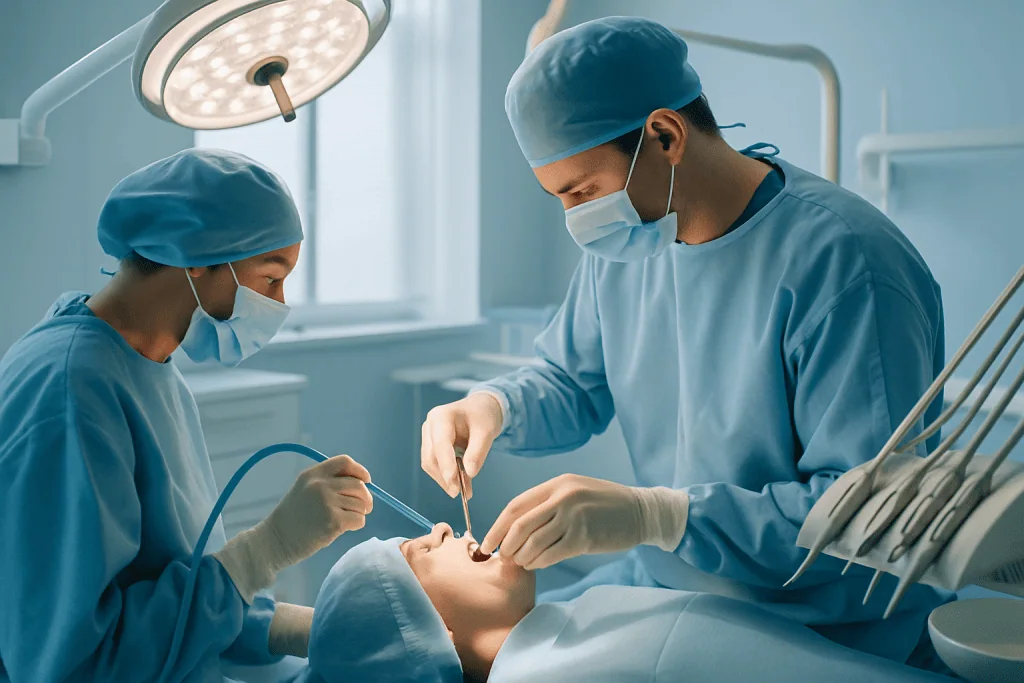
Oral and maxillofacial surgery diagnoses and surgically treats conditions of the mouth, teeth, jaws and facial bones, impacted teeth, jaw cysts, facial fractures, jaw misalignment, infections and soft-tissue lesions. Procedures range from short extractions under local anaesthetic to complex jaw realignment under general anaesthesia. An oral and maxillofacial surgeon trains in both dentistry and surgery, allowing the specialty to work across teeth, bone, nerves and facial soft tissue.
Oral and Maxillofacial Surgery: Care of the Mouth, Jaws and Face
Oral and maxillofacial surgery is the surgical specialty that diagnoses and treats diseases, injuries, deformities and functional problems of the mouth, teeth, jaws and facial bones. It covers everything from removing an impacted wisdom tooth to repairing facial fractures after an accident and realigning jaws that do not meet properly. An oral surgeon, more fully, an oral and maxillofacial surgeon, trains in both dentistry and surgery, and that dual grounding is what defines the field.
Problems in this region rarely stay cosmetic. They can make it difficult to chew, speak clearly, sleep comfortably, open the mouth fully or recover after an injury. Many patients reach an oral surgeon only after weeks or months of discomfort: repeated infections around a wisdom tooth, swelling that keeps returning, a jaw that clicks or locks, a bite that has slowly shifted, or a facial injury that suddenly changes daily life.
It is also normal to feel uncertain at this point. You may wonder whether surgery is truly necessary, how much discomfort to expect, how your face will look afterwards, or how long recovery takes. These are reasonable questions. The face, teeth and jaw joints sit close to identity as well as function, and decisions about them deserve unhurried, specific answers rather than reassurance in general terms.
The specialty bridges dentistry, medicine and surgery. It addresses conditions of the teeth, gums, jaws, temporomandibular joints, facial bones, salivary glands and the soft tissues of the mouth and face. Some procedures are brief, such as removing an impacted wisdom tooth under local anaesthetic. Others are complex, such as reconstructing facial fractures or correcting jaw position with orthognathic surgery under general anaesthesia in hospital.
Timing matters because many maxillofacial conditions do not stand still. Impacted teeth can damage their neighbours or give rise to cysts. Jaw misalignment can worsen chewing problems, facial imbalance and sleep-related breathing issues over time. Facial fractures need accurate early assessment if both function and symmetry are to be restored. A careful diagnosis establishes whether observation, medication, dental treatment, a minimally invasive procedure or a more advanced surgical plan is the right path, and sometimes the honest answer is that no surgery is needed at all.
What exactly is an oral surgeon?
An oral surgeon is a dentist who has completed additional specialist surgical training in operating on the mouth, jaws and, in the full maxillofacial scope, the facial skeleton. In everyday use the term covers practitioners at two levels: some concentrate on surgery within the mouth, extractions, impacted teeth, biopsies, implant-related bone work, while oral and maxillofacial surgeons extend that scope to facial trauma, jaw realignment, jaw joint surgery and reconstruction. What unites them is training that combines dental knowledge of teeth and occlusion with surgical knowledge of bone, nerves, blood vessels and anaesthesia. That combination matters because in this region a problem in one structure almost always involves another.
Is an oral surgeon higher than a dentist?
Not higher, differently trained, with a narrower and deeper scope. A general dentist manages the broad range of oral health: examinations, fillings, gum care, root canals, crowns and prevention. An oral surgeon has completed years of further training focused on surgery, and takes on the cases a general dental practice is not set up to handle: deeply impacted teeth, jaw cysts, fractures, complex infections and procedures requiring sedation or general anaesthesia. The two roles work together rather than in a hierarchy. Most surgical patients arrive by referral from a general dental and oral health practice, and return there for routine care once the surgical problem is resolved.
What is the difference between an oral surgeon and a dental surgeon?
In many countries, “dental surgeon” is simply the formal legal title of a qualified dentist, the person who examines, fills and restores teeth, while “oral surgeon” denotes a specialist who has completed additional surgical training after the dental degree. The overlap in wording causes real confusion for patients comparing clinics in different countries. The practical test is not the title on the door but the training behind it: whether the clinician has completed a recognised specialist programme in oral surgery or oral and maxillofacial surgery, and how much of their practice is surgical.
Why do the names for this specialty vary so much?
Because the specialty developed at the border between dentistry and medicine, its titles differ from country to country. You may encounter oral surgeons, maxillofacial surgeons, oral and maxillofacial surgeons, or, particularly in South Asia, facio maxillary surgeons; abbreviated clinic names such as clinicoms also appear in online searches. The labels describe the same clinical territory: surgery of the mouth, jaws and face. What varies is the training route behind the title, which is worth understanding before choosing where to be treated: this page returns to training later.
What Is Oral and Maxillofacial Surgery?
Oral and maxillofacial surgery is the diagnosis and surgical treatment of diseases, injuries, deformities and functional problems affecting the mouth, jaws, face and related structures. The specialty includes dentoalveolar surgery, tooth extractions and the management of impacted teeth; jaw surgery, including correction of jaw position and bite problems; treatment of cysts and benign lesions; facial trauma surgery; temporomandibular joint care; surgical management of infections; and selected reconstructive procedures. In practice this ranges from minor oral operations completed in a single outpatient visit to staged hospital treatment planned across months.
What distinguishes the specialty is anatomical integration. An oral and maxillofacial surgeon is trained to understand how teeth, bone, nerves, muscles, airway and facial soft tissue work together, because a problem in one area almost always affects another. A lower jaw that sits too far back influences the bite, the facial profile, the airway and the temporomandibular joint at the same time. An impacted canine may require coordinated planning between surgeon and orthodontist. A facial fracture must be repaired with the eye socket, dental occlusion, nerve function and long-term symmetry all in view.
The goal is never simply to “remove” or “repair” a structure. The aim is to restore health, function, comfort and facial balance while minimising risk to important anatomy, nerves, tooth roots, sinuses and blood vessels. Depending on the condition, treatment may be performed under local anaesthesia, sedation or general anaesthesia. Some procedures are completed as day surgery; more complex operations require hospital admission and coordinated postoperative monitoring.
At Acibadem, maxillofacial surgery is planned through modern diagnostic pathways with multidisciplinary input where the diagnosis calls for it. Planning starts with a thorough review of dental imaging, medical history, photographs and any prior treatment plans, so that the likely options and the shape of the treatment journey are clear before anything is decided.
Who May Need to See an Oral Surgeon?
Referrals to an oral surgeon come from many directions: dentists, orthodontists, emergency physicians, ENT specialists, plastic surgeons, oncologists and family doctors. Some patients arrive because of pain or infection; others because of functional problems, facial asymmetry, an abnormal bite, a cyst spotted incidentally on an X-ray, or a traumatic injury.
Common presenting symptoms include jaw pain, swelling in the mouth or face, difficulty chewing, limited mouth opening, recurrent infections around a wisdom tooth, tooth crowding, facial numbness, clicking or locking of the jaw joint, a change in the way the teeth fit together, sinus symptoms driven by dental disease, or a visible facial change after injury. In children and adolescents, delayed tooth eruption or an impacted tooth is a frequent reason for referral. In adults, tooth loss, bone loss, jaw cysts, chronic infection or trauma more often lead to surgical evaluation, and in older patients the picture is frequently shaped by existing dental work and general health: an overlap explored further under gerontological oral health.
Diagnosis begins with a detailed medical and dental history, followed by clinical examination of the mouth, bite, jaw movement, facial symmetry, nerves and soft tissues. Imaging is central to maxillofacial care. Panoramic dental X-rays show impacted teeth, cysts and bone changes. Cone beam CT or conventional CT provides three-dimensional information about tooth roots, jawbone, sinuses, joints and fracture patterns. MRI is used when soft tissue or the temporomandibular joint disc needs evaluation. Laboratory tests, biopsy or microbiology studies may follow when infection, inflammation or a lesion is suspected.
Surgical patients tend to fall into three broad groups. Some have an acute problem: a facial fracture, a dental abscess, a rapidly spreading infection. Others have a planned condition: impacted wisdom teeth, orthognathic surgery for jaw alignment, removal of a cyst, or bone preparation before dental implants. A third group has complex needs crossing several specialties, craniofacial differences, previous surgery, significant medical conditions, cancer-related reconstruction, or combined orthodontic and surgical treatment.
Conditions and Indications Treated
The specialty covers a wide range of conditions. The right treatment depends on the diagnosis, its severity, the symptoms, the patient’s age and general health, and long-term functional goals.
- Impacted wisdom teeth: Wisdom teeth that cannot erupt normally may cause pain, swelling, infection, gum problems, cyst formation or damage to neighbouring teeth.
- Impacted canines or other teeth: Teeth trapped in the jaw may need surgical exposure, removal, or coordinated management with orthodontic treatment.
- Jaw cysts and benign lesions: Cysts and non-cancerous growths can enlarge silently, weakening the jawbone or pressing on tooth roots if left untreated.
- Dental and facial infections: Abscesses can spread through the facial spaces and, in serious cases, threaten the airway or general health.
- Facial trauma: Fractures of the jaw, cheekbone, eye socket, nose and other facial bones may require precise repositioning and stabilisation.
- Jaw alignment problems: Orthognathic surgery is considered when the position of the upper jaw, lower jaw or chin affects the bite, facial balance, chewing, speech or breathing.
- Temporomandibular joint disorders: Selected cases of joint locking, structural damage or severe dysfunction may need minimally invasive or open surgical treatment once conservative options have been properly explored.
- Pre-prosthetic and implant-related surgery: Bone grafting, sinus lift procedures or soft-tissue surgery can prepare the mouth for dental implants or prosthetic rehabilitation, sometimes alongside maxillofacial prosthetics in reconstructive cases.
- Oral soft-tissue lesions: Biopsy or removal of suspicious, persistent or recurrent lesions may be needed for diagnosis and treatment.
- Congenital or developmental facial differences: Some patients need staged care involving oral surgery, orthodontics and other specialties over several years.
Not every condition on this list needs surgery, and few need it immediately. A careful consultation establishes whether monitoring, medication, dental treatment, orthodontics, physiotherapy, splint therapy or surgery is the most appropriate path, and in what order.
How Oral and Maxillofacial Surgery Is Performed
Every surgical journey starts with diagnosis and planning. An early review of the medical history, dental records, imaging and photographs clarifies what additional tests to expect and whether treatment can realistically be completed in a single stage or should be planned across several.
At the in-person evaluation, the surgeon examines the mouth, bite, jaw movement, facial symmetry, nerves and soft tissues, and reviews imaging in detail. Three-dimensional imaging is used to map the position of impacted teeth, the relationship of roots to nerves, the borders of cysts, the shape of the jawbone, the anatomy of the sinuses or the alignment of fracture fragments. In orthognathic cases, digital planning can simulate jaw movements and guide the surgical approach. In trauma, imaging underpins accurate reconstruction of bone position.
Preparation depends on the procedure. Patients may be asked to stop smoking, complete blood tests, treat active infection or improve oral hygiene beforehand. Whether any regular medication needs adjusting before surgery is a decision for the treating doctors, made with full knowledge of the patient’s health, which is why sharing a complete medication and supplement list, including blood thinners and anti-inflammatory drugs, is part of preparation. Patients with heart disease, diabetes, bleeding disorders or other significant conditions may need clearance from another specialist. For surgery under sedation or general anaesthesia, fasting instructions are given in advance.
How is an impacted tooth removed?
Most impacted tooth removals follow a recognisable sequence, usually under local anaesthesia with or without sedation:
- The area is anaesthetised and tested before any incision is made.
- The surgeon opens a small flap in the gum to reach the tooth.
- A small amount of bone is removed where it covers the tooth.
- The tooth is sectioned into parts when dividing it reduces trauma to surrounding bone and nerves.
- The tooth is removed, the site is cleaned and inspected, and sutures are placed.
Straightforward cases take a short time; deeply impacted or anatomically complex teeth demand slower, more careful dissection, particularly when roots lie close to the nerve that supplies sensation to the lower lip and chin.
What happens in surgery for jaw cysts and lesions?
For cysts and benign jaw lesions, the surgeon removes the lesion and sends tissue for pathological examination: the diagnosis under the microscope guides everything that follows. Depending on size and location, the resulting cavity may be cleaned, grafted or simply monitored as bone regenerates. Larger lesions are sometimes treated in stages to reduce the risk of weakening the jaw or injuring adjacent teeth and nerves.
How are facial fractures repaired?
Facial trauma surgery focuses on restoring bone position, dental occlusion and symmetry. The surgeon reaches the fracture through incisions inside the mouth where possible, or through carefully placed external incisions when necessary. Small plates and screws stabilise the bones while they heal. In jaw fractures, re-establishing the correct bite is the central objective; in fractures around the eye socket, cheekbone or midface, the plan also weighs eye movement, facial contour, sensation and sinus anatomy.
What does orthognathic (jaw realignment) surgery involve?
Orthognathic surgery repositions the upper jaw, lower jaw, chin or a combination of these to improve bite function and facial balance, and it is almost always planned jointly with an orthodontist. Braces or aligner therapy are typically needed before and after the operation. During surgery the repositioned bones are stabilised with internal fixation. Hospital stay and recovery are longer than for an extraction, but most patients return gradually to work, study and daily activities as swelling settles and the diet advances from liquid to soft to normal.
What technology supports the surgery?
Digital imaging lets the team understand anatomy in three dimensions before the first incision. Computer-assisted planning helps design bone cuts, anticipate jaw movement and evaluate facial proportions; surgical guides improve accuracy in selected cases. Magnification, fine instruments, nerve-aware technique, intraoperative imaging where appropriate and modern anaesthesia monitoring all contribute to controlled treatment. The honest way to think about technology is this: the device itself is not the point. Its value lies in helping the surgeon plan more precisely, reduce unnecessary tissue trauma and protect nerves, roots and sinuses.
Recovery begins the moment surgery ends. Patients are monitored until the effects of anaesthesia wear off and pain, bleeding and nausea are controlled. Written instructions cover swelling management, diet, mouth cleaning, activity limits, prescribed medication and the follow-up schedule. Soft foods, cold compresses and careful oral hygiene are the standard early advice. Complex procedures come with a structured recovery plan that may include jaw exercises, orthodontic follow-up, staged diet progression, control imaging and long-term monitoring.
Why Acting Early Matters
Delay tends to convert manageable problems into harder ones. An impacted wisdom tooth can repeatedly inflame the gum, damage the second molar or contribute to cyst formation. A dental infection can spread beyond the tooth into the jaw, face, neck or bloodstream: a particular concern for patients with diabetes, immune suppression or other medical vulnerabilities. Facial fractures assessed late may heal in the wrong position, making later correction considerably more complex than early repair would have been.
Jaw alignment problems carry their own slow costs. When teeth do not meet properly, chewing forces distribute unevenly, producing tooth wear, gum stress, muscle strain and temporomandibular joint symptoms over years. Many patients adapt for a long time before connecting facial imbalance, bite difficulty or breathing concerns to jaw position. Early specialist assessment does not mean early surgery, often it simply clarifies the options while all of them are still open.
Suspicious oral lesions deserve particular attention. A sore, lump, ulcer, colour change or swelling that does not resolve should be evaluated without long delay. Most oral lesions turn out to be benign, but biopsy is sometimes the only way to rule out more serious disease, and an accurate diagnosis is what allows treatment to be properly timed and targeted rather than guessed at.
Benefits of Oral and Maxillofacial Surgery
What treatment can realistically offer depends entirely on the diagnosis and the procedure. The table below summarises the benefits surgery may bring when it is appropriately indicated, no more, no less.
| Benefit | What It Means for You |
|---|---|
| Relief from pain and infection | Treating impacted teeth, abscesses or diseased tissue can reduce recurring discomfort, swelling and the need for repeated antibiotics. |
| Improved chewing and bite function | Correcting jaw position, fractures or tooth-related problems may help the teeth meet more effectively and reduce strain during eating. |
| Protection of nearby teeth and bone | Removing problematic impacted teeth or cysts can help prevent damage to adjacent teeth, jawbone and surrounding structures. |
| Restoration after facial injury | Accurate fracture repair supports facial symmetry, jaw movement, dental alignment and, in selected cases, eye or sinus function. |
| Better preparation for dental rehabilitation | Bone grafting or pre-prosthetic surgery can create a more stable foundation for implants, dentures or other dental restorations. |
| Improved facial balance in selected cases | Orthognathic surgery can address skeletal jaw discrepancies that affect both function and appearance. |
Recovery Timeline After Oral and Maxillofacial Surgery
Recovery spans a wide range: a few days after a simple extraction, several weeks or months after jaw realignment, but most patients recognise a common pattern.
| Time Period | What Patients Can Expect |
|---|---|
| Day 1 | Some bleeding, swelling, numbness from anaesthesia and discomfort are expected. The focus is rest, cold compresses, prescribed medication and a soft or liquid diet. |
| First Week | Swelling often peaks and then begins to improve. Oral hygiene matters, and a follow-up visit may be scheduled to check healing or remove sutures. |
| First Month | Most minor procedures have substantially improved. After more complex surgery, diet restrictions, jaw exercises, orthodontic care or imaging review may continue. |
| Longer Term | Bone healing, nerve recovery and final bite stabilisation take longer. Orthognathic and reconstructive cases may need several months of follow-up. |
Factors That Influence Outcomes
A good result depends on four things in sequence: diagnosis, planning, surgical execution and postoperative care. The same named procedure can carry very different levels of complexity from one patient to the next, depending on anatomy, medical history and treatment goals, which is why comparing procedures purely by name is misleading.
The first factor is the relationship of the surgical field to nerves, sinuses, tooth roots and blood vessels. Lower wisdom teeth may sit close to the inferior alveolar nerve, which supplies sensation to the lower lip and chin. Upper jaw procedures may involve the maxillary sinus. Three-dimensional imaging exists precisely so the surgeon can evaluate these relationships beforehand and discuss the safest approach honestly, including the risks specific to that anatomy.
General health is the second. Diabetes, smoking, immune suppression, osteoporosis medications, bleeding disorders and certain heart conditions can influence healing, infection risk and anaesthesia planning. The interaction runs in both directions, chronic oral infection can also affect general health, a relationship examined in more depth under oral health and systemic diseases. Good oral hygiene before and after surgery reduces bacterial load and supports healing.
Timing is the third. Fresh facial fractures are usually easier to reposition than fractures that have healed in the wrong position. Small cysts are simpler to remove than lesions that have already expanded the jaw. Infections are safer to treat before they spread. Orthognathic surgery plans function better when orthodontic preparation and surgical planning are coordinated from the start rather than bolted together late.
The fourth factor is the patient. Following diet instructions, avoiding smoking, attending follow-up visits, taking medication as directed and keeping the treating team informed about anything unexpected all make recovery safer. Healing after jaw surgery is rarely a straight line, swelling typically peaks in the first days before settling, and the follow-up schedule exists precisely so the surgical team can distinguish normal healing from a problem that needs attention.
Finally, outcomes reflect the team and its coordination. Maxillofacial surgery intersects with orthodontics, prosthodontics, ENT, plastic and reconstructive surgery, radiology, pathology, oncology, anaesthesiology and intensive care. That coordination matters most in complex trauma, jaw deformity, medically fragile patients and lesions that need biopsy and long-term surveillance.
How Oral Surgeons Train, and Why It Matters to Patients
Understanding how these surgeons are trained is not academic trivia. It is the most reliable way for a patient to judge who is qualified to operate on their face, especially when comparing clinicians across countries where titles differ.
How long is oral and maxillofacial surgery residency?
Specialist training in oral and maxillofacial surgery typically takes four to six years after the dental degree, depending on the country, and in some systems the programme also includes a full medical degree, extending the total pathway further. Entry is competitive: candidates usually need a strong dental qualification, clinical experience and success in specialty selection before beginning residency. The result is a clinician trained across dentistry, medicine, surgery and anaesthesia-adjacent care, one reason many who complete it regard it as a demanding but rewarding career. For patients, the length of this pathway explains why credentials deserve scrutiny: it is reasonable to ask where a surgeon trained, in which specialty programme, and how much of their current practice is surgical.
Can an oral and maxillofacial surgeon do plastic surgery?
Within the face and jaws, yes, reconstructive procedures on the facial skeleton and soft tissues, trauma repair and corrective jaw surgery sit inside the maxillofacial scope, and in some countries maxillofacial surgeons also perform selected facial aesthetic procedures where their training and licensing permit. What an oral and maxillofacial surgeon does not do is plastic surgery of the wider body; that belongs to plastic, reconstructive and aesthetic surgeons. In complex facial cases the two specialties frequently operate together, each contributing its own expertise, rather than competing for the same territory.
How much does oral surgery usually cost?
There is no single meaningful figure, and any page that quotes one without knowing your diagnosis is guessing. Cost is driven by the complexity of the procedure, the type of anaesthesia, the imaging and tests required, whether hospital admission is needed, whether treatment is staged across visits, and whether related work, grafting, orthodontics, prosthetics, forms part of the plan. A simple extraction and two-jaw orthognathic surgery sit at opposite ends of a very wide range. The only reliable basis for a cost estimate is a reviewed diagnosis and a written treatment plan that itemises what is included.
Oral and Maxillofacial Surgery at Acibadem
Acibadem hospitals provide oral and maxillofacial care within full hospital environments, supported by modern imaging, surgical facilities, anaesthesia services and coordinated inpatient care where the procedure requires it. That hospital setting matters for this specialty in particular, because its more complex cases, trauma, infection near the airway, jaw realignment, depend on services a standalone dental clinic cannot provide.
Many maxillofacial cases benefit from multidisciplinary review. Depending on the diagnosis, patients may be evaluated by oral and maxillofacial surgeons in collaboration with dentists, orthodontists, radiologists, ENT specialists, plastic surgeons, oncologists and anaesthesiologists. For jaw alignment surgery, orthodontic and surgical planning are inseparable. For facial trauma, imaging interpretation, airway safety and fracture stabilisation have to be integrated. For cysts and lesions, pathology review and follow-up recommendations are essential parts of the plan, not afterthoughts.
Internationally accepted treatment protocols guide decision-making, while each plan is adapted to the individual’s anatomy, health status and priorities. A patient needing an impacted tooth removed follows a different pathway from one requiring two-jaw surgery or repair of multiple fractures; a plan may include imaging, laboratory tests, dental preparation, the operation itself, hospital stay, medication and postoperative reviews. Digital radiology, three-dimensional imaging, computer-assisted planning and modern anaesthesia monitoring support diagnosis and execution, and in selected cases digital planning also makes it easier to show a patient exactly what the operation will involve before it happens.
Making an Informed Decision
Oral and maxillofacial surgery can resolve problems that affect comfort, function, facial balance and long-term oral health: an impacted tooth, a jaw cyst, a facial injury, recurrent infection, a jaw alignment concern. In every case the sequence is the same: a careful diagnosis first, a clear explanation of the options second, and only then a decision about surgery. Patients who understand that order, and insist on it, make better decisions about their own faces.
Useful questions to bring to any surgical consultation include: what exactly is the diagnosis, and how certain is it? What is likely to happen if nothing is done? What are the non-surgical alternatives, and why is surgery preferred in this case? Which risks apply to this particular anatomy, nerves, sinuses, adjacent teeth? And what will recovery demand, week by week? A surgeon who answers these questions specifically, with reference to the patient’s own imaging, is providing the information a sound decision requires.
Preparation
- Preparation usually includes an oral examination, panoramic X-rays or 3D imaging, and review of medical history and medications. Patients may need blood tests and anesthesia assessment before major procedures. Fasting is required if general anesthesia or sedation is planned.
Aftercare
- After surgery, swelling, bruising and mild bleeding are common and managed with prescribed medication, cold compresses and rest. Patients are usually advised to follow a soft diet, maintain careful oral hygiene, avoid smoking and attend follow-up visits. Strenuous activity should be avoided until the surgeon confirms healing is adequate.
Frequently Asked Questions
What affects the cost of oral and maxillofacial surgery?
The main factors are the diagnosis, complexity of the procedure, type of anaesthesia, imaging needs, hospital stay, pathology tests, surgeon expertise and whether travel support or interpreter services are included. A personalised plan is needed before a reliable quote can be prepared.
How can I get a personalised quote from Acibadem?
You can request a free consultation and share your medical history, dental records, imaging and any previous treatment notes. A specialist team can review your case and explain the proposed treatment plan, expected inclusions and cost factors.
Is the package price always the final amount?
A package can include many planned services, but the final cost may change if additional imaging, pathology, hospital stay, medications or a different surgical approach becomes necessary. The care team should clarify what is included and what may be billed separately.
Do I need to travel more than once for treatment?
This depends on the condition and treatment type. Some procedures can be planned within a single travel period, while jaw alignment surgery, reconstruction or orthodontic coordination may require staged visits or local follow-up support.
Are international patients supported with language and travel arrangements?
International hospitals in Turkey may offer interpreter support, appointment coordination, airport transfers and guidance on accommodation. These services can improve the patient experience, but inclusions should be confirmed during the quote process.
Is this information medical or financial advice?
No. This is general educational information only. Treatment suitability and cost depend on specialist assessment, so patients should request a free consultation for a personalised medical plan and quote.
Medically reviewed by the Acıbadem International Medical Board September 13, 2026
See our medical review board →
Update history
- PublishedJune 8, 2026
- Medical review approvedSeptember 13, 2026
- Last content updateSeptember 13, 2026
Trusted care for international patients
From the Acibadem Blog
How Oral and Maxillofacial Surgeons Train, and Questions to Ask Before Your Procedure
Oral and maxillofacial surgeons first complete dental school, then a hospital-based surgical residency that typically runs four to six years and includes rotations in…
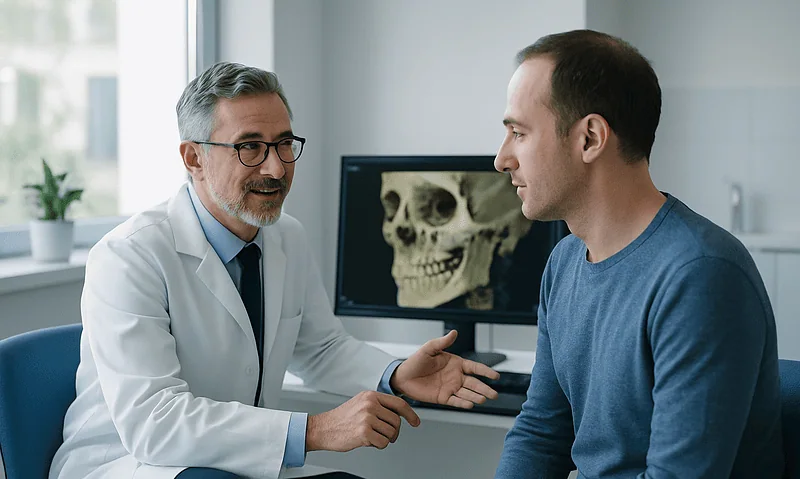
How 3D Imaging Changes Oral and Maxillofacial Surgery Planning Around Nerves and Sinuses
3D imaging in oral surgery planning, most often a cone beam CT scan, gives surgeons a layered view of the jaw so they can…

Which Anesthesia for Oral and Maxillofacial Surgery? Local, Sedation or General Explained
Oral and maxillofacial surgery is usually done under one of three approaches: local anesthesia, which numbs only the surgical area while you stay awake;…

Recovering From Oral and Maxillofacial Surgery: Swelling, Bruising and the Soft-Diet Weeks
Recovery after oral and maxillofacial surgery usually unfolds in stages: swelling peaks around the second or third day and eases over one to two…