Dental Sleep Medicine
Dental sleep medicine uses custom oral appliances and multidisciplinary evaluation to help manage snoring and obstructive sleep apnea by supporting the airway during sleep without surgery.
Quick answer
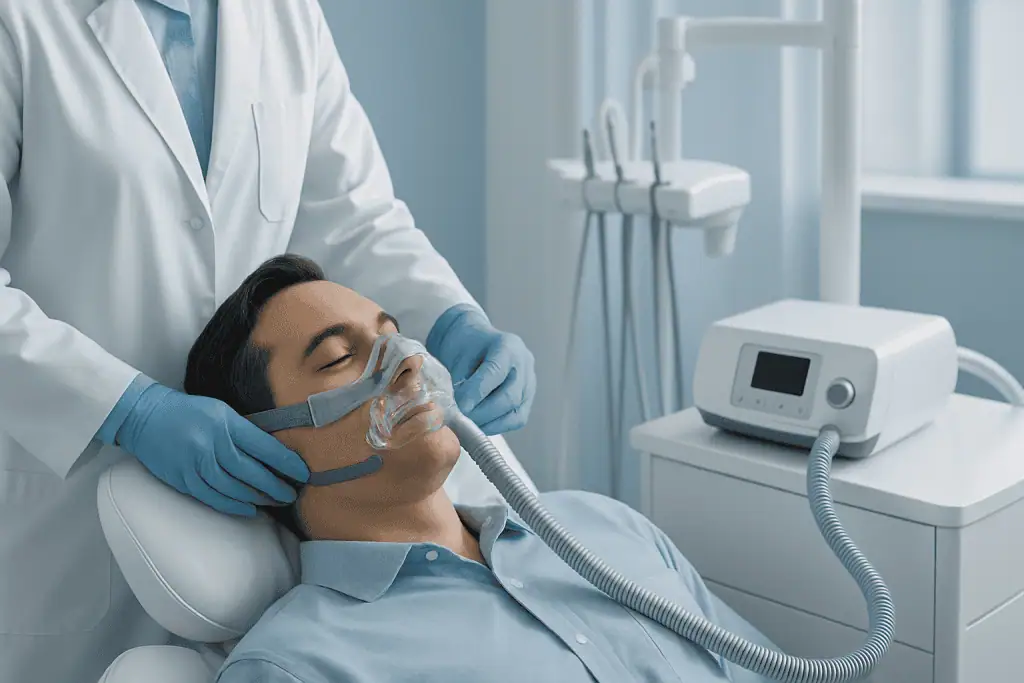
Dental sleep medicine treats snoring and obstructive sleep apnea with a custom-made oral appliance, usually a mandibular advancement device that holds the lower jaw slightly forward during sleep to keep the airway open. A trained dentist fits and adjusts the device in coordination with a sleep physician. It suits primary snoring, mild to moderate sleep apnea, and patients who cannot tolerate CPAP.
What Is Dental Sleep Medicine?
Dental sleep medicine is the area of dentistry that manages snoring and obstructive sleep apnea with custom-made oral appliances, worn during sleep to keep the upper airway open. A sleep apnea dentist designs, fits and adjusts the device — most often a mandibular advancement device that holds the lower jaw slightly forward — and works in coordination with sleep physicians rather than in place of them. It is a non-surgical option for selected patients: most often those with primary snoring or mild to moderate obstructive sleep apnea, and those who cannot tolerate CPAP.
It is worth being precise about what this field is not. It is not general dentistry with a night guard added on, and it is not simply buying a mouthpiece. A medical condition — sleep-disordered breathing — sits at the centre of the treatment, which means diagnosis comes first, the appliance comes second, and structured follow-up never stops mattering. The dentist manages the oral and jaw-related side of therapy; a sleep physician confirms the diagnosis, classifies its severity and verifies whether the treatment is actually working.
Can sleep apnea be treated by a dentist?
Yes — a trained dentist can treat obstructive sleep apnea with oral appliance therapy, but only after a physician has made the diagnosis. This division of roles protects you. Snoring alone cannot tell you whether you have significant sleep apnea, and an appliance fitted without a sleep study risks masking the noise of a condition while leaving its health effects untreated. The dentist’s contribution is real and specific: assessing whether your teeth, gums and jaw joints can support a device, fabricating it precisely, and adjusting it gradually. The physician’s contribution is equally specific: confirming what is being treated and measuring the response.
What does a dentist do for sleep apnea?
A sleep apnea dentist examines your teeth, bite, jaw joints and airway-related anatomy, takes impressions or digital scans, and fits a custom appliance that repositions the lower jaw during sleep. Moving the jaw forward also moves the tongue and attached soft tissues forward, which enlarges and stabilises the space behind them. Over subsequent visits, the dentist advances the device in small increments — a process called titration — balancing airway support against jaw comfort, and monitors for side effects such as tooth movement or bite changes. When the position seems right, a follow-up sleep test with the appliance in place is often recommended to confirm the result objectively.
Is dental sleep medicine the same as sedation dentistry?
No. The two are frequently confused because both involve the words “sleep” and “dentistry”, but they are entirely different services. Sedation dentistry uses medication to keep an anxious patient calm or lightly asleep during a dental procedure; questions about how long sedative medication lasts belong to that field. Dental sleep medicine, by contrast, treats a sleep disorder — it involves no sedation at all, only a removable appliance worn at night. If you were searching for help with dental anxiety, the sedation page is the one you need.
When Snoring or Sleep Apnea Starts Affecting Your Health
Snoring is often treated as a nuisance, but for many people it is a sign of something more serious: the airway may be partially or repeatedly blocked during sleep. When breathing pauses or becomes shallow at night, the brain and body are forced to respond again and again. Sleep becomes fragmented, oxygen levels may drop, and the next day can bring fatigue, morning headaches, poor concentration, irritability or a sense that sleep is never truly restorative.
The decision to seek care for snoring or obstructive sleep apnea can feel complicated, particularly if you have already tried treatment. You may have been prescribed a CPAP device and found it difficult to tolerate. You may be worried about sleeping with a machine, travelling with equipment, sharing a room with a partner, or undergoing surgery. You may also be unsure whether your symptoms are “serious enough” to justify evaluation. Dental sleep medicine offers a non-surgical option for selected patients, using a custom oral appliance designed to support the airway during sleep — and knowing that this option exists often makes people more willing to be assessed at all.
At Acibadem, dental sleep medicine is approached as part of a broader sleep and airway evaluation, not as a simple dental device purchase. Oral appliances can be effective for many patients with primary snoring and mild to moderate obstructive sleep apnea, and for some patients with more severe disease who cannot use other therapies. The right treatment depends on a careful diagnosis, your anatomy, your medical history, your sleep study results and your treatment goals — which is why a sleep apnea dentist works within a medical pathway rather than in isolation.
Treating sleep-disordered breathing matters because the effects extend well beyond night-time noise. Untreated obstructive sleep apnea may contribute to daytime sleepiness, reduced work performance, mood changes, high blood pressure, heart rhythm problems and increased cardiometabolic risk. It can also affect relationships, travel, driving safety and quality of life. A well-fitted oral appliance, combined with appropriate medical guidance, may help reduce airway obstruction, improve sleep quality and make treatment easier to maintain over time.
How Does Dental Sleep Medicine Work?
Dental sleep medicine works by mechanically changing the geometry of the upper airway during sleep. The most common appliance is a mandibular advancement device: two custom-fitted trays, one for each dental arch, connected by a mechanism that positions the lower jaw slightly forward of its resting position. Because the tongue and much of the soft tissue of the throat are anchored to the lower jaw, advancing the jaw pulls these structures forward too. For some patients, this reduces the vibration of soft tissue that causes snoring. For others, it reduces the frequency or severity of the airway collapse that defines obstructive sleep apnea.
How does dental sleep medicine work for sleep apnea?
For obstructive sleep apnea specifically, the appliance works by resisting airway collapse at the moments when muscle tone naturally falls during sleep. When you fall asleep, the muscles that hold the tongue and soft palate in position relax; in a vulnerable airway, this relaxation allows the passage to narrow or close, breathing stops or becomes shallow, and the brain briefly arouses to reopen it. A mandibular advancement device changes the starting position, so the same degree of muscle relaxation is less likely to produce a closed airway. The effect depends on wearing the device every night — unlike surgery, it works only while it is in place, and the benefit stops when the appliance comes out.
Custom appliances versus over-the-counter devices
Custom oral appliances differ significantly from over-the-counter anti-snoring devices. A medical-grade appliance is made from impressions or digital scans of your own teeth and is adjusted to your bite, jaw movement, dental health and comfort. Most importantly, it is adjustable in small, controlled increments, so the treatment position can be found gradually rather than guessed at. The goal is a position that supports the airway while minimising side effects such as jaw soreness, tooth movement or bite changes. Boil-and-bite devices sold online cannot be titrated in this way, fit less securely, and are used without the diagnosis and follow-up that make the therapy safe. Follow-up is not an optional extra: the appliance may need gradual adjustment over weeks, and effectiveness should be assessed clinically and, in many cases, with a repeat sleep evaluation.
Where oral appliances fit alongside CPAP
Dental sleep medicine does not replace every other sleep apnea therapy. Continuous positive airway pressure, known as CPAP, remains a highly effective therapy for many patients, especially those with more severe obstructive sleep apnea. Oral appliance therapy is typically recommended when the condition is mild to moderate, when snoring is the main problem, when CPAP is not tolerated despite reasonable efforts to adapt, or when a patient needs an alternative that is easier to use during travel. The two approaches are not enemies; some patients use CPAP at home and an appliance when travelling, and some benefit from combined care that also includes weight management, nasal treatment, positional therapy, orthodontic evaluation or medical management of contributing conditions.
Who May Need a Sleep Apnea Dentist
Patients usually reach a sleep apnea dentist because of symptoms noticed by themselves, a bed partner or a physician. Loud, habitual snoring is the most common trigger for consultation. Snoring that occurs most nights, disrupts a partner’s sleep, worsens when lying on the back, or is accompanied by witnessed pauses in breathing deserves evaluation rather than dismissal as harmless.
Obstructive sleep apnea presents in different ways. Some people wake choking, gasping or with a dry mouth. Others do not remember waking at all but feel exhausted during the day. Morning headaches, trouble focusing, memory lapses, irritability, decreased libido and falling asleep during quiet activities may all be linked to poor-quality sleep. In some patients, the first clue is a medical finding rather than a symptom: blood pressure that is difficult to control, night-time heart rhythm changes, or a cardiovascular risk profile that prompts a physician in internal medicine or cardiology to ask about sleep.
Dental signs can also raise suspicion. Tooth grinding, worn teeth, jaw muscle tension, scalloping along the sides of the tongue, a narrow dental arch, a small or retruded lower jaw, and a crowded airway appearance may prompt a dentist to recommend a sleep evaluation. These signs do not diagnose sleep apnea by themselves, but they help identify patients who should be assessed further — one reason a routine dental visit sometimes becomes the starting point of a sleep diagnosis.
How is the diagnosis made?
Diagnosis begins with a detailed consultation and medical history, and is confirmed with a sleep study — never with symptoms alone. Your clinician will ask about snoring patterns, witnessed breathing pauses, sleep position, daytime sleepiness, medications, alcohol use, nasal obstruction, weight changes, previous dental treatment and existing medical conditions. A physical examination may include evaluation of the teeth, gums, jaw joints, bite, tongue position, palate, tonsils, nasal breathing and facial structure.
The sleep study itself may be a laboratory-based polysomnography or a home sleep apnea test, depending on your symptoms and medical complexity. It measures breathing events, oxygen levels, sleep patterns, heart rhythm and body position, depending on the type of test used. The results determine whether the condition is primary snoring, mild, moderate or severe obstructive sleep apnea, or another sleep disorder requiring a different approach — some patients are referred onward within sleep medicine when the study points somewhere unexpected.
Who is a candidate for oral appliance therapy?
Candidates are adults with confirmed primary snoring or obstructive sleep apnea whose teeth, gums and jaw joints can support a device. In practice, the groups most often considered include:
- Adults with primary snoring who do not have clinically significant obstructive sleep apnea.
- Patients with mild to moderate obstructive sleep apnea who prefer an oral appliance or are advised that it suits their anatomy and clinical profile.
- Patients with obstructive sleep apnea who cannot tolerate CPAP despite reasonable efforts to adapt to it.
- Frequent travellers who need a portable treatment option, when medically appropriate.
- Patients who may benefit from combination therapy — an oral appliance used together with positional therapy, nasal treatment or lifestyle measures.
- Selected patients with more severe obstructive sleep apnea when other therapies are not tolerated, as part of a broader plan under sleep medicine supervision.
Not everyone is suitable. Oral appliance therapy requires enough healthy teeth or dental support to retain the device, adequate jaw movement, stable gum health and the ability to attend follow-up visits. Patients with active periodontal disease, severe jaw joint disorders, extensive missing teeth or certain bite conditions may need restorative dentistry or periodontal treatment first, or may require a different form of sleep apnea management altogether. Being told you are not currently a candidate is not a dead end — it is usually a sequencing problem, with dental treatment coming first.
Conditions and Indications Dental Sleep Medicine Addresses
Dental sleep medicine is most often used for snoring and obstructive sleep apnea, but the clinical situation behind those labels varies widely. The key questions are whether the problem is simple vibration of airway tissues, partial narrowing, repeated collapse, or a combination — and what is driving it. Treatment is planned around the cause, the severity and your individual risks, not around the appliance.
Primary snoring is snoring without significant breathing pauses, oxygen drops or sleep disruption on testing. It is not dangerous in the way obstructive sleep apnea is, but it can cause real social and relationship strain — separate bedrooms, resentment, embarrassment when travelling. A custom oral appliance may reduce snoring by improving airway space and soft tissue stability during sleep, but testing comes first, because the only way to distinguish primary snoring from sleep apnea is to measure.
Obstructive sleep apnea occurs when the upper airway repeatedly narrows or collapses during sleep, interrupting breathing. The body briefly arouses to reopen the airway, often without the sleeper’s awareness. Over months and years, this fragments sleep and places stress on the cardiovascular and metabolic systems. Oral appliance therapy is commonly considered for mild to moderate disease and may be considered in other situations when conventional options are not tolerated.
CPAP intolerance or difficulty with adherence is another common reason for referral. Mask discomfort, nasal dryness, claustrophobia, air leakage, travel inconvenience and disturbed sleep while using CPAP are all real problems. A careful evaluation is still needed, because CPAP adjustments or alternative masks sometimes solve them — but when CPAP genuinely cannot be sustained, an oral appliance can provide a practical treatment pathway for appropriate patients. A treatment that is used every night usually serves a patient better than a theoretically stronger treatment left in a drawer.
Positional sleep-disordered breathing occurs mainly when sleeping on the back. In selected cases, an oral appliance is used alongside positional therapy to reduce events and improve comfort. Nasal obstruction, allergies, enlarged tonsils, jaw structure, weight changes and alcohol use also influence symptoms, and these factors may need to be addressed in parallel for the best result.
Bruxism — night-time tooth grinding — is a further indication for evaluation when sleep-disordered breathing is suspected as a contributing factor. An oral appliance for sleep apnea is not the same as a standard night guard, and this distinction matters: a conventional flat night guard does not improve airway obstruction and may be inappropriate for some patients with sleep apnea. Where airway problems, jaw muscle overactivity and dental wear overlap, the device must be designed for all three.
How Dental Sleep Medicine Treatment Is Performed
Step 1: Initial consultation and sleep history
The process begins with a detailed discussion of your symptoms, previous diagnoses and treatment experience. Existing records matter here: prior sleep studies, dental X-rays, medical reports and medication lists all help the clinical team avoid unnecessary repetition and plan efficiently. Your clinician will ask about snoring intensity, breathing pauses witnessed by others, daytime sleepiness, morning headaches, sleep schedule, alcohol or sedative use, nasal breathing, reflux symptoms and weight changes.
Medical history carries weight because sleep apnea may be linked with hypertension, diabetes, heart disease, stroke risk, thyroid disease and other conditions. A careful history also flags other sleep disorders — insomnia, restless legs syndrome, circadian rhythm problems — which need different evaluation and would not respond to an oral appliance at all.
Step 2: Dental, jaw and airway evaluation
The dental assessment covers the teeth, gums, restorations, bite, jaw joints and jaw range of motion. The clinician evaluates whether an oral appliance can be safely retained and whether dental conditions need treatment first. Gum inflammation, unstable teeth, untreated decay or significant temporomandibular joint symptoms all affect candidacy and appliance design.
The airway evaluation may include the tongue, soft palate, tonsil region, facial proportions and nasal breathing. Some patients are referred to an ear, nose and throat specialist to evaluate nasal obstruction, enlarged tonsils, a deviated septum or other anatomical factors. This multidisciplinary step is particularly important when symptoms are severe, when prior treatment has failed, or when surgical and non-surgical options need to be compared honestly.
Step 3: Sleep testing and diagnosis
If you do not already have a recent sleep study, testing is recommended before any appliance is made. The study confirms the diagnosis, classifies severity and provides a baseline against which treatment can later be measured. For some patients a home sleep apnea test is appropriate; for others an overnight laboratory study is more informative — especially with complex medical conditions, suspected central sleep apnea, significant insomnia or other coexisting sleep disorders.
The sleep medicine physician interprets the results in the context of your symptoms and health history. This step is what separates responsible dental sleep medicine from device retail: an oral appliance should never be used as a casual anti-snoring gadget when significant sleep apnea may be present, because the snoring can quieten while the disease continues.
Step 4: Treatment planning
If oral appliance therapy is appropriate, your clinician explains the expected benefits, the limitations, the possible side effects and the follow-up plan — all four, not just the first. The plan may also include weight management, exercise, reducing alcohol near bedtime, improving nasal breathing, adjusting sleep position or treating reflux. In some cases CPAP, surgery or other medical therapies are more suitable; in others the appliance is the sensible first option. The plan should also state practicalities plainly: how many visits are needed for scans, fitting and adjustment, and what follow-up will look like over the first year.
Step 5: Digital scans or impressions and bite registration
To fabricate the appliance, the dental team captures the shape of your teeth and bite, using digital intraoral scanning or conventional impressions depending on the clinical situation. A bite registration records how the upper and lower jaws relate to each other and sets the starting position for mandibular advancement.
The appliance is then custom-made. Materials are selected for durability, comfort and cleanability. Most modern devices allow gradual adjustment, so the lower jaw can be advanced in small increments rather than placed too far forward from the first night — a design feature that directly protects your jaw joints and bite.
Step 6: Fitting the oral appliance
At the fitting visit, the clinician checks retention, comfort, bite position and jaw movement, and shows you how to insert, remove, clean and store the device — and how to recognise signs that it needs adjustment. The first nights usually feel unfamiliar. Increased saliva, dry mouth, mild tooth pressure and jaw muscle awareness are common early on and often settle as the mouth adapts; persistent discomfort should be assessed rather than pushed through.
The device is worn whenever you sleep, including naps and travel. Consistency is the whole game: the therapy works only while the appliance is in the mouth, which is why comfort, education and follow-up are treated as central rather than incidental.
Step 7: Adjustment and verification of effectiveness
After the initial fitting, the appliance is adjusted gradually — the titration process. The aim is to reduce snoring and breathing events while maintaining comfort, and the best position is not always the most advanced one. Over-advancement can cause jaw pain or bite changes; under-advancement may leave the airway unsupported.
Feeling better matters, but symptoms alone do not tell the whole story. Some patients feel improved while significant breathing events continue; others have few symptoms yet still need objective confirmation. A follow-up sleep study with the appliance in place is therefore often recommended. The results tell the team whether to adjust further, add combined therapy, or move to a different treatment.
Technology used in dental sleep medicine
Modern dental sleep medicine draws on diagnostic and planning technologies that improve precision and comfort. Imaging can assess dental structures, jaw joints, airway-related anatomy and overall oral health. Intraoral scanning creates accurate three-dimensional models of the teeth without conventional impression material in many cases, and computer-aided design supports a more precise fit and controlled adjustment — the same tools used across digital dentistry more broadly.
Sleep testing technology measures breathing patterns, oxygen levels and related physiological signals during sleep, at home or in a laboratory depending on the case. Digital records allow the sleep physician and the dental clinician to review findings together and coordinate decisions. None of this replaces clinical judgement; it makes the judgement better informed and the result verifiable.
Typical duration and what recovery involves
Dental sleep medicine is an outpatient, non-surgical treatment, so there is no surgical recovery period. Consultation and evaluation may take one or more visits, depending on whether sleep testing and specialty consultations are needed. Once scans or impressions are taken, fabrication time varies with the appliance and laboratory process. Fitting and instruction take place in a dedicated appointment, followed by adjustment visits. Most patients return to normal activities immediately after evaluation or fitting. Adaptation varies — some people are comfortable within a few nights, others need several weeks of gradual adjustment, with mild jaw or tooth sensitivity along the way. Early follow-up exists precisely to catch comfort problems before they become reasons to stop wearing the device.
Does Dental Sleep Medicine Work?
For the right patient, yes — oral appliance therapy can meaningfully reduce snoring and obstructive breathing events, and it is an established, evidence-based treatment rather than an experimental one. The honest caveats are equally important. It works best in primary snoring and mild to moderate obstructive sleep apnea; response in severe disease is less predictable, and CPAP remains the reference therapy there. It works only when worn, every night. And whether it has worked in your particular case is a question answered by a follow-up sleep test, not by how quiet the bedroom has become. Anyone promising a certain result from any sleep apnea treatment is overstating what medicine can honestly say — response varies with anatomy, severity and adherence, which is why verification is built into the pathway rather than left to impression.
Why Acting Early Matters
Patients commonly postpone evaluation because snoring feels embarrassing rather than medical, or because daytime fatigue gets attributed to stress, ageing or travel. Yet sleep-disordered breathing often progresses over time, especially with weight gain, ageing, alcohol use, nasal obstruction or changes in muscle tone. Early assessment clarifies whether the problem is simple snoring, obstructive sleep apnea or another sleep disorder — and each of those answers leads somewhere different.
Delaying care allows symptoms to keep affecting health, safety and performance. Untreated obstructive sleep apnea can contribute to persistent daytime sleepiness, reduced alertness while driving, impaired concentration, mood changes and reduced exercise tolerance. It can complicate the management of high blood pressure, heart rhythm conditions, diabetes and other chronic diseases. For patients undergoing surgery or sedation for unrelated reasons, unrecognised sleep apnea is also relevant to anaesthesia planning — one more reason a documented diagnosis is worth having.
Acting early also preserves options. When dental and jaw health are evaluated promptly, problems such as gum disease, tooth instability or jaw joint strain can be addressed before they limit appliance therapy. If an oral appliance is suitable, starting before symptoms become severe tends to make adaptation easier. If another treatment is needed, early diagnosis directs you to the right specialist pathway sooner rather than later.
Benefits of Dental Sleep Medicine
The potential benefits of oral appliance therapy depend on the severity of sleep-disordered breathing, your anatomy, your adherence and the quality of follow-up. With those conditions met, the advantages are practical and specific.
| Benefit | What It Means for You |
|---|---|
| Non-surgical airway support | A custom oral appliance positions the jaw to reduce airway collapse during sleep, without incisions or surgical recovery. |
| Improved snoring control | Many patients and bed partners notice less disruptive snoring once the appliance is properly fitted and adjusted. |
| Portable treatment option | The device is compact and, when clinically appropriate, easier to use during travel than larger equipment. |
| Alternative for CPAP intolerance | For selected patients who cannot use CPAP consistently, an oral appliance may be a more acceptable long-term option. |
| Potential improvement in daytime function | When breathing events and sleep fragmentation are reduced, patients may experience better energy, focus and morning comfort. |
| Personalised and adjustable therapy | The appliance can usually be advanced gradually, letting the team balance effectiveness against jaw and dental comfort. |
Recovery and Adaptation Timeline
Because dental sleep medicine is non-surgical, the timeline is best understood as adaptation and follow-up rather than recovery in the conventional sense.
| Time Period | What Patients Can Expect |
|---|---|
| Day 1 | The appliance is fitted, adjusted for comfort and retention, and you receive instructions on use, cleaning and storage. Mild pressure or unfamiliarity is common. |
| First week | Your mouth begins adapting. Extra saliva, dry mouth, tooth sensitivity or mild jaw muscle awareness can occur. The device should be worn as instructed unless discomfort is significant. |
| First month | Follow-up visits are used to adjust the appliance gradually. Snoring may improve, but objective sleep testing may still be needed to confirm effectiveness. |
| Longer term | Regular reviews monitor symptom control, appliance condition, dental health, jaw comfort and bite stability. Repeat sleep assessment may be recommended if symptoms change. |
Factors That Influence Outcomes
A good result in dental sleep medicine depends on correct diagnosis, careful patient selection and consistent use. Oral appliance therapy can be highly valuable for the right patient, but it is not a universal solution, and it is worth understanding exactly what tips the balance.
Severity and pattern of disease come first. Patients with mild to moderate obstructive sleep apnea generally respond better than those with severe airway collapse, although individual anatomy and tolerance of other therapies also count. Anatomy plays a major role: jaw position, tongue size, soft palate structure, nasal airflow, tonsil size, neck circumference and body weight all influence how the airway behaves during sleep. A patient with a retruded lower jaw responds differently from one whose obstruction is mainly driven by nasal blockage or enlarged tonsils — which is precisely why multidisciplinary evaluation is useful when the picture is complex.
Adherence is the next critical factor. The appliance must be worn consistently to provide any benefit, and comfort, ease of cleaning, a stable fit and good patient education all determine whether it is. A device that causes persistent pain or feels unstable ends up in a drawer. Early follow-up exists to solve these problems before they become barriers.
Dental and periodontal health influence success throughout. Teeth and gums must be able to support the appliance; existing restorations, crowns, implants, missing teeth and bite relationships all need assessment. Over time, oral appliances can cause changes in tooth position or bite in some patients — regular monitoring detects these changes early, when adjustment is still straightforward.
Lifestyle and medical factors matter too. Weight gain can worsen sleep apnea and blunt the effect of a previously successful appliance. Alcohol and sedatives relax airway muscles and increase obstruction. Nasal congestion promotes mouth breathing and degrades sleep quality. Managing these factors improves the overall result and may reduce the need for more intensive therapy.
Finally, objective verification matters. Feeling better is important, but sleep apnea treatment should be assessed with a repeat sleep study with the appliance in place, showing whether breathing events and oxygen patterns have improved sufficiently. If the response is incomplete, the options are further adjustment, combination therapy, reconsidering CPAP, or specialist referral — an incomplete response is information, not failure.
Choosing a Qualified Sleep Dentist
Not every dentist offering an anti-snoring device practises dental sleep medicine properly, so it pays to know what to look for. A qualified sleep dentist works from a physician-confirmed diagnosis, uses adjustable custom appliances rather than one-size devices, schedules structured follow-up, and arranges objective testing to confirm the result. Ask directly how the practice verifies effectiveness; the answer tells you most of what you need to know.
What do credentials like AADSM Diplomate mean?
In American sleep dentistry, the main credentialing body is the American Academy of Dental Sleep Medicine, and its Diplomate status marks a dentist who has completed structured examination and case requirements in this field. If you are wondering how many diplomates of dental sleep medicine there are, the AADSM publishes its current directory and the number changes each year as new dentists qualify, so the academy’s own listings are the reliable source. Outside the United States, equivalent expertise exists under different names — what matters everywhere is documented training in sleep-related breathing disorders, experience with appliance titration, and a working relationship with sleep physicians. Searching for sleep dentists near me will surface many providers; these criteria are how you separate the trained ones from the rest.
How much is a sleep apnea mouth guard from a dentist?
The cost of a custom sleep apnea appliance varies considerably and no single figure would be honest, because the price reflects far more than the device itself. It typically covers the clinical evaluation, scans or impressions, laboratory fabrication, the fitting visit, a series of titration appointments and follow-up review — and it differs with the appliance design, the materials, the country and whether insurance or a health system contributes. When comparing quotes, ask exactly what is included; a device sold without titration and follow-up is cheaper for a reason, and usually a poor economy.
What is the “Japanese trick” for sleep apnea?
There is no recognised medical treatment by this name — it is a label attached to viral social-media content, usually describing tongue positioning, throat exercises or mouth taping. Of these, structured oropharyngeal exercises have genuinely been studied as a supportive measure for some patients with snoring or mild disease, but they are an adjunct, not a substitute for diagnosis and treatment. Mouth taping is a different matter: it can be problematic for people with nasal obstruction and should not be adopted on the strength of a video. If a trick sounds like it replaces a sleep study, it does not.
How Acibadem Approaches Dental Sleep Medicine
Patients considering this treatment usually want the same three things: a careful diagnosis, coordinated specialist input, and a treatment plan that fits their daily life. At Acibadem, dental sleep medicine sits inside a broader medical environment, which matters because obstructive sleep apnea is not only a dental or night-time problem. Depending on the case, it can involve respiratory medicine, cardiology, ear, nose and throat evaluation, endocrinology, neurology, weight management and several dental specialties.
Multidisciplinary evaluation is the practical advantage. In selected cases, sleep physicians, dental sleep medicine clinicians, ENT specialists and other physicians review findings together or coordinate decisions — particularly valuable when a patient has severe symptoms, unclear sleep study results, CPAP intolerance, nasal obstruction, cardiovascular risk factors or prior unsuccessful treatment. The aim is to match the therapy to the patient rather than forcing every patient into one pathway, and sometimes the honest recommendation is not an oral appliance at all.
The diagnostic pathway uses sleep testing, dental evaluation and imaging when indicated, with digital dental technologies supporting accurate appliance design. The point is not technology for its own sake; it is that objective information about breathing events, oxygen levels and treatment response allows decisions to be evidence-based and results to be verified rather than assumed.
Experience matters here more than in most dental work, because oral appliance therapy demands both medical understanding and dental precision. The device must support the airway, fit securely, protect oral structures and be adjusted thoughtfully over time. A poorly fitted or unsupervised device may fail to treat the sleep apnea, cause discomfort, or contribute to dental changes — professional follow-up is what keeps the therapy both safe and effective.
Treatment planning stays personal because patient priorities differ. One patient needs a travel-friendly alternative to CPAP; another needs help with snoring that is straining a relationship; a third has newly diagnosed sleep apnea alongside cardiovascular concerns. The plan should reflect the diagnosis, medical risk, oral health, lifestyle and — realistically — the patient’s willingness to wear the appliance every night. And if the evaluation reveals issues beyond appliance therapy, the broader hospital setting means ENT consultation, cardiology input or metabolic and nutrition support can be built into the same care journey rather than handled piecemeal.
A Careful, Non-Surgical Pathway Toward Better Sleep
Dental sleep medicine is a genuine option for people who snore, have mild to moderate obstructive sleep apnea, or struggle to use CPAP consistently. A custom oral appliance can support the airway, reduce disruptive snoring and improve sleep quality without surgery — provided the diagnosis is accurate, the appliance is designed thoughtfully, the adjustment is gradual, and the result is confirmed objectively rather than assumed.
The most useful thing you can take from this page is the shape of a proper pathway: physician diagnosis first, then dental evaluation, then a custom adjustable appliance, then titration, then verification with a follow-up sleep test. For some patients, that pathway ends with an oral appliance. For others, the honest answer turns out to be CPAP, ENT treatment, combined therapy or further testing. Either way, a structured evaluation — wherever you choose to have it — is what turns fragmented, noisy nights into a defined problem with a defined plan, and that is the real first step toward more restorative sleep and better long-term health.
Preparation
- A sleep medicine or dental specialist reviews symptoms, medical history, dental structure, and any sleep study results. Dental impressions or digital scans may be taken to design a custom oral appliance. Patients should bring current medications and previous sleep apnea reports if available.
Aftercare
- The oral appliance is adjusted gradually for comfort and airway effectiveness. Follow-up visits check bite, jaw comfort, tooth movement, and symptom improvement. Patients should clean the device daily and continue sleep medicine follow-up when recommended.
Turkey vs UK, Germany & USA
Dental sleep medicine costs and pathways vary by country, provider, appliance type and the need for sleep-medicine assessment. A personalised evaluation is important because oral appliance therapy must be matched to the patient’s airway condition, dental status and sleep study findings.
This comparison highlights practical factors that can influence the overall cost and patient experience for dental sleep medicine.
| Factor | Turkey | UK | Germany | USA |
|---|---|---|---|---|
| Price drivers | Private package pricing may combine consultation, dental assessment, appliance planning and follow-up; final cost depends on appliance complexity and diagnostics. | Private care costs may vary by clinic, dentist expertise and whether sleep testing or specialist referral is needed. | Costs are influenced by dental laboratory work, specialist evaluation and whether treatment is provided in a private or insured setting. | Costs can vary widely depending on provider fees, sleep physician involvement, insurance rules, appliance type and follow-up requirements. |
| Hospital and specialist factors | International hospital groups may coordinate dental specialists, sleep medicine input and diagnostic services in the same care pathway. | Care may involve separate dental and sleep-medicine providers, with referral pathways depending on local availability. | Specialist-led care is common, and pathways may involve dental sleep medicine providers, laboratories and sleep physicians. | Care often involves several providers, including sleep physicians, dentists trained in oral appliance therapy and insurance administrators. |
| Accreditation and quality | JCI-accredited hospitals may offer structured international patient processes, documented quality standards and multilingual coordination. | Quality is influenced by provider credentials, clinic governance and adherence to national clinical guidance. | Quality is influenced by specialist training, clinic standards and laboratory processes for custom devices. | Quality depends on provider training, accreditation, laboratory standards and insurer or clinical guideline requirements. |
| Waiting times | Private international pathways may allow coordinated scheduling for assessment, imaging, impressions and appliance fitting. | Waiting time can depend on whether care is private or through public referral routes, and on access to sleep testing. | Waiting time varies by region, specialist availability and whether additional sleep-lab assessment is required. | Timing may depend on insurance approval, provider availability, sleep study access and appliance fabrication. |
| Travel and language logistics | International patient teams may support appointment planning, interpreter services, airport transfers and local accommodation guidance. | Travel logistics are usually patient-arranged unless care is provided by a private facilitator or clinic network. | International patients may need to coordinate language support, records transfer and follow-up planning in advance. | Long-distance patients may need to manage travel, insurance communication, records and follow-up with multiple offices. |
| Typical package inclusions | Packages may include dental consultation, airway and bite assessment, appliance planning, fitting, adjustment guidance and coordination with sleep-medicine specialists. | Private packages may include consultation and appliance fabrication, while diagnostics and sleep physician review may be separate. | Packages may include specialist assessment and custom appliance production, with diagnostics and follow-up arranged separately or together. | Packages may be itemised, with separate fees for sleep testing, dental visits, appliance fabrication, adjustments and physician review. |
What affects your final cost
- Whether a recent sleep study is available or new testing is needed.
- The severity and pattern of snoring or obstructive sleep apnea.
- The type and complexity of the custom oral appliance.
- The condition of the teeth, gums, jaw joints and bite.
- The need for imaging, impressions, digital scans or laboratory work.
- The number of adjustment visits and follow-up sleep evaluation required.
- Whether care is delivered as a coordinated hospital package or through separate providers.
- Travel, accommodation, interpreter and aftercare planning for international patients.
Compare your options
The most suitable dental sleep medicine option is decided by a specialist after reviewing symptoms, oral health, jaw function and sleep-medicine findings.
| Option | What it is | Typical use | Key considerations |
|---|---|---|---|
| Custom mandibular advancement appliance | A personalised oral device that gently positions the lower jaw forward during sleep. | Often considered for snoring and selected cases of obstructive sleep apnea, especially when a patient cannot tolerate other therapies or is advised it may be suitable. | Requires healthy teeth or dental support, careful bite assessment, fitting, adjustments and follow-up to monitor comfort and effectiveness. |
| Tongue-retaining appliance | A device designed to help keep the tongue from falling backward and narrowing the airway. | May be considered for selected patients when jaw advancement is not suitable or when dental support is limited. | Comfort, adaptation, saliva changes and long-term tolerance should be reviewed by the specialist. |
| Combination therapy | Oral appliance therapy used alongside another sleep treatment, such as positive airway pressure or positional therapy. | May be discussed when a single approach does not fully address symptoms or when comfort and adherence need support. | Requires coordination between the dentist and sleep physician, with monitoring to confirm airway control during sleep. |
| Dental assessment before appliance therapy | A detailed review of teeth, gums, bite, jaw joints and oral structures before making an appliance. | Used for all patients being considered for custom oral appliance therapy. | Untreated dental disease, unstable teeth, jaw joint symptoms or bite concerns may need management before treatment begins. |
| Follow-up adjustment and monitoring | Planned visits to fine-tune appliance position and assess comfort, bite changes and symptom response. | Used after appliance delivery to improve tolerance and support treatment effectiveness. | Ongoing review is important, and a sleep physician may recommend repeat sleep evaluation to confirm response. |
General information only — not medical or financial advice. Final costs depend on the factors above and your individual case; request a free, personalised quote.
Frequently Asked Questions
What affects the cost of dental sleep medicine?
Cost is influenced by the need for sleep testing, the type of custom appliance, dental and jaw health, laboratory work, specialist involvement, follow-up adjustments and whether services are bundled into an international patient package.
How can I get a personalised quote from Acibadem?
You can request a free consultation and share your sleep study, dental records, medical history and any previous treatment details. The team can then advise which assessments are needed and prepare a personalised quote.
Is the oral appliance included in a typical package?
Packages may include consultation, dental assessment, appliance planning, fitting and adjustment guidance, but inclusions vary. A written quote should clarify what is included and what may be billed separately.
Will I need a sleep study before receiving an appliance?
Many patients need a confirmed sleep-medicine diagnosis before oral appliance therapy is planned. If you already have a recent sleep study, the specialist can review it; if not, further testing may be recommended.
Can international patients complete treatment in a short visit?
Some parts of the pathway can be coordinated in advance, but timing depends on assessment needs, appliance fabrication and adjustment planning. The international patient team can help arrange appointments, language support and follow-up options.
Is dental sleep medicine a substitute for medical care?
No. This information is general and is not medical or financial advice. Suitability must be decided by qualified dental and sleep-medicine specialists after a personalised evaluation.
Medically reviewed by the Acıbadem International Medical Board — August 30, 2026
See our medical review board →
Update history
- PublishedJune 8, 2026
- Medical review approvedAugust 30, 2026
- Last content updateAugust 30, 2026
References3
- Sleep Apnea — medlineplus.gov
- Obstructive sleep apnoea — nhs.uk
- Sleep Apnea — my.clevelandclinic.org
Trusted care for international patients
Doctors Performing This Treatment

Assoc. Prof. Dr. Ferit Bayram
Oral & Dental Health
Dr. Ezgi Gülüm
Oral Dental & Maxillofacial Surgery
Dr. Emre Çengelli
Oral Dental & Maxillofacial Surgery
Dr. Arzu Morçiçek
Oral & Dental HealthDr. Deniz Turgut
Oral & Dental Health
Dr. Ceyda Sabancı
Oral & Dental Health
Dr. Çağla Su Doğangün Ayduk
Oral & Dental Health
Dr. Begüm Öykü Kesim
Oral & Dental Health
Dr. Eylül Türsen
Oral & Dental Health
Dr. Metin Kınacı
Oral & Dental Health
Dr. Duygu Yavuzer Karadeniz
PeriodontolgyDr. Ali Riza Özdurmuş
Oral & Dental Health
Dr. Bedii Ender Topçu
Oral & Dental Health
Dr. Sebiha Nihal Yılmaz
Oral Dental & Maxillofacial SurgeryDr. Seda Saygılı Özaydın
Oral & Dental Health
Dr. Zeynep Ekin Kılınç
Oral & Dental Health
Dr. Uğur Önder
Oral & Dental Health
Dr. Helin Kuşsever Topçu
Oral & Dental Health
Dr. Pelin Açık
Oral & Dental Health
Dr. İpek Saygılı
Oral & Dental Health
Dr. Halime Bayram
Oral & Dental Health
Dr. Havva Gölalan
Oral & Dental Health
Dr. Merve Ağartıoğlu
Oral & Dental Health
Dr. Mücahit Güner
Oral & Dental HealthMedical Units
Available at These Hospitals