Halitosis Treatment
Halitosis is persistent bad breath, most often linked to oral hygiene, gum disease, dry mouth, infections, or digestive problems. Evaluation identifies the cause and guides personalized treatment.
Quick answer
Halitosis is persistent bad breath that does not improve reliably with brushing, mouthwash or chewing gum. It is most often caused by bacteria in the mouth, on the tongue, under the gumline or around dental work, though sinus, tonsil, digestive and medication-related causes also occur. Treatment starts with identifying the source, then targets it with dental, medical or lifestyle measures.
Halitosis: When Bad Breath Becomes a Medical Concern
Halitosis is persistent or frequently recurring bad breath that does not improve reliably with brushing, mouthwash or chewing gum. It is most often produced by bacteria living in the mouth, on the back of the tongue, below the gumline, between the teeth or around dental work, although the nose, sinuses, tonsils, digestive system, medications and certain medical conditions can also play a part. In most people halitosis is treatable once its source has been identified, which is exactly what a structured evaluation is designed to do.
Everyone has unpleasant breath sometimes: after certain foods, on waking, or at the end of a long day without enough water. That is normal and it passes. Clinicians distinguish genuine halitosis, bad breath that persists through the day despite reasonable hygiene, from this ordinary, temporary odour. The distinction matters, because persistent odour usually has a physical source that can be found and treated, while temporary odour usually does not need treatment at all.
For many people the problem is not only physical. Halitosis can be a source of embarrassment, anxiety and social withdrawal. You may worry that colleagues notice it, avoid close conversations, or feel unsure whether the smell is coming from your mouth, your stomach, your sinuses or something else entirely. Searches for bad breath, bad breath remedies and halitosis products return endless quick fixes, mints, sprays, stronger rinses, and most of them mask the odour for an hour or two without touching its cause. If you have cycled through several of these already, the honest answer is that masking was never going to work, because the bacteria, inflammation, dryness or reflux producing the odour were still there.
Treatment also matters because persistent bad breath can be an early sign of conditions that deserve attention in their own right: periodontal disease, chronic sinus infection, tonsil stones, uncontrolled dry mouth or gastro-oesophageal reflux. A careful medical and dental assessment separates temporary breath odour from clinically significant halitosis, identifies the source and shapes a treatment plan around it.
At Acibadem, patients with halitosis can be evaluated through a coordinated pathway that may involve dentistry, periodontology, ear-nose-throat specialists, gastroenterology, internal medicine and nutrition support where appropriate. That coordination is particularly useful for people who have tried repeated home remedies or short courses of treatment without lasting improvement, because it examines all the plausible sources rather than one at a time.
What does halitosis smell like?
There is no single halitosis smell; the character of the odour depends on where it is produced. The most common pattern is a sulfurous odour, often compared to rotten eggs or decaying matter, created when oral bacteria break down proteins and release volatile sulfur compounds. Reflux-related breath tends to be sour or acidic. Very restrictive low-carbohydrate diets and prolonged fasting can produce a sweetish, acetone-like smell as the body burns fat for fuel; a similar odour can occur when diabetes is poorly controlled. Some kidney and liver conditions alter breath in more unusual ways, such as an ammonia-like note, although these causes are uncommon. The character of the smell can hint at the source, but it is never diagnostic on its own. Two people with the same odour may have entirely different underlying problems, which is why examination matters more than description.
What is the main cause of halitosis?
The main cause of halitosis is bacterial activity inside the mouth. Bacteria collect on the rough back surface of the tongue, in periodontal pockets under the gumline, between teeth, inside untreated cavities and around ill-fitting crowns, bridges or dentures. There they break down food particles, dead cells and proteins, releasing volatile sulfur compounds that carry the characteristic odour. Tongue coating and gum disease are the two most frequent single contributors. This is worth knowing before you assume the problem is your stomach: the majority of cases begin in the mouth, and the majority of effective treatments therefore begin at the dentist rather than the gastroenterologist. Other sources, sinus, tonsil, digestive, medication-related and systemic, are real, but they are considered when the oral examination does not fully explain the symptom, or when other symptoms point in their direction.
What Causes Bad Breath?
What causes bad breath depends on where the odour is produced, and the possible sources fall into a small number of groups: the mouth and teeth, saliva flow, the nose and throat, the digestive system, and lifestyle or systemic factors. In practice these often overlap. A patient may have mild gum disease and reflux, or a coated tongue and medication-related dryness. Understanding each group helps you make sense of the evaluation described later on this page.
Oral and dental causes
Oral and dental causes account for most persistent bad breath. Plaque is a soft bacterial film that forms on teeth every day; when it hardens into tartar it can no longer be removed at home and becomes a stable reservoir for odour-producing bacteria. Gingivitis, inflamed, bleeding gums, allows bacteria to multiply along the gumline. Periodontitis goes further: pockets form between the gum and the tooth root, deep bacterial deposits accumulate where no toothbrush can reach, and the supporting bone begins to erode. Gum disease and bad breath very often occur together, and treating one usually improves the other. Beyond the gums, untreated cavities, cracked or leaking fillings, open margins around crowns, infected teeth, food impaction between tight contacts and poorly fitting dentures or orthodontic appliances all create traps for food and bacteria. Tongue coating deserves particular mention: the back of the tongue is covered in grooves and papillae that hold bacteria and debris, and even people with excellent tooth-brushing habits often never clean it, or clean it so aggressively that they irritate the surface and stop.
Dry mouth (xerostomia)
Dry mouth, known clinically as xerostomia, is one of the most important and most overlooked contributors to halitosis. Saliva is the mouth’s own cleaning system: it rinses away food particles, buffers acids and keeps bacterial growth in check. When saliva flow drops, odour-producing bacteria flourish. Common reasons for reduced flow include medications (many everyday drugs list dry mouth as a side effect), dehydration, mouth breathing, salivary gland problems, autoimmune disease, previous head and neck cancer treatment and simple ageing. People who breathe mainly through the mouth at night, sometimes because of nasal obstruction, sometimes alongside a respiratory condition that has been investigated with a pulmonary function testoften wake with an intensely dry mouth and strong morning odour. Dry mouth rarely comes alone: it also brings burning sensations, difficulty swallowing dry foods, a sticky feeling, thicker saliva and a rising cavity rate, all of which are clues during the examination.
Nose, sinus, throat and tonsil causes
Nose, sinus and throat conditions produce halitosis by generating odour at the back of the throat rather than in the mouth itself. Chronic sinusitis and allergic rhinitis create thick postnasal drip, secretions that slide down the back of the throat and feed bacteria there. Nasal obstruction forces mouth breathing, which dries the mouth and compounds the problem. Tonsil stones (tonsilloliths) are small, pale, foul-smelling concretions that form in the crevices of the tonsils, trapping bacteria and debris; patients sometimes cough them up and are alarmed by the smell. Recurrent tonsillitis and throat infections have a similar effect. The tell-tale accompanying symptoms are nasal congestion, thick mucus, facial pressure, frequent throat clearing, cough or visible white debris on the tonsils. When these are present, an ear-nose-throat assessment usually earns its place in the pathway.
Does halitosis come from the stomach?
Less often than most people assume, but in selected patients, yes. Gastro-oesophageal reflux disease can contribute to sour or unpleasant breath, particularly when it also causes acid taste, regurgitation, chronic cough, hoarseness or throat irritation. Helicobacter pylori infection, gastritis, delayed stomach emptying and certain other digestive disorders are considered when the clinical picture points towards them. If you have been searching for ways to fix halitosis from the stomach, the practical answer is that the stomach itself is rarely the primary source, and when it is, treatment targets the digestive condition, reflux control, dietary timing, medical therapy prescribed by a gastroenterologist, rather than the breath directly. Once the reflux or infection is managed, the breath usually follows. What does not work is assuming a stomach cause and skipping the dental examination, because an oral source hiding alongside mild reflux is one of the commonest reasons treatment ‘fails’.
Lifestyle, diet and systemic factors
Lifestyle and systemic factors round out the list. Smoking and vaping dry and irritate the mouth, promote gum disease and carry their own persistent odour. Frequent alcohol use dehydrates oral tissues. Prolonged fasting, crash dieting and very low-carbohydrate eating alter breath chemistry. Strong-smelling foods, garlic, onion, certain spices, cause temporary odour that is normal and does not need treatment. On the systemic side, diabetes, kidney disease, liver disease and some metabolic conditions can change breath odour, though these are among the less common causes and are usually accompanied by other symptoms. Many medications reduce saliva flow as a side effect; identifying them is part of the assessment, and any change to a medication is a decision for the doctor who prescribed it, made in coordination with the halitosis care team.
Who Should Consider an Evaluation for Halitosis
A professional evaluation is worth considering when bad breath persists for more than a few weeks despite regular brushing, flossing, hydration and routine rinsing. Other reasonable triggers: another person has confirmed the odour; you notice a persistent bitter, sour or metallic taste; or you find that concern about your breath is shaping your behaviour, keeping distance in conversations, constantly checking, avoiding meetings. Some people arrive after changing toothpaste and mouthwash several times without effect. Others come because they suspect reflux, sinus disease or a dental infection and want the question settled.
Symptoms that commonly accompany clinically significant halitosis include:
- A coated tongue, especially towards the back
- Dry mouth, thick saliva or a sticky feeling
- Bleeding or swollen gums, loose teeth, or food trapping between teeth
- Mouth sores or persistent irritation
- Postnasal drip, frequent throat clearing or visible tonsil debris
- Sour taste, acid regurgitation or a sensation of something stuck in the throat
Morning breath that clears after brushing is usually not a concern on its own. Odour that persists through the day, or returns within an hour or two of cleaning, deserves proper assessment. One point worth stating plainly: people who have lived with halitosis for months or years often believe nothing will help. In many of those cases the problem has never actually been diagnosed: it has been guessed at, masked and worried over, but the underlying source has never been systematically looked for. A structured evaluation replaces assumption with findings, and that alone changes what treatment can achieve.
Some features are not typical of simple halitosis at all: gum bleeding with tooth pain or loosening, pus, mouth sores that do not heal, difficulty swallowing, unexplained weight loss, recurrent sinus infections, significant reflux symptoms or a change in taste. These usually reflect a distinct underlying condition rather than a breath problem alone, and outcomes for such conditions are generally better when they are identified early.
How Halitosis Is Diagnosed
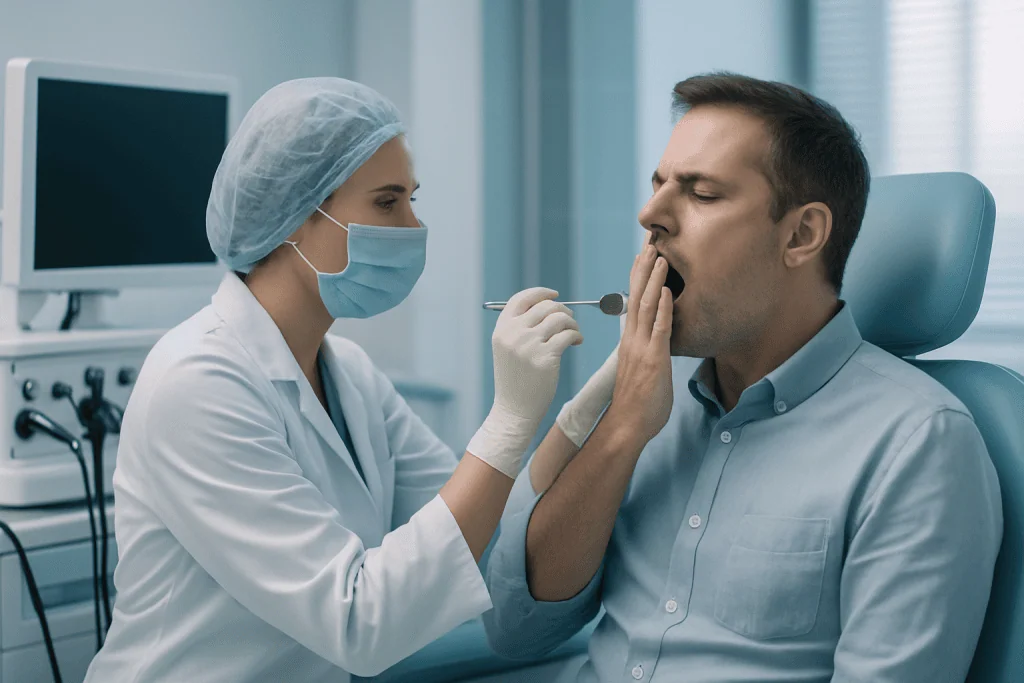
Diagnosis begins with a conversation, not a device. The clinician asks how long the problem has been present, what has been tried, whether another person has confirmed the odour, and how it behaves: worse in the morning, after meals, during fasting, under stress, or when the mouth feels dry? Diet, oral hygiene routine, smoking or vaping, alcohol use, medications, medical history, dental history and previous treatments all feed into the picture. This discussion is handled without judgement, halitosis is a common clinical problem, and clinicians who treat it hear about it every week.
Part of that conversation addresses a question many patients hesitate to ask: is the smell real? People are remarkably poor judges of their own breath, because the nose adapts to constant odours within minutes: a phenomenon called olfactory adaptation. Some patients with genuine halitosis are unaware of it, while others are convinced of a strong odour that no examiner can detect. The second situation, sometimes called pseudo-halitosis, is a recognised clinical entity and is taken just as seriously: it is addressed with objective assessment, clear explanation and, where distress persists, appropriate supportive care. Home tests, licking the wrist, cupping the hands, asking a trusted person, give only rough impressions. In the clinic, the odour is assessed directly and systematically, so that treatment decisions rest on findings rather than fear.
Preparation improves accuracy. Before the appointment you may be asked to avoid strongly scented mouthwash, breath sprays, chewing gum, smoking and strong-smelling foods for a set period, so the symptom can be assessed as it really is. A current list of medications and supplements, previous dental records or imaging, and any known medical conditions all help the clinician plan efficiently.
The assessment itself typically moves through a logical sequence:
- Oral examination. Teeth, gums, tongue, cheeks, palate, saliva, and every restoration, implant, denture, retainer or appliance in the mouth. The tongue coating is inspected directly, since it is one of the most frequent contributors.
- Periodontal measurement. If gum disease is suspected, pocket depths are measured around the teeth to map where bacteria have established themselves below the gumline.
- Dental imaging. Digital imaging can reveal hidden decay, bone loss, abscesses or areas where food is being trapped, problems that are invisible on surface examination.
- Saliva evaluation. Where dryness is suspected, saliva quantity and quality are assessed and the likely reasons (medications, mouth breathing, systemic conditions) are explored.
- ENT assessment when indicated. Nasal endoscopy, throat examination and sinus imaging are used when postnasal drip, tonsil stones, sinusitis or nasal obstruction seem likely.
- Digestive and systemic work-up when indicated. Gastroenterology consultation, reflux-focused testing or laboratory tests are added only when symptoms genuinely point that way.
The guiding principle is proportionate testing: enough to find the cause, not a scattergun of investigations. Most patients do not need every step on this list. The tools, digital dental imaging, periodontal probes, intraoral photography, salivary evaluation, fibre-optic endoscopy, laboratory testing, matter only insofar as they support a more accurate diagnosis. A focused dental assessment may be completed in a single visit; a complex, multi-source case may need coordinated appointments across two or three departments.
How to Get Rid of Halitosis: Treatment That Targets the Cause
How to get rid of halitosis depends entirely on what is producing it, which is why this page has spent so long on causes. Halitosis treatment is not a single procedure. It is a structured process: confirm the source, remove or control it, then prevent its return. The components below are combined according to the diagnosis, one patient may need only two of them, another may need four.
Professional dental and periodontal treatment
When plaque, tartar or gum disease is the source, treatment starts with professional scaling and root-surface cleaning to remove deposits from above and below the gumline. In mild cases, a standard professional cleaning plus improved home care is enough, and the change in breath can be noticeable within days. In established periodontitis, deeper periodontal therapy is needed: cleaning within the pockets, sometimes localised antimicrobial treatment, and in advanced cases surgical periodontal care. The choice depends on disease severity, tooth stability, remaining bone support and your overall health. Periodontal treatment is usually followed by a maintenance schedule, because pockets that have existed once can recolonise if left unattended.
Restorative and endodontic treatment
Bacterial reservoirs built into the teeth themselves have to be physically removed. That can mean fillings for cavities, replacement of cracked or leaking restorations, correction of open crown margins, root canal treatment for infected teeth, extraction of teeth that cannot be saved, and implant or prosthetic planning where teeth are lost. This step is often what separates lasting improvement from temporary improvement: a mouth can be professionally cleaned every month, but if an infected tooth or a food-trapping restoration remains, odour returns. Where a surgical step is planned, periodontal surgery, extraction under sedation, or an ENT procedure, general physical preparation helps recovery; the principles are the same as those described in our guide to prehabilitation before surgery.
Cleaning the tongue properly
Tongue cleaning is simple, but technique matters more than enthusiasm. A tongue scraper or soft brush is drawn gently forward from as far back as is comfortable, once or twice daily, focusing on the posterior third where the coating concentrates. Aggressive scraping irritates the surface, causes discomfort and makes people give up, so patients are shown how to do it effectively without damage. Depending on the cause, a specific oral rinse or gel may be recommended alongside, chosen for the clinical situation rather than the strength of its flavour. Strongly scented products that merely perfume the mouth are not treatment.
Managing dry mouth
Dry mouth management aims to restore moisture and protect the teeth and gums while the underlying reason is addressed. Practical measures include structured hydration through the day, saliva substitutes, sugar-free chewing gum or lozenges to stimulate flow, fluoride support to protect against the higher cavity risk, and treatment of mouth breathing where nasal obstruction is the cause. When a medication is the likely culprit, the halitosis team does not adjust it; the finding is communicated to the prescribing physician, who decides whether an alternative is appropriate. Dry mouth linked to autoimmune disease or previous head and neck treatment usually needs ongoing management rather than a one-off fix, and honest expectations are set at the start.
Treating nose, sinus and throat sources
Where the source sits behind the mouth, an ENT specialist evaluates the nasal passages, sinuses, throat and tonsils, often with fibre-optic examination, and with imaging when sinus disease is suspected. Treatment is matched to the finding: nasal saline care and allergy management for rhinitis, medical therapy for chronic sinusitis, treatment of tonsillitis, and management of tonsil stones, which in recurrent troublesome cases can include procedural options. Resolving nasal obstruction has a useful side effect: it reduces mouth breathing, which improves dryness and morning odour at the same time.
Treating digestive contributors
When reflux or another digestive issue appears likely, a gastroenterologist assesses the symptoms and decides whether medical therapy, dietary adjustment, endoscopy or other testing is warranted. Reflux management may involve meal timing, weight-related counselling where relevant, and medication when indicated, prescribed and monitored by the gastroenterologist. The important discipline here runs in both directions: not every sour breath is reflux, and not every reflux patient’s halitosis is digestive. Most cases retain an oral component, so digestive treatment usually runs alongside dental care rather than instead of it.
How to Get Rid of Bad Breath Day to Day
Knowing how to get rid of bad breath between professional treatments comes down to a short list of habits done consistently rather than a long list done occasionally. None of these replaces treating an underlying cause, but once the cause is under control, they are what keeps it controlled:
- Brush twice daily, and clean between the teeth every day with floss or interdental brushes: the spaces between teeth are where a toothbrush never reaches
- Clean the back of the tongue gently once or twice a day
- Drink water regularly through the day; dehydration is one of the simplest and most common odour amplifiers
- Clean dentures, retainers and other appliances as instructed, every day
- Use any prescribed rinse or gel as directed, rather than substituting a stronger-tasting commercial product
- Attend maintenance cleanings at the interval your dentist sets, for periodontal patients this is often more frequent than a routine check-up
Can you get rid of halitosis?
In most cases, yes, provided the cause is correctly identified and treated. Halitosis with a single clear source, such as tongue coating, plaque and tartar buildup, or one defective restoration, often improves quickly once that problem is corrected. Halitosis with multiple overlapping sources, say, moderate gum disease plus medication-related dryness, improves in stages as each contributor is addressed. The cases that do not improve are almost always the ones where treatment was aimed at a guess rather than a finding: months of mouthwash for what was actually a periodontal pocket, or reflux tablets for what was actually a coated tongue. Diagnosis first; then the answer to this question is usually favourable.
Does halitosis go away permanently?
That depends on whether the cause can be permanently removed or only continuously managed. A leaking filling, an infected tooth or a tartar deposit can be definitively treated; once gone, that source of odour is gone, and staying odour-free is a matter of routine maintenance. Chronic contributors behave differently. Ongoing dry mouth, autoimmune conditions, chronic sinus disease and reflux tend to need long-term management, and breath quality follows how well they are controlled. It is also worth being realistic about what no treatment can do: ordinary morning odour, dehydration on a long flight and the after-effects of a garlic-heavy dinner are normal human chemistry, not disease. The goal of treatment is to resolve persistent, abnormal odour and keep it from returning, and that goal is achievable for most patients.
Benefits of Halitosis Treatment
The benefits depend on the cause, but effective care typically improves oral health, comfort, confidence and long-term prevention at the same time.
| Benefit | What It Means for You |
|---|---|
| Identification of the source | A structured evaluation establishes whether the cause is dental, periodontal, dry mouth-related, ENT-related, digestive, medication-related or a combination, replacing years of guesswork with a finding. |
| More effective treatment | Care is directed at the underlying problem rather than at the smell itself, so improvement lasts instead of fading with the mouthwash. |
| Improved gum and dental health | Treating plaque, tartar, cavities, infections and periodontal disease reduces odour and protects teeth and supporting bone at the same time. |
| Better comfort and oral moisture | Managing dry mouth improves speaking, eating, taste, sleep comfort and protection against cavities. |
| Reduced recurrence | Personalised home care, follow-up and prevention strategies lower the chance that symptoms return quickly. |
| Greater confidence in daily life | When the cause is understood and treated, close conversations, work settings and social situations stop being sources of anxiety. |
Recovery Timeline After Halitosis Treatment
Recovery varies with the diagnosis, but the following timeline reflects what many patients can expect after evaluation and initial treatment.
| Time Period | What Patients Can Expect |
|---|---|
| Day 1 | Initial assessment identifies the likely causes. Professional cleaning, oral hygiene instruction, medication review or referrals may begin depending on findings. |
| First week | Patients treated for plaque buildup, tongue coating, mild gum inflammation or dehydration-related dryness may notice early improvement. Some temporary gum tenderness can occur after deep cleaning. |
| First month | Periodontal therapy, dry mouth management, ENT treatment or reflux care begins to show clearer results. Home care routines settle into habit. |
| Three to six months | Follow-up confirms whether gum health, saliva control, sinus symptoms or reflux symptoms are improving. Maintenance cleaning or additional treatment may be recommended. |
| Longer term | Ongoing prevention: regular dental visits, effective home care, hydration, management of medical contributors and prompt treatment of any recurrence sustain the result. |
Why Acting Early Matters
Persistent halitosis is sometimes filed away as a cosmetic nuisance, but it can be the first visible sign of treatable disease, and the diseases behind it get harder to treat with time. Gingivitis can progress to periodontitis, where pockets deepen, bone support erodes and teeth loosen; the inflammation of early gum disease is usually reversible, while bone that has been lost may not fully return. Untreated cavities become painful infections. Uncontrolled dry mouth accelerates tooth decay, invites oral fungal infections and makes eating and speaking genuinely uncomfortable.
The same logic applies beyond the mouth. Chronic sinus inflammation left alone tends towards ongoing mucus drainage, facial discomfort, disturbed sleep and repeated infections. Tonsil stones recur and irritate the throat. Untreated reflux can contribute to chronic throat symptoms, cough, erosion of dental enamel and, in some patients, sleep disturbance.
There is also the cost that does not show up on any scan: the emotional one. People with long-standing halitosis check their breath compulsively, angle away from conversations, and quietly withdraw from social and professional situations. Every month spent rotating through masking products is a month that burden continues. Early evaluation offers something the products cannot: a cause, and therefore a plan.
Not every case is urgent, and most halitosis is not. The clinical point is simpler: the conditions that lie behind persistent odour, gum disease, dental infection, dry mouth, sinus disease, reflux, respond better to early treatment than to later treatment of the same disease, which is why understanding the cause sooner rather than later pays off.
Factors That Influence Outcomes
The single biggest determinant of outcome is whether the correct cause was identified. Everything else follows from that. A patient whose halitosis stems from one clear source, tongue coating, tartar, a defective restoration, can improve quickly once it is corrected. A patient with periodontitis, chronic dry mouth, sinus disease or reflux is on a longer, more coordinated course, and knowing that from the start prevents disappointment.
Oral hygiene technique matters more than product choice. Brushing twice a day is necessary but rarely sufficient: cleaning between the teeth, clearing the tongue coating safely, maintaining appliances and attending professional cleanings at the right interval do the rest. Patients with periodontal disease usually need maintenance visits more often than the standard check-up rhythm, because pockets recolonise faster than healthy gums.
Disease severity sets the ceiling. Early gum inflammation is generally reversible with cleaning and better home care. Advanced periodontitis can be treated, bacterial burden and inflammation reduced substantially, but supporting bone already lost may not regrow, which is precisely why earlier treatment produces better results than later treatment of the same disease.
Saliva flow shapes the long game. Medication-related dryness, habitual mouth breathing, autoimmune conditions and previous head and neck treatment make management more complex, and for these patients the honest goal is sustained control: protecting oral health, keeping moisture up and holding bacterial activity down, rather than a single decisive intervention.
Lifestyle drives recurrence. Smoking and vaping dry and irritate the mouth, feed gum disease and add their own odour; frequent alcohol, poor hydration, high sugar intake, fasting patterns and certain diets all push in the wrong direction. The changes required are rarely extreme, personalised guidance usually identifies two or three specific habits worth adjusting rather than demanding a new life.
Finally, medical contributors have to be addressed when they exist. Reflux, sinus disease, tonsil stones, diabetes control and medication side effects all influence breath, and a good result is far more likely when the care team considers the whole medical context rather than a single symptom. This matters most for patients who have already had repeated dental cleanings or worked through the pharmacy shelf without lasting change: in those cases, the missing piece is usually a contributor nobody has yet looked for.
Halitosis Care at Acibadem
Patients who come to Acibadem for halitosis often arrive with a long history behind them: multiple mouthwashes, several dental visits, online remedies, dietary experiments, and genuine uncertainty about whether the problem is oral or digestive. The clinical approach is built around resolving that uncertainty methodically rather than adding another round of treatment on top of a guess.
Where records, dental imaging, medication lists and symptom history are available before the first appointment, the relevant team reviews them so that visits can be planned efficiently and unnecessary repetition avoided. For patients whose evaluation extends beyond dentistry, coordination can bring in periodontology, restorative dentistry, ENT, gastroenterology, internal medicine, radiology and nutrition support. The pathway is individualised: a straightforward periodontal case does not tour four departments, and a complex multi-source case is not left to a single one.
That multidisciplinary structure exists because halitosis so often has overlapping causes, mild gum disease alongside reflux, dry mouth alongside chronic nasal obstruction, tongue coating alongside medication-related saliva reduction. Treating one factor in a two-factor problem produces partial improvement and a frustrated patient. A coordinated assessment decides which findings are clinically meaningful and in what order to treat them.
The diagnostic tools available, digital dental imaging, periodontal assessment, intraoral visualisation, salivary evaluation, ENT endoscopy, gastrointestinal assessment, laboratory testing and radiologic imaging where needed, support that decision-making by revealing hidden decay, gum disease, sinus disease, throat findings or systemic contributors. Just as important is the clinical habit of listening: asking the right questions, taking the concern seriously, and recognising when a symptom does not fit the most common explanation, particularly for patients who have previously been told that nothing is wrong despite ongoing symptoms.
Treatment plans are personalised because the condition demands it. One patient needs periodontal therapy and a maintenance schedule. Another needs defective restorations replaced and dry mouth managed. A third needs ENT treatment for chronic postnasal drip, or gastroenterology care for reflux. The best plan is simply the one that matches the actual cause, the patient’s medical background and the practical realities of their situation.
Living Without Persistent Bad Breath
Persistent bad breath is difficult to talk about, which is exactly why so many people spend years managing it with mints instead of resolving it with a diagnosis. The pattern this page describes holds across almost every case: halitosis has a source; the source can usually be found; and once found, it can usually be treated. Whether that source turns out to be gum disease, tongue coating, dry mouth, a sinus problem, reflux, a dental infection or several of these together, a structured diagnostic approach leads to treatment that works, and to a prevention routine that keeps working long after the appointment is over. Understanding the cause is not the first step towards improvement. In most cases, it is most of the journey.
Preparation
- Patients should share their medical history, medications, oral hygiene routine, smoking status, and any digestive or ENT symptoms. Avoid strong-smelling foods, alcohol, and mouthwash shortly before assessment unless advised otherwise. Bring previous dental or medical records if halitosis has been persistent or recurrent.
Aftercare
- Aftercare depends on the cause and may include professional dental cleaning, gum treatment, hydration, tongue cleaning, or treatment for sinus, tonsil, reflux, or infection-related problems. Maintain regular brushing, flossing, tongue cleaning, and dental check-ups. Follow prescribed treatments and return for reassessment if symptoms persist.
Frequently Asked Questions
What affects the cost of halitosis treatment?
The main factors are the underlying cause, the need for dental cleaning or periodontal care, diagnostic tests, specialist consultations, imaging, infection treatment, restorations, and follow-up needs. A personalised assessment is required before a reliable quote can be prepared.
How can I get a personalised quote from Acibadem?
You can request a free consultation and share your symptoms, dental history, current medications, previous test results, and any available dental images. The medical team can then recommend the appropriate evaluation pathway and provide a personalised cost estimate.
Is halitosis treated by a dentist or a doctor?
Many cases are related to the mouth and gums, so dental evaluation is often the starting point. If needed, the care plan may include ENT, gastroenterology, or other medical specialists to identify non-dental causes.
Are diagnostics included in a treatment package?
Package content varies by patient need and provider policy. A package may include consultation, oral examination, hygiene assessment, selected diagnostics, treatment planning, and follow-up guidance, while additional procedures may be quoted separately.
Will treatment require more than a single visit?
Some patients need only evaluation and hygiene guidance, while others require staged periodontal treatment, dental restoration, infection management, or specialist follow-up. The expected visit plan is confirmed after clinical assessment.
Medically reviewed by the Acıbadem International Medical Board August 30, 2026
See our medical review board →
Update history
- PublishedJune 8, 2026
- Medical review approvedAugust 30, 2026
- Last content updateSeptember 8, 2026
References1
- Halitosis (Bad Breath) my.clevelandclinic.org
Trusted care for international patients
From the Acibadem Blog

Before a Halitosis Assessment: Foods, Mouthwash and Habits to Pause So Testing Is Accurate
Before a halitosis appointment, most clinics ask you to skip strong-smelling foods such as garlic and onions, avoid mouthwash, mints, gum and breath sprays,…

Halitosis Explained: Gum Disease, Dry Mouth and Other Sources Behind Persistent Bad Breath
Halitosis, or persistent bad breath, most often comes from the mouth itself: bacteria coating the back of the tongue, gum disease, food trapped between…