Lip Lift
Lip lift surgery shortens the space between the upper lip and nose to enhance lip definition, tooth show, and facial balance. It is tailored to individual anatomy and aesthetic goals.
Quick answer
A lip lift is a surgical procedure that shortens the vertical distance between the base of the nose and the upper lip. A measured strip of skin is removed beneath the nostrils, lifting the lip so that more of its pink portion and the upper teeth show naturally. It usually takes about an hour under local anaesthetic and suits people whose concern is lip length rather than lip volume.
Lip Lift: Changing Lip Position, Not Just Lip Volume
A lip lift is a facial surgical procedure that shortens the vertical distance between the base of the nose and the upper lip, so that more of the pink portion of the lip and more of the upper teeth show naturally. It works by removing a precisely measured strip of skin beneath the nostrils and elevating the lip into a new position. It suits people whose main concern is a long or flat upper lip, a problem of position and proportion, rather than a lack of volume, which filler addresses. Many international patients now research a lip lift in Turkey alongside options at home, which makes clear, honest information about the procedure itself the sensible starting point.
The lips occupy a small area of the face, yet their proportions shape facial expression, smile aesthetics and how the lower third of the face reads as a whole. Some people feel the upper lip looks long, flat or less defined than it once did. Others notice that little or none of their upper teeth show when they smile, or that the lip has lengthened with age and begun to cover the teeth. For these concerns, a lip lift can offer a structural and lasting change that adding volume alone cannot.
Choosing facial aesthetic surgery is a personal decision, and the common worries are legitimate ones. Will the result look natural? Will the scar be visible? Will the procedure change the smile? Is it wise to have this done abroad? A well-planned lip lift is not intended to create an exaggerated or uniform appearance. It is designed around the individual relationship between the nose, lips, teeth, chin and overall facial proportions, and a responsible surgeon will tell you plainly if you are not a good candidate.
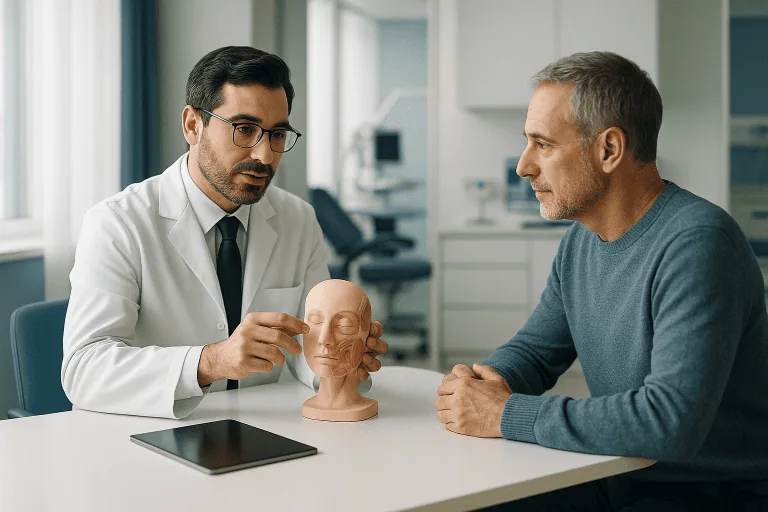
At Acibadem, lip lift assessment is treated as a detailed facial analysis rather than a single-feature decision. Surgeons in the plastic, reconstructive and aesthetic surgery department consider the height of the upper lip, lip shape, dental show, skin quality, nasal base anatomy, prior cosmetic treatments and your own preferences. The purpose is to determine whether surgery is appropriate at all and, if so, to plan a result that looks harmonious at rest, during speech and when smiling.
What Is a Lip Lift?
A lip lift is a plastic surgery procedure that shortens the vertical distance between the base of the nose and the upper lip: the area known as the philtrum. By removing a measured amount of skin from beneath the nose and elevating the upper lip, the procedure increases the visible pink portion of the lip, sharpens the definition of the cupid’s bow and allows more upper teeth to show when the face is relaxed or smiling. It changes where the lip sits, not what the lip contains.
The distinction matters because a long upper lip and a thin upper lip are different problems that are often confused. As the philtrum lengthens, whether naturally or with age, the lip tends to roll inward, the red portion narrows and the teeth disappear behind it. No amount of injected volume corrects that vertical length. A lip lift addresses it directly, which is why patients who have been dissatisfied with repeated filler treatments are often, on examination, patients whose real issue was lip position all along.
Is a lip lift the same as lip raise surgery?
Yes, lip raise surgery is simply another name for the same operation, and you may also see it called an upper lip lift or philtrum shortening. Whatever the label, the underlying principle is identical: skin is removed high on the lip, near or within the crease at the base of the nose, and the lip is repositioned upward. When you compare clinics or read about lip surgery in general, check what is actually being described rather than relying on the name, because terminology varies between countries and between practices.
How is a lip lift different from lip filler?
A lip lift changes the position and proportion of the upper lip permanently through surgery, whereas filler temporarily adds volume within the lip itself. Filler can be an appropriate choice for genuine volume loss, and the two approaches are not rivals so much as tools for different problems. In selected patients, a lip lift can even make a modest later volume enhancement look more balanced, because the lip is starting from a more favourable position. What filler cannot do is shorten a long philtrum, and attempting to compensate for lip length with volume alone can create a heavy, projected lip that still hides the teeth. A careful consultation should identify which problem, length, volume or both, you actually have before any treatment is chosen.
Is a lip lift the same as lip reduction surgery?
No, lip reduction surgery removes tissue from inside the lip to make it smaller, which is essentially the opposite goal. Lip reduction is considered for lips that are disproportionately large or that have been overfilled, whereas a lip lift is for an upper lip that is too long or insufficiently visible. The two operations use different incisions, address different anatomy and suit different patients. If you have encountered both terms during your research, an examination will quickly establish which, if either, is relevant to your face.
Types of Lip Lift Technique
The most commonly performed technique is the subnasal lip lift, often called a bullhorn lip lift because of the shape of the skin excision beneath the nostrils. The incision follows the natural contours at the base of the nose, where it tends to become less noticeable as healing progresses. A carefully designed section of skin is removed, and the upper lip is elevated and secured in its new position. Because the incision sits within an existing anatomical junction, the subnasal approach usually offers the most discreet scar for a full-width lift.
Other techniques exist for specific situations. A direct lip lift places the incision along the upper border of the lip itself, immediately above the vermilion. It gives the surgeon precise control over the new lip line, but the scar sits in a more exposed position, so it is chosen more selectively. A corner lip lift addresses downturned corners of the mouth by removing small triangles of skin at the outer edges of the lip; it can be performed alone or alongside a subnasal lift. Finally, revision procedures may be considered for patients with previous lip surgery whose result was under-corrected, over-corrected or asymmetrical: these are more demanding cases, because scar tissue and altered blood supply change what can safely be done.
The right technique for you depends on anatomy, scar considerations and the degree and pattern of change you want. There is no universally superior method, only a method that fits a particular face and a particular goal. A surgeon who recommends the same technique to every patient is not planning; they are repeating.
A lip lift is usually performed as an outpatient procedure. It can be carried out under local anaesthetic alone, sometimes with oral or intravenous sedation when appropriate. It may be performed on its own or combined thoughtfully with other facial procedures such as rhinoplasty or facial rejuvenation surgery, but combining procedures is not necessary for most patients and should only be considered when it serves a clear treatment plan and allows an appropriate recovery period.
Who May Need a Lip Lift?
People seek lip lift surgery for different reasons. Some have naturally long upper lips or limited upper tooth display from a young age. Others develop these features gradually as facial tissues change over time. With ageing, the upper lip can lengthen, the red portion of the lip may narrow, and the upper teeth become less visible, which can make the face look less animated even when the lips retain adequate volume.
Typical concerns that lead people to explore a lip lift include:
- A long distance between the base of the nose and the upper lip.
- Limited upper tooth show at rest or when smiling.
- A thin or less visible upper vermilion: the naturally pink portion of the lip.
- Reduced definition of the cupid’s bow or the upper lip border.
- An upper lip that appears to roll inward when smiling.
- Facial proportions that feel less balanced after age-related changes.
- Dissatisfaction with repeated lip filler treatments where the underlying issue is lip position rather than volume.
- A wish to refine upper lip proportions after a frank discussion about scarring and realistic outcomes.
Not everyone who wants a fuller-looking upper lip is a good candidate. People with a very short philtrum, pronounced gum display, certain nasal base features, active skin infection, poorly controlled medical conditions or a history of problematic scarring may need a different approach or further evaluation first. Smoking and other nicotine exposure impair wound healing and can worsen scar visibility, so surgeons generally ask patients to stop all nicotine products well before and after surgery.
Evaluation begins with a consultation and facial examination. The surgeon assesses lip length, lip mobility, tooth show, smile dynamics, facial symmetry, nasal anatomy and skin thickness. Standardised clinical photographs are usually taken for planning and for meaningful comparison over time. The discussion should also cover prior facial surgery, injectable treatments, any history of cold sores, current medications, allergies, planned dental work and any personal or family tendency toward hypertrophic or raised scars.
In most cases the assessment is clinical rather than dependent on laboratory tests or imaging. Medical evaluation may still be recommended when a patient has relevant health conditions or when sedation is planned. International patients are typically asked to share health records, medication lists and recent test results before travelling, so the care team can determine in advance whether any additional assessment will be needed on arrival.
Conditions and Aesthetic Concerns a Lip Lift Addresses
Lip lift surgery is an aesthetic procedure, not a treatment for disease. Even so, it addresses recognisable anatomical patterns that affect facial balance and smile appearance: congenital facial proportions, age-related elongation of the upper lip, loss of visible upper lip, reduced upper tooth show and selected concerns following previous cosmetic treatment.
For patients with age-related change, a lip lift can form part of a broader facial rejuvenation plan. Ageing may lengthen the upper lip while reducing lip definition and tooth display at the same time. Adding filler alone increases projection without correcting length, and in some faces this makes the lip look heavy or disproportionate. A lip lift addresses the vertical dimension directly; whether filler is useful afterwards depends on the patient’s remaining volume and preferred contour, and that decision can wait until healing is complete.
In younger patients, the procedure may be appropriate when the upper lip is naturally long relative to other features and upper tooth show is limited. Here the objective is usually refinement rather than dramatic change. The most successful plans respect the patient’s ethnic features, facial identity and personal preferences rather than pursuing a single idealised measurement: a philtrum length that flatters one face can look wrong on another.
A lip lift may also be considered in selected reconstructive or revision situations, for example after prior lip surgery, facial trauma or scarring that has altered lip position or contour. These cases demand especially careful review, because scar tissue and changed blood supply affect technique, healing and predictability. A surgeon may reasonably advise against operating when the likely benefit does not justify the scar or the other risks, and hearing that advice is itself a useful outcome of a consultation.
How Lip Lift Surgery Is Performed
The process begins well before the operation. During consultation, the surgeon listens to your concerns, examines your face in motion and explains what a lip lift can and cannot achieve. For patients seeking correction of age-related change, photographs taken earlier in life can be genuinely useful: they help clarify whether the concern is upper lip length, volume loss, dental show, nasal shape, skin laxity or a combination.
Preparation before surgery
Once a lip lift is agreed, you receive individualised preoperative instructions. These commonly include stopping nicotine, limiting alcohol, reviewing medications and supplements that can increase bleeding risk, and arranging support after the procedure if sedation is planned. Certain anti-inflammatory medicines, herbal supplements and blood-thinning medications may need adjustment, but any change is made only under the direction of the prescribing clinician and the surgical team, never on your own initiative.
If you have a history of herpes simplex, cold sores, tell the surgeon. Surgery around the mouth can occasionally trigger an outbreak, and preventive antiviral medication may be considered in appropriate cases. It is also sensible to avoid scheduling major dental treatment immediately around the operation unless the surgeon advises otherwise, because wide mouth opening is uncomfortable during early healing. General preparation questions, fasting rules, timing, what to bring, are covered in the guide to questions to ask before booking surgery in Turkey, which applies to smaller procedures as much as large ones.
Immediately before surgery, the surgeon marks the planned incision with you sitting upright. This step matters more than it sounds: facial soft tissues shift when you lie down, and markings made flat can mislead. The markings are tailored to your anatomy and the intended degree of elevation. Conservative planning is essential, removing too much skin creates excess tension, can alter lip movement and increases the visibility of the scar. In this operation, restraint is a technical skill.
What happens during the procedure?
A subnasal lip lift proceeds through a short, precise sequence, typically completed in about one hour:
- Step 1: Anaesthesia. Local anaesthetic injections numb the area beneath the nose. Sedation may be added for anxious patients or when the lip lift is combined with another procedure.
- Step 2: Incision. The surgeon makes a fine incision hidden within the contours below the nostrils and across the base of the nose, following the markings made earlier.
- Step 3: Measured skin removal. A precisely measured strip of skin is removed according to the surgical plan, no more, no less.
- Step 4: Elevation. The deeper tissues are adjusted to lift the upper lip while preserving normal anatomy, sensation and movement.
- Step 5: Layered closure. The incision is closed in layers with fine sutures. Layered closure reduces tension on the skin edge, which is one of the main determinants of how the scar matures.
Total time may be longer when sedation, additional procedures or complex revision work is involved. The technique is always adapted to the individual: a patient seeking a subtle increase in tooth show needs a different plan from someone with marked lip elongation, and nasal base shape, skin thickness, nostril width, lip asymmetry and pre-existing scars all influence incision design. The surgeon’s task is not simply to shorten the philtrum but to preserve natural expression and create a proportionate transition between nose and lip.
Technology and surgical planning
Lip lift surgery relies primarily on surgical judgement, detailed anatomical assessment and meticulous closure rather than on machinery. Standardised photography and modern facial imaging support planning by letting surgeon and patient discuss proportions, symmetry and the expected areas of change with something concrete in front of them. Digital communication tools also help international patients during pre-travel review and postoperative follow-up when clinically appropriate.
In the operating environment, modern anaesthesia monitoring supports safety whenever sedation or general anaesthesia is used. Fine instruments, magnification and carefully selected suture materials help the surgeon work accurately in an area where fractions of a millimetre are visible in the mirror. Technology earns its place when it improves planning, precision or monitoring: it does not replace individualised assessment or experienced technique, and no device compensates for a poorly judged excision.
Immediately after the procedure
Most patients return home or to their accommodation the same day. The upper lip and the area beneath the nose will be swollen, and mild bruising may appear. Temporary tightness, numbness, altered sensation and discomfort when moving the mouth are common in the first days and settle gradually as healing progresses.
The surgical team provides specific instructions for cleaning the incision, applying any prescribed ointment, taking pain medication and protecting the area from sun exposure. You will usually be advised to eat soft foods at first, avoid wide mouth movements, refrain from strenuous exercise for a period and sleep with your head elevated to limit swelling. Sutures are typically removed within approximately one week, depending on the technique and the surgeon’s preference. Discomfort after a lip lift is generally modest and manageable; for a realistic picture of how analgesia is organised after procedures here, see pain control after surgery in Turkey.
Recovery Timeline After a Lip Lift
Healing speed varies with technique, skin characteristics, overall health and how closely postoperative instructions are followed. The timeline below is a general guide, not a schedule your face is obliged to keep.
| Time Period | What Patients Can Expect |
|---|---|
| Day 1 | Swelling, tightness and mild discomfort are expected. Rest with the head elevated, use prescribed medication as directed and follow the incision-care instructions. |
| First week | Bruising and swelling begin to settle, though the upper lip may still feel stiff. Speaking, smiling widely and taking large bites can be uncomfortable. Sutures are often removed during this period. |
| Second to third week | Many patients feel comfortable returning to social activities, depending on residual bruising and personal preference. Makeup over the area only once the surgeon confirms the incision has healed sufficiently. |
| First month | Most visible swelling has resolved and lip movement feels more natural. The scar may remain pink or firm and should be protected from sunlight. |
| Longer term | Scar maturation and subtle soft-tissue settling continue over several months. Refinement is gradual, and follow-up reviews let the surgeon evaluate healing and symmetry. |
How long does a lip lift last?
A lip lift produces a lasting structural change, because skin has been removed and the lip repositioned rather than temporarily filled. The result is not frozen in time: your face continues to age, tissues continue to soften, and the lip may lengthen again very gradually over many years, but the procedure does not simply wear off the way an injectable does. This durability is one of the main reasons patients who have cycled through repeated filler appointments consider surgery instead. It is also a reason to plan conservatively: a change you will live with for a long time should err on the side of subtlety.
What should you look for in lip lift before and after photos?
Lip lift before and after photographs are most useful when they are consistent: the same lighting, the same angle, the same facial expression, and images taken at rest as well as smiling. Look at the scar region beneath the nose in the later photographs, check whether the nostril shape has changed, and pay attention to whether the result looks natural in motion, not only in a single flattering frame. Photographs taken very early, while swelling still adds fullness, can flatter a result that has not yet settled.
How should you read lip shortening before after images?
People searching for lip shortening before after comparisons should apply the same scepticism, and one extra test: measure with your eye how much the distance between nose and lip has actually changed, and ask whether that degree of change would suit your own anatomy. A result that looks striking on a very long philtrum would over-correct a moderate one. Comparison images are communication tools for your consultation, not templates to be copied onto a different face.
Benefits of Lip Lift Surgery
When the patient is well selected and the plan respects facial proportions, a lip lift can offer the following potential benefits.
| Benefit | What It Means for You |
|---|---|
| Shorter upper lip appearance | The distance between the nose and upper lip is reduced, creating a more balanced relationship between facial features. |
| Greater upper lip visibility | More of the pink portion of the upper lip becomes visible without relying solely on added volume. |
| Improved tooth show | A modest increase in upper tooth display can make both the smile and the relaxed expression appear more animated. |
| Enhanced lip definition | The cupid’s bow and upper lip border may appear more distinct, depending on individual anatomy and healing. |
| Long-lasting structural change | Because the procedure changes lip position rather than temporarily adding volume, the result is generally more enduring than injectable treatment. |
| Individualised facial refinement | The plan supports natural-looking proportions for your face rather than pursuing a standardised lip shape. |
Risks, Limits and What Influences a Good Result
Every surgical procedure carries risk, and a lip lift is no exception. Potential complications include bleeding, infection, delayed healing, asymmetry, changes in sensation, unfavourable scarring, changes to nostril shape, prolonged swelling, lip tightness and dissatisfaction with the aesthetic result. Revision surgery is sometimes possible but should never be assumed as a safety net. Careful planning, nicotine avoidance, diligent aftercare and realistic expectations all reduce avoidable risk, none of them eliminates it.
Your starting anatomy is central to what can be achieved. Lip length, skin elasticity, nasal base shape, upper tooth position, gum display, facial symmetry and existing lip volume all set the boundaries of a safe plan. The most appropriate outcome for one patient may not suit another, even when their concerns sound identical in conversation.
Scar healing deserves particular attention, because it is the trade the operation asks of you. The incision sits along natural contours beneath the nose, but any incision leaves a scar. In most patients it improves steadily with appropriate wound care, sun protection and scar-management guidance. Individual biology, skin type, tension at closure, infection, nicotine exposure and previous scarring patterns all affect the final quality. If you are prone to raised or dark scars, discuss this in detail before deciding, for some patients, the scar risk genuinely outweighs the aesthetic benefit, and a good surgeon will say so.
Clear communication shapes the result as much as technique does. Describe what you notice about your lips and smile in your own words, and stay open to the surgeon’s assessment of what is realistically achievable. Reference photographs can help you explain a preference, but they describe someone else’s anatomy; the plan must be built on yours.
Postoperative behaviour matters too. Following the advice on cleaning, activity restriction, nutrition, sun avoidance and scheduled reviews supports healing. It also helps to understand in advance which changes are a normal part of healing and which are not: the guide on warning signs to report after surgery in Turkey explains how surgical teams draw that line, which is especially relevant when your return flight is part of the plan.
Finally, a good result is not measured only in millimetres. It includes whether the lips look right in motion, whether your facial identity is preserved, whether the scar matures acceptably and whether the outcome matches the goals agreed before surgery. Improvement should be meaningful, and proportionate.
How Much Does a Lip Lift Cost?
The cost of a lip lift is set individually, because the price reflects a specific surgical plan rather than a fixed product. Several factors move the total: the technique chosen and its complexity, whether the operation is a first procedure or a revision, the type of anaesthesia and whether sedation is involved, the facility setting, and whether the lip lift is combined with other procedures such as rhinoplasty. A quotation prepared after a proper assessment of your anatomy and medical history is the only figure worth relying on; a number published before anyone has examined you is a marketing figure, not a surgical one.
What is the surgeon’s fee for a lip lift?
The surgeon’s fee is one component of the total cost, covering the surgeon’s assessment, planning, the operation itself and surgical follow-up. Around it sit the other components: anaesthesia, the facility or operating-room charge, preoperative tests where needed, medications and postoperative reviews. When you compare quotations, anywhere in the world, the useful question is not which headline number is lower, but exactly what each number includes. A quotation that itemises these components is easier to trust than one that does not.
How much does a lip lift cost in Turkey?
In Turkey, as everywhere, the cost of a lip lift depends on the same drivers: technique, complexity, anaesthesia, facility and any combined procedures. For international patients, the practical approach is to request a personalised quotation after a records review or consultation, and to confirm in writing what it covers, including follow-up visits and how any complications would be managed. Beware of quotes that are only valid if you commit quickly; elective aesthetic surgery is never a decision that benefits from time pressure.
Having a Lip Lift in Turkey: Planning as an International Patient
A typical care pathway for an international patient begins before travel, with a remote review of your photographs, medical history, medication list and goals. This lets the surgical team give a preliminary view on candidacy and technique, and tells you whether any additional assessment will be needed on arrival. Nothing replaces the in-person examination, however: the final decision and the final plan are made face to face, with your smile assessed in motion.
Plan your stay around four fixed points: the in-person consultation, the procedure itself, early recovery, and the first postoperative review, which usually coincides with suture removal within approximately one week. Arriving a day or two before surgery gives time for the consultation, marking and any final checks without pressure: the guide on when to arrive before surgery in Turkey sets out sensible timing in more detail. The recommended total stay varies with whether the lip lift is performed alone or combined with other surgery, and the team will confirm your schedule before you book flights.
Return travel deserves the same planning as arrival. Although a lip lift is a comparatively small operation, your surgeon should confirm that healing is on track before you fly, and the general principles in when is it safe to fly home after surgery in Turkey apply here too. After you return home, follow-up can often continue remotely where clinically appropriate, with photographs and video review; your surgeon will explain what to send and when, and what would prompt an in-person check locally.
Practical points worth settling before travel: bring your complete medication list and any relevant medical records; avoid booking dental work or other facial treatments into the same trip unless the surgeon agrees; plan soft foods and sun protection into your first days; and keep your schedule light around suture removal rather than filling it with sightseeing that involves sun, sweat and wide smiles for photographs. Small procedure, small adjustments, but they are worth making.
Why International Patients Choose Acibadem for Lip Lift Surgery
For patients travelling for aesthetic surgery, clinical quality and practical support both matter. Acibadem brings together plastic and aesthetic surgery expertise, modern diagnostic pathways and patient-centred planning within its hospital network. Each patient is assessed individually, with attention to medical history, facial anatomy, procedural suitability and the desired degree of change, including the honest conclusion, where it applies, that surgery is not the right answer.
Complex or combined aesthetic plans benefit from multidisciplinary review. Depending on your needs, plastic and aesthetic surgeons can coordinate with anaesthesia specialists, dermatology teams, dental professionals, ear, nose and throat specialists or other relevant physicians. This is particularly valuable when a patient has had prior facial surgery, has concerns involving nasal anatomy or is weighing up multiple procedures at once.
Acibadem’s physicians work to evidence-based treatment protocols while adapting care to the individual. For lip lift surgery, that means careful preoperative assessment, appropriate anaesthesia planning, detailed consent discussions, infection-prevention practices and structured follow-up. International patient services help with the practical side of receiving care in Turkey, appointment coordination, medical documentation, language support and travel-related planning, tailored to the treatment plan and to each patient’s location, timing and medical requirements.
Deciding with Clarity
A lip lift can be a refined option if you want improved upper lip proportion, more visible tooth show or a more defined lip contour, and it is the wrong option if your real issue is volume, if your philtrum is already short, or if your scarring risk outweighs the gain. The procedure rewards patience at every stage: patience in choosing it, patience in planning it conservatively, and patience while the scar matures over the months that follow.
There is rarely any urgency. A lip lift is elective surgery, and there is time to research, to obtain a second opinion and to decide whether the potential benefits align with your goals. Acting early does not mean rushing; it means addressing the actual anatomical problem before repeated temporary treatments or progressive tissue changes make it harder to solve well. The most useful outcome of a thorough evaluation is not always an operation, sometimes it is simply an accurate understanding of your own face, and a plan that fits it.
Preparation
- Your plastic surgeon assesses facial proportions, lip shape, medical history, and expectations to determine whether a lip lift is suitable. You may need to stop smoking and avoid certain medicines or supplements that can increase bleeding, as advised by your care team. Arrange for someone to accompany you home after the procedure.
Aftercare
- Swelling, bruising, and mild discomfort are common during the first days and usually improve gradually. Keep the incision clean, use prescribed medications as directed, and avoid stretching the upper lip or strenuous activity until your surgeon approves. Attend follow-up visits for wound assessment and suture removal if required.
Frequently Asked Questions
What is a lip lift surgery?
A lip lift is a surgical procedure that shortens the space between the upper lip and the base of the nose, known as the philtrum. It can increase the visibility of the upper pink lip, create a more defined cupid’s bow, and improve lip balance without relying on added filler volume. Acibadem plastic and aesthetic surgery specialists assess facial proportions, skin quality, dental show, and your aesthetic goals to determine whether a lip lift is appropriate.
Am I a good candidate for a lip lift?
You may be a candidate if you have a long upper-lip area, limited upper tooth show when smiling, age-related elongation of the philtrum, or want more upper-lip definition. Candidates should be in generally good health, have realistic expectations, and understand that a small scar is part of the procedure. Smoking can affect wound healing, so stopping before and after surgery is important. Acibadem specialists provide a personalized assessment of your facial anatomy and suitability.
How is a lip lift performed?
The most common technique is a subnasal or bullhorn lip lift. The surgeon removes a carefully measured strip of skin beneath the nose and lifts the upper lip into a more elevated position. The incision is placed in the natural crease at the base of the nose to make it as discreet as possible. The procedure is usually performed under local anesthesia with or without sedation, depending on the treatment plan and patient preferences.
Will I have a visible scar after a lip lift?
A lip lift leaves a scar because it involves removing skin, but the incision is generally positioned in the crease beneath the nose. In the early weeks, it may appear red, firm, or slightly raised before gradually improving over time. Healing varies according to skin type, genetics, sun exposure, and aftercare. Your surgeon may recommend scar-care measures after the incision has healed. Acibadem specialists explain scar placement and realistic healing expectations before surgery.
How long does recovery take after a lip lift?
Most patients experience swelling, tightness, bruising, and mild discomfort during the first several days. Sutures are often removed within about one week, while many patients feel comfortable returning to social activities after 7 to 14 days, depending on bruising and swelling. Strenuous exercise, excessive mouth movement, and direct sun exposure may need to be avoided temporarily. Final scar maturation and settling of the lip position can take several months.
Is a lip lift painful?
A lip lift is generally well tolerated because anesthesia is used during the procedure. Afterward, patients may feel tightness, tenderness, swelling, or a pulling sensation around the upper lip and nose. Discomfort is usually manageable with medication recommended by the surgeon and typically improves during the first few days. Following instructions on sleeping position, food choices, wound care, and activity restrictions can support a more comfortable recovery and help protect the incision.
What are the risks of lip lift surgery?
Like any surgical procedure, a lip lift can involve swelling, bruising, temporary numbness, infection, bleeding, wound-healing concerns, asymmetry, changes in lip shape, and noticeable scarring. Rarely, patients may be dissatisfied with the degree of lift or need further treatment. Risks can be reduced by choosing a qualified plastic surgeon, avoiding smoking, and following aftercare instructions carefully. During consultation, Acibadem specialists discuss your individual risk factors and expected outcomes.
What is the difference between a lip lift and lip filler?
Lip filler adds volume to the lips and can improve hydration, contour, or mild asymmetry, but it does not permanently shorten the philtrum. A lip lift surgically changes the position of the upper lip and may increase upper tooth show while creating a more defined lip shape. Some patients benefit from one treatment, while others may combine a conservative amount of filler with surgery. The best option depends on your anatomy, desired appearance, and previous treatments.
Are lip lift results permanent?
A lip lift creates a long-lasting structural change by shortening the skin between the nose and upper lip. Although the surgical effect remains, the face continues to age naturally, and skin elasticity can change over time. Results also depend on healing, scar behavior, and the amount of lift appropriate for your anatomy. A careful, conservative surgical plan is important to maintain natural facial expression and lip function while achieving balanced aesthetic improvement.
How long should international patients stay in Turkey after a lip lift?
International patients are commonly advised to remain in Turkey long enough for early follow-up and suture removal, which is often around one week after surgery. Your exact travel plan depends on the technique used, your healing progress, and your surgeon’s recommendations. It is helpful to avoid scheduling demanding activities immediately after the procedure. Acibadem’s team can help coordinate consultation timing, surgery, postoperative appointments, and personalized travel guidance for a safe recovery period.
What affects the cost of a lip lift?
The estimate is influenced by the chosen technique, the complexity of your anatomy and goals, surgeon expertise, anaesthesia needs, operating facility, pre-operative tests, medicines, follow-up care, and any combined procedures. International patients should also consider travel and accommodation arrangements.
How can I get a personalised lip lift quote?
A personalised quote requires a consultation with a qualified specialist. You may be asked to share medical information and clear photographs for an initial assessment, followed by confirmation after clinical evaluation. A free consultation can help clarify suitability, treatment planning, and package inclusions.
What is usually included in a lip lift treatment package?
Inclusions vary by hospital and surgeon. A package may include consultation, surgery-related fees, anaesthesia, facility use, routine post-operative checks, and international patient coordination. Ask for a written outline of what is included and which items may be separate.
Can a lip lift be combined with other procedures?
It can sometimes be combined with procedures such as rhinoplasty or other facial rejuvenation treatments when clinically appropriate. Combining procedures may change the surgical plan, recovery requirements, safety considerations, and final estimate.
How should international patients plan follow-up after a lip lift?
Patients should allow sufficient time at the destination for early post-operative review and follow the surgeon’s travel guidance. Before travelling home, discuss wound care, scar management, remote follow-up options, warning signs, and how to access local medical support if needed.
Medically reviewed by the Acıbadem International Medical Board September 14, 2026
See our medical review board →
Update history
- PublishedAugust 3, 2026
- Medical review approvedSeptember 14, 2026
- Last content updateSeptember 14, 2026
Trusted care for international patients
From the Acibadem Blog

Are Lip Lift Results Long-Lasting? How the Upper Lip Ages After Surgery
A lip lift removes a narrow strip of skin beneath the nose, and because removed skin does not grow back, the shorter distance between…

Lip Lift Scars and Other Risks: Visible Lines, Asymmetry and What Helps Healing
A lip lift leaves a permanent scar along the base of the nose. In many people it settles into a thin, pale line hidden…
Doctors Performing This Treatment



Aesthetic Plastic & Reconstructive Surgery
Prof. Mehmet Veli Karaaltın, MD


Aesthetic Plastic & Reconstructive Surgery
Assoc. Prof. Erdem Güven, MD

Aesthetic Plastic & Reconstructive Surgery
Assoc. Prof. Ahmet Küçükçelebi, MD

Aesthetic Plastic & Reconstructive Surgery
Assoc. Prof. Mehmet Altıparmak, MD

Aesthetic Plastic & Reconstructive Surgery