PRP for Hair Loss
PRP for Hair Loss is a non-surgical treatment that uses your own platelet-rich plasma to support hair follicles, reduce shedding, and promote thicker hair growth in suitable patients.
Quick answer
PRP (platelet-rich plasma) for hair loss is a non-surgical treatment in which a small sample of your blood is spun to concentrate the platelets, and the resulting plasma is injected into thinning areas of the scalp. It aims to support weakened but still-active hair follicles, reduce shedding and gradually improve hair thickness over several months. Most plans involve an initial series of sessions followed by maintenance.
PRP Injection for Hair Loss: What It Is and Who It Is For
A PRP injection for hair loss delivers a concentrated preparation of platelets, drawn from your own blood, into thinning areas of the scalp. The aim is to support hair follicles that are weakened but still active, so that shedding slows and existing hairs grow stronger over time. It is a non-surgical, outpatient treatment, no incisions, no general anaesthesia, and it suits early to moderate thinning far better than advanced baldness. It does not restore growth in areas where follicles have been absent for years, and it does not work equally well for everyone.
Hair loss can feel surprisingly personal. For many people it is not only about appearance; it affects confidence, social comfort and the sense of control over one’s own health and ageing. Some notice gradual thinning over years. Others are alarmed by increased shedding in the shower, a widening part line, or a hairline that seems to recede quickly. It is common to spend months on supplements, shampoos and online advice before seeking medical guidance, and to arrive at a consultation with more confusion than clarity.
If you are considering this treatment, your questions are probably practical ones. Will it work for your type of hair loss? How many sessions are involved? How long before anything is visible? Does it make sense alongside a transplant? These questions deserve careful, evidence-based answers rather than a one-size-fits-all promise. This page sets out what a PRP injection can realistically do, how the procedure is performed step by step, what recovery involves, what it may cost in principle, and where it fits alongside other hair restoration options.
What is PRP for hair loss?
PRP for hair loss is platelet-rich plasma therapy applied to the scalp. Platelets are blood components best known for their role in clotting, but they also carry signalling proteins and growth factors involved in tissue repair and regeneration. In this treatment, a small sample of your blood is processed in a centrifuge so that the platelet-rich fraction can be separated and concentrated. That concentrated plasma is then injected into carefully mapped areas of thinning scalp.
You will see the same procedure described in several ways online, platelet-rich plasma therapy, plasma rich injections, or simply PRP. PRP in each case means the same thing: the platelet-concentrated portion of your own blood, prepared and re-injected during a single visit. The names vary; the biology does not.
What are PRP injections good for?
PRP injections are used across several fields of medicine, including orthopaedic problems of tendons and joints, skin treatments and wound-healing support. In hair medicine, the main use is pattern hair loss: the gradual, hereditary thinning that affects both men and women. PRP is also considered for prolonged shedding after an identifiable trigger, and as a supportive treatment around hair transplantation. Because the material comes from your own body, it appeals to patients who want a treatment without implants, donor tissue or surgery. What the treatment can offer in your particular case, however, depends entirely on your diagnosis, which is why assessment comes before any decision to treat.
How PRP Treatment Works on the Scalp
PRP treatment works by improving the environment around weakened follicles rather than by creating new ones. Hair follicles cycle continuously through growth, transition and resting phases. In common forms of thinning, especially pattern hair loss, follicles shrink gradually over time, a process called miniaturisation. Each cycle produces a hair that is slightly finer, shorter and less pigmented than the last, until the hair becomes barely visible. The growth factors in concentrated plasma are thought to encourage follicle activity, support the small blood vessels that supply each follicle, and help prolong or strengthen the growth phase of the cycle.
Two practical points follow from this. First, a follicle has to be alive to respond. PRP is support, not resurrection: skin that has been smooth and bald for many years, or scalp replaced by scar tissue, has little for the plasma to act on. Second, hair biology is slow. The hair cycle is measured in months, so the effect of treatment is judged over months as well, never after a single session, and never in the first few weeks.
Does PRP work for hair loss?
It can, for the right person, with the right diagnosis, at the right stage. That is a more conditional answer than much of what you will read online, and it is the honest one. Clinical experience and published research suggest that in androgenetic alopecia, PRP may reduce ongoing shedding and improve the calibre and density of existing hairs in suitable patients. But response varies widely between individuals: some see a clearly visible change, some a modest one, and some see little difference at all. There is currently no blood test or scan that reliably predicts who will respond. This is precisely why baseline photographs and structured follow-up matter: they allow you and your physician to judge, after an agreed period, whether the treatment is helping and whether continuing makes sense.
Who May Be a Candidate for a PRP Injection
A PRP injection is most often considered by people with early to moderate thinning who want a non-surgical way to support the hair they still have. It may be appropriate for men and women, depending on the diagnosis. Typical reasons for seeking evaluation include a widening part, reduced volume at the crown, a receding frontal hairline, diffuse thinning across the scalp, or simply more hairs than usual on the pillow and in the brush.
- Gradual thinning consistent with male or female pattern hair loss
- Shedding that continues after periods of stress, illness or hormonal change
- Thinning after pregnancy or significant weight change, once other causes have been reviewed
- The wish to strengthen existing hair before or after a hair transplant
- Interest in a non-surgical option when topical or oral therapies alone have not been sufficient
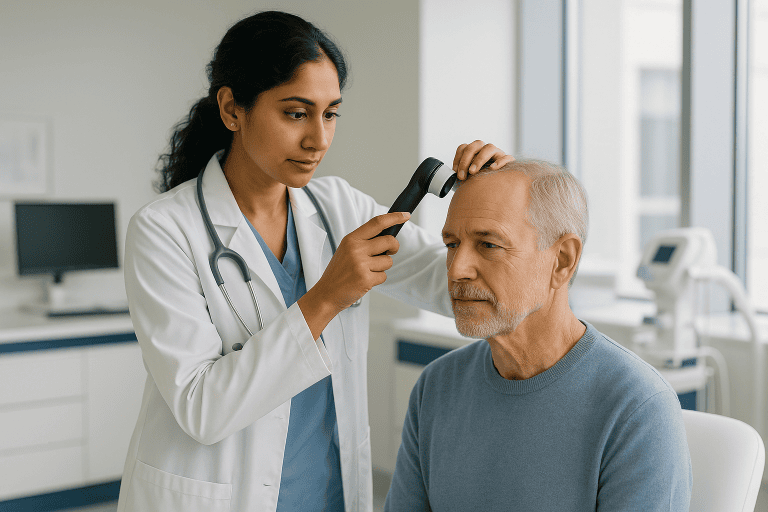
Not all hair loss is the same, so diagnosis comes first. During assessment, the physician reviews your medical history, family history of hair loss, current medications, nutritional factors, recent illness, hormonal changes and the timing of your symptoms. The scalp and hair are then examined to establish the pattern of thinning, the condition of the scalp, and whether there is evidence of inflammation, scarring or miniaturisation of individual hairs.
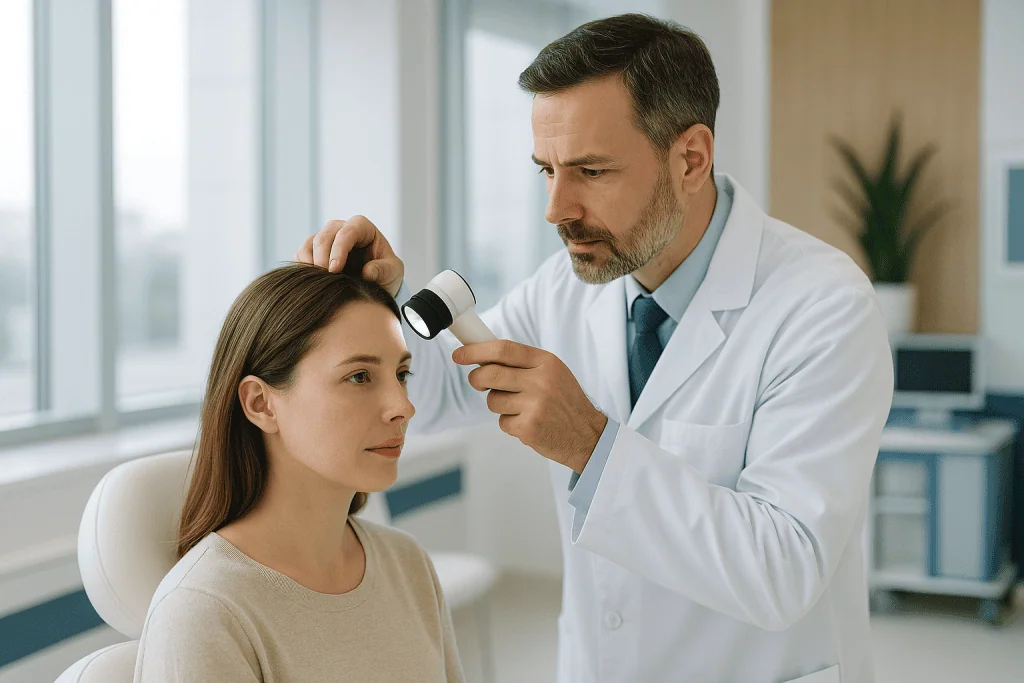
Further evaluation is added when needed. Blood tests can identify contributing problems such as iron deficiency, thyroid disease, vitamin deficiencies or hormonal imbalance. Trichoscopic scalp analysis, magnified examination of the scalp, can assess follicle density, variation in hair shaft diameter and scalp health with more precision. If the diagnosis remains unclear, dermatologic evaluation may be needed before any injections are planned.
PRP is not the first choice for everyone. Someone with advanced baldness and little remaining follicular activity is usually better assessed by a dedicated hair transplant team, because supporting follicles that no longer exist achieves nothing. Active scalp infection, certain platelet or blood disorders, uncontrolled medical problems and some blood-thinning medicines can also make a person unsuitable until those issues are addressed, and any decision about medication rests with the doctor treating you, never with the clinic offering the injections. The best results tend to come when the treatment is matched to the right diagnosis and started before thinning becomes too advanced.
Conditions and Indications PRP May Address
Androgenetic alopeciamale or female pattern hair loss, is the most common indication. It is the most frequent cause of progressive thinning and generally responds best when treatment begins while follicles are still producing hair, even if those hairs have become fine and weak.
Telogen effluvium, a form of diffuse shedding triggered by stress, illness, surgery, childbirth or nutritional change, is a second setting in which PRP is sometimes considered. Here the sequence matters: the underlying trigger should be identified and addressed first, with PRP reserved for cases where shedding is prolonged or recovery is incomplete.
Around hair transplantation, some physicians use PRP as a supportive treatment, to optimise scalp condition before surgery, to support the native hairs surrounding transplanted areas, or to assist recovery afterwards. Its exact role varies by patient and by the overall restoration strategy, and it applies to modern techniques such as FUE hair transplant and DHI hair transplant alike.
Thinning eyebrows or other localised areas of reduced density can also be considered, although suitability depends heavily on the cause of the loss in that area.
PRP is usually less effective where there is extensive scarring alopecia, longstanding complete follicle loss, or inflammatory scalp disease that needs its own treatment first. Hair loss caused by repeated pulling is a different problem again: trichotillomania is a behavioural condition, and injections do not address its cause. Because hair loss can also signal a broader medical issue, the indication for PRP should always rest on diagnosis rather than appearance alone.
How a PRP Injection Session Is Performed
A PRP injection session is carried out in an outpatient setting and does not require hospitalisation. Although the session itself is relatively short, the process is more deliberate than many patients expect. Each step exists to protect safety, comfort and consistency, and skipping steps is usually a sign of a rushed service rather than an efficient one.
Before the procedure
Treatment begins with consultation and scalp assessment. The physician confirms the diagnosis, reviews your medical history, and takes standardised photographs to document the baseline. This matters more than it sounds: changes in hair density develop gradually, and memory is a poor instrument for judging them months later. You may be given simple preparation instructions, such as staying well hydrated on the day. The physician also reviews your medicines and supplements and advises whether anything needs adjusting beforehand: a decision that belongs to your treating doctor, not to you alone. If there are concerns such as a low platelet count, active infection, scalp inflammation or an untreated medical cause of hair loss, these are dealt with first.
Blood collection and PRP preparation
On the day of treatment, a small amount of blood is drawn from a vein in your arm, exactly as for a routine laboratory test. The sample goes into a processing system that spins it at controlled speed, separating its components so the platelet-rich portion of the plasma can be isolated from the red blood cells and other elements. The aim is a preparation with a higher concentration of platelets than whole blood carries. The exact formulation varies with the clinical protocol and your individual characteristics, and in a structured medical setting the preparation follows defined handling standards designed to protect sterility and consistency from draw to injection.
Scalp preparation and the injections
Once the plasma is ready, the treatment itself follows a set sequence:
- The scalp is cleaned and the areas of thinning are mapped against the baseline photographs.
- Comfort measures are applied where needed: a topical numbing agent, cooling, or both, depending on the area and the physician’s approach.
- The prepared plasma is drawn up into fine syringes.
- A series of small, evenly spaced injections is placed across the thinning zones, directed into areas where follicles are still present.
- You are observed briefly, given aftercare instructions, and go home the same day.
The session is methodical rather than rushed. The goal is not simply to place fluid under the skin but to treat the relevant scalp zones in a clinically precise pattern. In some treatment pathways, PRP is combined with other non-surgical strategies when indicated; whether it is used alone or as part of combination therapy depends on the diagnosis, the degree of thinning, age, hormonal influences and previous treatments.
Will the injections hurt?
Most people find the discomfort manageable rather than severe. The scalp is a sensitive area, and each injection produces a brief sting or pressure. Topical numbing and cooling reduce this considerably, and any tenderness afterwards is usually short-lived. Sensitivity varies from person to person, so tell the physician if a previous session was harder to tolerate than expected: the comfort measures can be adjusted.
How long does a session take?
The treatment itself often takes under an hour. Total appointment time is longer once consultation, photography, scalp assessment and numbing are included. Because the procedure is minimally invasive, you normally leave the clinic shortly after it finishes. Bear in mind that PRP is not a one-time event: most protocols involve an initial series of sessions followed by maintenance at intervals set by the physician according to your response. The schedule follows the natural rhythm of the hair cycle, not the calendar of impatience.
Technology used and why it matters
Although non-surgical, PRP relies on several kinds of medical technology. Blood processing systems separate and concentrate the plasma in a controlled, repeatable way. Trichoscopy and other magnified scalp imaging document follicle density and shaft diameter at baseline and at review. Standardised clinical photography allows objective comparison over time. Careful injection technique and modern outpatient protocols round out the picture. For you, this matters because hair restoration is evaluated over months, not days: without reliable documentation, nobody, including you, can honestly say whether the treatment is working.
Recovery After PRP Injections
Recovery is generally straightforward. The scalp may feel tender, tight or mildly swollen for a short time, and small pinpoint marks at the injection sites usually settle quickly. Most patients return to work and everyday activities the same day or the next day, depending on personal comfort.
You are usually advised to leave the scalp unwashed for a brief period after treatment, and to postpone intense exercise, saunas and other heat exposure, and harsh hair products for a short time. The specific instructions vary between clinics, and following them matters: PRP works within a slow biological process, and sensible aftercare reduces irritation while the scalp settles.
Visible change takes time. Reduced shedding is often the first thing patients notice; improvements in thickness, texture or density tend to emerge gradually over several months. Because early progress is subtle, follow-up with photographs and scalp reassessment is the honest way to determine whether the treatment is helping and whether the plan needs adjusting.
| Time Period | What Patients Can Expect |
|---|---|
| Day 1 | Mild scalp tenderness, pinpoint redness, or a sense of tightness. Most patients resume normal activities. |
| First week | Any minor swelling or sensitivity usually settles. Hair appearance typically looks unchanged at this stage. |
| First month | Some patients begin to notice reduced shedding, though visible density changes are still usually limited. |
| Months 3 to 6 | Gradual changes in hair quality, thickness or fullness may become more noticeable if the treatment is working. |
| Longer term | Maintenance planning, follow-up photographs and reassessment determine whether continued sessions or combined treatment are appropriate. |
How long can PRP injections last?
The effect is not permanent. In pattern hair loss the underlying process is ongoing, so any benefit is maintained with periodic top-up sessions rather than achieved once and kept forever. The maintenance interval is individual and is set according to how your scalp responds, which is another reason structured follow-up matters. If you stop treatment and the underlying condition is progressive, thinning tends to resume its previous course over time. Nobody can honestly quote a fixed duration in advance; what a good clinic can do is review your photographs at each stage and agree the schedule with you based on what is actually happening on your scalp.
What Is the Downside of PRP Injections?
The most important downside is uncertainty of response: PRP helps some patients clearly, others modestly, and some not at all, and this cannot be predicted with certainty beforehand. Other downsides are practical rather than dangerous, but they deserve to be stated plainly:
- Multiple sessions plus maintenance mean a real commitment of time and cumulative expense.
- Temporary tenderness, swelling, pinpoint bleeding, occasional bruising or a short-lived headache can follow a session.
- It is unsuitable for long-standing bald areas, scarred scalp and untreated inflammatory scalp disease.
- Preparation systems and protocols vary between providers, so quality is not uniform, and a poorly selected candidate is unlikely to benefit however good the technique.
- Results build slowly, which tests patience and makes objective follow-up essential.
Because the plasma is your own, an allergic reaction to the injected material itself is not a concern in the way it would be with donor products. Infection at the injection sites is possible, as with any injection, but uncommon when sterile technique and proper handling standards are followed.
Why Acting Early Matters and the Risks of Delay
Hair loss usually progresses more quietly than patients realise. By the time thinning is obvious in photographs or under strong lighting, significant miniaturisation of the follicles has often already occurred. In earlier stages, those follicles may still be active enough to respond to supportive treatment; over time, some become too diminished to recover meaningful growth.
This is why timing matters with PRP. The treatment is generally more useful while follicles are weakened but not permanently inactive. Waiting too long reduces the likelihood that non-surgical therapy alone will produce visible improvement, and shifts the realistic discussion towards transplantation or cosmetic camouflage rather than follicle support.
Delay matters for a second reason: hair loss is not always purely cosmetic. In some patients it reflects anaemia, thyroid dysfunction, nutritional deficiency, hormonal imbalance, inflammatory scalp disease, or the effects of illness or medication. Postponing evaluation can mean missing the chance to identify and correct a treatable cause.
Finally, waiting tends to feed fragmented self-treatment. Many people arrive at consultation having tried multiple products without a diagnosis, sometimes combining therapies that are unnecessary, ineffective or irritating to the scalp. A timely assessment replaces that uncertainty with a rational, sequenced plan.
Potential Benefits of PRP for Hair Loss
What you can realistically expect depends on the underlying diagnosis and the condition of your follicles when treatment begins. In suitable candidates, the benefits fall into a few clear categories.
| Benefit | What It Means for You |
|---|---|
| Non-surgical approach | No incisions, no general anaesthesia, and little interruption to daily routines. |
| Uses your own blood components | The treatment relies on autologous plasma, which avoids exposure to donor material. |
| May reduce shedding | Some patients notice less ongoing hair fall before they see visible thickening. |
| Can support hair thickness and density | In suitable candidates, weakened hairs may become stronger and appear fuller over time. |
| Can complement other therapies | PRP may be used alongside medical treatment plans or around hair transplantation when appropriate. |
| Minimal downtime | Most patients return quickly to work, travel and routine activities after the session. |
What Influences the Outcome
Several factors shape whether PRP delivers a result worth having. The first is the diagnosis: pattern hair loss with active but weakened follicles is a more suitable indication than advanced baldness with longstanding follicle loss. The second is timingearlier intervention offers more opportunity to preserve and strengthen existing hair.
Scalp health matters too. Inflammation, infection, heavy scaling or untreated dermatologic conditions can interfere with progress and may need separate treatment first. So do overall health factors: iron status, thyroid function, nutritional deficiencies and hormonal balance all influence shedding and regrowth potential, which is why blood tests sometimes precede injections.
The treatment plan itself is another variable. PRP tends to work best inside a structured protocol, an initial series, defined review points, and maintenance, rather than as an isolated one-off session with no follow-up. Some patients benefit from combining PRP with evidence-based medical therapies, depending on diagnosis and tolerance, and consistency with appointments and aftercare makes a measurable difference.
Finally, expectations. The realistic goal is often improvement, stabilisation or slowing of progression rather than a dramatic transformation. Patients who understand that hair restoration is gradual and cumulative judge their own progress more fairly. Photographs taken under similar lighting and styling conditions help distinguish subtle real change from day-to-day variation.
How PRP Compares with Other Hair Restoration Options
PRP is one tool among several, and it helps to know where it sits. On the non-surgical side, options include medical therapies prescribed by a dermatologist, laser hair therapy, and broader non-surgical hair restoration programmes that combine several approaches. PRP differs from these in being autologous and injection-based: it uses your own biology, delivered in sessions, rather than a device or a daily product.
On the surgical side sits hair transplantation, which redistributes healthy follicles from a donor area into thinning or bald zones. For advanced loss, transplantation is often the more logical route, because it moves living follicles rather than trying to revive absent ones. Put simply: a transplant moves hair, while PRP supports hair: they solve different problems, which is why they are not interchangeable and why one cannot be judged against the other on price alone.
Combining the two is common in practice. PRP may be used before or after a transplant to support the native hairs around the transplanted zone and to assist the scalp during recovery. Whether that combination makes sense for you depends on the surgical technique, the state of your native hair and the surgeon’s overall plan.
Whichever direction you lean, the sequence should be the same: diagnosis first, then treatment selection. Choosing a procedure before understanding the cause of the loss is the most common, and most avoidable, mistake in hair restoration.
Cost and Insurance: What to Expect
What is the average cost of a PRP injection?
There is no single meaningful average, because the price of a PRP injection reflects several variables rather than one fixed service. What you pay depends on the number of sessions in your plan, the preparation system used, the size of the area treated, the experience of the clinician, the clinical setting: a hospital-based service is organised differently from a walk-in aesthetic studio, and whether PRP is combined with other therapy. The sensible comparison is the cost of the whole plan, including assessment, photography and follow-up reviews, rather than a single-session headline price. A very low quoted price sometimes reflects a minimal protocol: injections without diagnosis, documentation or review, which makes it impossible to know whether the treatment is doing anything at all.
Is PRP for hair loss covered by insurance?
Usually not. Most insurers class PRP for pattern hair loss as an elective or cosmetic treatment and exclude it from cover. The investigation of a suspected underlying medical cause, thyroid disease or anaemia, for example, may be handled differently, since those tests address a health question rather than a cosmetic one. Policies vary considerably between countries and insurers, so the only reliable answer comes from your own policy documents or from your insurer directly, ideally before you commit to a treatment plan.
How Acibadem Approaches PRP for Hair Loss
At Acibadem, PRP for hair loss sits within a hospital-based medical framework rather than being offered as a standalone cosmetic service. Physicians who evaluate scalp and hair disorders take the differential diagnosis seriously: they examine the pattern and duration of loss, consider whether endocrine, dermatologic, nutritional or systemic factors may be involved, and bring in related specialists when the workup requires it. This matters most when the diagnosis is uncertain or more than one cause is contributing.
Technology plays a practical rather than decorative role. Blood processing systems, scalp assessment methods and standardised medical photography support precise candidacy decisions, objective tracking of response, and adjustment of the plan when the evidence calls for it, rather than guesswork dressed up as reassurance.
The treatment philosophy is equally practical. Not every patient with hair loss should undergo PRP, and not every candidate needs the same schedule or combination of therapies. A personalised plan weighs the pattern and duration of loss, age, scalp findings, medical history and future goals. For some patients PRP is a sensible first step; for others it works as an adjunct to medical therapy or transplantation; for some it is simply not the most useful option, and saying so plainly is part of good care.
Moving Forward with More Clarity
If thinning hair or ongoing shedding concerns you, early evaluation makes every subsequent decision easier. A PRP injection can be a meaningful non-surgical option for suitable patients, particularly when follicles are still active and the diagnosis is clear. The real question is rarely whether the procedure exists, but whether it fits your type of hair loss, your expectations and your longer-term restoration plan. A structured consultation, careful history, scalp examination, honest discussion of the options and their limits, is usually the point at which a confusing, emotional subject becomes a manageable plan.
Preparation
- A doctor evaluates your scalp, hair loss pattern, and medical history to decide if PRP is appropriate. Blood-thinning medicines, smoking, and alcohol may need to be limited before treatment based on medical advice. Arrive with a clean scalp and avoid harsh hair products on the day of the procedure.
Aftercare
- Mild tenderness, redness, or swelling of the scalp can occur for a short time after treatment. Patients are usually advised to avoid washing the hair, intense exercise, and heat exposure for the first day or two. Multiple sessions may be recommended, followed by maintenance treatments based on response.
Frequently Asked Questions
What is PRP for hair loss and how does it work?
PRP stands for platelet-rich plasma, a treatment that uses a small sample of your own blood. After processing, the platelet-rich part is injected into areas of thinning hair on the scalp. These platelets contain growth factors that may support hair follicles, improve scalp circulation, and encourage thicker, healthier hair growth. PRP is commonly used for early-stage hair thinning and can also complement other hair restoration treatments. Acibadem specialists provide a personalized assessment to determine suitability.
Who is a good candidate for PRP hair treatment?
PRP is often most suitable for men and women with mild to moderate hair thinning, especially androgenetic hair loss. It may also help patients noticing increased shedding or reduced hair density. The treatment works best when hair follicles are still active, so timing matters. People with certain blood disorders, scalp infections, or uncontrolled medical conditions may not be ideal candidates. At Acibadem, hair restoration specialists review your scalp, hair pattern, and medical history before recommending a treatment plan.
Does PRP for hair loss really work?
PRP can be helpful for many patients, particularly when hair loss is detected early and treated consistently. Results vary because hair loss has different causes, including genetics, hormones, stress, and nutritional factors. PRP is designed to stimulate existing follicles rather than create new ones where follicles are no longer active. Many patients notice reduced shedding first, followed by gradual improvement in hair thickness. A personalized assessment at Acibadem can clarify whether PRP alone or a combined approach is more appropriate.
How many PRP sessions are usually needed for hair loss?
Most treatment plans involve a series of initial sessions followed by maintenance treatments, but the exact number depends on your hair loss pattern, age, scalp condition, and goals. Some patients start with monthly sessions for a few months, then continue at longer intervals. Others may need a combined strategy with medical therapies or hair transplantation. Because there is no single plan that fits everyone, Acibadem specialists tailor the schedule after evaluating the degree and cause of your hair thinning.
When will I see results after PRP hair treatment?
PRP results are gradual, not immediate. Many patients begin by noticing less shedding within the first few months, while visible improvement in thickness and texture may take longer. Hair grows in cycles, so patience is important. The response can differ from person to person depending on the cause of hair loss and how advanced it is. Regular follow-up is useful to monitor progress. At Acibadem, specialists explain realistic timelines and adjust your plan based on your response.
Is PRP hair treatment painful?
Most patients tolerate PRP well. The procedure involves blood collection and multiple small injections into the scalp, so you may feel brief discomfort, pressure, or stinging. A local numbing method may be used to make the session more comfortable, depending on the treatment area and your pain sensitivity. Any soreness afterward is usually mild and temporary. If you are anxious about discomfort, the team at Acibadem can explain comfort measures and what to expect during each step.
Are there any side effects or risks with PRP for hair loss?
Because PRP uses your own blood, the risk of allergy is low. Common temporary effects include mild redness, tenderness, swelling, pinpoint bleeding, or a tight feeling on the scalp after injections. These usually settle quickly. As with any injection-based procedure, there is a small risk of infection or bruising if aftercare is not followed. A careful medical review is important, especially if you have a bleeding disorder or take blood-thinning medication. Acibadem specialists assess safety before treatment.
How long does a PRP session for hair loss take, and is there downtime?
A PRP session is usually relatively quick and often completed within about an hour, including preparation, blood draw, processing, and scalp injections. Most patients return to normal daily activities the same day. However, you may be advised to avoid washing your hair for a short period, intense exercise, saunas, or harsh scalp products right after treatment. Downtime is minimal, which makes PRP convenient for international patients. Acibadem provides detailed aftercare instructions based on your treatment plan.
Can PRP be combined with hair transplant surgery or other hair loss treatments?
Yes, PRP is often combined with other hair restoration options. It may be used alongside medical treatments, supportive scalp care, or hair transplant procedures, depending on your needs. In some cases, PRP is recommended before or after transplantation to support scalp health and existing hair quality. Combination therapy can be especially useful when hair thinning has several contributing factors. Acibadem hair restoration specialists design personalized treatment plans so PRP works as part of a broader strategy when appropriate.
Why do international patients choose Acibadem in Turkey for PRP hair loss treatment?
International patients often look for experienced specialists, modern medical facilities, clear communication, and coordinated care when traveling for treatment. Acibadem offers a multidisciplinary approach in a hospital environment, which can be reassuring for patients seeking safe and structured hair restoration care. Your treatment plan is based on a personalized assessment rather than a one-size-fits-all package. For patients traveling to Turkey, support with planning, consultation, and follow-up can also make the process smoother and more comfortable.
Medically reviewed by the Acıbadem International Medical Board September 13, 2026
See our medical review board →
Update history
- PublishedJuly 19, 2026
- Medical review approvedSeptember 13, 2026
- Last content updateSeptember 12, 2026
From the Acibadem Blog
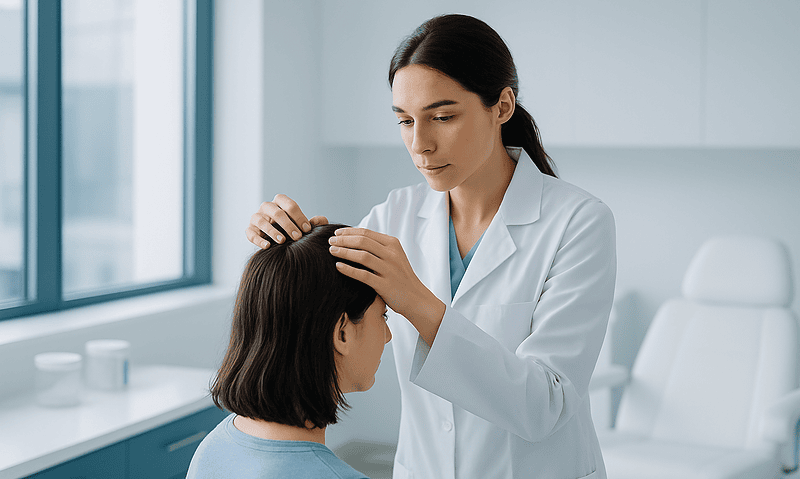
PRP for Hair Loss Side Effects: Normal Scalp Tenderness vs Signs to Call Your Clinic About
Common PRP for hair loss side effects are mild and short-lived: scalp tenderness, pinpoint bleeding, redness, slight swelling and a tight or bruised feeling…