Restorative Dentistry
Restorative dentistry repairs damaged, decayed, or missing teeth using fillings, crowns, inlays, onlays, bridges, and implant-supported restorations to restore chewing function, comfort, and appearance.
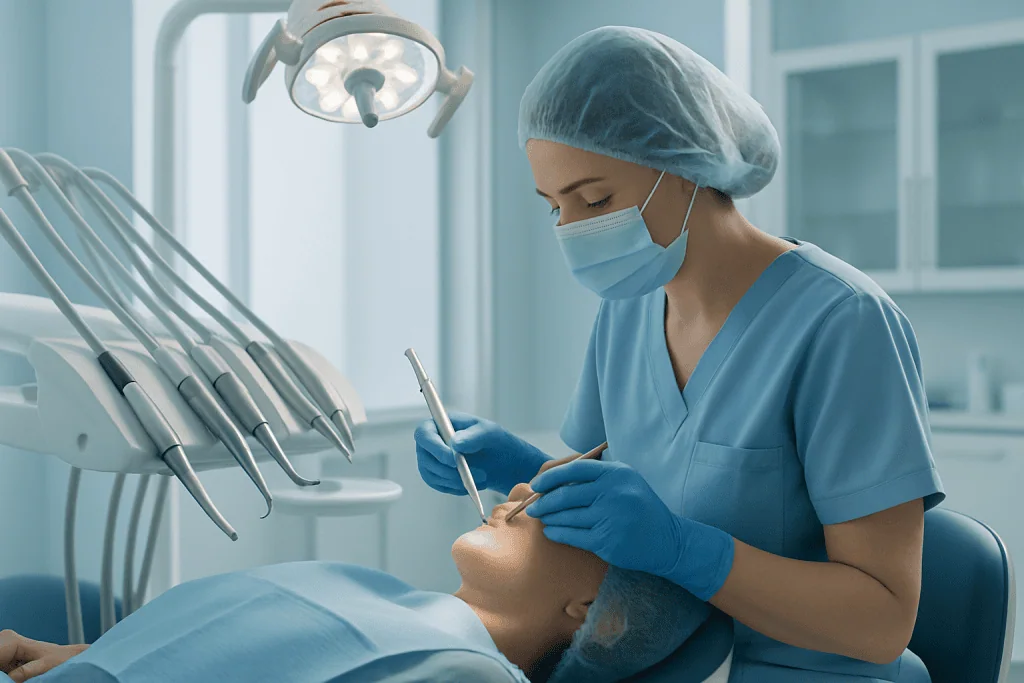
Quick answer
Restorative dentistry repairs teeth that are decayed, cracked, worn or missing. Depending on how much tooth structure is affected, treatment may involve a filling, an inlay or onlay, a crown, a bridge or an implant-supported restoration. The aim is to restore comfortable chewing, protect the remaining tooth and keep the bite stable, while preserving as much healthy natural tooth as possible.
What Is Restorative Dentistry?
Restorative dentistry is the area of dental care that repairs damaged, decayed, worn or missing teeth. It covers everything from a small tooth-coloured filling to inlays, onlays, crowns, bridges and implant-supported restorations, and it is intended for anyone whose teeth no longer feel, work or look the way they should. The right option depends on how much of the tooth is affected, where the tooth sits in the mouth, how much chewing force it must tolerate, and whether the tooth root and surrounding bone are healthy.
When a tooth breaks, a filling fails or decay progresses, the concern is rarely only cosmetic. Most people worry about pain, infection, the possibility of losing the tooth, the complexity of treatment and whether the result will feel natural. Restorative dentistry addresses the practical needs of daily life: biting, chewing, speaking, smiling and maintaining oral health over time. A well-planned restoration is not simply a repair. It takes account of the tooth itself, the bite, the gums, the jaw, neighbouring teeth, appearance and long-term maintenance. The purpose of every option, from the smallest filling to a full-arch prosthesis, is the same: to restore dental function and protect what remains.
For a small cavity, a direct filling placed and shaped in the mouth during a single visit may be enough. For larger defects, an inlay or onlay may provide better strength and fit, because it is made outside the mouth to replace a specific part of the tooth more precisely. When a tooth has lost significant structure, a crown may be recommended to cover and protect what remains. When one or more teeth are missing altogether, a fixed bridge or an implant-supported crown or bridge can close the gap.
Modern restorative dentistry also considers appearance. Materials are chosen not only for durability but for how they reflect light, match natural tooth colour and blend with the rest of the smile. In visible areas, ceramic and composite materials can often look convincingly natural. In high-force areas at the back of the mouth, material strength, bite stability and restoration design matter more than shade.
Restorative dentistry is also inseparable from prevention. A restoration repairs existing damage, but the long-term result depends on controlling whatever caused that damage: decay risk, gum disease, grinding, acid erosion, dry mouth, an unbalanced bite or inadequate oral hygiene. A good restorative plan is therefore both corrective and protective — it fixes the problem in front of you and reduces the chance of the same problem returning.
What does restoration mean in dentistry?
In dentistry, a restoration is anything a dentist places to rebuild lost tooth structure or replace a missing tooth. A filling is a restoration. So is an inlay, an onlay, a crown, a bridge, a denture or an implant-supported crown. Dentists broadly divide restorations into two groups. Direct restorations, such as composite fillings, are placed and shaped inside the mouth in one appointment. Indirect restorations, such as crowns, inlays, onlays and bridges, are manufactured outside the mouth — in a dental laboratory or by an in-clinic milling system — and then fitted and bonded or cemented in place. The distinction matters because it affects how many visits you need, how precisely the restoration can be made, and how it behaves under chewing forces over the years.
What is basic restorative dentistry?
Basic restorative dentistry usually refers to the simpler, more common repairs: fillings, small bonded repairs of chips, and the replacement of worn or leaking fillings. The term appears frequently in dental insurance documents, which often separate basic restorative work (typically fillings and simple extractions) from major restorative work (crowns, bridges, dentures and implant-supported restorations). Clinically, the boundary is not rigid — a deep filling on a heavily worn tooth may be technically harder than a routine crown — but the distinction is a useful shorthand for how extensive, and how staged, treatment is likely to be.
What is another name for restorative dentistry?
Restorative dentistry is sometimes called operative dentistry, particularly when it refers to direct fillings and the repair of individual teeth. Where it involves replacing missing teeth with crowns, bridges, dentures or implant-supported prostheses, it overlaps heavily with prosthodontics, the dental speciality dedicated to prosthetic tooth replacement. In everyday practice, many general dentists provide restorative care themselves and refer complex cases to prosthodontists or other specialists. The names differ; the goal — rebuilding teeth so they work — does not.
Who May Need Restorative Dental Treatment?
Restorative dental treatment may be needed by anyone with a damaged, decayed, worn, failing or missing tooth — and the trigger is not always pain. Some patients notice a chipped edge, a visible cavity, a dark line around an old crown, or sensitivity to cold and sweet foods. Others develop discomfort on chewing, food trapping between teeth, a rough edge that irritates the tongue, or swelling near the gum. Many have no symptoms at all: the problem is found during a routine examination or on digital imaging, often beneath an old filling that looks intact from the outside.
Signs that commonly lead to restorative treatment include toothache, temperature sensitivity, a cracked or broken tooth, a lost filling, worn biting surfaces, bleeding around a defective restoration, a persistent bad taste or breath odour related to decay, and difficulty chewing on one side. Missing teeth deserve particular attention. A gap changes chewing patterns, can affect speech, and allows neighbouring teeth to drift and opposing teeth to over-erupt into the space, which complicates later treatment.
Diagnosis begins with a clinical examination. The dentist evaluates each tooth, the gums, bite alignment, jaw movement, existing fillings and crowns, and any areas of wear, mobility or fracture. Digital X-rays are used to assess decay between teeth, bone levels, root condition, hidden cracks, infection and the fit of existing restorations. In more complex cases, three-dimensional imaging can help evaluate bone volume, implant options, impacted teeth or anatomy near nerves and sinuses.
Patients who typically benefit include those with untreated cavities, fractured teeth, failing restorations, significant tooth wear, missing teeth, old dental work that no longer fits, or teeth weakened after root canal treatment. It is also common for people planning cosmetic dentistry to need restorative care first: the foundation of a smile has to be healthy and structurally sound before aesthetic improvements are worth making. For patients travelling for care, restorative dentistry is often most useful when several problems have accumulated over time and a single coordinated plan is needed — urgent issues first, then the remaining work organised into a realistic schedule that accounts for healing time, laboratory work and follow-up.
What does a restorative dentist do?
A restorative dentist diagnoses damaged and missing teeth and rebuilds them — removing decay, placing fillings, designing and fitting inlays, onlays, crowns and bridges, and restoring dental implants once they have healed. Just as importantly, a restorative dentist decides what not to do: whether a tooth can be saved or should be replaced, whether root canal treatment is needed before a crown, whether gum treatment should come first, and whether a conservative repair will hold or a stronger restoration is justified. In complex cases the restorative dentist acts as the planner, coordinating endodontic, periodontal, surgical and orthodontic input so that the final restorations sit on a stable foundation rather than treating one tooth in isolation.
Conditions and Indications Restorative Dentistry Addresses
Restorative dentistry addresses a broad range of conditions, from early structural damage to complex tooth loss. The common thread is that a tooth or a bite needs to be rebuilt, protected or replaced to restore health and function.
Tooth decay is the most frequent indication. When bacteria and acids damage enamel and dentine, the decayed tissue must be removed and the tooth restored — with a filling, inlay, onlay or crown depending on how much structure is lost. If decay reaches the nerve of the tooth, root canal treatment is usually needed before the final restoration can be placed.
Cracked, chipped or fractured teeth are another major reason for restorative care. A small chip may be repaired with bonding or a conservative filling. A larger crack, especially one running across a chewing surface, may need an onlay or crown to hold the tooth together and reduce the risk of further breakage. If a crack extends deep into the root, options narrow considerably — which is one reason early evaluation matters so much.
Worn teeth can result from grinding, clenching, acid reflux, acidic diets, ageing or bite imbalance. Restorative treatment can rebuild worn edges and surfaces, but the underlying cause has to be managed too. A night guard, bite adjustment, medical evaluation for reflux, or changes in diet and oral hygiene may all form part of the long-term plan; rebuilding worn teeth without addressing the cause tends to produce restorations that wear or fracture in turn.
Missing teeth can be restored with a bridge or an implant-supported restoration. A traditional bridge uses the neighbouring teeth for support; an implant-supported crown or bridge is anchored to dental implants placed in the jawbone. The choice depends on bone availability, gum health, the condition of the neighbouring teeth, medical history, treatment goals and timeframe. Where bone volume is insufficient, dental bone grafts may be considered as part of implant planning. If a tooth has recently been removed, the timing of implant placement is itself a planning decision — the guide on dental implants after tooth extraction explains how that sequence typically works.
Failing dental work is the final large category. Old fillings can leak, fracture or allow decay to recur underneath. Crowns can loosen, wear, chip or develop decay at the margin. Bridges can fail if their supporting teeth become compromised. Replacing or redesigning these restorations protects the remaining teeth and reduces the risk of infection and eventual tooth loss.
Types of Dental Restoration
A dental restoration is any repair or replacement placed on, in or instead of a tooth, and the main types form a spectrum from most conservative to most extensive. Choosing between them is less about preference and more about how much healthy tooth remains and what the tooth has to withstand.
Fillings
Fillings are the most conservative dental treatment for decay and small defects. After the damaged tissue is removed, a tooth-coloured composite resin is placed directly into the cavity, shaped, hardened with a curing light and polished. Composite bonds to the tooth, which allows relatively small preparations and a natural appearance. Fillings suit small to moderate cavities; when a defect becomes large, a filling alone may leave the remaining tooth walls too thin to survive chewing forces.
Inlays and onlays
Inlays and onlays are indirect restorations made outside the mouth — usually from ceramic — and then bonded into or onto the tooth. An inlay fits within the contours of the biting surface; an onlay extends over one or more cusps. They occupy the middle ground between a filling and a crown: stronger and more precisely contoured than a large filling, but requiring less removal of healthy tooth than a full crown.
Crowns
A crown covers the entire visible part of a tooth. It is used when decay, fracture or previous treatment has left too little sound structure for a filling or onlay, and commonly after root canal treatment on back teeth, which become more fracture-prone. The tooth is shaped, the crown is fabricated to fit precisely, and it is then cemented or bonded in place so that chewing forces are distributed across the whole restoration rather than concentrated on weakened tooth walls.
Bridges
A bridge replaces one or more missing teeth using crowns on the neighbouring teeth (or on implants) as anchors, with an artificial tooth suspended between them. A well-designed bridge restores chewing and appearance, but it makes the supporting teeth responsible for extra load, and its design must allow cleaning underneath — hygiene access is one of the main determinants of how long a bridge lasts.
Implant-supported restorations
Implant-supported crowns and bridges attach to dental implants integrated in the jawbone, so they do not rely on neighbouring teeth for support. The restorative phase — designing and fitting the visible crown or bridge — comes after the implant has healed or according to the specific protocol selected. Implant restorations can replace a single tooth, several teeth or a full arch, but they demand adequate bone, healthy gums and a carefully controlled bite.
How Restorative Dental Treatment Is Performed
Restorative treatment proceeds in stages, beginning with diagnosis and planning. The exact sequence depends on how many teeth are involved and how complex the case is, but the process is designed to be structured, transparent and tailored to the individual mouth.
Consultation and diagnostic assessment
The first step is a detailed consultation. The dentist listens to your concerns, symptoms, previous dental history and expectations. For patients travelling for treatment, this discussion also covers available time, preferred treatment pace, medical conditions, current medications and any existing imaging or dental records worth reviewing.
A comprehensive oral examination follows: teeth, gums, bite, jaw joints, soft tissues, existing restorations and any areas of sensitivity or mobility. Digital X-rays identify decay, bone levels, root anatomy and problems invisible to the naked eye. In selected cases, three-dimensional imaging is recommended for implant planning, surgical assessment or complex anatomy. Intraoral scanning can create accurate digital models of the teeth, in many situations without conventional impression material.
When a case is complex, planning involves more than one specialist. The restorative dentist may coordinate with an endodontist for root canal treatment, a periodontist for gum and bone health, an oral and maxillofacial surgeon for surgical needs, or an orthodontist when tooth position affects the final result. This multidisciplinary approach exists for a simple reason: restorations only last when they are built on a healthy, stable foundation.
Treatment planning and material selection
After diagnosis, the options are laid out plainly. A small restoration may need only one appointment; larger or multiple restorations need a staged plan. The dentist weighs which teeth can be preserved, which restorations are most appropriate, and whether any supporting treatment — gum therapy, root canal treatment, extraction — must come first.
Material selection is a genuine decision, not an afterthought. Tooth-coloured composite resin suits smaller fillings and repairs. Ceramic materials are often recommended for crowns, inlays, onlays and visible restorations because they combine strength with a natural appearance. Other materials may be considered for areas under heavy chewing force or for specific clinical needs. The choice rests on function, aesthetics, tooth location, remaining structure, bite forces and your own preferences — there is no single material that is right for every tooth.
Digital tools support precision throughout. Intraoral scanners capture tooth shape and bite relationships; digital shade analysis and clinical photography help with colour matching and communication with the laboratory; computer-assisted design and manufacturing supports accurate fit. These are the working methods of digital dentistry, and they are used because they help — they support clinical judgement, they do not replace it.
Which noble metal is used for cast restorations in dentistry?
The noble metal traditionally used for cast restorations in dentistry is gold. Gold alloys — often combined with other noble metals such as platinum and palladium — have a long history in cast crowns, inlays and onlays because they resist corrosion in the mouth, adapt precisely to the prepared tooth and are gentle on opposing enamel. Today, tooth-coloured ceramics have replaced gold in most visible positions, but cast gold restorations are still used in some situations, particularly on back teeth under heavy load where appearance matters less than durability. If you have older gold work that is functioning well, it does not automatically need replacing; sound existing restorations are generally left alone.
Preparation for the procedure
Preparation depends on the restoration. For fillings, inlays, onlays and crowns, local anaesthesia is typically used to keep you comfortable while the dentist removes decay, old restorative material or weakened tooth structure, then shapes the tooth to support the planned restoration. When a tooth has deep decay or infection, root canal treatment is performed before the final restoration. Patients who find dental treatment difficult can discuss additional comfort options, including sedation dentistry, at the planning stage.
If a crown, inlay, onlay or bridge is being made by a laboratory, an impression or digital scan is taken after the tooth is prepared, and a temporary restoration protects the tooth while the final piece is made. You will be given instructions about eating, cleaning and protecting the temporary. Depending on the clinical situation and the technology available, same-day fabrication is possible for some restorations; in other cases, laboratory fabrication is preferred for detailed customisation.
For implant-supported restorations, the restorative phase follows implant integration with the bone, or the specific protocol chosen for the case. The dentist evaluates gum contours, implant position and bite forces before designing the final crown or bridge. Some patients wear a temporary implant restoration during healing; others wait until the final restoration is ready.
What happens during the procedure itself?
The procedure follows a predictable sequence, and knowing it in advance removes much of the uncertainty. For a direct filling, the steps are:
- The area is numbed and the decayed or damaged tissue is cleaned away.
- The cavity is shaped and conditioned so the filling material can bond.
- The composite is placed in layers, hardened and sculpted to the tooth’s anatomy.
- The bite is checked and adjusted so the restoration does not feel high, then polished.
For an inlay, onlay or crown, treatment typically spans preparation and final placement:
- The tooth is prepared under local anaesthesia and scanned or impressed.
- A temporary restoration is placed to protect the tooth.
- The final restoration is fabricated to match the scan and the planned shade.
- At the fit appointment, the dentist checks fit, contact with neighbouring teeth, bite and appearance, then bonds or cements the restoration and makes final adjustments.
A well-fitting restoration should feel stable and natural after a short adaptation period. For a bridge, the supporting teeth or implants are prepared or assessed, scans are taken, and the custom prosthesis is checked carefully for fit, bite and — critically — hygiene access, so you can clean under and around it. For implant-supported crowns and bridges, an abutment is connected to the implant and the restoration is attached with a screw-retained or cement-retained design; the bite is checked with particular care, because excessive force affects both the restoration and the implant system over time.
Typical duration and aftercare
Duration varies widely. A single filling can be completed in one visit. A crown, inlay or onlay may require one or more appointments depending on the workflow and laboratory process. A bridge usually takes multiple visits. Implant-supported restorations carry a longer overall timeline when implant surgery, bone grafting or a healing interval is part of the plan.
After most restorative procedures, local anaesthesia wears off within hours and mild sensitivity may follow for a few days, particularly after deeper fillings or crown preparation. Temporary restorations call for caution with sticky or very hard foods. After final placement, a brief adjustment period to the new bite or tooth shape is normal. A restoration that continues to feel high, loose or persistently painful, or sensitivity that does not settle, warrants a follow-up assessment rather than waiting it out.
Aftercare is unglamorous and decisive: careful brushing, cleaning between the teeth, regular check-ups and professional hygiene visits. Patients who grind or clench may be advised to wear a protective night guard. The longevity of any restoration depends not only on material and technique but on oral hygiene, bite forces, diet, gum health and routine follow-up — the parts of the equation that belong to you.
Recovery Timeline After a Tooth Restoration
Recovery after a tooth restoration depends on the type and extent of treatment, but most patients return to normal daily activities quickly after routine procedures. The table below describes a typical course; your own dentist’s instructions take precedence where they differ.
| Time Period | What Patients Can Expect |
|---|---|
| Day 1 | Numbness from local anaesthesia wears off. Mild tenderness or sensitivity can occur. Avoid chewing until sensation returns fully, and follow the instructions given for any temporary restoration. |
| First Week | Most routine sensitivity improves. The bite should begin to feel natural. A restoration that feels too high, causes sharp pain or feels loose needs assessment by the dental team. |
| First Month | Final restorations usually feel integrated into normal chewing. Oral hygiene routines, interdental cleaning and any recommended night guard use become important for maintenance. |
| Longer Term | Regular dental examinations and professional cleanings monitor margins, gum health, bite forces and restoration durability. Good home care is essential for long-term success. |
Why Acting Early Matters
Dental problems progress quietly. A small cavity enlarges until it reaches the nerve, turning a simple filling into root canal treatment or even extraction. A cracked tooth fractures further under chewing pressure. A failing crown lets decay spread underneath, hidden from view. A missing tooth gradually affects neighbouring teeth, bite balance and bone support. None of this announces itself until the treatment required has become larger.
Early treatment preserves more natural tooth structure. When damage is limited, the restoration can usually be conservative — a filling instead of a crown, a crown instead of an extraction. Delaying care tends to mean more extensive treatment, a longer timeline and a more involved recovery, and it raises the risk of pain, infection and urgent dental problems arising at inconvenient moments, including while travelling.
Prompt evaluation carries extra weight for patients with diabetes, immune system concerns, heart valve conditions, a history of head and neck radiation, or other medical factors that affect infection risk and healing. Dental infections are not sealed off from the rest of the body; significant oral inflammation can complicate broader medical care, which is why the medical history is taken seriously in restorative planning.
Acting early also makes planning easier in practical terms. Patients with a defined travel window benefit most when problems are diagnosed before they become urgent, so that appointments, imaging, laboratory work and any specialist input can be arranged efficiently — and so there is time to understand the choices rather than deciding under pressure.
Benefits of Restorative Dentistry
The benefits of restorative dentistry are both functional and personal, particularly when treatment is planned around long-term oral health rather than a single tooth in isolation.
| Benefit | What It Means for You |
|---|---|
| Improved chewing function | Restored tooth shape and stability can help you eat more comfortably and distribute biting forces more evenly. |
| Relief from sensitivity or discomfort | Treating decay, cracks or failing restorations may reduce pain triggers and protect exposed tooth structure. |
| Preservation of natural teeth | Timely restorations can help save teeth that might otherwise deteriorate further or require extraction. |
| Replacement of missing teeth | Bridges and implant-supported restorations can close gaps that affect chewing, speech and bite balance. |
| More natural appearance | Tooth-coloured materials can be selected and shaped to blend with surrounding teeth, particularly in visible areas. |
| Support for long-term oral health | A planned restoration can make teeth easier to clean, reduce food trapping and help stabilise the bite. |
Is restorative dentistry worth it?
For most people with damaged or missing teeth, yes — with an honest caveat. Untreated dental problems tend to progress, and the treatment required tends to grow with them, so a timely restoration usually means less intervention overall than a delayed one. Restored teeth also protect their neighbours: a filled cavity stops decay spreading, a crowned tooth is less likely to fracture, a replaced tooth stops the drift of the teeth around the gap. The caveat is that no restoration is permanent. Every filling, crown, bridge and implant restoration needs maintenance and may eventually need replacement, and its lifespan depends heavily on your own hygiene, diet and bite. Restorative dentistry is worth it as an investment you maintain, not a purchase you forget.
What Influences the Outcome of Restorative Dentistry?
A good restorative result depends on diagnosis, planning, technical execution and patient-related factors — and it is worth understanding each, because some are within your control.
The starting condition of the tooth is one of the most important influences. A tooth with limited decay and strong remaining structure is generally easier to restore than one with deep decay, cracks, infection or severe structural loss. This is the plainest argument for early treatment.
Gum and bone health matter equally. Restorations need healthy surrounding tissues for stability and long-term maintenance. If gum disease is present, it may need treating before or alongside restorative care. For bridges and implant-supported restorations, bone support and hygiene access are key considerations from the first planning appointment.
The bite is a major and often underestimated factor. Teeth absorb repeated forces every day. Grinding, clenching or an unbalanced bite can shorten the life of restorations or fracture them outright. In patients with heavy bite forces, material choice, restoration design and protective appliances become especially important.
Material selection must match the clinical situation. No single material is ideal for every patient or every tooth. The dentist weighs strength, appearance, remaining tooth structure, moisture control during placement, position in the mouth, the opposing teeth and your preferences. A restoration that looks beautiful but cannot tolerate the bite is not a solution; nor is an indestructible restoration in a visible position where appearance is central to your confidence.
Precision at the margins — the junction between restoration and tooth — determines much of a restoration’s fate, because poorly fitting edges trap plaque and invite recurrent decay. Careful tooth preparation, accurate scanning, good laboratory communication and meticulous placement all support better fit. Yet daily care remains essential: brushing, interdental cleaning, fluoride when recommended, sensible dietary habits and routine check-ups strongly influence how restorations perform over the years.
Medical history can shape the plan. Diabetes, dry mouth, reflux disease, osteoporosis treatment, immune suppression and certain medications can influence decay risk, healing and infection management. Share your full medical history and medication list so the dental team can plan safely and coordinate with your physicians where needed; decisions about any medication itself always rest with the treating doctor.
Finally, expectations should be realistic and openly discussed. Restorative dentistry can significantly improve function, comfort and appearance, but every restoration requires maintenance and may need replacement in the future. A transparent discussion of options, risks, benefits and alternatives lets you choose care that fits your health, priorities and timeframe.
Cost and Insurance Questions
How much does dental restoration cost?
There is no single answer, because cost depends on what your teeth actually need — which is exactly why an examination comes before any estimate. The main drivers are the number of teeth involved; whether each restoration is direct (a filling placed in one visit) or indirect (a laboratory-made inlay, onlay, crown or bridge); the material chosen; whether preparatory work such as root canal treatment, gum therapy or extraction is required first; and whether implants, and possibly bone grafting, form part of the plan. Two patients asking for “a crown” can need very different amounts of treatment underneath it. A written, itemised plan after diagnosis is the only reliable basis for comparing costs, wherever you are treated.
Does insurance cover restorative dentistry?
It depends entirely on your policy and your country’s system. Many dental insurance plans distinguish between basic restorative treatment, such as fillings, and major restorative treatment, such as crowns, bridges, dentures and implant-supported work — often with different rules, waiting periods and annual limits for each category. Some national health systems cover clinically necessary restorations while excluding purely aesthetic choices of material. Coverage for treatment received abroad varies again and is set by the insurer, not the clinic. The practical advice is unexciting but sound: read your policy’s restorative provisions before treatment, and ask your insurer in writing what is covered, at what level, and with what documentation requirements.
Restorative Dentistry at Acibadem
At Acibadem, restorative dental care is provided within the wider Dental & Oral Health services of a hospital-based healthcare network experienced in caring for patients from many countries. For patients with complex medical histories, or dental needs connected to broader health concerns, a hospital-based environment offers something a stand-alone dental office cannot: access to related medical specialties and coordinated infection control and safety processes under one system.
Treatment begins with assessment, not with a predetermined recommendation. Dentists evaluate whether a tooth should be restored, protected, treated endodontically, replaced or simply monitored — and when several options are reasonable, patients are walked through the advantages and limitations of each. Complex cases draw on specialist input: implant candidates may need evaluation of bone volume and gum tissue; a patient with failing crowns and gum inflammation may need periodontal treatment before definitive restorations; extensive tooth wear may call for bite analysis and a staged plan. This collaborative model reduces the risk of treating one tooth while missing the larger cause of the problem.
Technology supports each stage. Digital imaging reveals problems hidden beneath old restorations or between teeth; three-dimensional imaging supports implant assessment and surgical planning where indicated; intraoral scanning improves comfort and accuracy for impressions in many cases; digital design and close laboratory communication help produce restorations that fit well and match the planned appearance. These tools inform clinical judgement — they do not substitute for it.
For international patients, Acibadem International provides dedicated support in more than 20 languages, which can include help with appointment coordination, medical record sharing, treatment scheduling, interpretation and practical arrangements around travel. Clear communication matters particularly in restorative dentistry, where patients need to understand staged treatment, temporary restorations, healing intervals, laboratory timelines and maintenance instructions — and where misunderstanding any one of these can undermine the result.
Continuity is treated as part of the treatment itself. Patients who travel for care should leave with documentation of what was done, which materials were used where relevant, and what follow-up is recommended, so that a local dentist at home can take over maintenance with a full picture. Finally, the experience itself is taken seriously: dental care can be stressful, especially for people who have postponed treatment because of fear or previous difficult experiences. A respectful consultation, careful explanation and a step-by-step plan make treatment more manageable, and patients are encouraged to ask questions and understand the reasoning behind every recommendation.
Living With Your Restorations
Restorative dentistry can repair damaged teeth, replace missing tooth structure and return the comfort needed for everyday eating, speaking and smiling — whether the concern is a single broken filling or an accumulation of decay, wear and missing teeth built up over years. The essential first step is always the same: a thorough evaluation that establishes which teeth can be preserved, which restorations are appropriate, how long treatment will take and what maintenance will follow.
That last word — maintenance — deserves the final emphasis. A restoration is finished when it is fitted, but its success is decided afterwards: in daily brushing and interdental cleaning, in wearing a night guard if one is prescribed, in regular examinations where margins and gum health are checked while problems are still small. Restored teeth are not invulnerable teeth. Treated well, however, they can serve for many years, and the habits that protect them are the same habits that protect every natural tooth around them.
Preparation
- Before restorative dentistry, the dentist examines the teeth and gums and may request dental X-rays or digital scans. Existing decay, infection, bite problems, or gum disease are assessed to plan suitable restorations. Patients should share medical conditions, medications, and any allergies before treatment.
Aftercare
- After treatment, mild sensitivity or gum tenderness can occur for a few days. Patients should follow oral hygiene instructions, avoid very hard foods until advised, and attend follow-up visits to check fit and bite. Long-term results depend on regular dental check-ups and daily brushing and flossing.
Turkey vs UK, Germany & USA
Restorative dentistry costs vary according to the condition of the teeth, the materials selected, and whether treatment is combined with gum care, root canal therapy, or implant planning. Comparing destinations can help patients understand differences in care pathways, appointment logistics, and what is typically included in a treatment package.
For international patients, the overall experience depends on clinical complexity, laboratory quality, dentist expertise, hospital standards, and travel support as well as the dental treatment itself.
| Factor | Turkey | UK | Germany | USA |
|---|---|---|---|---|
| Cost drivers | Material choice, digital planning, laboratory work, and whether care is delivered in an internationally focused hospital setting influence the quote. | Costs are shaped by private practice fees, laboratory charges, and whether treatment is delivered outside public pathways. | Fees may reflect specialist involvement, technical laboratory standards, and detailed diagnostic planning. | Costs often vary widely by state, clinic setting, dentist credentials, and insurance arrangements. |
| Hospital and dentist factors | International hospitals may coordinate restorative dentistry with oral surgery, implantology, and other specialties when needed. | Care is commonly provided in private dental clinics, with referral to specialists for complex restorative or surgical needs. | Patients may choose between private clinics, specialist practices, and university-linked services depending on complexity. | Care is often delivered in private practices, specialist dental centers, or academic settings for advanced cases. |
| Accreditation and quality | Some hospital groups, including JCI-accredited providers, use structured international patient pathways and documented clinical protocols. | Quality oversight depends on national professional regulation and clinic-level governance. | Quality is supported by professional regulation, technical standards, and clinic-level protocols. | Quality oversight varies by state regulation, professional boards, and clinic accreditation where applicable. |
| Waiting times | International patient departments may help arrange diagnostics and treatment planning within a coordinated visit schedule. | Private care can reduce waiting compared with public routes, but specialist availability may still affect timing. | Timing depends on clinic availability, laboratory schedules, and whether specialist consultations are needed. | Appointment timing varies by location, provider demand, and insurance or self-pay arrangements. |
| Travel and language logistics | Packages may include airport transfers, interpreter support, accommodation guidance, and appointment coordination. | Usually simpler for local patients; international patients may need to arrange travel, accommodation, and language support separately. | International patients may need translation support and coordination between clinics, laboratories, and travel plans. | Longer travel for many international patients may add accommodation, transport, and scheduling considerations. |
| Typical package scope | A package may include dental examination, imaging, treatment planning, restorations, temporary restorations when needed, and follow-up guidance. | Quotes are often itemised by consultation, imaging, laboratory work, and each restoration. | Quotes may separate diagnostics, specialist planning, laboratory manufacturing, and clinical procedures. | Quotes commonly separate professional fees, imaging, laboratory fees, sedation if used, and follow-up care. |
What affects your final cost
- Extent of treatment: The number of damaged or missing teeth and whether bite correction is needed.
- Type of restoration: Fillings, inlays, onlays, crowns, bridges, and implant-supported restorations have different planning and laboratory requirements.
- Material selection: Composite, ceramic, zirconia, metal-ceramic, and other materials differ in aesthetics, strength, and laboratory process.
- Additional dental care: Gum treatment, root canal therapy, extraction, bone grafting, or implant surgery can change the plan.
- Technology and laboratory work: Digital scans, smile design, chairside production, and custom laboratory fabrication may influence the quote.
- Travel support: Transfers, interpretation, accommodation assistance, and coordinated appointments may affect the overall patient package.
Compare your options
Restorative dentistry includes several clinical options, and the best choice depends on tooth structure, gum health, bite, aesthetics, and long-term maintenance. Suitability is decided by a specialist after examination and imaging.
| Option | What it is | Typical use | Key considerations |
|---|---|---|---|
| Dental filling | A tooth-coloured or other restorative material placed directly into a prepared cavity. | Small to moderate areas of decay, minor fractures, or replacement of worn fillings. | Conservative and commonly completed efficiently, but durability depends on cavity size, bite forces, and oral hygiene. |
| Inlay | A custom restoration made to fit within the chewing surface of a tooth. | Moderate damage where a direct filling may not provide enough strength. | Requires precise preparation and laboratory or digital fabrication; material choice affects aesthetics and strength. |
| Onlay | A custom restoration that covers part of the tooth surface and one or more weakened cusps. | Teeth with larger damage where preserving natural tooth structure is still possible. | May be more conservative than a full crown in selected cases, but requires careful bite assessment. |
| Crown | A custom cap that covers the visible part of a tooth. | Heavily restored, cracked, root canal treated, or structurally weakened teeth. | Provides coverage and protection, but requires tooth preparation and attention to gum margins, bite, and aesthetics. |
| Bridge | A fixed restoration that replaces a missing tooth by using neighbouring teeth or implants for support. | To replace missing teeth when suitable support is available. | May involve preparation of adjacent teeth if tooth-supported; cleaning access and bite forces are important. |
| Implant-supported restoration | A crown, bridge, or larger prosthetic restoration attached to dental implants. | Replacement of missing teeth when bone, gum health, and general health are suitable. | Often involves surgical and restorative stages; planning may include imaging, implant placement, healing, and custom prosthetics. |
General information only — not medical or financial advice. Final costs depend on the factors above and your individual case; request a free, personalised quote.
Frequently Asked Questions
What affects the cost of restorative dentistry?
The final cost depends on the number of teeth treated, the type of restoration, material choice, laboratory work, digital planning, dentist expertise, and whether additional care such as root canal treatment, gum therapy, extraction, or implants is required.
How can I get a personalised quote?
You can request a free consultation by sharing dental photographs, any recent dental imaging, your concerns, and your preferred treatment goals. A specialist will review the information and may recommend an in-person examination before confirming the final plan.
Are crowns, bridges, and implant restorations included in the same type of package?
They may be quoted differently because each option has distinct diagnostic, laboratory, surgical, and follow-up requirements. A package can be tailored after the dentist confirms which restorations are clinically suitable.
Does the material choice change the price?
Yes. Composite, ceramic, zirconia, metal-ceramic, and other restorative materials differ in manufacturing process, aesthetics, strength, and indication, which can affect the overall quote.
Will I need more than one appointment?
This depends on the treatment plan. Simple fillings may be completed more quickly, while custom crowns, bridges, and implant-supported restorations can require staged planning, fabrication, fitting, and follow-up.
Is restorative dentistry abroad suitable for every patient?
Not always. Suitability depends on oral health, gum condition, bone support, bite, medical history, and travel schedule. A dental specialist should assess your case and explain the safest and most appropriate options.
Medically reviewed by the Acıbadem International Medical Board — September 1, 2026
See our medical review board →
Update history
- PublishedJune 8, 2026
- Medical review approvedSeptember 1, 2026
- Last content updateAugust 31, 2026
Trusted care for international patients
Doctors Performing This Treatment

Assoc. Prof. Dr. Ferit Bayram
Oral & Dental Health
Dr. Ezgi Gülüm
Oral Dental & Maxillofacial Surgery
Dr. Emre Çengelli
Oral Dental & Maxillofacial Surgery
Dr. Arzu Morçiçek
Oral & Dental HealthDr. Deniz Turgut
Oral & Dental Health
Dr. Ceyda Sabancı
Oral & Dental Health
Dr. Çağla Su Doğangün Ayduk
Oral & Dental Health
Dr. Begüm Öykü Kesim
Oral & Dental Health
Dr. Eylül Türsen
Oral & Dental Health
Dr. Zeynep Ezgi Akan
Oral & Dental Health
Dr. Metin Kınacı
Oral & Dental Health
Dr. Duygu Yavuzer Karadeniz
PeriodontolgyDr. Ali Riza Özdurmuş
Oral & Dental Health
Dr. Bedii Ender Topçu
Oral & Dental Health
Dr. Sebiha Nihal Yılmaz
Oral Dental & Maxillofacial SurgeryDr. Seda Saygılı Özaydın
Oral & Dental Health
Dr. Zeynep Ekin Kılınç
Oral & Dental Health
Dr. Uğur Önder
Oral & Dental Health
Dr. Helin Kuşsever Topçu
Oral & Dental Health
Dr. Pelin Açık
Oral & Dental Health
Dr. İpek Saygılı
Oral & Dental Health
Dr. Halime Bayram
Oral & Dental Health
Dr. Havva Gölalan
Oral & Dental Health
Dr. Merve Ağartıoğlu
Oral & Dental HealthMedical Units
Available at These Hospitals