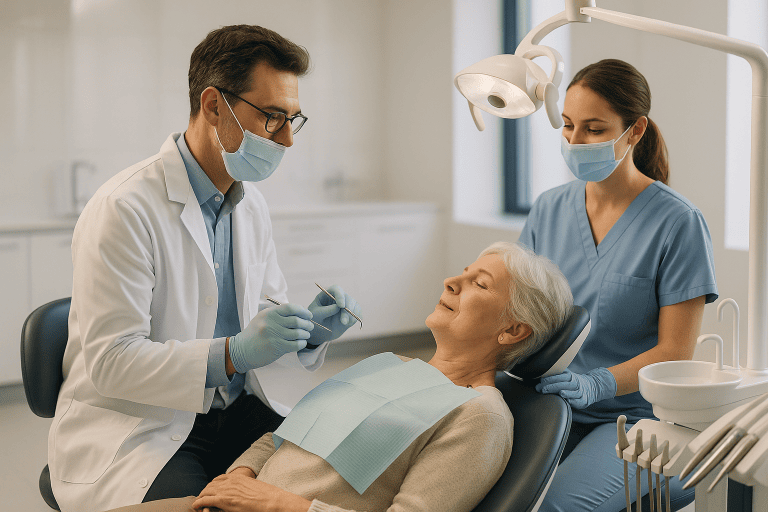
TMJ Treatment
TMJ treatment manages temporomandibular joint pain, clicking, jaw locking and bite-related discomfort through dental evaluation, splints, medication, physiotherapy or, rarely, surgery.
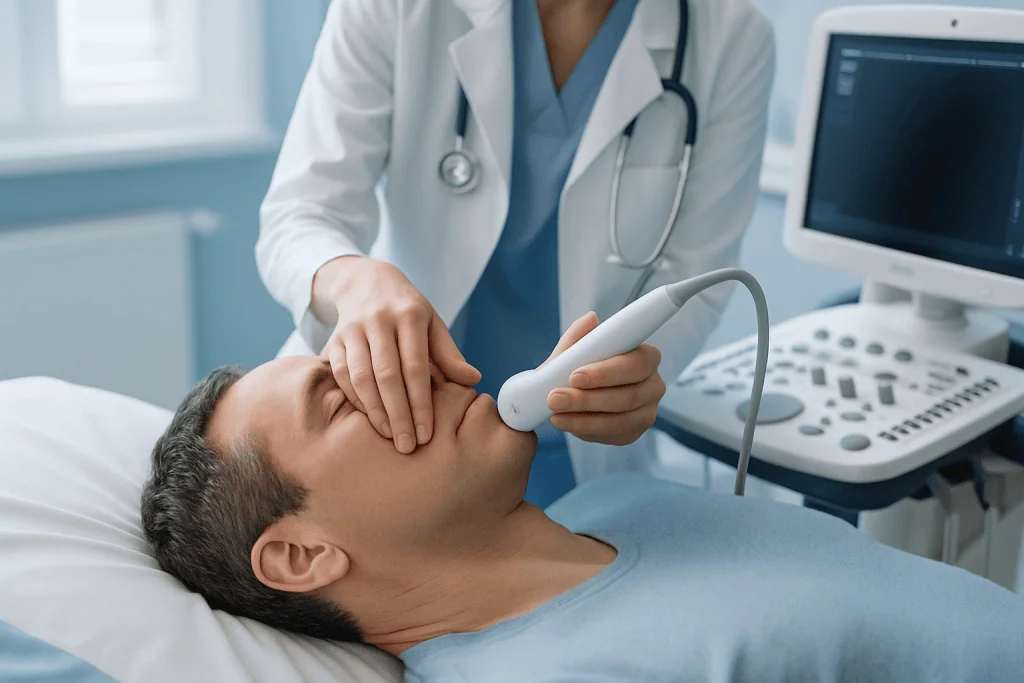
Quick answer
TMJ treatment is the diagnosis and management of disorders affecting the temporomandibular joints, the jaw joints in front of the ears, and the chewing muscles. Care usually begins conservatively with education, a custom bite splint, medication and physiotherapy. Injections, joint lavage, arthroscopy or open surgery are reserved for specific structural problems that do not respond to simpler measures.
What TMJ Treatment Is
TMJ treatment is the diagnosis and management of disorders affecting the temporomandibular joints: the two small joints in front of your ears that connect the lower jaw to the skull, and the muscles that move them. It covers a spectrum of care, from education, custom bite splints, medication and physiotherapy through to injections, joint lavage and arthroscopy, and, in a small group of patients, open joint surgery. It is for people whose jaw pain, clicking, locking or limited mouth opening interferes with eating, speaking, sleep or everyday comfort.
The temporomandibular joint is easy to ignore until it complains. It works quietly every time you speak, chew, yawn or swallow, and when it becomes irritated it can produce persistent pain, clicking, jaw fatigue, headaches, ear-area discomfort and a level of anxiety out of proportion to its size. For some people, symptoms appear suddenly after dental work, a stressful period, clenching or an injury. For others, they build gradually until eating, sleeping or concentrating becomes difficult, and something as basic as opening the mouth starts to feel unreliable.
If you are researching TMJ treatment, you may be worried that your jaw is “out of place”, that the clicking sound means permanent damage, or that surgery is the only answer. In reality, most temporomandibular disorders, often called TMD, can be managed with careful diagnosis and conservative treatment. The essential first step is understanding what is driving the symptoms. Jaw joint pain may come from the joint itself, the chewing muscles, bite mechanics, inflammation, arthritis, disc displacement, teeth grinding, previous trauma or a combination of these factors, and each source calls for a different response.
TMJ treatment matters because the jaw joint is part of a larger system. Your teeth, muscles, ligaments, joint disc, neck posture, airway, stress response and daily habits all influence how the joint functions. When discomfort is ignored, you may begin chewing on one side, limiting how wide you open, avoiding certain foods or developing muscle guarding without noticing it. These adaptations can reinforce pain patterns and make the condition harder to resolve. Timely evaluation helps reduce pain, protect joint function and steer you towards the least invasive option that actually works for your diagnosis.
What is a temporomandibular disorder (TMD)?
A temporomandibular disorder, or TMD, is any condition that affects the jaw joints, the cushioning discs inside them or the muscles that control jaw movement. TMD is an umbrella term rather than a single disease. The temporomandibular joints sit on each side of the face and connect the lower jaw, or mandible, to the skull. Each joint contains a small disc that helps the jaw glide smoothly during opening, closing and side-to-side movement; when the joint, disc, muscles or bite relationship becomes irritated or imbalanced, symptoms develop. Strictly speaking, TMJ names the joint itself and TMD names the disorder, but in everyday language the terms overlap, people who say they “have TMJ” almost always mean they have a temporomandibular disorder.
What causes TMJ pain?
TMJ pain is usually caused by overloaded chewing muscles, a displaced or irritated joint disc, inflammation within the joint, arthritis, or a combination of these. Clenching and teeth grinding, bruxism, are frequent contributors, and they are often driven by stress, poor sleep or ingrained habits rather than by the joint itself. Other common triggers include prolonged dental appointments, habitual gum chewing, nail biting, chewing on pens, direct trauma to the jaw, whiplash-type events and posture that keeps the neck and jaw muscles under constant tension. One point is worth holding onto: the pain can be muscular even when the joint is the noisy part. A clicking joint and aching muscles frequently coexist, and effective treatment targets the actual source of pain rather than the loudest symptom.
How TMJ Treatment Works
There is no single TMJ treatment that suits every patient. Depending on the diagnosis, care may include education and self-care, a custom occlusal splint, medication, physiotherapy, management of grinding and clenching, injections in selected cases and, rarely, minimally invasive or open surgical procedures. The choice depends on symptom severity, imaging findings, jaw function, oral health, general medical history and your own goals. It is also worth stating plainly what treatment is for. The aim is not to silence every click; many jaw joints click without ever needing intervention. The aims are to reduce pain, restore function, improve mouth opening, make chewing comfortable, protect the teeth and joints from excessive load, and help you understand how to prevent recurrence.
What does an occlusal splint do?
An occlusal splint, also called a bite splint, stabilisation splint or night guard, is a custom-made appliance worn over the teeth to reduce strain on the jaw muscles and joints, particularly in people who clench or grind. It is a common first-line treatment, and it is not the same thing as a generic sports mouthguard bought off the shelf. A therapeutic splint is designed after a dental evaluation, fabricated to fit your teeth precisely and adjusted over time to support a more comfortable jaw position.
The process typically involves digital or conventional impressions, a bite registration and appliance design, followed by a fitting appointment where comfort, stability and the contact pattern are checked. You may be advised to wear it at night, during specific periods, or according to your clinician’s instructions. Follow-up adjustments matter more than most people expect: jaw muscles often relax as treatment progresses, and the appliance may need refinement to keep working as intended. A poorly fitting or unsupervised appliance can make symptoms worse, which is exactly why professional monitoring is part of proper splint therapy rather than an optional extra.
What medication is used for TMJ disorders?
Medication in TMJ care is used to reduce pain, inflammation or muscle spasm for a defined period: it supports the treatment plan rather than replacing it. Anti-inflammatory medicines may be prescribed for short-term joint or muscle pain when medically appropriate. Muscle relaxants may be considered for acute spasm. In some chronic pain situations, medicines that influence pain pathways may be discussed as part of a broader strategy. Which medicine, at what dose and for how long depends on your medical history, your other medications, and stomach, kidney, liver and cardiovascular considerations. Those decisions belong to your treating doctor, made with your full history in front of them, not to a general information page.
How does physiotherapy help the jaw?
Physiotherapy improves jaw mobility, relaxes overactive muscles, corrects harmful movement patterns and addresses neck or posture-related contributors to jaw pain. A physiotherapy and rehabilitation programme may include controlled jaw exercises, stretching, manual therapy, relaxation training and posture correction. The aim is never to force the joint aggressively; it is the gradual restoration of comfortable movement. You will usually be given home exercises, and consistent, gentle practice is one of the strongest levers you personally control in this condition. Physiotherapy is particularly valuable when mouth opening is limited, when the chewing muscles are tender to touch, or when the neck is clearly part of the picture.
What are TMJ injections, arthrocentesis and arthroscopy?
Injections, arthrocentesis and arthroscopy are minimally invasive options considered when a clear diagnosis has been made and conservative treatment has not been enough. Trigger point injections may be used for certain muscle pain patterns. Intra-articular injections, delivered into the joint itself, often under image guidance, may be considered when inflammation persists despite simpler measures. Arthrocentesis is a procedure that rinses the joint space with sterile fluid and can help some patients with painful limited opening or inflammatory joint problems. TMJ arthroscopy goes a step further: a small camera and fine instruments are introduced through tiny incisions to examine the joint from the inside and treat certain problems directly. None of these is a routine first step. Each is weighed against the diagnosis, with an honest discussion of expected benefits, limitations and risks before anything is scheduled.
When is TMJ surgery necessary?
Open TMJ surgery is uncommon and reserved for specific structural problems that conservative and minimally invasive care cannot address. It may be considered for severe joint degeneration, ankylosis, where the joint fuses and cannot move, tumours, significant deformity, recurrent dislocation that has not responded to other care, trauma-related damage or advanced internal derangement with persistent disability. Surgical planning may involve specialists in oral and maxillofacial surgery, dentists, radiologists and anaesthesiology, and the operation, anaesthesia, hospital stay and recovery vary widely with the diagnosis and the technique used. If surgery has been recommended early in your course, without a period of well-supervised conservative care and without a structural diagnosis that justifies it, seeking a second opinion is a reasonable and common step.
Who May Need TMJ Treatment
You may benefit from a TMJ evaluation if jaw pain persists, recurs or interferes with daily activities. Patients typically describe pain in front of the ear, tenderness in the cheek muscles, jaw tiredness while eating, headaches around the temples, difficulty opening wide, or a jaw that feels stuck at certain points. Some notice clicking, popping or a grating sensation on opening and closing. Others report a change in the way their teeth meet, tooth sensitivity related to grinding, neck tension, ear fullness or discomfort that an ear examination has not explained.
TMJ symptoms are rarely constant. They often worsen during stressful periods, after long dental appointments, with gum chewing, after hard foods, during sleep bruxism or following jaw trauma. Some people wake with jaw soreness and a headache; others experience a sudden locked jaw, where the mouth will not fully open or close. These patterns are diagnostically useful, because they help distinguish muscle spasm from disc displacement, inflammation and other joint problems, which is why a careful history matters as much as any scan.
How is a TMJ disorder diagnosed?
Diagnosis rests on a detailed history and a hands-on physical examination, with imaging added only when it is likely to change the plan. Your clinician will ask when the symptoms started, what makes them better or worse, whether there is clicking or locking, whether you grind your teeth, and whether you have had previous dental treatment, orthodontics, facial trauma, arthritis or chronic pain conditions. The examination then assesses how far and how smoothly your mouth opens, whether the movement deviates to one side, whether joint sounds occur at specific points in the opening cycle, and which muscles are tender. Your bite and teeth are checked for wear, cracks, missing teeth, gum and dental health, and restorations that may affect how the jaw is loaded, and the neck and facial muscles are examined for involvement. By the end of this process, most patients already have a working diagnosis before any imaging is ordered.
What imaging is used for the TMJ?
Imaging is used when symptoms are significant, persistent, unusual or suggest joint damage, not for every jaw click. Dental panoramic imaging shows the teeth, jaws and certain bony structures. Cone beam computed tomography (CBCT) examines bony changes in the joint, such as arthritis, deformity or the effects of trauma. Magnetic resonance imaging (MRI) is the tool for evaluating the joint disc, joint fluid, inflammation and the other soft tissues. In some patients, digital impressions, bite records or jaw movement analysis are added to plan splint therapy or dental rehabilitation. Imaging findings always need interpreting in context: some people show disc displacement or degenerative changes on a scan and have no pain at all, while others have substantial symptoms with minimal visible joint change. The best decisions combine the images, the examination and your actual functional limitations.
Is jaw clicking serious?
A painless click with normal jaw function is usually not serious and may simply be monitored. Clicking often reflects the disc moving over the joint surfaces during opening, and by itself it is not proof of damage. Treatment becomes more likely when clicking is accompanied by pain, locking, limited movement, progressive bite changes, difficulty chewing, significant tooth wear, muscle spasm, joint inflammation or a genuine effect on quality of life. The right treatment addresses the source of the problem, not the presence of a sound.
Conditions and Indications TMJ Treatment Addresses
TMJ treatment covers a wide range of temporomandibular disorders, and the specific label matters, because each condition follows its own logic and responds to different measures.
Myofascial pain and bruxism (teeth grinding)
Myofascial pain is among the most common TMJ diagnoses: the chewing muscles become tender, tight or overactive, and they ache even when the joint itself is structurally sound. It is often associated with clenching, grinding, stress, poor sleep, posture, prolonged dental procedures or parafunctional habits such as nail biting or chewing on objects. Bruxism deserves particular attention because it works in the background. Daytime clenching frequently goes unnoticed until someone points it out, and sleep bruxism happens entirely outside conscious control. Beyond muscle pain, unmanaged grinding can wear teeth, crack restorations and sensitise the whole chewing system, which is why the dental examination is part of TMJ care rather than a separate matter.
Disc displacement and internal derangement
Internal derangement of the TMJ means the joint disc has moved out of its normal position or no longer moves normally with the jaw. In some patients the disc slips forward and returns into place during opening, disc displacement with reduction, which typically produces the familiar click. In others the disc does not return, which can limit opening or cause a locked jaw, sometimes called closed lock. Disc-related disorders often improve with conservative management, especially when they are addressed early, but persistent locking may require more advanced care, and this is one of the situations where minimally invasive procedures earn their place.
Arthritis and degenerative joint disease
Arthritis can affect the TMJ just as it affects other joints. Osteoarthritis may cause stiffness, grating sounds, reduced opening and a deep aching pain that builds with use. Inflammatory arthritis, including rheumatoid arthritis and other systemic conditions, can involve the jaw joints as part of a broader disease process. These cases usually call for coordination with rheumatology or other medical specialties, because the jaw problem is one expression of a condition that needs whole-body management, not an isolated dental issue.
Trauma, growth-related problems and structural conditions
TMJ treatment may be needed after jaw injury, fracture, whiplash-type events or a direct impact to the face, any of which can affect the joint surface, the disc, the ligaments or the muscles. In children and adolescents, growth-related jaw joint problems require particular expertise, because the TMJ influences how the face develops over time. Other structural indications include recurrent dislocation, joint ankylosis, benign or malignant lesions involving the joint region, severe degenerative change and persistent symptoms after previous treatment.
Bite-related discomfort and dental stability
Bite-related discomfort can arise when missing teeth, worn teeth, unstable restorations, orthodontic changes or jaw alignment problems load the joints unevenly. Bite adjustment alone is rarely the answer to every TMJ symptom, but dental stability is an important element of selected treatment plans. In more complex cases, orthodontic treatment, restorative dentistry or orthognathic surgery, repositioning of the jaws, may be considered, but only after a careful diagnosis and, where appropriate, after conservative measures have been tried. Irreversible changes to the bite should never be the opening move in TMJ care.
Finally, facial pain has many possible causes beyond the TMJ, including dental infection, nerve-related pain, sinus disease, headache disorders and ear conditions. A proper diagnosis has to come before treatment, because treating the wrong structure wastes time, adds cost and can entrench the pain it was meant to relieve.
How TMJ Treatment Is Performed, Step by Step
TMJ care begins with a structured consultation rather than a procedure. The first visit exists to identify the source of pain, map the contributing factors and decide whether conservative treatment is appropriate. Where previous medical records, dental images and reports exist, reviewing them in advance helps the care team plan the necessary appointments and judge whether further imaging or additional specialist input is likely to be needed. A typical pathway looks like this:
- 1. History and consultation. Your symptoms, general health, medications, dental history and any background of arthritis, trauma, sleep problems or chronic pain are reviewed in detail.
- 2. Physical examination. Mouth opening range, smoothness and deviation of movement, joint sounds, muscle tenderness, bite relationship, tooth wear and neck involvement are assessed hands-on.
- 3. Imaging when indicated. Panoramic imaging, CBCT or MRI is selected according to the suspected problem, and digital scans or bite records are added if an appliance is planned.
- 4. Education and self-care. You learn how to unload the jaw, manage daytime clenching and adjust habits that feed the problem.
- 5. Active treatment. Depending on the diagnosis, this may combine a custom splint, physiotherapy and short-term medication, with injections or arthrocentesis considered in selected cases.
- 6. Review and refinement. Follow-up visits track pain, opening and function; the plan is adjusted if a component is not working, and escalated only when the diagnosis justifies it.
The education stage sounds modest, but it carries real weight. You are guided to avoid overloading the jaw, to limit hard or chewy foods temporarily, to stop chewing gum, to support the jaw during yawning, to notice and release daytime clenching and to use heat or cold as advised. Awareness of daytime clenching alone can significantly reduce muscle strain. Sleep-related bruxism needs a different strategy, usually appliance protection, because it occurs outside conscious control and cannot be trained away by willpower.
The duration of TMJ treatment depends on the approach. A diagnostic visit may take a single appointment, while imaging and splint fabrication add time to the pathway. Conservative treatment usually unfolds over weeks to months, with progress checked at follow-up visits. Minimally invasive procedures are performed in a procedural setting and often allow a return to light activity relatively quickly, although soreness can occur. More extensive surgery requires a longer recovery plan and closer follow-up, agreed before the operation rather than improvised afterwards.
Recovery itself is individualised. Many patients start with soft diet modifications, medication if prescribed, splint wear and home exercises. Improvement tends to be gradual rather than immediate, especially when symptoms have been present for a long time. The care team monitors pain, mouth opening, chewing comfort, joint sounds, bite stability and day-to-day function. If one component of the plan is not effective, it is adjusted: the pathway does not escalate automatically towards surgery.
Why Acting Early Matters
TMJ symptoms often fluctuate, which makes it tempting to wait until the pain becomes severe. A short episode of jaw discomfort may settle with simple self-care, but persistent or recurrent symptoms deserve a proper evaluation. Early assessment establishes whether the problem is mainly muscular, joint-related, dental, inflammatory or connected to another condition, and that distinction matters, because each cause calls for a different strategy.
Delay has costs of its own. Protective muscle guarding can harden into habit: chewing on one side only, keeping the mouth half-closed, avoiding normal jaw movement altogether. Over time this contributes to stiffness, heightened muscle sensitivity and reduced function. Grinding and clenching that go unaddressed may accelerate tooth wear, fractures, gum recession and problems with existing dental work. And where a displaced disc causes repeated locking, early management may improve the chance of restoring function without more invasive treatment.
Can TMJ problems go away on their own?
Many mild TMJ flare-ups settle without formal treatment, particularly when they are tied to a stressful period, a long dental appointment or a spell of overuse. That is precisely why not every click or ache needs a procedure. The picture changes when symptoms persist, recur, worsen or start to involve locking, bite changes or real difficulty eating, at that point a diagnosis is worth more than waiting. The purpose of early care is not to medicalise every jaw sound; it is to use conservative measures during the window when they are most likely to help, before structural change or entrenched pain patterns develop.
Some features usually prompt clinicians to look beyond a routine TMD diagnosis: a sudden inability to open or close the mouth, progressive bite changes, swelling, fever, recent trauma, numbness, unexplained weight loss, severe pain that does not improve, or jaw symptoms in someone with known inflammatory arthritis or a cancer history. Not all jaw pain is a TMJ disorder, and a thorough evaluation exists partly to make sure dental infection, nerve-related pain, tumours and systemic disease are not being missed.
Benefits of TMJ Treatment
The benefits you can realistically expect depend on your diagnosis and the treatment method chosen, but the core aims are consistent: less pain, better function and less ongoing overload.
| Benefit | What It Means for You |
|---|---|
| Reduced jaw and facial pain | Treatment can decrease strain on the joint and chewing muscles, making speaking, eating and daily activities more comfortable. |
| Improved mouth opening | Guided exercises, splint therapy or selected procedures may help restore more natural jaw movement and reduce episodes of locking. |
| Better chewing comfort | Stabilising the bite and calming muscle overactivity can make meals easier again, especially after a long period of avoiding certain foods. |
| Protection of teeth and restorations | Managing clenching or grinding helps limit tooth wear, cracks, sensitivity and stress on existing dental work. |
| More precise diagnosis | A structured evaluation distinguishes TMJ disorders from dental infection, headache disorders, nerve pain and ear-related conditions. |
| Lower likelihood of unnecessary treatment | When the cause is understood, care can begin with conservative, reversible options rather than moving too quickly to irreversible procedures. |
Recovery Timeline After TMJ Treatment
Recovery depends on whether your treatment involves self-care, splint therapy, physiotherapy, injections, arthrocentesis, arthroscopy or more extensive surgery. The pattern below reflects a typical conservative pathway.
| Time Period | What Patients Can Expect |
|---|---|
| Day 1 | After evaluation or splint fitting, you receive instructions on diet, jaw rest, appliance use, medication and exercises. After minimally invasive procedures, mild soreness or swelling may occur. |
| First Week | Soft foods, avoiding wide opening and following home care instructions are common. A splint may feel unfamiliar at first and may need adjustment for comfort and function. |
| First Month | Many patients begin to notice changes in muscle tension, jaw comfort or opening range, although progress can be gradual. Follow-up may include appliance adjustment and physiotherapy review. |
| Three to Six Months | Conservative treatment plans are reassessed. Long-standing symptoms may continue to improve with consistent splint use, exercises and habit modification. |
| Longer Term | Maintenance may include periodic dental review, continued bruxism management, replacement or adjustment of appliances and monitoring of joint or bite changes when needed. |
How long does TMJ treatment take?
Most conservative TMJ treatment unfolds over weeks to months rather than days. A recent flare linked to stress or overuse can settle relatively quickly once the jaw is unloaded, while long-standing pain typically improves in stages: the splint is adjusted, the exercises progress, the habits change, and each element compounds the others. Minimally invasive procedures shorten some journeys but still carry their own recovery period, and surgery sits at the far end of the timescale with a structured rehabilitation plan. Expecting a single decisive appointment sets you up for disappointment; expecting steady, monitored progress sets you up to notice it.
Factors That Influence Outcomes
A good outcome in TMJ treatment depends on an accurate diagnosis, realistic goals and your own participation. TMJ disorders are not all the same. Muscle-dominant pain behaves differently from arthritis, disc displacement, trauma-related joint damage or a chronic pain condition, and understanding the pain source is the foundation everything else stands on.
The duration of symptoms matters. Recent-onset pain related to overuse, stress or mild inflammation tends to respond more readily than symptoms that have been present for years. Chronic pain can involve changes in muscle behaviour and in the way the nervous system processes pain, which calls for a more layered approach. That does not make improvement impossible: it makes patience and coordinated care part of the treatment.
Bruxism and clenching habits influence results directly. A splint can reduce harmful loading and protect the teeth, but daytime awareness and habit change carry part of the load. Sleep quality, stress, caffeine intake, certain medications and airway-related issues can all affect grinding patterns. Patients who wear their appliance as instructed and attend adjustment appointments give the treatment a fair chance to work as designed.
Dental stability is another lever. Missing teeth, unstable restorations, severe tooth wear or bite collapse can place uneven forces on the jaw. In such cases, TMJ symptoms usually need to be stabilised before any definitive dental reconstruction is planned. Irreversible bite changes and extensive dental procedures deserve caution and a clear indication, not momentum.
General health shapes recovery too. Inflammatory arthritis, connective tissue disorders, fibromyalgia, migraine, anxiety, depression and other chronic pain conditions can influence symptom severity and treatment response. None of these excludes TMJ treatment, but they may require coordination between specialties and a broader pain management strategy rather than a jaw-only plan.
Finally, expectations decide how the outcome feels. TMJ treatment is a process, not a single appointment, and the honest goal is usually meaningful pain reduction, improved function and better control of flare-ups, not the elimination of every sound the joint makes. Patients who understand their condition and take an active role in care are consistently better prepared for long-term stability.
How TMJ Care Is Organised at Acibadem
TMJ disorders rarely belong to a single specialty, and Acibadem approaches TMJ care as the interdisciplinary problem it is: depending on the condition, a case may involve dentists, oral and maxillofacial surgeons, prosthodontists, orthodontists, physiotherapists, radiologists, pain specialists or rheumatology consultants, with multidisciplinary discussion in more complex situations. This matters most for patients who have received conflicting opinions and are unsure whether they need a splint, injections, orthodontic care, dental reconstruction or surgery.
Diagnostics are coordinated around the clinical question rather than ordered by routine. Depending on the case, this may include high-resolution dental imaging, three-dimensional jaw assessment, MRI for disc and soft-tissue evaluation, digital dental impressions or functional bite analysis. These tools do not replace clinical judgement: they explain the anatomy and mechanics behind the symptoms. Having examination, imaging and treatment planning organised in sequence, rather than scattered across disconnected appointments, is one of the practical advantages of a structured pathway.
Treatment planning is individual. A patient with stress-related muscle pain and bruxism does not need the same pathway as a patient with recurrent jaw locking or severe degenerative joint disease. Some need only conservative treatment and monitoring; others benefit from a custom splint, physiotherapy and medication; a smaller group requires minimally invasive procedures or a surgical consultation. The plan is shaped by the diagnosis, symptom severity, medical background and long-term follow-up needs, including what can realistically be continued at home between visits. A splint or exercise programme only works if you fully understand how to use it, how to manage flare-ups and when a review or adjustment is due, so clear instructions and follow-up planning are treated as part of the treatment itself.
Second opinions follow the same logic. Reviewing prior imaging, dental records and earlier treatment recommendations may confirm an existing plan, refine it or identify a more conservative pathway: a review that is particularly relevant when surgery has been proposed or when a previous splint did not deliver improvement. Wherever care is delivered, the proposed treatment should match the diagnosis, the risks and alternatives should be explained plainly, and the follow-up plan should remain workable in daily life.
Moving Forward With TMJ Care
Living with TMJ pain is frustrating because it intrudes on ordinary moments, eating with family, speaking in a meeting, sleeping through the night, simply feeling relaxed during the day. The encouraging reality is that many TMJ disorders can be managed without surgery, especially when the cause is properly identified and treatment starts with conservative, evidence-based steps taken in the right order.
You do not need to decide in advance whether you need a splint, physiotherapy, medication or surgery: that is the diagnosis’s job, not yours. Persistent jaw pain, clicking with discomfort, locking, bite changes, headaches tied to jaw tension or visible tooth wear from grinding are all reasons a specialist evaluation is worthwhile. A careful diagnosis, an honest discussion of the options and a plan matched to your condition remain the strongest predictors of getting your jaw, and your ordinary moments, back to normal use.
Preparation
- A dentist or maxillofacial specialist assesses jaw movement, bite alignment, pain patterns and teeth grinding habits. Imaging may be requested if joint damage, arthritis or structural problems are suspected. Patients should bring previous dental records and list current medications.
Aftercare
- Patients may be advised to use a night guard, eat soft foods, avoid wide mouth opening and perform jaw exercises. Pain-relief medication or physiotherapy should be followed as prescribed. Follow-up visits help adjust splints and monitor symptom improvement.
Frequently Asked Questions
What affects the cost of TMJ treatment?
The cost depends on the diagnosis, imaging needs, whether a custom splint is required, the need for physiotherapy or injections, specialist involvement and whether any hospital-based procedure is planned. Travel support, interpreter services and follow-up can also affect the final package.
How can I get a personalised quote for TMJ treatment in Turkey?
You can request a free consultation and share your symptoms, dental records, imaging if available and previous treatment history. A preliminary plan can be prepared remotely, while the final recommendation is confirmed after in-person specialist assessment.
Is a TMJ splint usually included in the package?
A custom splint may be included if it is part of the treatment plan, but this should be confirmed in writing. Ask whether the quote includes consultation, impressions or digital scans, laboratory fabrication, fitting, adjustments and follow-up guidance.
Why can surgical TMJ treatment cost more than conservative care?
Surgical or minimally invasive care may involve operating room use, anaesthesia, specialist surgical fees, imaging, hospital recovery and closer follow-up. Many TMJ cases do not require surgery, and suitability must be decided by a specialist.
Do waiting times influence the total cost for international patients?
They can affect travel planning, accommodation and time away from work or family. International patient departments may help coordinate appointments efficiently, but timing depends on specialist availability and the care pathway needed.
Is this information medical or financial advice?
No. It is general educational information only. A TMJ specialist should assess your condition, and a written personalised quote should be requested before making treatment or travel decisions.
Medically reviewed by the Acıbadem International Medical Board September 1, 2026
See our medical review board →
Update history
- PublishedJune 8, 2026
- Medical review approvedSeptember 1, 2026
- Last content updateSeptember 8, 2026
References3
- Temporomandibular joint (TMJ) disorders nhs.uk
- Temporomandibular Disorders (TMD) medlineplus.gov
- Temporomandibular Joint (TMJ) Disorders my.clevelandclinic.org
Trusted care for international patients
From the Acibadem Blog

Living With TMJ Treatment: Soft Foods, Wide Yawns to Avoid and Daily Jaw Habits
A soft diet for TMJ means choosing foods that need little chewing, such as yogurt, eggs, cooked grains, flaky fish and well-cooked vegetables, for…

Managing TMJ Pain Safely: Heat, Medication Reviewed by Your Team and Physiotherapy
Most TMJ pain responds to conservative, reversible care: heat or cold as preferred, softer foods during flares, avoiding gum and clenching, and gentle jaw…

Does TMJ Treatment Ever Mean Surgery? Why Conservative Care Comes First
Most people with TMJ disorders never need surgery. Major health bodies, including the NIH and the NHS, advise starting with reversible, conservative care such…