

Orofacial Myology
Orofacial myology is an exercise-based therapy that retrains tongue, lip, jaw and facial muscle patterns to support breathing, swallowing, speech and dental alignment.
Quick answer
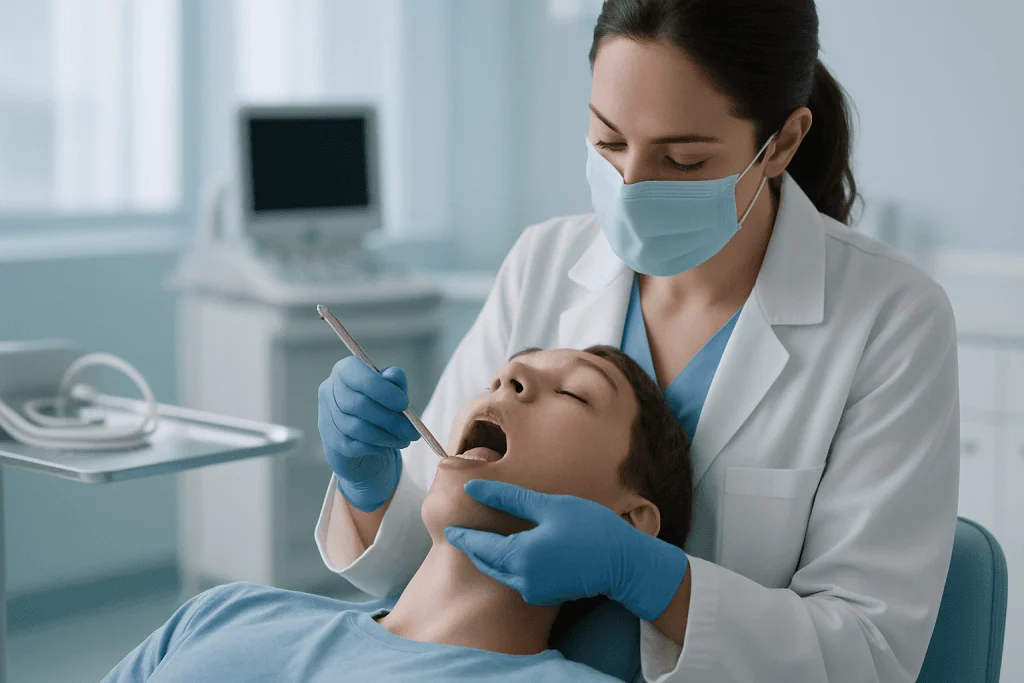
Orofacial myology is an exercise-based treatment that retrains the tongue, lips, jaw, and facial muscles to improve breathing, swallowing, speech, and oral posture. At Acibadem in Turkey, it is provided through individualized programs that assess muscle function and habits, then use targeted exercises and follow-up to support functional improvement alongside dental, ENT, or speech-related care when needed.
Orofacial Myology: Relearning the Muscle Patterns That Support Breathing, Swallowing, Speech and Facial Balance
When the tongue, lips, jaw and facial muscles do not work in a balanced way, the effects can be felt in many parts of daily life. A child may breathe through the mouth, develop a forward tongue posture, struggle with certain speech sounds or show dental changes over time. An adult may notice jaw tension, an open-mouth resting posture, snoring, relapse after orthodontic treatment, tongue thrust when swallowing or difficulty maintaining comfortable nasal breathing. These concerns can be frustrating because they often seem small at first, yet they may persist despite dental care, speech therapy, orthodontics or repeated reminders to “close the mouth” or “swallow correctly.”
Orofacial myology, also known as orofacial myofunctional therapy, focuses on the learned patterns behind these symptoms. It is an exercise-based therapy that retrains the muscles of the mouth and face to function more efficiently at rest and during breathing, swallowing, chewing and speaking. The goal is not simply to strengthen muscles. It is to help the tongue rest in a healthier position, encourage lip closure, improve nasal breathing patterns when medically appropriate and support a more coordinated swallow.
For many patients and families, the decision to begin orofacial myology comes after a longer journey. A dentist may have noticed tongue thrust or an open bite. An orthodontist may be concerned about stability after braces. An ear, nose and throat specialist may be evaluating enlarged tonsils, adenoids, nasal obstruction or sleep-disordered breathing. A speech and language therapist may see that tongue placement is affecting certain sounds. Orofacial myology can be an important part of care when these patterns are contributing to functional, dental or airway-related concerns.
At Acibadem, patients are assessed with attention to the full clinical picture. Because orofacial muscle patterns may relate to dentistry, orthodontics, pediatric development, ENT health, sleep medicine, speech and language function, and sometimes jaw joint symptoms, the most effective plan is often coordinated across specialties. This is especially important for international patients who want a clear diagnosis, a practical treatment plan and confidence that underlying medical causes are not being overlooked.
What Is Orofacial Myology?
Orofacial myology is a structured therapy that evaluates and retrains the function of the oral and facial muscles. It is most often used to address orofacial myofunctional disorders, which are patterns of muscle use that are inefficient, imbalanced or developmentally inappropriate. These may include low tongue posture, forward tongue thrust, lips-apart resting posture, mouth breathing habits, abnormal swallowing patterns, poor chewing coordination, excessive facial muscle use during swallowing, and certain speech placement issues.
A central concept in orofacial myology is the resting posture of the mouth. Ideally, when a person is not speaking or eating, the lips rest gently together, the tongue rests lightly against the palate, the teeth are slightly apart and breathing occurs comfortably through the nose. This resting pattern helps support normal oral function and may contribute to dental and facial stability over time. When the tongue rests low or forward, or when the lips remain apart for long periods, the muscles may place repeated forces on the teeth and jaws. In growing children, these patterns may influence dental arch development and bite relationships. In adults, they may contribute to orthodontic relapse or ongoing functional strain.
Orofacial myology uses specific, progressive exercises and behavioral training. Patients learn where the tongue should rest, how to create comfortable lip seal, how to swallow without pushing the tongue forward, and how to coordinate breathing, chewing and oral posture. Therapy is tailored to age, diagnosis, anatomy, dental status, airway findings and patient goals. It is not a one-session intervention; it requires practice, repetition and follow-up to convert new skills into automatic daily habits.
This therapy is often used alongside other treatments rather than as a replacement for them. For example, a patient with nasal obstruction may need ENT evaluation before therapy can be fully effective. A child with a restricted lingual frenulum, sometimes called tongue-tie, may require careful assessment and, in selected cases, treatment by an appropriate specialist. A patient undergoing orthodontic care may benefit from orofacial myology to reduce tongue thrust and support long-term stability. In sleep-disordered breathing, therapy may help improve oral muscle tone and nasal breathing habits as part of a broader medical plan, but it is not a stand-alone substitute for diagnosing or treating obstructive sleep apnea.
Who May Need Orofacial Myology?
People may be referred for orofacial myology at different ages and for different reasons. In children, concerns are often identified by parents, pediatricians, dentists, orthodontists, speech and language therapists, or ENT physicians. Parents may notice that a child sleeps with the mouth open, drools beyond the expected age, has difficulty chewing certain foods, pushes the tongue between the teeth, lisps, sucks a thumb or pacifier for a prolonged period, or has a bite that does not close properly. A child may also be restless during sleep or show signs of chronic nasal congestion.
In adolescents and adults, therapy may be considered when oral habits continue after growth has advanced, when orthodontic results appear unstable, or when jaw and facial muscles feel overactive during swallowing or speaking. Adults may also seek evaluation because of snoring, mouth dryness on waking, difficulty maintaining nasal breathing, tension around the lips and chin, or concerns about tongue posture after orthodontic or dental treatment.
Diagnosis begins with a detailed clinical history. The clinician will ask about breathing patterns, sleep, allergies, nasal obstruction, tonsil or adenoid history, feeding and chewing habits, speech concerns, dental and orthodontic treatment, oral habits such as thumb sucking or nail biting, and any prior surgeries or therapies. For children, developmental history and growth patterns may be relevant. For adults, jaw symptoms, dental wear, sleep quality and prior orthodontic relapse may be discussed.
The physical assessment typically includes observation of facial symmetry, lip competence, tongue mobility, tongue resting posture, palate shape, dental bite, swallow pattern, speech articulation, chewing, oral habits and breathing route. The clinician may look for signs such as a high narrow palate, anterior open bite, posterior crossbite, scalloped tongue, overactive chin muscle during swallowing, low tongue posture or restricted tongue movement. The evaluation may include simple functional tasks, photographs for clinical documentation, and standardized measurements of tongue mobility or oral posture where appropriate.
Because orofacial myology is closely connected to airway and dental development, diagnosis may require collaboration. An ENT physician may assess nasal airflow, adenoids, tonsils, septal deviation, chronic rhinitis or sinus concerns. A dentist or orthodontist may evaluate occlusion, jaw growth, oral appliances or orthodontic timing. A sleep medicine specialist may be involved if symptoms suggest sleep-disordered breathing, such as loud snoring, witnessed pauses in breathing, excessive daytime sleepiness, morning headaches or behavioral concerns in children. A speech and language therapist may evaluate articulation and language-related needs. At Acibadem, this type of coordinated assessment helps ensure that therapy is aimed at the correct problem and that contributing medical factors are addressed.
Conditions and Indications Orofacial Myology May Address
Orofacial myology may be recommended for a range of functional patterns and conditions. The most common indication is an orofacial myofunctional disorder affecting tongue, lip, jaw or facial muscle behavior. These disorders may appear alone, but they are often linked with dental, speech, airway or developmental concerns.
One frequent indication is tongue thrust, in which the tongue presses forward or between the teeth during swallowing, speech or rest. Over time, this pressure may contribute to dental changes such as an open bite or spacing, especially in growing children. Orofacial myology helps the patient learn a more mature swallow pattern and a healthier resting tongue position.
Mouth breathing patterns are another common reason for referral. Some patients breathe through the mouth because of nasal obstruction, allergies, enlarged adenoids or other airway issues. Others continue the habit even after the medical obstruction has improved. Therapy can help re-establish nasal breathing habits when the airway is adequate, while medical evaluation is used to identify and treat obstruction when present.
Orofacial myology may also be used to support orthodontic treatment. If a low tongue posture, forward tongue pressure or poor lip seal continues after braces or aligners, the teeth may be exposed to forces that affect treatment stability. Therapy may be recommended before, during or after orthodontic care, depending on the patient’s age, bite relationship and treatment plan.
In selected patients, therapy can assist with speech sound placement, particularly sounds that require precise tongue position. It is important to distinguish orofacial myology from full speech and language therapy. Orofacial myology addresses muscle posture and movement patterns that may influence articulation; a speech and language therapist may be needed when the speech concern is broader or language-based.
Other indications may include prolonged oral habits such as thumb sucking or pacifier use, difficulty transitioning to age-appropriate chewing and swallowing patterns, excessive drooling related to oral posture, lip incompetence, certain patterns of jaw muscle tension, and functional concerns after tongue-tie release when exercises are needed to support mobility and coordinated use. Therapy may also be considered as part of care for snoring or mild sleep-disordered breathing patterns, but only after proper medical evaluation and with realistic expectations.
How Orofacial Myology Is Performed: From Evaluation to Daily Habit Change
Orofacial myology is a clinical therapy program, not a surgical procedure. Its success depends on accurate assessment, a tailored exercise sequence and consistent practice. The process is usually divided into several stages: comprehensive evaluation, preparation and coordination with other specialists, active therapy sessions, home practice, and maintenance.
Comprehensive Initial Evaluation
The first appointment is designed to understand why the pattern exists and what needs to change. The clinician reviews symptoms, medical and dental history, sleep and breathing patterns, oral habits, prior orthodontic treatment, speech concerns and patient goals. For a child, parents are usually included in the discussion because home routines and daily observation are important for progress.
The clinician then observes oral and facial function. This may include how the lips rest, where the tongue sits at rest, whether the patient can breathe comfortably through the nose, how the tongue moves upward and side to side, how the jaw moves, how the patient swallows water or saliva, and how speech sounds are produced. Photographs or short videos may be used for clinical documentation and to track progress over time.
Identifying Barriers Before Therapy Begins
Orofacial myology works best when the patient is physically able to perform the desired patterns. If nasal breathing is not possible because of obstruction, or if the tongue cannot elevate adequately because of restriction, exercises alone may not be enough. In these cases, the clinician may recommend additional evaluation by ENT, dentistry, orthodontics, pediatric medicine, sleep medicine or another relevant specialty.
This step is particularly important for international patients who may be trying to combine diagnosis and treatment within a limited travel schedule. At Acibadem, the care pathway can be organized so that necessary specialist opinions, imaging or functional assessments are coordinated efficiently. The purpose is to avoid fragmented care and to ensure that therapy is started at the right time.
Personalized Exercise Planning
Once the evaluation is complete, the clinician develops a therapy plan. Exercises are selected based on the patient’s needs, age, anatomy and ability to practice. A child may need playful, simple tasks with parent support, while an adult may work through more precise drills and habit reminders. The plan may include exercises for tongue elevation, tongue-palate suction, lip closure, nasal breathing awareness, chewing coordination, jaw stability and swallowing without excessive facial muscle contraction.
The therapy sequence is progressive. Patients first learn awareness: where the tongue is, whether the lips are apart, how the swallow feels, and how breathing is occurring. They then learn isolated movements, such as lifting the tongue to a specific spot on the palate. Later, the movements are integrated into real-life tasks such as drinking, eating, speaking and resting posture throughout the day. The final goal is automatic use, so the patient no longer has to consciously think about every swallow or tongue position.
What Happens During Therapy Sessions
During a typical session, the clinician reviews home practice, checks technique, corrects compensations and introduces new exercises. The patient may practice in front of a mirror, use tactile cues, perform controlled swallowing tasks or work on nasal breathing routines. The clinician may also observe chewing and food handling if that is part of the concern.
Sessions are usually brief and highly practical, but the home program is essential. Most patients are asked to practice exercises daily for short periods. Consistency matters more than intensity. The aim is to create neuromuscular learning, which means the brain and muscles gradually adopt a new pattern through repeated accurate practice.
Technology and Diagnostic Tools That May Support Care
Orofacial myology is based on clinical expertise, but modern diagnostic pathways can provide valuable information. Digital photography and video documentation help the clinician compare posture and movement over time. Dental imaging or orthodontic records may show bite relationships, palate shape and jaw development. ENT evaluation may include nasal and airway assessment when obstruction is suspected. Sleep studies may be recommended when symptoms suggest sleep apnea or another sleep-related breathing disorder. In some cases, speech assessment tools are used to evaluate articulation and tongue placement.
These technologies do not replace the clinical examination. They help clarify why symptoms are occurring and whether therapy should be combined with medical, dental, orthodontic or speech-related treatment. For the patient, this can make the care plan more precise and reduce the chance of treating a habit while missing an underlying cause.
Typical Duration and Follow-Up
The length of therapy varies. Some patients need a shorter program focused on a limited pattern, while others require several months of structured work, particularly when long-standing habits, airway concerns, orthodontic issues or speech placement patterns are involved. Children may progress at a different pace depending on age, motivation, parental support and developmental readiness. Adults may be highly motivated but may also have deeply ingrained patterns that require time to change.
Follow-up is used to monitor whether the new patterns are becoming stable. If orthodontic treatment is ongoing, communication between the orofacial myology clinician and the dental or orthodontic team can be valuable. If ENT treatment, allergy management or sleep care is part of the plan, therapy may be adjusted as the airway improves. Maintenance exercises may be recommended after the active phase to help reinforce long-term stability.
Why Acting Early Matters and the Risks of Delay
Orofacial myofunctional disorders are often easier to correct when they are identified early, especially in children whose facial and dental structures are still developing. Repeated muscle patterns can influence the way the teeth and jaws adapt over time. A low tongue posture, chronic mouth breathing or forward tongue thrust may contribute to open bite, narrow dental arches, crossbite, spacing or relapse after orthodontic treatment. Early assessment can help determine whether the concern is mainly a habit, a functional pattern, an airway issue or a combination.
Delay does not mean treatment is no longer possible. Adults can benefit from orofacial myology, particularly when they are consistent with practice and when contributing medical or dental factors are addressed. However, long-standing patterns may require more time to retrain. Dental and skeletal changes that have already developed may also need orthodontic or other specialist treatment in addition to therapy.
In airway-related concerns, timely evaluation is important because mouth breathing, snoring and restless sleep may signal underlying obstruction or sleep-disordered breathing. Children with poor sleep quality may experience daytime fatigue, attention difficulties, behavioral changes or growth concerns. Adults with sleep-related symptoms may have cardiovascular, metabolic or cognitive implications if obstructive sleep apnea is present and untreated. Orofacial myology can play a supportive role, but it should not delay appropriate medical diagnosis.
Speech and swallowing patterns may also become more established over time. If a child repeatedly places the tongue forward for certain sounds, or uses an immature swallow pattern beyond the expected age, therapy may help prevent the pattern from becoming more deeply ingrained. For patients undergoing orthodontic care, addressing muscle patterns at the right time may support the stability of dental correction.
Benefits of Orofacial Myology
The benefits of orofacial myology depend on the diagnosis, the patient’s anatomy, the presence of airway or dental factors, and the consistency of practice.
| Benefit | What It Means for You |
|---|---|
| Healthier tongue resting posture | The tongue is trained to rest more appropriately against the palate, which may support oral function and dental stability. |
| Improved lip closure and oral posture | Patients learn to reduce lips-apart posture and excessive facial muscle effort during rest and swallowing. |
| Support for nasal breathing habits | When the airway is adequate, therapy can help patients transition away from habitual mouth breathing. |
| More coordinated swallowing | Therapy can reduce forward tongue pressure and improve the pattern used when swallowing saliva, liquids and food. |
| Better support for orthodontic treatment | Addressing muscle habits may help reduce forces that contribute to bite changes or orthodontic relapse. |
| Enhanced speech placement support | For selected patients, improved tongue awareness and mobility may assist articulation work with a speech specialist. |
Recovery and Progress Timeline
Because orofacial myology is a therapy program rather than an operation, “recovery” is best understood as a gradual process of learning, practice and habit stabilization.
| Time Period | What Patients Can Expect |
|---|---|
| Day 1 | The first visit focuses on evaluation, explanation of findings and initial awareness of tongue, lip, jaw and breathing patterns. |
| First Week | Patients begin simple exercises and learn how to practice accurately at home. Mild muscle fatigue can occur as new movements are introduced. |
| First Month | Awareness usually improves. Patients may begin to notice changes in resting posture, lip closure or swallowing technique with conscious effort. |
| Several Months | Exercises become more functional and are integrated into eating, drinking, speaking and daily rest posture. Progress depends strongly on consistency. |
| Longer Term | The goal is automatic use of healthier patterns. Maintenance guidance may be recommended, especially when orthodontic or airway care continues. |
Factors That Influence Outcomes
Outcomes in orofacial myology are influenced by several interrelated factors. The first is the accuracy of diagnosis. If a patient is mouth breathing because of untreated nasal obstruction, therapy may be limited until the airway problem is addressed. If a tongue restriction significantly limits elevation, exercises may not achieve full effect without appropriate evaluation and management. If orthodontic or skeletal factors are significant, therapy may need to be coordinated with dental or orthodontic treatment.
Consistency is another major factor. Orofacial myology relies on neuroplasticity and motor learning. Small, accurate exercises performed regularly are generally more effective than occasional intense practice. Children often need parental involvement to remember exercises, maintain motivation and apply new habits during daily routines. Adults may need strategies to interrupt long-standing patterns during work, sleep preparation, meals or exercise.
Age and development also matter. Younger children may benefit from early habit correction, but they must be mature enough to follow instructions and practice reliably. Adolescents may respond well when they understand the connection between therapy and orthodontic stability, breathing or appearance. Adults can make meaningful changes, although they may need more time because the patterns have been present for many years.
Dental and orthodontic status can affect the plan. Patients with open bite, crossbite, crowding or jaw discrepancies may require orthodontic treatment in addition to therapy. Orofacial myology can help address the muscle patterns that influence these conditions, but it does not move teeth in the way orthodontic appliances do. Similarly, therapy may support function after orthodontic treatment, but retainers and dental follow-up remain important.
Airway health is central. Allergies, chronic rhinitis, enlarged tonsils or adenoids, deviated septum, sinus disease and sleep-disordered breathing can all influence oral posture and breathing habits. When these issues are identified and treated, patients may be better able to maintain nasal breathing and stable oral posture. This is why collaboration with ENT and sleep specialists can be important.
Patient expectations should also be realistic. Orofacial myology is not a quick cosmetic intervention, and it does not replace medical treatment for sleep apnea, orthodontic correction for significant bite problems or speech therapy for language disorders. Its value lies in changing the functional patterns that may contribute to these concerns. A good result is typically measured by improved awareness, more stable resting posture, more coordinated swallowing, better integration with dental or speech care, and improved ability to maintain nasal breathing when medically appropriate.
Why International Patients Choose Acibadem for Orofacial Myology
International patients often seek care abroad when they want a more complete explanation of symptoms, access to multiple specialists in one medical system, or a second opinion before committing to orthodontic, ENT, sleep or surgical treatment. Orofacial myology is especially suited to a coordinated model because it sits at the intersection of several disciplines. The tongue, lips and facial muscles are not separate from the airway, teeth, jaw growth, speech or sleep quality.
At Acibadem, evaluation can be organized around the patient’s specific concerns. A child with mouth breathing and dental changes may need input from pediatric dentistry or orthodontics as well as ENT. An adult with snoring, morning dry mouth and low tongue posture may need sleep medicine assessment before therapy goals are finalized. A patient with articulation concerns may require coordination with speech and language specialists. When indicated, cases can be reviewed through multidisciplinary discussion so that recommendations are aligned rather than fragmented.
Acibadem hospitals are JCI-accredited, and clinical pathways are shaped by internationally accepted standards. For patients traveling from the United States, Europe, the Middle East or other regions, this can be particularly important. Many arrive with previous dental records, orthodontic photographs, sleep study results or ENT reports. The clinical team can review existing information, request additional tests when necessary and develop a plan that reflects both evidence-based care and the patient’s practical travel needs.
Advanced diagnostic resources may support the process. Digital imaging, dental and orthodontic records, airway evaluation, sleep testing and speech assessment can be incorporated when clinically appropriate. The purpose of these tools is not to make treatment more complex; it is to make it more accurate. If therapy is likely to help, the patient receives a structured plan. If another medical or dental issue must be treated first, that is identified early.
For international patients, communication is part of care. Acibadem International provides support in more than 20 languages, helping patients with appointment planning, medical record coordination, interpretation, travel-related arrangements and communication between departments. This is especially valuable for families traveling with children or for adults seeking second opinions across several specialties. Clear explanations reduce uncertainty and help patients understand what can realistically be achieved during a visit and what may require ongoing follow-up after returning home.
Experienced physicians and allied health professionals work together to personalize the plan. Some patients may need only evaluation, education and a focused therapy program. Others may require a staged pathway that begins with ENT treatment, orthodontic planning, sleep assessment or management of oral habits before myofunctional therapy is intensified. The treatment plan is shaped by anatomy, function, age, medical findings and patient goals rather than by a single standard protocol.
Another consideration for international patients is continuity. Orofacial myology depends on practice over time, so the plan must be practical after the patient returns home. Acibadem clinicians can provide clear exercise instructions, progress goals and recommendations for follow-up. When ongoing care is needed in the patient’s home country, documentation can help local dentists, orthodontists, ENT physicians or speech therapists understand the findings and treatment direction.
Taking the Next Step
If you or your child has been told there is tongue thrust, mouth breathing, low tongue posture, orthodontic relapse, a swallowing pattern concern or an orofacial myofunctional disorder, a careful evaluation can clarify what is happening and what type of care is appropriate. Orofacial myology may be a valuable part of the solution, particularly when it is coordinated with dental, orthodontic, ENT, sleep or speech care as needed.
For many patients, the most reassuring step is understanding whether the pattern is a habit, a sign of an airway issue, a consequence of oral anatomy or a combination of factors. With the right assessment, therapy can be targeted, realistic and easier to follow. International patients may request a consultation or second opinion through Acibadem to review symptoms, previous records and possible next steps before traveling.
This information is general and is not a substitute for professional medical advice, diagnosis or treatment. A qualified healthcare professional should evaluate your individual situation and recommend the most appropriate care plan.
Preparation
- A specialist evaluates oral posture, tongue movement, swallowing, breathing habits and related dental or ENT findings. Patients may be asked about sleep, speech, orthodontic history and daily habits. A personalized exercise plan is created based on the assessment.
Aftercare
- Patients continue prescribed daily exercises at home and attend follow-up sessions to monitor progress. Consistency is important for improving muscle memory and long-term function. Coordination with dental, orthodontic or ENT care may be recommended when needed.
Turkey vs UK, Germany & USA
Orofacial myology is usually delivered as a personalised therapy pathway, so costs depend on assessment findings, session structure and whether other specialists are involved. International patients often compare destinations based on clinical coordination, access, language support and what is included in the care plan.
The overall patient experience for orofacial myology can vary by care setting, referral pathway and whether therapy is combined with dental, speech, ENT or sleep-related care.
| Factor | Turkey | UK | Germany | USA |
|---|---|---|---|---|
| Price drivers | Specialist assessment, therapy planning, session frequency, dental or ENT referrals and international patient coordination can affect the final quote. | Private fees vary by provider; public pathways may depend on referral criteria and local service availability. | Costs may depend on whether care is private or reimbursed, the professional discipline involved and linked dental or ENT care. | Costs vary widely by provider type, insurance network, location and whether related dental or airway care is included. |
| Hospital and specialist factors | Care may be coordinated through hospital-based teams, with access to speech, dental, orthodontic, ENT and sleep specialists when needed. | Care may be provided by speech and language therapists, dental professionals or private clinics, with referrals for related issues. | Care may involve speech therapy, orthodontics, ENT or paediatric specialists depending on symptoms and referral pathways. | Care may be offered by myofunctional therapists, speech-language pathologists, dentists or multidisciplinary clinics. |
| Accreditation and quality | International patients may choose hospitals with recognised accreditation such as JCI and structured patient services. | Quality is guided by national regulation, professional registration and clinic standards. | Quality is guided by medical regulation, professional bodies and clinic or hospital standards. | Quality depends on provider credentials, clinic accreditation and state or professional licensing. |
| Typical access and waiting experience | Private appointment scheduling and bundled coordination may support a more predictable visit plan for international patients. | Public referral routes can involve waiting; private appointments may offer more scheduling flexibility. | Access varies by region, insurance status and specialist availability. | Access may be faster in private settings but can depend on insurance approval and provider availability. |
| Travel and language logistics | International patient teams may assist with appointments, translation, travel planning and coordination between departments. | International patients usually arrange travel and translation independently unless using a private service. | Language support may be available in some centres, but arrangements can vary. | Travel distances, accommodation and interpreter needs can add complexity, especially for follow-up therapy. |
| What a package may include | Assessment, personalised therapy plan, coordinated specialist opinions, interpreter support and follow-up planning may be included depending on the case. | Packages vary; private care may include assessment and therapy sessions, while related referrals are often billed separately. | Packages vary by clinic and insurance model; related dental or ENT services may be managed separately. | Packages vary widely; therapy, dental assessments, sleep evaluation or ENT care may be billed through separate providers. |
What affects your final cost
- The complexity of tongue, lip, jaw, breathing, swallowing or speech patterns.
- The need for input from orthodontics, dentistry, ENT, speech therapy, paediatrics or sleep medicine.
- Session frequency, session length and the amount of home-practice supervision required.
- Whether digital follow-up, in-person therapy or a combined pathway is recommended.
- Interpreter support, airport transfer, accommodation planning and international patient coordination.
- Any diagnostic tests or additional treatments recommended after specialist assessment.
Compare your options
Orofacial myology is often part of a broader care plan rather than a standalone decision. Suitability for any option is decided by a specialist after assessment.
| Option | What it is | Typical use | Key considerations |
|---|---|---|---|
| Orofacial myofunctional therapy | Exercise-based retraining of tongue, lips, jaw and facial muscle patterns. | Used to support nasal breathing habits, swallowing patterns, oral rest posture, speech support and dental stability. | Requires consistent home practice and follow-up; progress depends on diagnosis, motivation and related airway or dental factors. |
| Speech and language therapy | Therapy focused on articulation, oral motor coordination and communication skills. | Used when speech sound issues or oral movement patterns affect clarity or function. | May be combined with orofacial myology when tongue posture, swallowing or lip function affects speech goals. |
| Orthodontic or dental care | Assessment and treatment of tooth position, bite relationship and oral structures. | Used when dental alignment, open bite, crossbite or oral habits influence function. | Muscle retraining may support stability, but orthodontic decisions require dental or orthodontic evaluation. |
| ENT and airway assessment | Evaluation of nasal breathing, tonsils, adenoids, allergies or other airway factors. | Used when mouth breathing, snoring, chronic congestion or airway obstruction is suspected. | Therapy may be less effective if airway restriction is not addressed; treatment planning should be coordinated. |
| Frenulum assessment and related care | Evaluation of tongue mobility and the tissue under the tongue. | Used when restricted tongue movement may affect swallowing, speech, oral posture or feeding patterns. | Release procedures are not suitable for everyone; pre- and post-therapy may be recommended when clinically appropriate. |
| Sleep and breathing support | Assessment of sleep-related breathing symptoms and contributing oral or airway patterns. | Used when snoring, restless sleep, daytime tiredness or mouth breathing are concerns. | Requires specialist evaluation; orofacial myology may complement but does not replace medical sleep management. |
Trusted care for international patients
General information only — not medical or financial advice. Final costs depend on the factors above and your individual case; request a free, personalised quote.
Doctors Performing This Treatment

Assoc. Prof. Dr. Ferit Bayram
Oral & Dental Health
Assoc. Prof. Dr. Gökşen Gökşenoğlu
Physical Medicine & RehabilitationDr. Ali Riza Özdurmuş
Oral & Dental Health
Dr. Arzu Morçiçek
Oral & Dental Health
Dr. Aynur Göksel
Physical Medicine & Rehabilitation
Dr. Bedii Ender Topçu
Oral & Dental HealthDr. Begüm Öykü Kesim
Oral & Dental Health
Dr. Ceyda Sabancı
Oral & Dental HealthDr. Deniz Turgut
Oral & Dental Health
Dr. Destina Suay Sarı
Oral & Dental Health
Dr. Emre Çengelli
Oral Dental & Maxillofacial Surgery
Dr. Eylül Türsen
Oral & Dental HealthDr. Ezgi Gülüm
Oral Dental & Maxillofacial Surgery
Dr. Halime Bayram
Oral & Dental Health
Dr. Havva Gölalan
Oral & Dental Health
Dr. Helin Kuşsever Topçu
Oral & Dental Health
Dr. Melike Zeynep Çapoğlu
Oral & Dental Health
Dr. Merve Ağartıoğlu
Oral & Dental Health
Dr. Metin Kınacı
Oral & Dental Health
Dr. Mukhtar Shahgaldıyev
Physical Medicine & Rehabilitation
Dr. Mücahit Güner
Oral & Dental Health
Dr. Nesrin Yılmaz Baıramov
Physical Medicine & Rehabilitation
Dr. Pelin Açık
Oral & Dental Health
Dr. R.Şirin Atlığ
Physical Medicine & RehabilitationMedical Units
Available at These Hospitals












Frequently Asked Questions
What affects the cost of orofacial myology?
The main cost factors are the initial assessment, the complexity of the muscle pattern, session frequency, therapist expertise, and whether other specialists such as orthodontics, ENT, speech therapy or sleep medicine are needed. Travel support, translation and follow-up planning can also affect the final package.
How can I get a personalised quote from Acibadem?
You can request a free consultation and share your symptoms, previous reports, dental or orthodontic notes, speech therapy records and any airway or sleep-related findings. The team can then guide you on the appropriate specialist review and provide a personalised quote based on your care plan.
Is orofacial myology usually a single appointment?
It is usually planned as a therapy pathway rather than a single visit. The specialist assesses tongue, lip, jaw, swallowing, breathing and oral rest posture patterns, then recommends a plan with guided sessions and home exercises.
Will I need to see other specialists before starting therapy?
Some patients benefit from coordinated review by orthodontics, dentistry, ENT, speech therapy, paediatrics or sleep medicine. This depends on the cause of the symptoms and whether airway, bite, tongue mobility or speech factors are involved.
Can international patients continue therapy after returning home?
In many cases, follow-up planning can be arranged before travel, and the care team can advise whether remote guidance, local therapy support or further in-person visits may be appropriate. The best format depends on the clinical assessment and therapy goals.
Is the quoted cost the same for every patient?
No. Orofacial myology is personalised, so the quote depends on the assessment findings, recommended therapy format, related consultations and any additional diagnostics or treatments. A free consultation is the best way to receive case-specific information.