Abducens Nerve: What Patients Need to Know
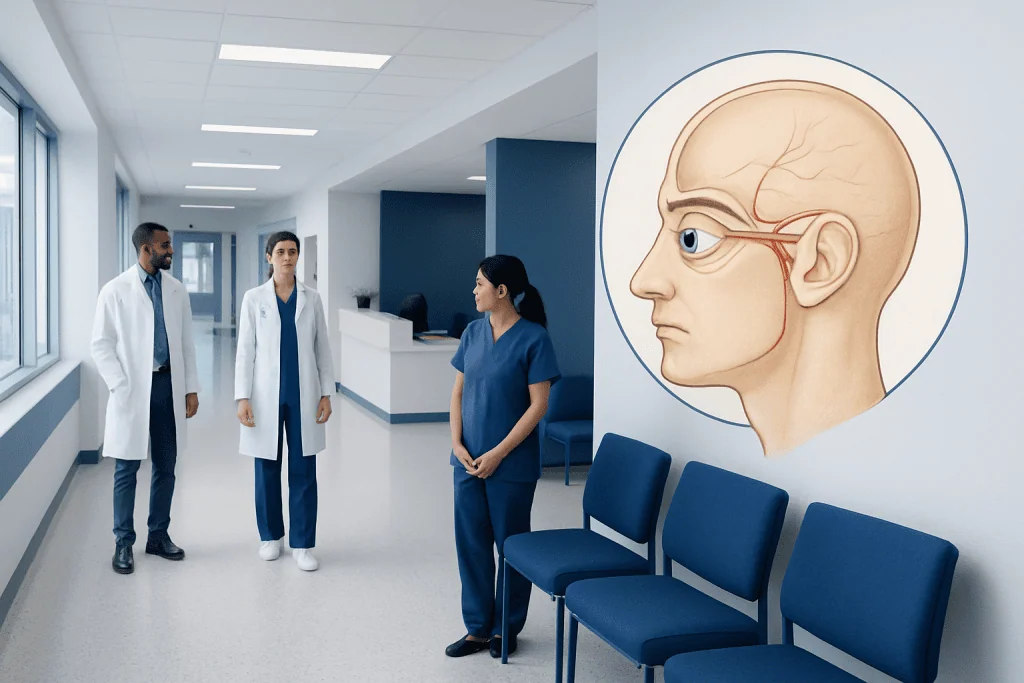
The abducens nerve controls the lateral rectus muscle, which moves the eye outward. A problem with this nerve commonly causes double vision that is worse when looking to one side.
Key Takeaways
- The abducens nerve controls the lateral rectus muscle, which moves the eye outward.
- A problem with this nerve commonly causes double vision that is worse when looking to one side.
- Causes range from temporary inflammation to diabetes, high blood pressure, stroke, trauma, or pressure from a mass.
- Diagnosis usually involves an eye and neurological examination, and some people need brain imaging or blood tests.
- Treatment focuses on the cause and may include observation, prisms, eye patching, medication, or surgery in selected cases.
The abducens nerve is the sixth cranial nerve and helps move one eye outward. When it is irritated or damaged, a person may develop horizontal double vision, eye misalignment, or trouble looking to the side, and treatment depends on the underlying cause.
Overview: what the abducens nerve does
The abducens nerve, also called the sixth cranial nerve, controls the lateral rectus muscle. This muscle pulls the eye outward, away from the nose. When the nerve is working normally, both eyes move together smoothly so a person can look side to side without seeing double.
If the abducens nerve is weakened, the affected eye may drift inward because the opposite eye muscle pulls more strongly. This can make it difficult to look outward on that side and often leads to horizontal double vision. People may notice that symptoms are worse when looking in the direction of the affected eye or when viewing distant objects.
An abducens nerve problem is not a disease by itself. It is a sign that something is affecting the nerve somewhere along its path from the brainstem to the eye socket. For that reason, evaluation focuses not only on the eye movement problem but also on finding the reason behind it.
Signs and symptoms patients may notice

The most common symptom of abducens nerve dysfunction is double vision, especially side-by-side or horizontal double vision. This usually becomes more noticeable when a person looks toward the affected side. Some people also turn their head toward one side to reduce the double vision and help keep the images single.
Another common sign is limited outward movement of one eye. Family members may notice that one eye appears slightly turned inward. In children, the problem may be harder to describe because they may not complain clearly of double vision. Instead, they may squint, close one eye, tilt the head, or seem less steady when focusing on objects.
Symptoms can appear suddenly or gradually, depending on the cause. Additional symptoms such as headache, facial numbness, weakness, imbalance, eyelid changes, eye pain, or other vision changes may suggest a more complex neurological problem and can help guide urgent evaluation.
- Horizontal double vision
- Trouble moving one eye outward
- Eye turning inward
- Head turn to compensate
- Blurred vision or eye strain
Causes and risk factors
There are several reasons the abducens nerve may stop working normally. In adults, common causes include reduced blood flow to the nerve related to diabetes, high blood pressure, or other vascular risk factors. In some cases, the nerve is affected by inflammation, infection, increased pressure inside the skull, head trauma, or compression from a mass along its course.
Because the abducens nerve has a long path inside the skull, it can be vulnerable to pressure and stretching. Conditions that increase intracranial pressure may affect it on one or both sides. Brainstem disorders, aneurysms, and neurological diseases can also cause abducens nerve palsy. Sometimes the problem occurs after surgery or following injury to the head or face.
In children, causes are somewhat different and may include infection, inflammation, trauma, raised intracranial pressure, congenital disorders, or rarely a tumor. A child with a new eye movement problem should always be assessed carefully. Doctors may also consider related conditions such as brain tumors or vascular events such as stroke when symptoms and examination findings suggest them.
Risk factors depend on the cause, but may include older age, diabetes, hypertension, high cholesterol, smoking, head injury, recent infection, or a history of neurological disease. In some people, no clear cause is found at first, but follow-up is still important to confirm recovery and ensure nothing more serious is developing.
How doctors diagnose an abducens nerve problem
Diagnosis begins with a detailed medical history and examination. A doctor asks when the symptoms started, whether the double vision is constant or intermittent, and whether there are associated symptoms such as headache, pain, weakness, numbness, or recent trauma. The pattern of the double vision can provide important clues about whether the abducens nerve is involved.
The physical examination typically includes testing eye movements in all directions, checking whether the eyes are aligned, assessing visual acuity, and looking at the pupils and the back of the eye. A neurological examination may also be needed to evaluate balance, coordination, facial sensation, strength, and other cranial nerves.
Some patients need imaging studies such as MRI or CT to look for stroke, inflammation, mass effect, injury, or other structural causes. Blood tests may be used to assess diabetes, infection, inflammation, or autoimmune conditions. If raised pressure around the brain is suspected, further tests may be recommended. In selected cases, doctors may also use MRI scans or neurological rehabilitation planning as part of a broader care pathway when the nerve problem is linked to a larger neurological condition.
Not everyone needs the same tests. In an older adult with isolated abducens nerve palsy and well-known vascular risk factors, doctors may sometimes monitor closely while still considering imaging based on the full clinical picture. In younger patients, children, or anyone with additional neurological symptoms, a more urgent and extensive workup is often appropriate.
Treatment options and recovery
Treatment for abducens nerve dysfunction depends on the underlying cause rather than the nerve alone. If the problem is related to diabetes or high blood pressure, careful management of those conditions is important. If imaging shows inflammation, infection, increased intracranial pressure, trauma-related injury, or a mass, treatment is directed at that diagnosis.
For symptom relief, some people benefit from temporary measures such as patching one eye or using prism lenses to reduce double vision. These approaches do not treat the cause, but they can improve daily comfort while the nerve recovers or while further treatment is underway. In many cases caused by small blood vessel problems, improvement may occur gradually over weeks to months.
If recovery is incomplete, additional options may be considered. These can include botulinum toxin in selected cases or surgery on the eye muscles to improve alignment after the condition has stabilized. When the nerve problem is part of a broader neurological illness, treatment may involve teams in neurology, neuro-ophthalmology, and sometimes brain surgery or stroke rehabilitation depending on the cause.
Follow-up is an important part of care. Doctors monitor whether the eye movement is improving, whether double vision is changing, and whether any new symptoms have appeared. A stable or improving course is reassuring, but persistent or worsening symptoms may require repeat assessment.
Daily management, prevention, and self-care
Self-care cannot correct a damaged abducens nerve on its own, but it can help reduce discomfort and support overall health. If double vision is interfering with reading, walking, or driving, a doctor may advise temporarily avoiding activities that require precise depth perception. Patients should follow medical advice about eye patching or prism use rather than trying to manage the problem independently.
Managing general vascular health may lower the risk of some nerve palsies. This includes controlling blood sugar, blood pressure, and cholesterol, not smoking, staying physically active, and attending regular checkups. These steps are especially important for adults whose nerve problem may be linked to reduced blood flow.
It is also helpful to keep a record of symptoms, including whether the double vision is improving, staying the same, or becoming worse. New symptoms such as headache, imbalance, numbness, or weakness should be reported promptly. If rehabilitation is needed after a related neurological condition, a structured program may support safer recovery and day-to-day function.
When to seek medical care
New double vision should always be assessed by a qualified doctor, especially if it starts suddenly. Even when the cause turns out to be temporary or related to a small nerve blood supply problem, it is important to confirm the diagnosis and rule out more serious conditions.
Urgent medical care is especially important if double vision is accompanied by severe headache, weakness, numbness, trouble speaking, facial drooping, loss of balance, recent head trauma, fever, or reduced alertness. These symptoms may point to a neurological emergency.
Children with a new eye turn or reduced eye movement also need prompt evaluation. Near the end of the care journey, some patients may wish to be assessed in a center with coordinated expertise. Acibadem International’s multidisciplinary specialists and JCI-accredited hospitals diagnose and treat neurological and eye movement disorders for international patients.
Frequently asked questions
What is the abducens nerve?
The abducens nerve is the sixth cranial nerve. Its main job is to control the lateral rectus muscle, which moves the eye outward. This movement helps both eyes stay aligned when looking from side to side.
What happens when the abducens nerve is damaged?
When the nerve is not working properly, the affected eye may have trouble moving outward. This can cause the eye to drift inward and lead to horizontal double vision. Symptoms are often more noticeable when looking toward the affected side.
Can abducens nerve palsy go away on its own?
Some cases do improve over time, especially when they are related to small blood vessel problems in adults. Recovery may take weeks to months, and careful follow-up is still important. Not all cases resolve spontaneously, so the underlying cause should be assessed by a doctor.
Is abducens nerve palsy a sign of stroke?
It can be, but it is not always caused by stroke. The abducens nerve may also be affected by diabetes, high blood pressure, inflammation, trauma, increased intracranial pressure, or other neurological conditions. Sudden symptoms with weakness, speech problems, or facial drooping need urgent evaluation.
How is double vision from abducens nerve problems treated?
Treatment depends on the cause of the nerve problem. Doctors may use temporary measures such as patching or prism lenses to reduce symptoms while recovery is monitored. If the problem does not improve, further medical treatment or eye muscle surgery may be considered.
Do children with suspected abducens nerve problems need urgent care?
Yes. A child with a new eye turn, new double vision, or reduced outward eye movement should be assessed promptly. Children may have different causes than adults, so careful evaluation is important.
This article is for general information only and is not a substitute for professional medical advice. Please consult a qualified doctor about your individual situation.
Explore treatments in Turkey — costs, top hospitals & a free quote
JCI-accredited · board-certified surgeons · reply within 24h
Add us as a Preferred Source to see more of our trusted health content across Google Search, AI Overviews and Discover.
Check your numbers in seconds
BMI, calories, due date, blood pressure and 30+ more clinical calculators — free, instant, doctor-reviewed ranges.

More from the Health Library

What happens if u drink sour milk? A Doctor-Reviewed Answer

Spermatic Cord: An Evidence-Based Guide for Patients

Propecia for Thinning Hair: What Patients Need to Know

Ripe Avocado: An Evidence-Based Guide for Patients

Lgsil — Explained by Medical Evidence, Not Myths