

Ophthalmic Lasers
Ophthalmic lasers are advanced eye treatments used for conditions affecting vision, the retina, cornea, or eye pressure. They are usually outpatient procedures planned after detailed eye examination.
Quick answer
Ophthalmic lasers are focused light treatments used to treat or manage eye conditions affecting the retina, cornea, and eye pressure, often without open surgery. At Acibadem in Turkey, these procedures are planned after a detailed ophthalmic examination and performed as outpatient treatments using the laser technique best suited to the specific eye problem.
Ophthalmic Laser Treatment: A Precise Approach to Protecting Vision
When an eye specialist recommends a laser procedure, many patients feel a mixture of relief and concern. Relief because laser treatments are often outpatient, targeted, and less invasive than surgery. Concern because vision is deeply personal, and any procedure involving the eyes can feel intimidating. It is natural to wonder whether the treatment will hurt, how long recovery will take, whether you can travel afterward, and what will happen if you wait.
Ophthalmic lasers are used across several areas of eye care, including diseases of the retina, cornea, lens capsule, and eye pressure system. They can help stabilize diabetic eye disease, treat retinal tears before they progress, improve vision after cataract surgery when the lens capsule becomes cloudy, reduce eye pressure in selected forms of glaucoma, or reshape corneal tissue in certain visual conditions. In many cases, the goal is to preserve existing vision, prevent further damage, or improve visual clarity when the underlying condition is suitable for laser treatment.
Because the eye is a delicate and highly specialized organ, successful planning begins long before the laser is applied. A detailed eye examination, imaging, measurements, and careful diagnosis determine whether laser treatment is appropriate, which laser approach is safest, and what results are realistic. At Acibadem, ophthalmic laser care is planned by experienced ophthalmologists using modern diagnostic pathways and evidence-based protocols, with particular attention to the needs of international patients who may be traveling for diagnosis, treatment, or a second opinion.
What Ophthalmic Laser Treatment Is
Ophthalmic laser treatment uses focused light energy to treat specific tissues in or around the eye. Unlike a general surgical instrument, a laser can be directed with high precision to create tiny openings, seal abnormal or leaking blood vessels, apply controlled thermal treatment to the retina, reshape the cornea, or influence the eye’s fluid drainage system. The type of laser, the settings, and the treatment pattern vary depending on the diagnosis.
The word “laser” does not refer to one single procedure. In ophthalmology, different laser platforms are used for different medical purposes. For example, retinal lasers may be used to treat diabetic retinopathy, retinal tears, retinal vein occlusion-related changes, or selected peripheral retinal diseases. A YAG laser may be used to clear cloudy vision after cataract surgery by opening the posterior lens capsule, or to create a small opening in the iris for certain narrow-angle glaucoma situations. Selective laser trabeculoplasty may be used to lower intraocular pressure in appropriate glaucoma patients by treating the drainage area of the eye. Corneal laser procedures may be used for refractive correction or selected corneal surface conditions after careful screening.
Most ophthalmic laser treatments are performed without general anesthesia. Numbing eye drops are commonly used, and the patient is usually awake. The ophthalmologist may place a special contact lens on the eye to focus the laser beam and stabilize the view. Some procedures take only a short time; others require a longer session or more than one visit. Afterward, patients are usually able to go home the same day, with instructions about eye drops, activity, warning symptoms, and follow-up.
The key principle is precision. Laser energy is useful because it can be delivered to a defined target. However, it is still a medical intervention. The benefits and risks depend on the condition being treated, the health of the eye, the accuracy of diagnosis, and the experience of the treating physician.
Who May Need Ophthalmic Laser Treatment
Patients may be referred for ophthalmic laser treatment after symptoms, screening findings, or diagnostic imaging suggest that a laser could help protect or improve vision. Some people notice changes themselves, while others have no symptoms and are diagnosed during a routine eye examination. This is especially common in conditions such as diabetic retinopathy or early glaucoma, where damage can progress silently before vision changes become obvious.
Symptoms that may lead to evaluation include blurred or fluctuating vision, new floaters, flashes of light, dark spots, distortion, reduced night vision, eye pressure concerns, glare after cataract surgery, or a sudden change in peripheral vision. Patients with diabetes, high blood pressure, previous cataract surgery, glaucoma, high myopia, retinal disease, or a family history of eye conditions may require closer monitoring and earlier intervention.
Diagnosis typically begins with a comprehensive ophthalmic examination. This may include visual acuity testing, measurement of eye pressure, slit-lamp examination, dilated retinal examination, corneal evaluation, and assessment of the optic nerve. Depending on the suspected condition, imaging may be performed to map the retina, measure retinal thickness, evaluate blood flow abnormalities, inspect the optic nerve fiber layer, or analyze the corneal surface and thickness. These tests help determine whether laser treatment is appropriate or whether another therapy, such as medication, injection therapy, conventional surgery, or observation, is better suited.
For international patients, a second opinion can be particularly valuable when a laser procedure has been recommended but the diagnosis, urgency, or alternatives are not fully clear. Bringing previous reports, imaging, medication lists, and surgical history can help the ophthalmologist compare findings and make a more personalized plan.
Conditions and Indications Treated With Ophthalmic Lasers
Ophthalmic lasers are used for a wide range of eye conditions. The indication depends on the part of the eye involved and the purpose of treatment. In retinal disease, laser treatment may be used to seal retinal tears, reduce the risk of retinal detachment, manage areas of abnormal retinal blood vessel growth, or treat leakage in selected macular and peripheral retinal conditions. In diabetic eye disease, laser treatment may help reduce the risk of severe vision loss in patients with proliferative diabetic retinopathy or certain patterns of retinal swelling, although modern care may also include intraocular injections and metabolic disease management.
In glaucoma care, laser treatment may be recommended to improve fluid drainage or reduce pressure-related damage. Selective laser trabeculoplasty is often considered in open-angle glaucoma or ocular hypertension when the drainage system is accessible and the patient is a suitable candidate. Laser iridotomy may be used in narrow-angle anatomy to create an alternate pathway for fluid flow and reduce the risk of angle-closure events. Other laser procedures may be used in more advanced or complex glaucoma situations, depending on the eye’s condition.
After cataract surgery, some patients develop a cloudy posterior capsule, sometimes called secondary cataract, even though the original cataract has already been removed. A YAG laser capsulotomy can create a clear central opening in the capsule, often improving visual clarity when the cloudy capsule is the cause of blurred vision.
Corneal lasers are used in selected patients to reshape or treat the corneal surface. This may include refractive procedures for nearsightedness, farsightedness, or astigmatism in carefully screened candidates, as well as therapeutic corneal surface treatments in certain scarring or irregularity conditions. Not every patient is suitable for corneal laser treatment; corneal thickness, shape, dryness, stability of prescription, age, and eye health are all important.
In some cases, laser treatment is not designed to restore lost vision but to prevent further deterioration. This distinction is important. A retinal laser may stabilize a high-risk area, while vision improvement depends on whether the central retina, optic nerve, or other structures have already been damaged. A glaucoma laser may reduce pressure, but it cannot reverse vision already lost from optic nerve injury. A realistic discussion with the ophthalmologist helps align expectations with the medical goal of the procedure.
How Ophthalmic Laser Treatment Is Performed
The process begins with evaluation and treatment planning. Your ophthalmologist reviews your symptoms, medical history, previous eye surgeries, medications, allergies, and any existing reports or imaging. If you have diabetes, hypertension, glaucoma, autoimmune disease, or are taking blood thinners, these details are important. Some patients may need updated retinal imaging, corneal scans, eye pressure testing, or optic nerve analysis before a decision is made.
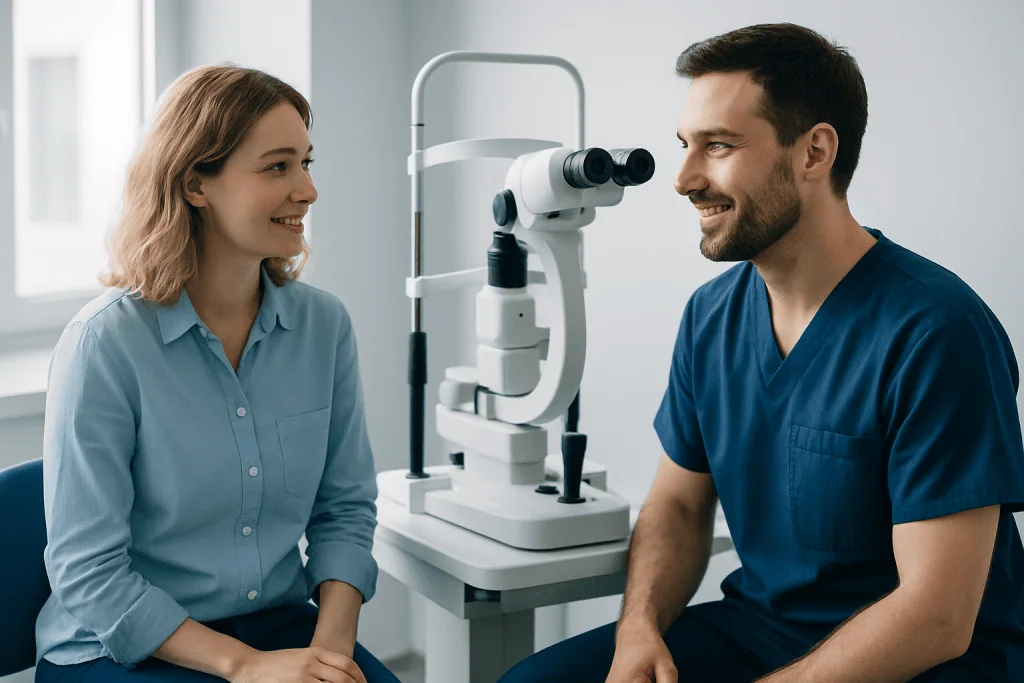
Before the procedure, eye drops may be used to dilate the pupil, numb the surface of the eye, lower eye pressure, or prepare the eye in another way depending on the laser type. For many laser procedures, you will sit at a specialized microscope-like device similar to the equipment used during an eye examination. A small lens may be placed on the eye with lubricating gel after numbing drops. This lens helps the physician focus the laser precisely and keep the eye in the correct position.
During retinal laser treatment, the ophthalmologist directs laser spots to targeted areas of the retina. Patients may see bright flashes of light. There may be mild discomfort or a sensation of pressure, especially when treating the peripheral retina, but many patients tolerate the procedure well with drops alone. The number and pattern of laser applications depend on the condition, such as a retinal tear, proliferative diabetic retinopathy, or retinal vascular disease. Some retinal conditions require more than one session to treat the area safely.
During YAG laser capsulotomy after cataract surgery, the laser creates an opening in the cloudy posterior capsule behind the artificial lens implant. The treatment is usually brief. Patients may hear clicking sounds and see light, but the procedure is generally not painful. Vision may improve quickly in many patients, although floaters or temporary blurring can occur in the first days.
During laser iridotomy, the physician creates a tiny opening in the iris to help fluid circulate more freely in eyes with narrow drainage angles. The eye may be pretreated with drops to make the pupil smaller and reduce the chance of pressure elevation. Patients may notice a brief stinging or pressure sensation. Eye pressure is often checked after the procedure.
During selective laser trabeculoplasty, laser energy is applied to the trabecular meshwork, the drainage tissue of the eye. The aim is to improve outflow of fluid and lower intraocular pressure. It may reduce the need for eye drops in selected patients or support pressure control when medication alone is not sufficient. The pressure-lowering effect is not always immediate and may be assessed over follow-up visits.
During corneal laser procedures, the eye is positioned under a laser system designed to treat the corneal surface or reshape corneal tissue. Detailed measurements are taken before treatment to guide the plan. The procedure may involve creating or lifting a thin corneal layer, treating the surface directly, or smoothing an irregular area, depending on the diagnosis and technique. Corneal laser patients require careful preoperative screening and structured postoperative follow-up because healing quality affects visual recovery.
The technology used in ophthalmic laser care is selected according to the medical problem. Diagnostic imaging may include high-resolution retinal scans, corneal mapping, optic nerve analysis, visual field testing, retinal photography, and angiographic imaging when blood vessel leakage or abnormal circulation must be assessed. Laser delivery systems allow controlled energy application to defined tissue targets. Imaging and measurement tools help the physician decide where to treat, how extensive the treatment should be, and how the eye is responding over time.
Most ophthalmic laser treatments are outpatient procedures. The time in the hospital may be longer than the procedure itself because preparation, dilation, examination, consent, treatment, and post-procedure checks are included. After treatment, you may receive anti-inflammatory drops, pressure-lowering drops, lubricants, or other medication depending on the procedure. Because dilation and temporary blur are common, patients should not plan to drive immediately afterward. International patients should also discuss flying, return travel, follow-up timing, and warning symptoms before leaving the hospital.
Recovery varies by laser type. Some patients return to normal activities the same day or the next day, while others need several days of reduced activity, light sensitivity precautions, or eye drop treatment. Retinal laser patients may experience temporary blurred vision, reduced night vision, or peripheral visual changes depending on treatment extent. Corneal laser recovery may involve more noticeable discomfort, light sensitivity, and fluctuating vision during the early healing period. Glaucoma laser patients may need pressure checks and continued medication until the response is known.
Why Acting Early Matters
Many eye diseases are time-sensitive. Delaying evaluation or treatment can allow damage to progress in ways that may not be reversible. The retina and optic nerve are particularly vulnerable. Once retinal tissue detaches, scars, or loses function, or once optic nerve fibers are damaged by glaucoma, treatment may prevent further decline but cannot always restore what has been lost.
In diabetic retinopathy, abnormal blood vessels may bleed, scar, or pull on the retina. Early detection and appropriate treatment can reduce the risk of severe complications. In a retinal tear, timely laser treatment may help secure the retina around the tear and reduce the chance of progression to retinal detachment. In narrow-angle glaucoma, early recognition of risky anatomy can help prevent sudden pressure elevation, which may threaten vision and cause severe pain. In open-angle glaucoma, pressure control is important because vision loss often develops gradually and silently.
Even when symptoms seem mild, they should not be ignored. New flashes, floaters, a curtain-like shadow, sudden blurred vision, eye pain with halos, or sudden vision loss should be assessed urgently. For patients planning travel abroad, it is wise to schedule evaluation early enough to allow diagnostic testing, treatment if needed, and appropriate follow-up before returning home.
Benefits of Ophthalmic Laser Treatment
The benefits of ophthalmic laser treatment depend on the diagnosis, but the following advantages are common reasons physicians recommend a laser-based approach when appropriate.
| Benefit | What It Means for You |
|---|---|
| Targeted treatment | Laser energy can be directed to a specific structure, such as the retina, capsule, iris, drainage angle, or cornea, while limiting unnecessary disruption to surrounding tissue. |
| Outpatient care | Most ophthalmic laser procedures are performed without hospital admission, allowing many patients to return to their hotel or home the same day. |
| Reduced need for incisions | Many laser procedures treat the eye without traditional surgical cuts, which can simplify recovery in suitable patients. |
| Vision preservation | For conditions such as diabetic retinopathy, retinal tears, and glaucoma, treatment may help reduce the risk of further vision loss when performed at the right time. |
| Improved clarity in selected cases | Procedures such as YAG capsulotomy after cataract surgery may improve visual clarity when the cause of blurred vision is a cloudy capsule. |
| Personalized treatment planning | Laser type, treatment extent, follow-up schedule, and medication are adapted to your diagnosis, eye anatomy, and overall health. |
Recovery Timeline After Ophthalmic Laser Treatment
Recovery differs by procedure and condition, but many patients can use the following general timeline to understand what to expect after ophthalmic laser treatment.
| Time Period | What Patients Can Expect |
|---|---|
| Day 1 | Temporary blurred vision, light sensitivity, mild irritation, or floaters may occur. Some patients have eye pressure checked before leaving. Driving is usually avoided immediately after treatment, especially if the pupil was dilated. |
| First Week | Vision may fluctuate while the eye settles. Eye drops may be prescribed to reduce inflammation or control pressure. Patients should follow activity instructions and report severe pain, worsening vision, increasing redness, or new visual shadows. |
| First Month | Follow-up examinations may be used to assess healing, eye pressure, retinal response, or corneal recovery. Some conditions require additional laser sessions or complementary treatment. |
| Longer Term | Ongoing monitoring is important for chronic conditions such as diabetes, glaucoma, or retinal vascular disease. Laser treatment may address a specific problem, but the underlying disease may still require long-term care. |
Factors That Influence Outcomes
The result of ophthalmic laser treatment depends on more than the procedure itself. A good outcome begins with an accurate diagnosis and careful selection of the right treatment. Not every eye condition is best treated with laser, and not every patient with the same diagnosis needs the same approach. The ophthalmologist must consider the stage of disease, location of the problem, eye anatomy, previous surgery, medications, and the patient’s visual goals.
The condition being treated is one of the most important factors. A small retinal tear identified before detachment may have a different outlook than advanced retinal disease with bleeding or scarring. A patient with mild posterior capsule clouding after cataract surgery may notice rapid improvement after YAG capsulotomy, while a patient whose blurred vision is caused by macular disease may not improve with capsule treatment alone. In glaucoma, laser response varies from patient to patient, and pressure control may still require drops or additional procedures.
Timing also matters. Earlier treatment can sometimes prevent complications, particularly in retinal tears, diabetic retinopathy, and glaucoma-related risk. However, treatment should also be well planned. Performing a laser without adequate imaging or complete examination can miss related problems or lead to unrealistic expectations. This is why diagnostic precision is essential.
General health influences eye outcomes. Diabetes control, blood pressure management, cholesterol levels, smoking, kidney disease, and medication adherence can all affect retinal disease. Dry eye, autoimmune disease, and corneal thickness may affect corneal laser planning and healing. For glaucoma patients, consistent use of prescribed drops and attendance at follow-up visits are often as important as the laser procedure itself.
The patient’s ability to follow post-treatment instructions also contributes to recovery. Eye drops should be used as prescribed. Follow-up visits should not be missed, particularly after retinal or glaucoma laser treatment. Symptoms such as sudden vision loss, increasing pain, a curtain-like shadow, severe redness, or many new floaters should prompt urgent medical contact.
Finally, outcomes are influenced by the expertise of the clinical team and the quality of the diagnostic and treatment environment. Ophthalmic laser care requires precise examination, appropriate technology, experienced interpretation of imaging, and clear communication about benefits, alternatives, and risks. The best result is not simply a successful procedure; it is a treatment plan that fits the patient’s diagnosis and protects vision over time.
Why International Patients Choose Acibadem for Ophthalmic Laser Care
International patients often come to Acibadem for ophthalmic laser evaluation because they want medical clarity, careful planning, and coordinated support while receiving care abroad. Eye conditions can be stressful, particularly when vision is changing or a procedure has been recommended urgently. For patients traveling from the United States, Europe, the Middle East, Africa, or other regions, the ability to access experienced ophthalmologists, advanced diagnostic testing, and organized international services can make the process more manageable.
Acibadem hospitals are JCI-accredited, reflecting structured standards for patient safety, clinical quality, and hospital processes. In ophthalmology, this environment supports a disciplined approach to diagnosis, documentation, consent, procedure planning, and follow-up. Laser treatment is planned after a detailed examination rather than as a one-size-fits-all intervention. When needed, cases may be discussed with related specialists, especially for patients whose eye disease is connected to diabetes, vascular disease, neurologic symptoms, autoimmune conditions, or previous complex surgery.
Modern ophthalmic diagnosis is central to treatment decisions. At Acibadem, physicians may use high-resolution retinal imaging, optic nerve analysis, corneal mapping, eye pressure assessment, visual field testing, and other diagnostic tools depending on the condition. These technologies help identify subtle disease, guide laser placement, determine whether additional treatment is needed, and monitor response. For a patient seeking a second opinion, updated imaging can clarify whether a laser is urgent, optional, or not the most appropriate option.
Experienced ophthalmologists are important because laser procedures require judgment as well as technical skill. The physician must decide what to treat, what to avoid, how much energy to use, whether treatment should be staged, and how to manage risks. In retinal disease, undertreatment may fail to control progression, while overtreatment may increase side effects. In glaucoma, the anatomy of the angle and the stage of optic nerve damage influence the laser choice. In corneal laser care, patient selection is critical because corneal stability and shape determine safety.
For international patients, the medical journey includes more than the procedure day. Acibadem International provides dedicated coordination in more than 20 languages, helping patients with appointment planning, medical document transfer, interpretation, hospital navigation, and communication with clinical teams. This is especially valuable in ophthalmology because eye care often involves multiple tests, dilation time, procedure scheduling, medication instructions, and follow-up. Clear communication reduces uncertainty and helps patients understand what they should expect before returning home.
Personalized treatment planning is also essential for travel-related decisions. Some patients can complete evaluation and laser treatment in a short visit, while others need staged care or longer monitoring. A patient with a retinal tear may need prompt treatment and early follow-up. A glaucoma patient may need pressure checks after laser and medication adjustment over time. A corneal laser patient may need more structured healing assessment before travel. The team can help advise on practical issues such as when flying may be appropriate, whether a companion is recommended, and what warning symptoms require urgent attention.
Acibadem’s approach is not limited to performing a laser when one is requested. The priority is to determine whether laser treatment is medically appropriate and to explain alternatives. Some patients may benefit more from medication, intraocular injections, cataract surgery, glaucoma surgery, or observation. Others may require laser as part of a broader treatment plan. For international patients, this balanced assessment can be especially important when making decisions far from home.
Taking the Next Step
Ophthalmic laser treatment can be a valuable option for many eye conditions, but the right decision depends on a precise diagnosis and a clear understanding of the goal of treatment. For some patients, laser care is intended to improve visual clarity. For others, it is used to reduce eye pressure, prevent retinal complications, or protect remaining vision from further damage. Knowing which situation applies to you is the first step toward confident decision-making.
If you have been advised to consider an ophthalmic laser procedure, have new visual symptoms, or want a second opinion before traveling for treatment, a comprehensive eye evaluation can clarify your options. Sharing previous reports, imaging, medication lists, and surgical history allows the ophthalmology team to assess your case more efficiently and recommend a plan suited to your condition, travel schedule, and long-term eye health.
Acibadem offers coordinated ophthalmic evaluation and laser treatment planning for international patients, supported by experienced physicians, advanced diagnostic pathways, JCI-accredited hospital standards, and multilingual patient services. To learn more, you may request a consultation or second opinion and receive guidance on the most appropriate next steps for your eyes.
This information is general and is not a substitute for professional medical advice. Diagnosis and treatment decisions should always be made after examination by a qualified ophthalmologist.
Preparation
- An ophthalmologist performs a detailed eye examination and may request imaging or eye pressure measurements before treatment. Contact lenses may need to be stopped before certain laser procedures. Patients should inform the doctor about medications, allergies, pregnancy, or previous eye surgery.
Aftercare
- Temporary blurred vision, light sensitivity, mild irritation, or watering may occur after ophthalmic laser treatment. Prescribed eye drops should be used as directed, and rubbing the eyes should be avoided. Follow-up visits are important to check healing, eye pressure, or retinal response.
Turkey vs UK, Germany & USA
Ophthalmic laser procedures can differ in cost and experience depending on the eye condition, laser technology, specialist expertise, and the hospital setting. International patients usually compare not only the procedure fee, but also diagnostics, travel logistics, follow-up planning, and language support.
The overall value of ophthalmic laser treatment depends on clinical complexity, technology used, and how care is organised before and after the procedure.
| Factor | Turkey | UK | Germany | USA |
|---|---|---|---|---|
| Price drivers | Private hospital pricing often combines consultation, diagnostics, laser use, and coordination services into a planned pathway. | Private care costs vary by clinic and consultant; public access depends on eligibility and referral pathways. | Costs vary by hospital, specialist, diagnostic depth, and whether treatment is outpatient or linked to broader eye care. | Pricing can vary widely by provider, technology, facility fees, insurance status, and follow-up arrangements. |
| Hospital and surgeon factors | Experience of the ophthalmologist, subspecialty expertise, and access to modern diagnostic and laser platforms influence the quote. | Consultant reputation, private clinic setting, and availability of subspecialist services can affect cost and scheduling. | University, specialist, and private hospital settings may differ in fees, diagnostics, and care pathways. | Subspecialist expertise, facility type, and separate professional or facility billing may influence the final amount. |
| Accreditation and quality | International patients may choose hospitals with international accreditation such as JCI and multilingual patient services. | Quality oversight is structured through national regulation and professional standards, with variation between public and private settings. | Care is supported by national regulation, specialist training standards, and hospital quality systems. | Hospitals and surgery centers follow regulatory and accreditation systems that vary by state and provider. |
| Typical waiting and scheduling | Private scheduling for diagnostics and outpatient laser treatment is often coordinated in advance for international patients. | Private appointments may be arranged directly, while public pathways may involve referral-based waiting. | Scheduling depends on provider type, subspecialist availability, and diagnostic requirements. | Private scheduling is usually direct, but timing depends on insurance, provider availability, and pre-authorisation where applicable. |
| Travel and language logistics | International patient departments may assist with appointments, translation, airport and hotel coordination, and follow-up planning. | Travel is straightforward for domestic patients; international visitors may need to arrange accommodation and clinic communication separately. | Many centers support international patients, though language services and coordination vary by provider. | Travel and accommodation can be significant considerations, especially when multiple visits or follow-up appointments are needed. |
| What a package may include | Packages may include examination, diagnostic imaging, the laser procedure, routine medicines, interpreter support, and care coordination. | Private quotes may separate consultation, tests, procedure, medicines, and follow-up visits. | Quotes may be itemised or bundled depending on hospital policy and clinical pathway. | Billing may be separated between physician, facility, diagnostics, medicines, and follow-up care. |
What affects your final cost
- The eye condition being treated, such as retinal disease, corneal refractive error, glaucoma, or post-cataract capsule clouding.
- The type of laser and whether additional diagnostic imaging is required.
- The number of eyes treated and whether treatment is performed during the same visit or staged.
- The ophthalmologist’s subspecialty, hospital setting, and accreditation profile.
- Need for medicines, protective lenses, repeat checks, or additional procedures.
- Travel, accommodation, interpreter support, and remote follow-up planning for international patients.
Compare your options
Ophthalmic lasers include several clinical options, each designed for a different eye problem. Suitability is decided by an ophthalmology specialist after a detailed eye examination and diagnostic testing.
| Option | What it is | Typical use | Key considerations |
|---|---|---|---|
| Excimer laser corneal treatment | A laser reshapes the cornea to help focus light more accurately. | Used for selected refractive errors such as myopia, hyperopia, or astigmatism. | Requires careful corneal mapping, tear film assessment, and screening for suitability. |
| Femtosecond laser assisted corneal treatment | A precise laser creates corneal cuts or tissue separation during refractive or corneal procedures. | Used in selected laser vision correction and some corneal surgeries. | Technology choice depends on corneal thickness, eye anatomy, lifestyle needs, and surgeon assessment. |
| Retinal photocoagulation laser | A laser creates targeted treatment spots on the retina. | Used for selected retinal tears, diabetic retinal changes, retinal vein problems, or other retinal conditions. | May require retinal imaging, pupil dilation, and follow-up to check response and stability. |
| YAG laser capsulotomy | A laser opens a cloudy capsule behind an artificial lens after cataract surgery. | Used when posterior capsule clouding affects vision after cataract surgery. | Usually outpatient, but pressure checks and retinal risk assessment may be needed. |
| YAG laser iridotomy | A laser creates a small opening in the iris to improve fluid flow inside the eye. | Used for selected patients at risk of angle closure or with certain glaucoma patterns. | Requires eye pressure assessment, angle evaluation, and specialist follow-up. |
| Selective laser trabeculoplasty | A laser targets the eye’s drainage area to help lower eye pressure. | Used in selected glaucoma or ocular hypertension cases. | Effect varies between patients and may be combined with drops or other glaucoma care. |
Trusted care for international patients
General information only — not medical or financial advice. Final costs depend on the factors above and your individual case; request a free, personalised quote.
Doctors Performing This Treatment

Prof. Dr. Altan Göktaş
Ophthalmology
Prof. Dr. Ayşe Öner
Ophthalmology
Prof. Dr. Banu Coşar
Ophthalmology
Prof. Dr. Berna Özkan
Ophthalmology
Prof. Dr. Dilaver Erşanlı
Ophthalmology
Prof. Dr. Dilek Güven
Ophthalmology
Prof. Dr. G. Ertuğrul Mirza
Ophthalmology
Prof. Dr. Gökhan Pekel
Ophthalmology
Prof. Dr. Haluk Esgin
Ophthalmology
Prof. Dr. Mehdi S. Öğüt
Ophthalmology
Prof. Dr. Muhsin Eraslan
Ophthalmology
Prof. Dr. Müslime Akbaba
Ophthalmology
Prof. Dr. Nazan Bengüdeniz Erda
Ophthalmology
Prof. Dr. Sarper Karaküçük
Ophthalmology
Prof. Dr. Selçuk Sızmaz
Ophthalmology
Prof. Dr. Seyhan Topbaş
Ophthalmology
Prof. Dr. Solmaz Balcı Akar
Ophthalmology
Prof. Dr. Özgül Altıntaş
Ophthalmology
Prof. Dr. Özlem Şahin
Ophthalmology
Assoc. Prof. Dr. Özgür Çakıcı
Ophthalmology
Dr. Akın Banaz
Ophthalmology
Dr. Alpaslan Koç
Ophthalmology
Dr. Buket Ayoğlu
Ophthalmology
Dr. Ercan Paşaoğlu
OphthalmologyMedical Units
Available at These Hospitals












Frequently Asked Questions
What affects the cost of ophthalmic laser treatment?
Cost depends on the diagnosis, the type of laser, diagnostic imaging, whether one or both eyes need treatment, the ophthalmologist’s subspecialty, hospital setting, medicines, and follow-up requirements. A personalised quote can be provided after reviewing your medical details.
How can I get a quote before travelling to Turkey?
You can request a free consultation by sharing your diagnosis, eye reports, imaging results, previous surgery history, and current medicines. The medical team can then advise which examinations are needed and prepare a personalised estimate.
Is ophthalmic laser treatment usually done as an outpatient procedure?
Many ophthalmic laser treatments are planned as outpatient procedures, but the exact pathway depends on the condition and the type of laser. Your specialist will explain preparation, expected visit time, and follow-up needs.
What is usually included in an international patient package?
Depending on the hospital and clinical plan, a package may include specialist examination, diagnostic tests, the laser procedure, routine medicines, interpreter support, appointment coordination, and follow-up guidance. Inclusions should always be confirmed in your written quote.
Will I need follow-up after an eye laser procedure?
Follow-up is often recommended to check vision, eye pressure, healing, or retinal response, depending on the procedure. International patients should discuss which checks must be done in Turkey and which can be arranged with a local ophthalmologist after returning home.