

Laminate Veneers
Laminate veneers are thin, custom-made porcelain shells bonded to the front of teeth to improve their color, shape, size, or alignment for a natural-looking smile.
Quick answer
Laminate veneers are thin, custom-made porcelain shells bonded to the front of teeth to improve their color, shape, size, or alignment for a natural-looking smile.
A considered approach to improving your smile
When you are unhappy with the appearance of your teeth, the concern is often about more than cosmetics. You may avoid photographs, cover your mouth when laughing, or feel that your smile does not reflect how you want to present yourself professionally or socially. Discoloration that does not respond to whitening, small gaps, worn edges, uneven tooth shape, or teeth that appear slightly misaligned can all affect confidence.
Laminate veneers offer a conservative cosmetic dentistry option for carefully selected patients. These thin, custom-made porcelain coverings are bonded to the visible front surfaces of teeth to improve color, shape, proportion, and overall smile harmony. The goal is not to create a uniform or artificial-looking result. A well-planned veneer treatment should respect your facial features, lip line, age, natural tooth character, and preferences for a brighter or more refined smile.
Choosing veneers is still an important dental decision. Even when tooth preparation is minimal, treatment may involve altering a small amount of enamel, and porcelain veneers require long-term care. International patients commonly ask whether veneers look natural, whether teeth must be filed down, how many appointments are needed, how long they last, and what happens if a veneer chips or comes loose. These are appropriate questions, and they should be addressed through a detailed assessment rather than a one-size-fits-all cosmetic plan.
At Acibadem, veneer planning begins with an understanding of your oral health, dental function, and aesthetic priorities. Dentists assess the condition of the enamel, gums, bite, and surrounding teeth before recommending laminate veneers or considering alternatives such as whitening, orthodontic treatment, bonding, crowns, or gum contouring. This careful approach helps ensure that cosmetic improvement supports long-term dental health.
What are laminate veneers?
Laminate veneers are very thin restorations, most commonly made from high-quality dental porcelain or ceramic, designed to cover the front and sometimes the biting edge of a tooth. Each veneer is individually fabricated to match the desired shade, translucency, contour, and surface texture. Once bonded to the tooth with specialized dental adhesive, the veneer becomes a durable part of the visible tooth surface.
Porcelain is widely used because it can reproduce many of the optical qualities of natural enamel. It reflects light differently from opaque materials, allowing the dentist and dental laboratory to create depth and subtle variation rather than a flat, overly white appearance. Porcelain is also relatively resistant to staining from coffee, tea, red wine, and tobacco compared with natural enamel and composite resin, although the margins around restorations and adjacent teeth still require careful hygiene.
Veneers are usually placed on teeth that show when you smile, most often the upper front teeth and, depending on the smile line and patient goals, the lower front teeth. Treatment may involve one tooth, several teeth, or a broader smile design. The number of veneers is determined by the visibility of the teeth, the degree of color or shape change requested, the natural symmetry of the smile, and whether neighboring teeth need to be balanced.
In many cases, a small amount of enamel is gently reshaped to create room for the veneer and allow it to sit naturally within the smile. This is often called minimal-preparation veneer treatment. Some patients may be candidates for little or no preparation, but “no-prep” veneers are not appropriate for every tooth. If there is not enough space, placing porcelain over the existing tooth without preparation can make teeth look bulky, affect speech, irritate the gums, or create bite problems. The most conservative approach is not always the one that removes the least enamel; it is the one that achieves a healthy, balanced, functional result with the least necessary alteration.
It is important to distinguish veneers from crowns. A crown covers the entire tooth and may be indicated when a tooth has extensive decay, a large fracture, significant structural weakness, or previous large restorations. A veneer is primarily an aesthetic restoration for a tooth that is otherwise structurally sound. Composite bonding may also be an option for small changes, though it generally has different longevity, stain resistance, and repair characteristics than porcelain.
Who may need laminate veneers?
Laminate veneers may be considered by adults whose teeth and gums are healthy but who wish to address visible aesthetic concerns. Patients often seek treatment because their teeth appear dark, uneven, worn, chipped, too small, irregularly shaped, or mildly crowded. Others have older composite restorations on front teeth that no longer match the surrounding enamel, or they have developmental differences in tooth shape or enamel appearance.
Common concerns that may lead someone to ask about veneers include:
- Persistent tooth discoloration that has not improved sufficiently with professional whitening
- Small gaps between front teeth
- Chipped, fractured, or worn incisal edges
- Teeth that appear short, narrow, pointed, or disproportionate
- Mild rotation, asymmetry, or uneven alignment of front teeth
- Surface irregularities, minor enamel defects, or visible old fillings
- Uneven tooth color following trauma, root canal treatment, medication exposure, or developmental enamel changes
- A desire to improve smile symmetry while maintaining a natural appearance
Diagnosis begins with a comprehensive dental examination. The dentist reviews your medical and dental history, evaluates the teeth and gums, checks for cavities and signs of gum disease, and examines how the upper and lower teeth meet. Digital photographs, intraoral scans or impressions, and dental X-rays may be used when clinically appropriate. These records help the team assess the tooth structure beneath the visible surface and plan the position, length, and shape of proposed veneers.
Bite assessment is especially important. Patients who clench or grind their teeth, known as bruxism, may still be candidates for veneers, but they require individualized planning and may need a protective night guard after treatment. Significant bite instability, active jaw pain, untreated decay, gum inflammation, or severe tooth misalignment should usually be addressed before cosmetic veneers are placed.
For international patients, pre-travel planning can often begin with recent dental records, clear smile photographs, and a description of your goals. However, a final recommendation should be based on an in-person clinical examination. Digital images are useful for preliminary discussion, but they cannot fully determine enamel quality, gum health, bite forces, or the precise treatment needed.
Conditions and aesthetic concerns laminate veneers can address
Laminate veneers are not a treatment for every dental problem, but they can be highly effective for selected cosmetic and restorative indications. The best candidates generally have healthy gums, sufficient enamel for strong bonding, stable oral hygiene habits, and realistic expectations about what porcelain can and cannot change.
Veneers may be used to improve teeth affected by intrinsic discoloration, including color changes related to certain medications, enamel development, aging, or prior trauma. They can mask discoloration more predictably than whitening in some cases, particularly when the color is located within the tooth rather than on its outer surface. When a single tooth is darker than neighboring teeth, treatment may require particularly careful shade planning so that the restoration blends naturally.
They may also address minor shape and alignment concerns. For example, veneers can close limited spaces, build up worn edges, soften pointed canines, lengthen teeth that appear short, and create a more balanced relationship between central and lateral incisors. For more substantial crowding, rotations, or bite discrepancies, orthodontic treatment may be the healthier and more predictable first step. Attempting to correct major alignment issues with veneers alone can require excessive tooth reduction or result in an unnatural contour.
Veneers can be useful when enamel is irregular due to mild developmental defects, superficial pitting, or small areas of damage. They can also replace older aesthetic restorations where appropriate. Yet a veneer is not usually recommended for teeth with extensive decay, large fillings, severe cracks, inadequate enamel, or major structural loss. In these situations, a crown, filling, root canal treatment, periodontal treatment, orthodontics, or another intervention may be more suitable.
Patients with active gum disease need periodontal care before veneer treatment. Healthy, stable gums form the frame of a natural-looking smile and help support predictable margins around restorations. Similarly, patients with untreated tooth decay or active infection should receive necessary dental treatment before any elective cosmetic procedure.
How laminate veneer treatment is performed
Veneer treatment is a carefully sequenced process that combines clinical dentistry, dental technology, and aesthetic judgment. Depending on the complexity of the case, it may be completed over several appointments. International treatment plans are coordinated around sufficient time for diagnostics, preparation, laboratory fabrication, fitting, and follow-up, rather than compressing important clinical steps.
Consultation, smile assessment, and treatment planning
Your first visit involves a detailed discussion of what you would like to change and what you wish to preserve. Some patients want a subtle improvement that resembles their natural smile; others want a brighter shade or more visible symmetry. The dentist considers facial proportions, skin tone, lip movement, gum display, tooth proportions, and the way you speak and smile. Aesthetic treatment should be individualized rather than based on a standard tooth shape or shade.
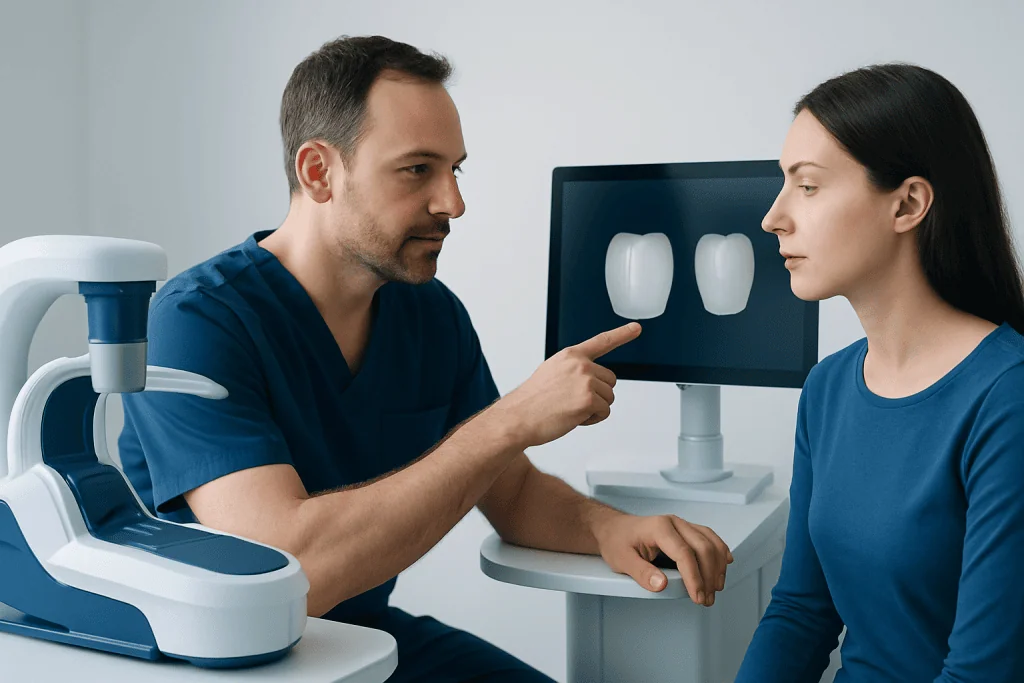
Digital photography, intraoral scanning, radiographic imaging when indicated, and smile-design software may be used to support planning. These tools allow the dental team to analyze tooth dimensions and create a visual guide for treatment. In selected cases, a diagnostic wax-up or digital simulation is prepared to show a proposed change in tooth shape and position. A temporary “mock-up” may be placed over the teeth so you can evaluate how changes in length or contour feel and appear in the mouth.
Planning may also include professional whitening of natural teeth before veneers are fabricated. Because porcelain does not whiten after placement, whitening is generally considered first when patients wish to brighten the surrounding natural teeth. The final veneer shade is then selected to harmonize with the stabilized color of the smile.
Tooth preparation
At the preparation appointment, the dentist may use local anesthetic for comfort, particularly if enamel reshaping is needed or several teeth are being treated. A very thin layer of enamel may be reduced from the front surface and, in some cases, the edge of the tooth. The amount varies according to the original tooth position, the desired color change, the thickness of the porcelain, and the planned final contour.
Conservative enamel preparation is valuable because porcelain bonds most reliably to enamel. The dentist aims to preserve as much healthy tooth structure as possible while creating adequate room for a veneer that is neither too thick nor overly opaque. Some cases require little preparation, while others require more detailed contouring to correct tooth position or accommodate a substantial color change. The reason for the recommended approach should be explained before treatment begins.
After preparation, precise digital scans or conventional impressions are taken and sent to the dental laboratory. Temporary veneers may be placed to protect prepared teeth and maintain appearance while the permanent restorations are made. In very minimal-preparation cases, temporary veneers may not be necessary.
Laboratory fabrication and aesthetic customization
Dental laboratory technicians fabricate veneers using the prescribed design, tooth shade, and material characteristics. Modern digital workflows can improve the precision of scanning, planning, and communication between the dentist and laboratory. The clinical team may specify variations in translucency, surface texture, edge definition, and shade gradients that help the veneers resemble natural enamel.
Technology supports precision, but it does not replace clinical judgment. The final design must account for how your teeth interact with the lips, how light falls across the smile, and how your bite functions. This is why high-quality veneer treatment is a collaborative process between the treating dentist, laboratory team, and patient.
Try-in, bonding, and final adjustments
At the final placement visit, each veneer is first evaluated for fit, shade, shape, and harmony with adjacent teeth. The dentist may place the veneers temporarily with a try-in medium so that you can view the result before permanent bonding. Minor adjustments can be made at this stage when needed.
Once the design is approved, the tooth surface and veneer are carefully prepared for bonding. Specialized adhesive systems are used to create a strong connection between the porcelain and enamel. Each veneer is positioned precisely, bonded, and polished. The dentist then checks the bite, speech, and edge contacts, making final refinements to help reduce excess pressure on the restorations.
The placement appointment can vary in length depending on the number of veneers and the complexity of the case. A single veneer may be placed relatively quickly, while a multi-tooth smile rehabilitation requires more time for detailed assessment, bonding, and adjustment. Your dental team will explain the anticipated schedule in advance.
Technology used in laminate veneer care
Modern veneer planning may incorporate digital intraoral scanning, high-resolution dental photography, computer-assisted smile simulation, digital shade analysis, and precision laboratory manufacturing methods. These technologies can help reduce inaccuracies associated with conventional impressions, improve communication about the intended design, and allow closer evaluation of fit and proportions.
Diagnostic imaging may be used to assess roots, supporting bone, existing restorations, and hidden dental concerns before treatment. Magnification and enhanced lighting can support meticulous preparation and bonding. The exact technology used is selected according to your clinical needs and is discussed as part of your treatment plan.
Recovery and aftercare
Recovery after veneer placement is usually brief because the procedure is minimally invasive compared with many surgical treatments. Some patients experience mild sensitivity to cold, heat, or pressure for several days, especially after enamel preparation. The gums may feel slightly tender if they have been retracted during treatment. These effects commonly settle as the mouth adapts.
You can generally eat and drink after the anesthetic has worn off, but it is sensible to begin with softer foods if your teeth or gums feel sensitive. Avoid biting hard foods directly with front teeth in the early period and follow any instructions related to temporary veneers. Once permanent veneers are bonded, they are designed for normal daily function, but they should not be used to bite fingernails, open packaging, hold hard objects, or crack ice.
Why early assessment matters
Cosmetic dental concerns may seem elective, but an early professional assessment can identify issues that should not be overlooked. A chipped or discolored tooth may be the visible sign of trauma, decay, an old leaking restoration, enamel erosion, grinding, or an underlying nerve problem. Gaps and changes in tooth position may sometimes be associated with gum disease or shifting teeth. Addressing the cause before changing the appearance helps protect both the result and the health of your mouth.
Delaying treatment for active decay, gum inflammation, or fractured teeth can allow damage to progress. What may initially be manageable with a conservative restoration can become more complex if infection, structural loss, or gum recession develops. Likewise, untreated clenching or grinding can continue to wear natural teeth and place excessive force on veneers, crowns, or fillings.
Early assessment does not mean that every patient needs immediate veneer treatment. In some cases, the most appropriate recommendation is to start with hygiene care, whitening, orthodontics, a night guard, gum treatment, or simple bonding. A responsible cosmetic plan begins by identifying the least invasive option that can safely meet your goals.
Benefits of laminate veneers
For appropriately selected patients, laminate veneers can offer the following practical and aesthetic benefits.
| Benefit | What It Means for You |
|---|---|
| Natural enamel-like appearance | Porcelain can be customized for shade, translucency, texture, and shape, helping the restored teeth blend with the character of your smile. |
| Improved color consistency | Veneers can mask selected types of persistent discoloration and create a more even shade across visible teeth. |
| Conservative tooth coverage | Unlike full crowns, veneers generally cover only the visible front portion of a tooth and may require less removal of healthy tooth structure. |
| Correction of minor shape concerns | They can improve chipped edges, uneven lengths, small gaps, and minor asymmetries when the underlying teeth are healthy. |
| Resistance to everyday staining | High-quality porcelain is less likely than natural enamel or composite resin to absorb common food and drink stains, though good oral hygiene remains essential. |
| Individualized smile design | The number, shape, brightness, and proportions of veneers can be planned around your facial features, bite, and preference for a subtle or more noticeable change. |
Recovery timeline after laminate veneer placement
Recovery varies with the extent of preparation, gum sensitivity, the number of teeth treated, and individual oral health, but the following timeline is typical.
| Time Period | What Patients Can Expect |
|---|---|
| Day 1 | Mild numbness may persist until local anesthetic wears off. Teeth or gums can feel slightly sensitive, and it is best to avoid very hard foods or extreme temperatures until comfort returns. |
| First Week | Most patients adapt quickly to the new tooth surfaces. Minor sensitivity, awareness of changed contours, or slight speech adjustment usually improves within several days. A bite review may be arranged if any tooth feels high or uncomfortable. |
| First Month | The gums and bite should feel settled. Continue brushing, flossing, and attending any recommended review appointment. Report persistent sensitivity, roughness, pressure when biting, or changes around the gumline. |
| Longer Term | Veneers require the same routine dental care as natural teeth, including professional examinations and hygiene visits. A night guard may be advised for patients who grind or clench. |
What influences outcomes and long-term results?
A good veneer result depends on more than the porcelain itself. Careful diagnosis, suitable case selection, conservative preparation, accurate bonding, laboratory craftsmanship, and ongoing patient care all influence appearance and durability. Strong bonding to healthy enamel is particularly important, which is why dentists evaluate whether enough enamel is available before recommending treatment.
Gum health plays a central role. Inflamed or receding gums can affect the appearance of veneer margins and make it more difficult to maintain a stable, attractive result. Patients should have periodontal concerns addressed first and continue regular hygiene care after veneers are placed. Brushing twice daily with a non-abrasive toothpaste, cleaning between teeth, and attending routine dental examinations help protect both the veneers and the natural teeth underneath.
Bite forces are another significant factor. Porcelain is durable but can chip, crack, or debond under excessive force. Patients who grind their teeth, bite pens, chew ice, or use their teeth as tools have a higher risk of damage. Where indicated, a custom night guard can help reduce stress on veneers during sleep. If a veneer is damaged, the appropriate solution may range from minor polishing to repair or replacement, depending on the nature and location of the issue.
Longevity varies from person to person. With appropriate planning and maintenance, porcelain veneers can remain functional and aesthetically pleasing for many years. However, they are not permanent in the sense that they will never need attention. Gum changes, normal wear, dental trauma, changes in bite, decay at the edges of restorations, or accidental damage can affect the long-term result. Understanding this before treatment helps patients make an informed decision.
Realistic expectations are equally important. Veneers can improve visible teeth, but they do not stop natural aging, change the health of untreated teeth, or replace ongoing dental care. They may not be the ideal solution for severe crowding, advanced gum disease, significant jaw-related bite problems, or extensively damaged teeth. An experienced dentist will discuss alternatives when another treatment is likely to preserve more tooth structure or provide a more stable result.
Why international patients choose Acibadem for veneer treatment
International patients seeking cosmetic dentistry often value clear clinical guidance as much as the treatment itself. At Acibadem, laminate veneer care is approached as part of comprehensive dental assessment rather than as an isolated cosmetic service. Dentists consider oral health, gum condition, tooth structure, bite function, and aesthetic goals before developing a personalized plan.
For cases involving complex dental needs, care can be coordinated across relevant specialties. This may include prosthodontics, restorative dentistry, periodontology, endodontics, orthodontics, oral and maxillofacial surgery, or other disciplines when appropriate. A multidisciplinary perspective is particularly important when a patient has gum concerns, substantial tooth wear, missing teeth, jaw symptoms, prior extensive dental work, or a smile concern that cannot be safely addressed with veneers alone.
Acibadem hospitals are JCI-accredited, reflecting established standards for patient safety, quality processes, and clinical care. International patients are supported by dedicated services designed to make the care process easier to navigate, including assistance in more than 20 languages. Coordination may include appointment planning, medical documentation support, interpretation, travel-related guidance, and communication with the clinical team before and after the visit.
Modern diagnostic pathways, digital dental planning, and precision laboratory collaboration can support detailed aesthetic evaluation and accurate treatment delivery. Technology is used to improve assessment and communication, while the final plan remains centered on the individual patient. The treating dentist discusses what is feasible, what may require additional treatment, and what level of change is appropriate for the health and proportions of your smile.
For patients traveling from the United States or other countries, the practical question is often whether treatment can be completed safely within a planned visit. The answer depends on the number of teeth involved, whether preparatory treatment is needed, laboratory timelines, and the value of allowing time for review and adjustment. Your care team can outline a realistic schedule after reviewing your case, with the aim of allowing appropriate clinical evaluation rather than rushing a permanent dental decision.
Taking the next step toward a smile that feels like your own
Laminate veneers can be an elegant option for improving the color, shape, and balance of visible teeth when they are planned carefully and placed on healthy foundations. The most satisfying results are usually those that look credible, feel comfortable, function well, and remain consistent with the individual character of your smile.
If you are considering veneers, a consultation can help clarify whether they are appropriate for your needs, how many teeth may be involved, whether other treatments should come first, and what long-term care will be required. You may also request a second opinion if you have already received a cosmetic dentistry recommendation and would like a broader assessment of your options.
This information is for general educational purposes only and is not a substitute for professional medical or dental advice, diagnosis, or treatment. A qualified dentist should assess your individual oral health and suitability for laminate veneers.
Preparation
- A dentist examines your teeth and gums, discusses your smile goals, and may take digital impressions or photographs. Any active decay or gum disease should be treated before veneers are placed. Patients may be advised to avoid teeth whitening shortly before shade selection.
Aftercare
- Avoid biting hard foods, ice, or non-food objects with veneered teeth, especially during the first days. Maintain daily brushing, flossing, and regular dental check-ups to protect the veneers and surrounding teeth. A night guard may be recommended for patients who grind or clench their teeth.
Turkey vs UK, Germany & USA
Laminate veneers are a cosmetic dental treatment whose overall cost and experience depend on the materials selected, the complexity of smile design, the condition of the teeth and gums, and the level of clinical planning required. Comparing destinations can help patients understand differences in care pathways, travel arrangements and what may be included in a treatment plan.
Costs and patient experience vary according to the dental clinic, the treating dentist’s expertise, laboratory standards, diagnostic technology and the amount of preparation needed before veneers are placed.
| Factor | Turkey | UK | Germany | USA |
|---|---|---|---|---|
| Price drivers | Clinic location, veneer material, laboratory work, smile design and any preparatory dentistry. | Private clinic fees, laboratory choice, clinician experience and preparatory treatment. | Practice fees, laboratory quality, materials, planning and additional dental care. | Regional practice costs, cosmetic dentist fees, laboratory work and treatment complexity. |
| Hospital and dentist factors | International hospitals and dental centres may offer coordinated care with prosthodontic, restorative and periodontal support where needed. | Care is commonly provided in private dental practices; specialist referral may be required for complex needs. | Care is often delivered through private practices and specialist dental clinics. | Care is generally provided in private dental offices, with specialist involvement depending on the case. |
| Accreditation and quality | Patients can look for recognised quality systems; JCI-accredited hospital groups follow established international patient-safety standards. | Patients may review professional registration, clinic governance and laboratory credentials. | Patients may review practitioner qualifications, practice standards and laboratory credentials. | Patients may review dentist credentials, state licensing, clinic standards and laboratory credentials. |
| Waiting times | International treatment plans may be scheduled around travel dates after consultation and clinical assessment. | Availability can vary between private practices and according to appointment demand. | Availability varies by city, clinic and whether preparatory care or specialist input is needed. | Availability varies by location, provider schedule and insurance or financing arrangements where relevant. |
| Travel and language logistics | International patient teams may assist with appointment coordination, interpretation and travel-related planning. | May be convenient for UK residents; overseas visitors need to arrange travel and follow-up planning. | International visitors should consider travel, language preferences and plans for aftercare at home. | Travel distances can be substantial for international visitors; language and follow-up arrangements should be considered. |
| What a package typically includes | May include consultation, imaging or smile planning, veneers, laboratory work and coordination services; inclusions should be confirmed in writing. | Usually itemised by the practice and may separate consultation, diagnostics, laboratory fees and follow-up visits. | Often itemised, with separate charges possible for diagnostics, laboratory work and additional treatment. | Often itemised; consultation, imaging, laboratory work, temporary restorations and follow-up may be billed separately. |
What affects your final cost
- The number of teeth being treated and whether the aim is a single-tooth correction or a broader smile enhancement.
- The veneer material, shade characteristics, translucency and degree of custom laboratory artistry.
- Whether teeth require cleaning, gum treatment, fillings, whitening, bite adjustment or other preparation first.
- The amount of tooth reshaping required and whether temporary restorations are clinically appropriate.
- Digital smile design, diagnostic mock-ups, imaging and the number of fitting or review appointments needed.
- Travel, accommodation, interpretation and plans for maintenance or follow-up after returning home.
Compare your options
Several cosmetic and restorative approaches can improve the appearance of front teeth. The most suitable option depends on enamel condition, tooth position, bite, gum health, oral hygiene and the patient’s aesthetic goals; a specialist should decide suitability after assessment.
| Option | What it is | Typical use | Key considerations |
|---|---|---|---|
| Porcelain laminate veneers | Thin, custom-made porcelain shells bonded to the visible front surface of teeth. | Improving colour, shape, minor spacing, worn edges or mild appearance-related alignment concerns. | Requires careful planning and bonding; some enamel preparation may be needed. Veneers do not replace orthodontic treatment for significant tooth movement or correct underlying disease. |
| No-prep or minimal-prep veneers | Very thin veneers designed to preserve as much enamel as possible. | Selected cases with suitable tooth position, size and bite. | Not appropriate for every smile; adding material can make teeth appear bulky if planning is unsuitable. |
| Composite bonding | Tooth-coloured resin applied and shaped directly on the tooth. | Small chips, minor gaps, contour changes and conservative cosmetic improvements. | Usually more easily repaired than porcelain but may be more prone to staining, wear or chipping over time. |
| Dental crowns | Restorations that cover the entire visible portion of a tooth. | Teeth with extensive damage, large restorations, substantial wear or a need for greater structural coverage. | Generally involves more tooth reduction than a veneer and is not usually the first option for a healthy tooth needing only cosmetic change. |
| Teeth whitening | Professional bleaching to lighten natural tooth colour. | Discolouration where tooth shape and structure are otherwise satisfactory. | Does not change tooth shape or alignment, and existing restorations do not whiten in the same way as natural enamel. |
| Orthodontic treatment | Braces or clear aligners used to move teeth gradually. | Crowding, spacing, bite concerns and more substantial alignment issues. | May be recommended before veneers to preserve tooth structure and improve long-term function; it requires ongoing compliance and monitoring. |
Trusted care for international patients
General information only — not medical or financial advice. Final costs depend on the factors above and your individual case; request a free, personalised quote.
Doctors Performing This Treatment

Assoc. Prof. Dr. Ferit Bayram
Oral & Dental HealthDr. Ali Riza Özdurmuş
Oral & Dental Health
Dr. Arzu Morçiçek
Oral & Dental Health
Dr. Bedii Ender Topçu
Oral & Dental HealthDr. Begüm Öykü Kesim
Oral & Dental Health
Dr. Ceyda Sabancı
Oral & Dental HealthDr. Deniz Turgut
Oral & Dental Health
Dr. Destina Suay Sarı
Oral & Dental Health
Dr. Emre Çengelli
Oral Dental & Maxillofacial Surgery
Dr. Eylül Türsen
Oral & Dental HealthDr. Ezgi Gülüm
Oral Dental & Maxillofacial Surgery
Dr. Halime Bayram
Oral & Dental Health
Dr. Havva Gölalan
Oral & Dental Health
Dr. Helin Kuşsever Topçu
Oral & Dental Health
Dr. Melike Zeynep Çapoğlu
Oral & Dental Health
Dr. Merve Ağartıoğlu
Oral & Dental Health
Dr. Metin Kınacı
Oral & Dental Health
Dr. Mücahit Güner
Oral & Dental Health
Dr. Pelin Açık
Oral & Dental Health
Dr. Sebiha Nihal Yılmaz
Oral Dental & Maxillofacial SurgeryDr. Seda Saygılı Özaydın
Oral & Dental Health
Dr. Uğur Önder
Oral & Dental Health
Dr. Zeynep Ekin Kılınç
Oral & Dental Health
Dr. Çağla Su Doğangün Ayduk
Oral & Dental HealthMedical Units
Available at These Hospitals












Diseases This Treats
Frequently Asked Questions
What are laminate veneers and what problems can they correct?
Laminate veneers are very thin, custom-made porcelain or ceramic shells bonded to the front surfaces of teeth. They can improve the appearance of discoloration, minor chips, worn edges, small gaps, uneven shapes, and mildly misaligned teeth. Veneers are mainly a cosmetic solution and may not be suitable when there is significant decay, gum disease, severe crowding, or bite instability. Acibadem dental specialists assess your teeth, gums, bite, and smile goals before recommending treatment.
How is the laminate veneer procedure performed?
Treatment usually begins with a dental examination, photographs, digital planning, and shade selection. The dentist may gently reshape a small amount of enamel, depending on the planned veneer type. Impressions or digital scans are used to design the veneers in a laboratory. At the final visit, the dentist checks the fit, color, and bite before bonding each veneer securely. Temporary veneers may be used in some cases while the final restorations are being made.
Do laminate veneers require shaving down natural teeth?
Many laminate veneers require only minimal enamel preparation, while some no-prep or ultra-thin options may require little or no reshaping. However, the amount of preparation depends on tooth position, existing restorations, tooth color, and the desired final shape. Removing too little or too much enamel can affect the result, so careful planning is important. Acibadem specialists provide a personalized assessment and explain whether minimal-prep, no-prep, or conventional veneers are appropriate.
Are laminate veneers painful to get?
Most patients experience little discomfort during veneer preparation. Local anesthesia can be used if enamel reshaping is needed or if you have sensitive teeth. After treatment, mild temporary sensitivity to hot or cold foods may occur, especially during the first days after bonding. This usually settles as your teeth adapt. If discomfort, bite pressure, or sensitivity continues, the dentist should review the veneers promptly to ensure the fit and bite are comfortable.
How long do laminate veneers last?
With good oral hygiene and regular dental care, laminate veneers can remain attractive and functional for many years. Their lifespan depends on the material, bonding quality, bite forces, oral habits, and whether you grind or clench your teeth. Veneers can chip, loosen, stain around their edges, or require replacement over time. Avoiding hard biting habits, wearing a night guard if recommended, and attending dental check-ups can help protect your investment.
Can I get laminate veneers if I have crooked, missing, or damaged teeth?
Veneers can camouflage mild crowding, small rotations, uneven edges, and minor gaps, but they do not move teeth or replace missing teeth. More significant misalignment may be better treated with orthodontics first. Teeth with extensive damage, large fillings, root canal treatment, or weak enamel may need crowns or other restorations instead. Missing teeth generally require options such as dental implants or bridges. A personalized dental evaluation determines the safest and most natural-looking approach.
How many days do I need to stay in Turkey for laminate veneers?
The required stay depends on the number of veneers, the type of material, laboratory scheduling, and whether preliminary treatments are needed. Many international patients complete treatment over several appointments during one visit, while complex cases may require more time or a follow-up visit. Your dental team can provide an estimated schedule after reviewing your scans, X-rays, and treatment plan. It is sensible to allow time for fitting adjustments and final bite checks before traveling home.
What is the difference between porcelain laminate veneers and composite bonding?
Porcelain or ceramic laminate veneers are laboratory-made restorations known for their natural translucency, color stability, and resistance to staining. Composite bonding uses tooth-colored resin applied and shaped directly on the tooth, often with less preparation and a shorter treatment time. Composite may be easier to repair but can be more prone to staining or wear. The best choice depends on your smile goals, tooth condition, bite, budget considerations, and expected maintenance needs.
Can laminate veneers stain or change color after treatment?
High-quality ceramic veneers are highly resistant to staining from coffee, tea, red wine, and smoking, although the natural teeth and bonding material around them can still change color. Veneers themselves cannot be whitened with bleaching products after placement. For this reason, dentists often recommend whitening natural teeth before selecting the final veneer shade when appropriate. Regular brushing, professional cleaning, and avoiding tobacco help maintain a bright, balanced smile.
What should I avoid after getting laminate veneers?
After veneers are placed, avoid using your teeth to open packages, bite nails, or chew hard objects such as ice, pens, and hard candy. Limit habits that place excessive pressure on the front teeth, including biting directly into very hard foods. Brush twice daily with a non-abrasive toothpaste, clean between teeth, and attend routine dental visits. If you clench or grind your teeth, a custom night guard may be recommended to reduce the risk of chipping or debonding.
What factors have the greatest effect on the cost of laminate veneers?
The main factors include the number of teeth treated, porcelain type and laboratory work, the complexity of smile design, the dentist’s experience, and any dental treatment needed before veneer placement. A clinical examination is needed to determine the full plan.
What is usually included in a laminate veneer treatment quote?
Quotes may include consultation, dental examination, imaging or digital planning, veneer fabrication, fitting appointments and follow-up. However, inclusions vary, so ask for a written treatment plan that clearly explains what is and is not included.
Can I receive a quote before travelling to Turkey?
A preliminary estimate may be possible after sharing suitable photographs, dental records and your goals. A definitive plan and quote require an in-person examination, as tooth health, bite and gum condition must be assessed. You can request a free consultation for personalised guidance.
Will I need treatment before getting veneers?
Possibly. Cleaning, gum care, treatment of decay, replacement of unsuitable fillings, whitening, orthodontic care or bite management may be recommended before cosmetic treatment. This can affect both the treatment timeline and the final cost.
How should international patients plan follow-up care?
Ask how many visits are expected, what reviews are planned after fitting and how to arrange care at home if needed. Keep copies of your treatment records and discuss maintenance, night guards where appropriate, and what to do if a veneer feels loose or damaged.