Tick Head Stuck in Skin: What Patients Need to Know

A retained tick head or mouthparts do not usually increase the risk of tick-borne disease after the tick’s body has been removed. Do not squeeze, burn, cover with substances, or deeply dig into the skin to remove small retained parts.
Key Takeaways
- A retained tick head or mouthparts do not usually increase the risk of tick-borne disease after the tick’s body has been removed.
- Do not squeeze, burn, cover with substances, or deeply dig into the skin to remove small retained parts.
- Wash the bite site with soap and water, then monitor it for normal healing, local infection, and new symptoms of illness.
- A clinician can safely remove visible retained mouthparts when they are easy to access or the area becomes inflamed.
- A spreading rash, fever, flu-like symptoms, or signs of skin infection after a tick bite need timely medical assessment.
If a tick’s mouthparts appear to be left in the skin, they usually behave like a small splinter and may work their way out naturally. The priority is to clean the area, avoid forceful digging, watch for infection or illness, and seek medical advice when removal is difficult or concerning symptoms occur.
What it means when a tick head is stuck in skin
A tick head stuck in skin usually refers to small mouthparts left behind after the tick’s body has been removed. This can happen when a tick is pulled away quickly, squeezed, or removed at an angle. Although it can look worrying, retained mouthparts generally act like a tiny splinter rather than a living tick.
Once the body of the tick has been removed, the remaining mouthparts cannot continue feeding or transmit infection in the same way an attached tick can. The main concern becomes local skin irritation or, less commonly, a minor bacterial skin infection if the area is repeatedly picked, scratched, or contaminated.
It is not always possible to tell whether a dark dot is a retained piece of the tick, a small scab, dried blood, or a natural skin mark. For this reason, it is usually better to focus on gentle wound care and symptom monitoring rather than attempting deep removal at home.
Safe steps to take at home

First, wash hands and clean the bite area with soap and water. An antiseptic may also be used if appropriate for the person’s skin and according to the product instructions. Keeping the site clean reduces the chance of irritation and helps make changes in the skin easier to notice.
If a small piece is clearly visible at the surface and can be lifted easily with clean, fine-tipped tweezers, it may be removed gently. The skin should not be squeezed. If the piece does not come out with minimal effort, it is usually safer to stop rather than dig into the skin.
Do not use petroleum jelly, nail polish, heat, alcohol, essential oils, or other home substances in an attempt to remove retained parts. These methods can irritate the skin and do not reliably remove mouthparts. Avoid scraping with needles, pins, or blades, as this can create a larger wound and increase infection risk.
- Clean the site and dry it gently.
- Use a small clean dressing only if clothing rubs against the area.
- Take a clear photograph of the bite if possible, especially if a rash later develops.
- Note the date and likely location of the tick exposure.
What normal healing can look like
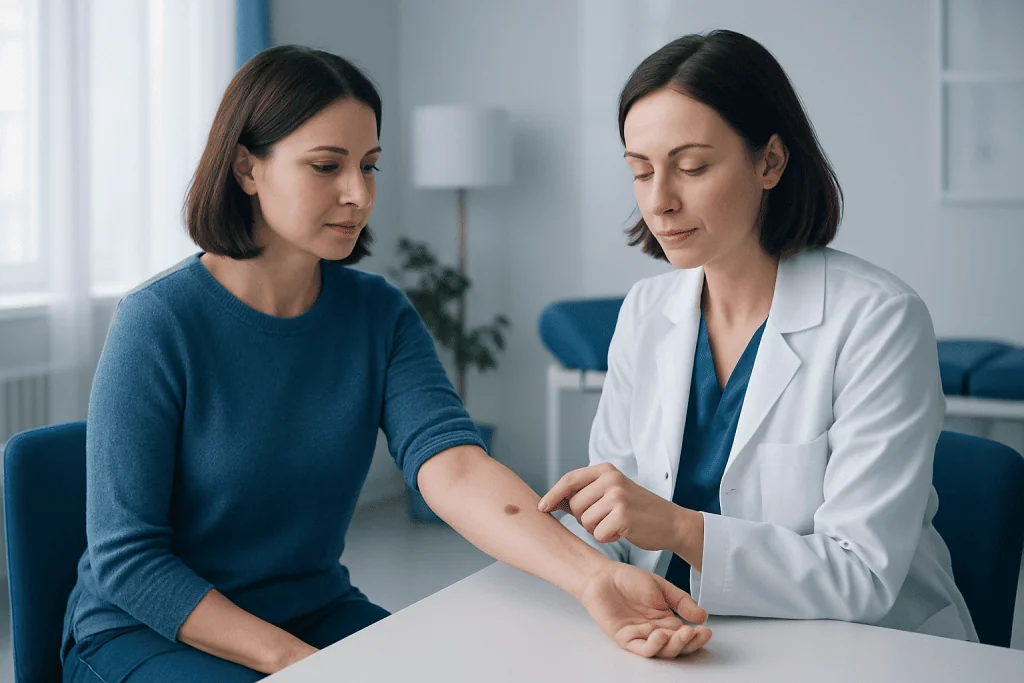
A small red bump, mild tenderness, itching, or a pinpoint scab can occur after any tick bite. These local reactions often improve over several days. A retained mouthpart may gradually be pushed out by the skin’s natural healing process, much as a superficial splinter may eventually surface.
The bite site should generally become less sore and less red over time. It may help to avoid scratching, because scratching can prolong irritation and allow bacteria from the skin or fingernails to enter the area. If itching is bothersome, a pharmacist or clinician can advise on suitable options based on the person’s age, health conditions, and other medicines.
Not every redness after a tick bite indicates a tick-borne illness. A small area of redness limited to the bite site shortly after removal is commonly a local reaction. However, redness that expands noticeably over days, particularly if it becomes larger than a simple irritated spot, should be assessed by a healthcare professional.
Tick-borne illness: what to monitor
Tick-borne infections depend on the type of tick, where exposure occurred, how long it was attached, and local disease patterns. Removing a tick promptly is important because some infections are more likely to be transmitted after prolonged attachment. Retained mouthparts alone are not thought to be a meaningful source of continued transmission once the tick body has been removed.
In the days to weeks after a tick bite, monitor for fever, chills, headache, unusual fatigue, muscle or joint aches, swollen lymph nodes, or a new rash. A rash associated with Lyme disease can enlarge gradually and may sometimes have a target-like appearance, but it does not always look the same in every person. Other tick-borne illnesses may cause different symptoms and may not include a rash.
People who develop symptoms after tick exposure should tell their clinician when and where the bite occurred, if known. This information can guide decisions about examination, testing, and treatment. For information about one possible infection associated with tick exposure, see Lyme disease.
When to seek medical care
Medical care is advisable if retained mouthparts are deeply embedded, located in a sensitive area such as near the eye or genitals, or cannot be removed without digging into the skin. A clinician can examine the site and remove material safely when removal is necessary. This is also sensible for people with reduced immunity, poor wound healing, or conditions that raise the risk of skin infection.
Prompt assessment is important if the bite becomes increasingly painful, warm, swollen, or red; produces pus; develops red streaks; or is accompanied by fever. These may indicate a local skin infection or another condition requiring treatment. Seek urgent care for severe allergic symptoms, such as trouble breathing, facial swelling, widespread hives, faintness, or confusion.
A doctor should also be contacted if flu-like symptoms or an expanding rash develop after a tick bite, even if the bite itself appears to be healing. Early evaluation can help identify whether testing or treatment is appropriate.
Prevention for future tick exposure
Prevention begins before outdoor activities in grassy, wooded, brushy, or leaf-covered areas. Wearing long sleeves, long trousers, and closed shoes can reduce exposed skin. Light-colored clothing may make ticks easier to spot. In areas where ticks are common, use an insect repellent or clothing treatment that is suitable for the individual and used exactly as directed.
After spending time outdoors, check the whole body for ticks, including the scalp, behind the ears, under the arms, around the waist, behind the knees, and in the groin area. Children and pets should also be checked. Showering soon after coming indoors may help with a thorough skin check, although it does not replace visual inspection.
If an attached tick is found, remove it as soon as possible with fine-tipped tweezers. Grasp it close to the skin and pull upward steadily without twisting or crushing the body. Then clean the skin and wash hands. If needed, Acibadem International’s multidisciplinary specialists and JCI-accredited hospitals can evaluate tick bites and related concerns for international patients.
Frequently asked questions
Can a tick head left in the skin still transmit disease?
After the tick’s body has been removed, retained mouthparts cannot continue feeding. They are not generally considered a source of ongoing tick-borne disease transmission. Monitoring for symptoms after any tick bite is still important because transmission, if it occurred, may have happened before removal.
Will a tick head work its way out on its own?
Small retained mouthparts may gradually be pushed out as the skin heals. They can also become surrounded by a tiny scab and resolve without intervention. If the area becomes increasingly painful, red, swollen, or draining, a clinician should examine it.
Should a person dig out a tick head with a needle?
No. Digging with a needle or other sharp object can damage the skin, leave a larger wound, and raise the chance of infection. If a visible piece cannot be removed easily with clean tweezers, medical advice is safer.
How long should a tick bite be monitored?
The bite site should be watched until it has healed, usually over days to a couple of weeks. General symptoms such as fever, fatigue, aches, or a new expanding rash can occur days to weeks after exposure, depending on the infection. Anyone with new symptoms should contact a healthcare professional.
Is a small red bump after tick removal normal?
A small, local red bump or mild itching soon after removal can be a normal skin reaction. It should gradually improve rather than continue expanding or becoming more painful. Increasing redness, warmth, pus, fever, or a spreading rash needs medical assessment.
Should the tick be saved after removal?
In some settings, saving a tick in a sealed container or taking a photograph may help identify it, but routine tick testing is not always recommended or useful for medical decisions. Local public health advice can vary. The most helpful information for a clinician is often the date and location of exposure, estimated attachment time, and any symptoms.
This article is for general information only and is not a substitute for professional medical advice. Please consult a qualified doctor about your individual situation.
Explore treatments in Turkey — costs, top hospitals & a free quote
JCI-accredited · board-certified surgeons · reply within 24h
Add us as a Preferred Source to see more of our trusted health content across Google Search, AI Overviews and Discover.

More from the Health Library

Prokinetics: An Evidence-Based Guide for Patients

Eye Color Change in Newborns: What Patients Need to Know

Bruising in stomach area: Symptoms, Causes, and Treatment — Complete Patient Guide

Ercp Procedure: What Patients Need to Know

Shingles on Arm — Explained by Medical Evidence, Not Myths