

Lasek vs LASIK: Differences Explained

LASIK creates a thin corneal flap, whereas LASEK treats the surface layer of the cornea. LASIK commonly provides quicker comfort and visual recovery than LASEK.
Key Takeaways
- LASIK creates a thin corneal flap, whereas LASEK treats the surface layer of the cornea.
- LASIK commonly provides quicker comfort and visual recovery than LASEK.
- LASEK may be an option for selected people with thinner corneas or lifestyles involving eye trauma risk.
- Neither procedure is automatically best; suitability depends on corneal measurements, prescription stability, eye health and personal priorities.
- Dry eye, glare, halos and residual prescription can occur after either procedure, although serious complications are uncommon with careful assessment.
- Long-term vision can remain good after laser surgery, but age-related changes such as presbyopia and cataracts may still develop.
LASEK and LASIK are laser vision correction procedures that reshape the cornea to reduce dependence on glasses or contact lenses. LASIK generally offers faster visual recovery, while LASEK may be considered when the cornea is thinner or when avoiding a deeper corneal flap is important.
LASEK vs LASIK: the main difference
In the comparison of LASEK vs LASIK, both procedures use an excimer laser to reshape the cornea, the clear front surface of the eye. Changing the corneal shape helps light focus more accurately on the retina, which can improve short-sightedness, long-sightedness and some forms of astigmatism. The central difference is how the surgeon accesses the corneal tissue before applying the laser.
During LASIK, the surgeon creates a very thin hinged flap in the cornea, folds it back, reshapes tissue beneath it with the laser and returns the flap to its position. During LASEK, the very thin outer skin-like layer of the cornea, called the epithelium, is loosened and moved aside. The laser treatment is performed at the surface, and the epithelium is repositioned or allowed to heal under a protective contact lens.
Because LASIK preserves the surface layer more directly, many people see more clearly and feel more comfortable sooner after surgery. LASEK usually involves several days of surface healing and a slower early visual recovery. However, it does not involve making a deeper corneal flap, which may make it suitable for some people after a detailed eye assessment.
How LASEK and LASIK work step by step
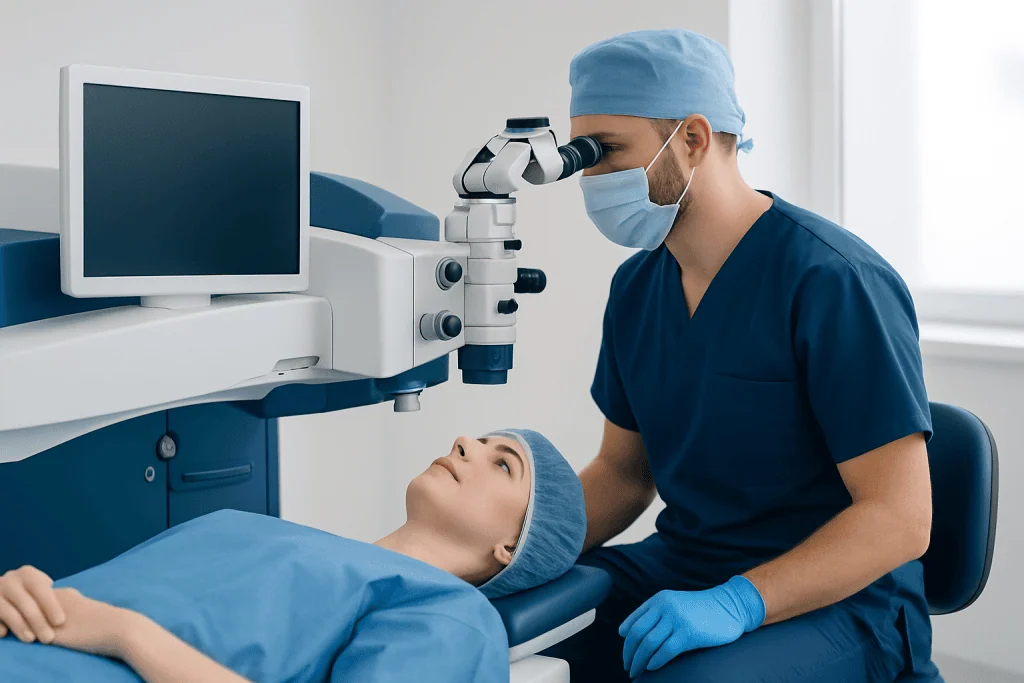
Before either procedure, an ophthalmologist checks the prescription, corneal thickness and shape, tear film, pupil size and general eye health. The person must have a stable prescription and realistic expectations. Contact lenses may need to be stopped for a period before measurements because they can temporarily alter the corneal shape.
For LASIK, numbing drops are used first. A femtosecond laser or a surgical instrument creates a thin corneal flap. The flap is lifted, and an excimer laser removes a precisely calculated amount of corneal tissue. The flap is then placed back without stitches, where it naturally adheres as healing begins.
For LASEK, numbing drops are also used. The surgeon applies a dilute alcohol solution briefly to loosen the epithelium, moves this layer aside and uses the excimer laser to reshape the corneal surface. A soft bandage contact lens is placed over the eye while the surface heals. The lens is usually removed by the eye care team after the epithelium has recovered sufficiently.
Both procedures are typically performed as outpatient surgery and usually take only a short time per eye. People remain awake, but numbing drops generally prevent pain during treatment. Clear aftercare instructions and follow-up visits are essential for safe healing.
Who may be a candidate for LASEK or LASIK?

Good candidates for laser vision correction are generally adults with a stable glasses or contact lens prescription, healthy corneas and no active eye infection or uncontrolled eye disease. The evaluation is more important than the name of the procedure: it identifies whether laser correction is appropriate at all and which technique offers the most favorable balance of benefit and risk.
LASIK may be appropriate for many people with suitable corneal thickness and shape who wish to return to usual activities relatively quickly. People with significant dry eye, an irregular cornea, unstable prescriptions or certain corneal conditions may not be suitable for LASIK. A careful assessment can also identify signs of keratoconus, a corneal thinning disorder for which routine laser vision correction is generally not appropriate.
LASEK can be considered for some people whose corneas are relatively thin for a conventional LASIK flap, or for those who prefer a surface-based treatment. It may also be discussed for people whose work, sports or other activities carry a higher chance of direct eye impact. This does not mean LASEK is risk-free or suitable for every thin cornea; corneal mapping and other measurements guide the decision.
Pregnancy, breastfeeding, poorly controlled diabetes, autoimmune conditions, some medications and active dry eye can affect candidacy or timing. An ophthalmologist should review the individual medical history, visual needs and expected outcomes before recommending LASIK eye surgery or another laser vision correction option.
What is better, LASEK or LASIK?
Neither LASEK nor LASIK is universally better. LASIK is often preferred when a person is eligible because it usually causes less early discomfort and provides faster functional vision. Many people can return to desk-based activities within a short period, although the exact timing differs between individuals and visual tasks.
LASEK may be the better choice when a surface treatment is clinically preferable, particularly if corneal thickness or flap-related concerns influence the decision. Its trade-off is typically a more uncomfortable first few days and less predictable early clarity while the corneal surface heals. Final visual results can be comparable in appropriately selected patients, but recovery experiences differ substantially.
The wider comparison of lasek vs lasik vs PRK is useful because PRK is another surface-based procedure. PRK removes the epithelium rather than preserving and repositioning it, while LASEK loosens and moves it aside. Both usually need a bandage contact lens and have a longer surface-healing period than LASIK. The preferred option depends on corneal findings, prescription, dry-eye status, occupation, activities and the surgeon’s clinical judgment.
SMILE is another laser procedure used mainly for selected cases of short-sightedness and astigmatism. In a lasek vs lasik vs SMILE discussion, SMILE uses a small corneal incision to remove a laser-created piece of tissue rather than creating a LASIK-style flap. It may be appropriate for some patients, but it is not interchangeable with every type of laser correction. An eye specialist can explain which procedures are available and appropriate for the person’s prescription.
Recovery timeline, benefits and possible risks
After LASIK, vision is often noticeably improved by the next day, although fluctuation, glare or haziness can occur during early healing. The eyes may feel dry, gritty, watery or sensitive to light. Most people are advised to use prescribed drops, avoid rubbing the eyes and attend scheduled reviews. Visual quality can continue to settle over weeks to months.
After LASEK, discomfort, tearing and light sensitivity are more common during the first several days because the surface layer needs to heal. Vision may remain blurry or fluctuate for longer than after LASIK, and full stabilization may take weeks or sometimes longer. The bandage contact lens should only be removed when directed by the eye care team.
Potential benefits of either procedure include reduced reliance on glasses or contact lenses and improved uncorrected distance vision. However, outcomes are not guaranteed. Some people still need glasses for certain tasks, may require enhancement treatment in selected circumstances, or may later need reading glasses as part of normal aging.
Possible risks include dry eye symptoms, temporary or persistent glare, halos around lights, reduced contrast sensitivity, undercorrection or overcorrection, infection, inflammation and rarely more serious vision problems. Thorough screening, experienced surgical care and following aftercare guidance help reduce avoidable risks. People considering treatment can discuss the full range of options, including refractive surgery, with an ophthalmologist.
Why does the military prefer PRK over LASIK?
Some military organizations have historically favored PRK for certain service members because it does not create a corneal flap. In occupations where there may be a higher possibility of facial impact, pressure changes, intense physical activity or limited access to immediate eye care, avoiding a flap can be an operational consideration.
This does not mean that LASIK is unsafe for everyone in military service or that PRK is automatically the best procedure for all active people. Policies vary by country, military role and current medical standards. Eligibility also depends on the individual’s eyes, prescription and expected duties.
PRK has its own considerations, including a more uncomfortable early recovery and slower return of clear vision compared with LASIK. LASEK and PRK are both surface procedures, but they are performed differently. A person should not choose one solely based on occupation; individualized corneal testing and professional advice remain essential.
Why don't doctors recommend LASIK?
Many ophthalmologists do recommend LASIK for suitable patients, but responsible doctors do not recommend it to everyone. Laser vision correction is elective, and the safest choice may be to continue using glasses or contact lenses when the eye measurements, medical history or visual goals do not support surgery.
Reasons to advise against LASIK can include an unstable prescription, insufficient or abnormal corneal tissue, untreated dry eye, cataracts, glaucoma concerns, active inflammation or certain retinal and corneal conditions. Some people may be better suited to a surface laser procedure, an implantable lens, cataract surgery at a later stage or no surgery at all.
Doctors also discuss expectations. LASIK corrects refractive error but does not stop natural age-related changes in the eye. For example, people usually develop presbyopia in midlife and may need reading glasses even if distance vision is excellent after LASIK. Transparent discussion of these limits is part of good clinical care.
What happens 10 years after LASIK?
Ten years after LASIK, many people continue to have good uncorrected distance vision. The corneal reshaping from surgery is generally permanent, but vision can still change over time because the eye and lens continue to age. Some people notice gradual prescription changes or need glasses for specific tasks.
Presbyopia commonly develops from the 40s onward as the natural lens becomes less flexible. This is not caused by LASIK, although it may become more noticeable when a person has enjoyed clear distance vision without glasses. Later in life, cataracts can also affect vision; cataract surgery remains possible after LASIK, but the surgeon needs the history of prior laser treatment to plan lens measurements carefully.
Persistent dry eye, night-vision symptoms or regression of the original prescription can occur in a minority of patients. Regular eye examinations remain important, especially for new blurred vision, pain, flashes, floaters or other changes. Prior LASIK does not protect against common eye conditions such as glaucoma, retinal disease or age-related cataract.
Acibadem International’s multidisciplinary specialists and JCI-accredited hospitals assess and treat vision concerns for international patients, including decisions about laser vision correction and long-term eye care.
When to seek medical care
Anyone considering LASEK or LASIK should arrange a comprehensive assessment with an ophthalmologist rather than relying on prescription information alone. The clinician can evaluate corneal health, dry eye, retinal health and the practical demands of work, driving, hobbies and screen use.
After laser eye surgery, urgent medical advice is needed for increasing pain, marked redness, worsening rather than improving vision, pus-like discharge, sudden light sensitivity or an eye injury. These symptoms can have several causes and should be assessed promptly rather than managed at home.
Routine follow-up is also important even when recovery seems smooth. People should use prescribed eye drops as directed, avoid rubbing their eyes, protect the eyes as advised and ask their care team when it is safe to resume swimming, eye makeup, contact sports and driving.
Frequently asked questions
Is LASEK more painful than LASIK?
LASEK usually causes more discomfort during the first few days because the corneal surface layer needs to heal. LASIK generally has a faster and more comfortable early recovery, although temporary dryness, irritation and light sensitivity can occur after both procedures. The care team can explain how discomfort is managed after surgery.
Is LASEK safer than LASIK?
Safety depends on the person's corneal anatomy, eye health and surgical suitability rather than on one procedure being safer for everyone. LASEK avoids creating a LASIK flap, which can be useful in selected situations, but it has a longer surface-healing phase. Both procedures carry potential risks and require careful preoperative screening.
How long does it take to recover from LASEK compared with LASIK?
Many people have useful vision relatively soon after LASIK, though vision can fluctuate for weeks. LASEK commonly involves several days of surface healing and a slower return to clear, stable vision that may continue improving over weeks or longer. Individual recovery varies with the prescription, healing response and aftercare.
Can LASEK or LASIK correct astigmatism?
Both procedures can treat many cases of astigmatism by reshaping the cornea in a more regular pattern. Whether treatment is appropriate depends on the amount and type of astigmatism, corneal mapping and overall eye health. An ophthalmologist uses detailed measurements to determine suitability.
Will reading glasses still be needed after LASIK or LASEK?
Possibly. Laser vision correction can improve distance vision, but it does not prevent presbyopia, the age-related reduction in near focusing ability. Many people need reading glasses in midlife unless a planned strategy such as monovision is suitable and well tolerated.
Can LASIK be repeated after 10 years?
In some cases, an enhancement procedure may be possible if there is enough healthy corneal tissue and the vision change is suitable for further treatment. It is not appropriate for everyone, and a new full eye examination is needed. Other options may be better depending on age, corneal findings and the cause of the visual change.
References
- American Academy of Ophthalmology
- U.S. Food and Drug Administration
- National Eye Institute
- Royal College of Ophthalmologists
- European Society of Cataract and Refractive Surgeons
This article is for general information only and is not a substitute for professional medical advice. Please consult a qualified doctor about your individual situation.
LASIK in Turkey — costs, top hospitals & a free quote
JCI-accredited · board-certified surgeons · reply within 24h
Add us as a Preferred Source to see more of our trusted health content across Google Search, AI Overviews and Discover.

More from the Health Library



Related Specialists

Dr. Süveyda Yeşilaras
Emergency Service
Prof. Dr. Faik Acar Koç
Perinatology & High Risk Pregnancies
Assoc. Prof. Dr. Taner Arpacı
Radiology
Dr. Şekip Şimşek
Internal Medicine