Radiation for Lung Cancer Stage 1: How It Works, Results and What to Expect
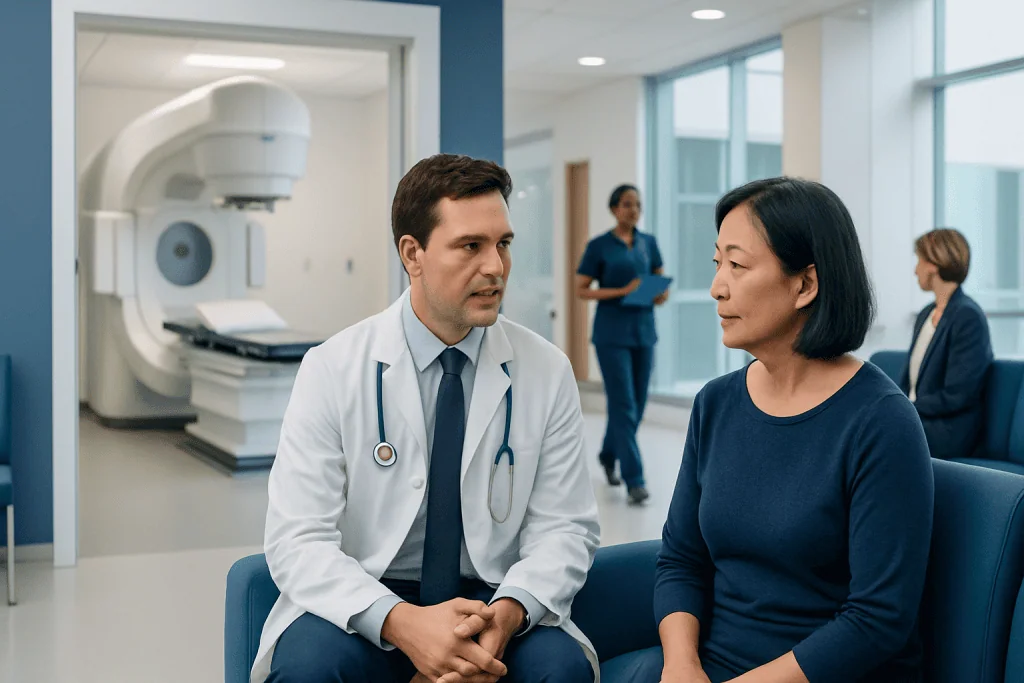
Stage 1 lung cancer is localized to the lung and has not spread to distant organs or lymph nodes. Surgery is often the preferred treatment for people who are fit enough, but SBRT is an established curative alternative for many people who cannot have surgery.
Key Takeaways
- Stage 1 lung cancer is localized to the lung and has not spread to distant organs or lymph nodes.
- Surgery is often the preferred treatment for people who are fit enough, but SBRT is an established curative alternative for many people who cannot have surgery.
- SBRT usually involves a small number of highly focused treatment sessions, while conventional radiation may take several weeks.
- Treatment planning uses detailed imaging and careful positioning to account for breathing and protect healthy lung, heart, spinal cord and esophagus.
- Follow-up scans are essential because changes on imaging after radiation can take time to interpret.
- New or worsening breathlessness, chest pain, coughing blood or a persistent fever should be assessed promptly.
Radiation for lung cancer stage 1 is often used with curative intent when surgery is not appropriate or is declined. Modern focused techniques, particularly stereotactic body radiation therapy (SBRT), can treat a small lung tumor precisely while limiting radiation exposure to nearby healthy tissue.
Overview: radiation for lung cancer stage 1
Radiation for lung cancer stage 1 can be a potentially curative treatment for a cancer that is confined to the lung. It is most commonly recommended for people who cannot safely undergo surgery because of other health conditions, reduced lung function or personal preference. For selected small tumors, stereotactic body radiation therapy (SBRT), also called stereotactic ablative radiotherapy, delivers high-dose radiation very accurately over a limited number of visits.
Stage 1 non-small cell lung cancer is generally a tumor that has not spread to lymph nodes or distant parts of the body. The care team confirms the stage using imaging, biopsy findings when feasible, and sometimes additional tests to assess lymph nodes. Small cell lung cancer is treated differently and is less commonly described using the same stage-based approach.
The best treatment plan is individualized. A thoracic surgeon, radiation oncologist, medical oncologist, pulmonologist, radiologist and pathologist may review the case together. This helps balance the likelihood of cancer control with a person’s lung health, heart health, tumor location and daily priorities.
How radiation works and who may be a candidate
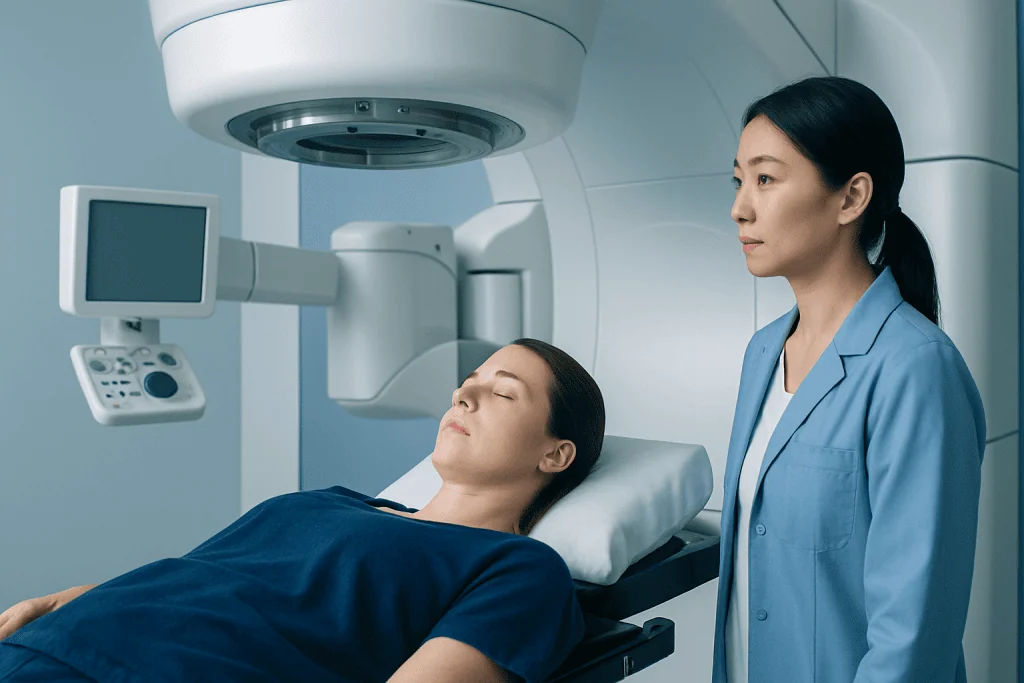
Radiation therapy uses high-energy beams to damage cancer-cell DNA. Cancer cells are less able than healthy cells to repair this damage, so they gradually stop dividing and die. The body then clears the treated cells over time; this process is why scans may continue to change for months after treatment.
For early-stage disease, SBRT uses multiple carefully shaped beams that converge on the tumor. Each beam passes through a small amount of normal tissue, while the combined dose is concentrated at the target. Image guidance before and during treatment helps the team account for breathing-related tumor movement and deliver treatment as accurately as possible.
A person may be considered for radiation when surgery carries an unacceptably high risk, lung reserve is limited, the tumor is in a location that makes surgery difficult, or surgery is not wanted. Radiation may also be considered after surgery in particular situations, although this is less typical for completely removed stage 1 disease. A full discussion should include alternatives, including surgery, observation in uncommon circumstances, and clinical trials where available.
Assessment often includes a chest CT scan, PET-CT scan, lung-function testing and review of medical history. A biopsy is usually sought to confirm the diagnosis, but in carefully selected cases where biopsy risk is high and imaging strongly suggests cancer, a specialist team may discuss treatment without a tissue sample.
Step by step: what happens during treatment
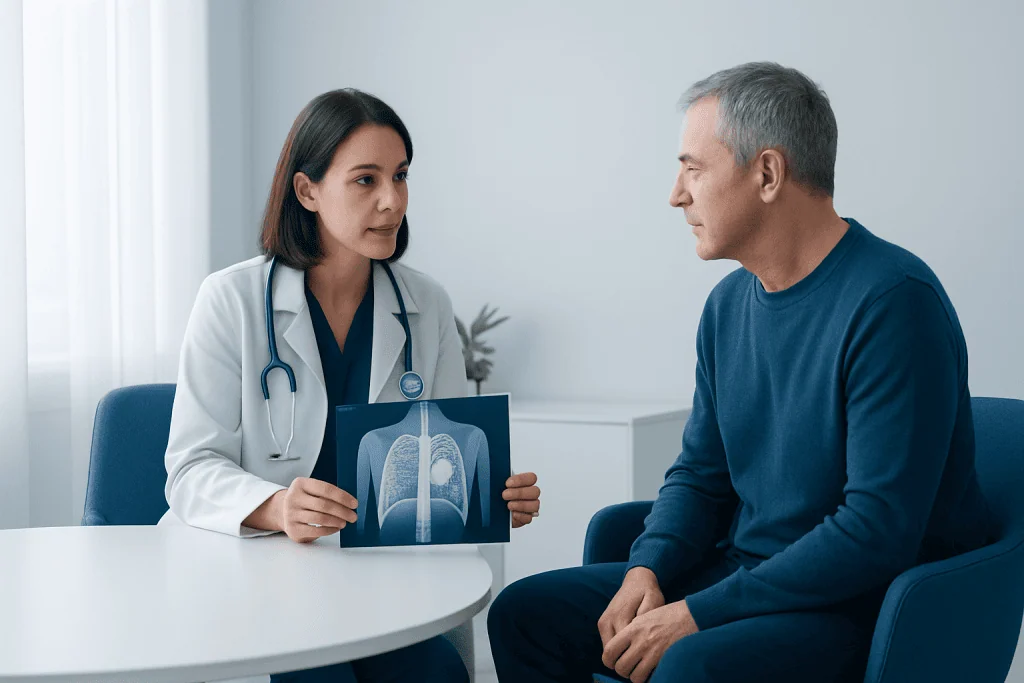
Radiation treatment begins with planning rather than radiation delivery. During a simulation appointment, the person lies in the treatment position on a CT scanner. A custom support may be used to improve comfort and reduce movement. The team may use a breathing-management technique, such as four-dimensional CT imaging, to map how the tumor moves as the person breathes.
Radiation oncologists, medical physicists and dosimetrists then create a personalized plan. They outline the tumor and nearby structures, such as healthy lung tissue, airways, heart, esophagus, spinal cord and chest wall. The plan is checked carefully before treatment begins.
At each treatment visit, radiation therapists help the person into the same position and perform image guidance to verify alignment. The machine rotates around the body but does not touch it. Radiation itself is painless, and the person does not become radioactive afterward. Staff monitor from an adjacent room and can communicate throughout the session.
SBRT commonly involves a few treatment sessions delivered over days to approximately two weeks. Conventional external-beam radiation uses a lower dose per session and may be delivered daily on weekdays for several weeks. The precise schedule depends on tumor size, location, nearby organs, prior treatments and the radiation team’s clinical judgment. Radiation therapy planning is designed around safety as well as tumor control.
Benefits, risks and recovery timeline
The main benefit of radiation for stage 1 lung cancer is local tumor control without an operation. SBRT is noninvasive, usually does not require anesthesia or a hospital stay, and can be particularly valuable for people with medical conditions that make lung surgery unsafe. It can also preserve as much remaining lung tissue as possible through highly focused treatment.
Many people continue normal daily activities during treatment, although tiredness can build gradually and may last for several weeks afterward. Other short-term effects can include mild skin irritation over the treatment area, cough, throat discomfort if the treated area is near the esophagus, or a temporary increase in breathlessness. The care team can suggest practical ways to manage symptoms.
Radiation-related inflammation in the lung, called radiation pneumonitis, can occur weeks to months after treatment. Symptoms may include a new or worsening dry cough, breathlessness, low-grade fever or chest discomfort. It is often treatable, but it is important to report symptoms early because infection, heart conditions and cancer-related changes can cause similar problems.
Less common longer-term effects include scarring in part of the lung, rib or chest-wall discomfort for tumors close to the chest wall, narrowing of an airway, or injury to nearby structures. Risks vary substantially with tumor location and pre-existing lung disease. The radiation oncologist explains the expected benefits and individual risks before consent is given.
Follow-up and living after stage 1 lung cancer treatment
Follow-up is an important part of recovery. Imaging, usually chest CT scans at planned intervals, checks the treated area and looks for any new changes elsewhere in the lungs. Early after SBRT, radiation can cause inflammation and later scarring that may resemble a mass on CT. Comparing scans over time and, when needed, using PET-CT or other testing helps specialists interpret these changes.
People are encouraged to attend all follow-up visits even when they feel well. The team also reviews breathing symptoms, physical activity, nutrition, emotional wellbeing and tobacco use. Stopping smoking at any stage can improve overall health, help lung function and reduce the risk of future cancers; support programs and medicines can make quitting more achievable.
Gentle activity, adequate sleep, balanced meals and gradual return to usual routines can support recovery. People with chronic obstructive pulmonary disease, asthma, heart disease or other long-term conditions should continue regular care with their usual clinicians. Pulmonary rehabilitation may be helpful for some people who have ongoing shortness of breath or reduced exercise tolerance.
Acibadem International’s multidisciplinary specialists and JCI-accredited hospitals evaluate and treat lung cancer for international patients, coordinating imaging, pathology, radiation oncology, surgery and supportive care when appropriate.
Is stage 1 lung cancer curable with radiation?
Yes. Stage 1 non-small cell lung cancer can be treated with curative intent using radiation, especially SBRT for people who are not suitable candidates for surgery. Curative intent means the goal is to eliminate the known cancer and prevent it from returning, although no treatment can guarantee that recurrence will not occur.
For people who can safely have surgery, surgical removal is commonly recommended because it removes the tumor and allows direct examination of lymph nodes. However, modern SBRT has produced strong local-control outcomes in medically inoperable patients and is an accepted standard treatment option for appropriately selected early-stage tumors.
The likelihood of cure depends on several factors, including whether the cancer is truly localized, tumor size and location, cancer type, overall health, smoking status and whether treatment can be completed as planned. Accurate staging and expert treatment planning are therefore essential. More general information is available in lung cancer information.
How many rounds of radiation is normal for lung cancer?
There is no single normal number of radiation sessions for lung cancer. For a small stage 1 tumor treated with SBRT, treatment often takes place in a limited number of sessions, commonly between one and several treatments. The number is selected to provide an effective dose while protecting nearby organs.
Tumors near central airways, the heart, esophagus or major blood vessels may require more sessions with a smaller dose per visit than tumors located farther from these structures. This approach can reduce the risk of injury to sensitive tissues. A radiation oncologist explains the recommended schedule and why it fits the individual tumor.
Conventional external-beam radiation may be used in some circumstances and is commonly delivered on weekdays over several weeks. Radiation may also be used for more advanced lung cancer, after surgery, together with chemotherapy, or to ease symptoms; those uses have different schedules from curative SBRT for stage 1 disease.
Can you fully recover from stage 1 lung cancer?
Many people recover well after treatment for stage 1 lung cancer, and some remain free of cancer long term. Recovery has two parts: healing from treatment and ongoing surveillance for recurrence or a new lung cancer. The physical recovery period varies with the chosen treatment, lung function before treatment and other medical conditions.
After SBRT, people often have no major immediate recovery restrictions because there is no incision. Fatigue may be temporary, while breathing symptoms can take longer to settle in people who already have lung disease. After surgery, recovery usually takes longer and includes healing from the procedure as well as rebuilding strength and lung capacity.
It is understandable to feel worried while waiting for follow-up scans. Clear communication with the cancer team can help people understand what is expected, what symptoms require attention and how results will be reviewed. Support from family, counseling services, rehabilitation professionals and smoking-cessation programs can also be valuable.
What are the odds of surviving stage 1 lung cancer?
Stage 1 lung cancer generally has a more favorable outlook than lung cancers found after spread to lymph nodes or distant organs. However, survival estimates cannot predict what will happen for one individual. They are based on large groups of people treated in earlier years and may not fully reflect advances in imaging, surgery, radiation technology and supportive care.
Outlook is influenced by the exact stage, tumor size, cancer subtype, molecular features in some cases, treatment received, lung and heart health, and whether cancer returns. For this reason, clinicians may discuss prognosis in broad terms and focus on the factors that can guide a person’s care.
It is reasonable to ask the oncology team about the aim of treatment, the chance of local control, the follow-up plan and how individual health factors affect outlook. Honest, personalized discussion is more useful than relying on a single percentage found online.
When to seek medical care
Anyone being assessed for or treated for lung cancer should contact their care team about new, persistent or worsening symptoms. Prompt advice is particularly important for increasing shortness of breath, chest pain, fever, a persistent cough, coughing up blood, dizziness, confusion, severe weakness or difficulty swallowing.
Emergency medical care is needed for severe breathing difficulty, sudden chest pain, coughing up a large amount of blood, fainting, blue or gray lips, or other symptoms that feel immediately life-threatening. These symptoms can have many causes, but they should not be managed by waiting at home.
People who have completed radiation should also keep scheduled scan appointments. Follow-up allows the team to identify treatable side effects, distinguish radiation-related changes from recurrence and support long-term lung health.
Frequently asked questions
Is SBRT the same as radiation for lung cancer stage 1?
SBRT is a specialized form of external-beam radiation therapy often used for small, early-stage non-small cell lung cancers. It delivers a high dose to the tumor with great precision over a limited number of visits. Not every tumor is suitable for SBRT, particularly when it is very close to sensitive central chest structures.
Does radiation for stage 1 lung cancer hurt?
Radiation delivery is painless. The machine does not touch the body, and patients do not feel the radiation beam. Some side effects, such as tiredness, skin sensitivity, cough or irritation in the chest, may develop during or after treatment.
Can radiation make lung cancer spread?
No. Radiation therapy does not cause cancer to spread. Its purpose is to damage cancer cells in the targeted area and reduce the chance that the treated tumor will grow or remain active.
Can stage 1 lung cancer come back after radiation?
It can recur after radiation, just as it can after surgery, because cancer cells may sometimes remain or may have spread before treatment was detectable on scans. Regular follow-up imaging is important for identifying recurrence or a new lung cancer early. The oncology team can explain the individual risk based on tumor and health factors.
How soon will a scan show whether radiation worked?
The first follow-up CT scan is often arranged a few months after treatment, but exact timing varies by care plan. Radiation-related inflammation and scarring can make the treated area look different on scans for months or longer. Specialists usually interpret response by comparing several scans over time rather than relying on one image alone.
Can a person work during SBRT for stage 1 lung cancer?
Many people can continue working and maintaining daily routines during SBRT, especially if treatment-related fatigue is mild. This depends on the person’s job, travel needs, baseline breathing and other health conditions. Adjusting the schedule or reducing strenuous activity temporarily may be helpful.
References
- National Cancer Institute
- American Cancer Society
- National Comprehensive Cancer Network
- American Society for Radiation Oncology
- European Society for Medical Oncology
This article is for general information only and is not a substitute for professional medical advice. Please consult a qualified doctor about your individual situation.
Lung Cancer in Turkey — costs, top hospitals & a free quote
JCI-accredited · board-certified surgeons · reply within 24h
Add us as a Preferred Source to see more of our trusted health content across Google Search, AI Overviews and Discover.

Medical Oncology Department
Medical treatment of cancer with chemotherapy, immunotherapy and targeted therapies under a multidisciplinary tumor board.
60 specialists in this unitMore from the Health Library


Related Specialists
Dr. Yusuf Ay
Emergency Service
Prof. Dr. Hale Göksever Çelik
Gynecology & Obstetrics
Prof. Dr. Yüksel Ersoy
Physical Medicine & Rehabilitation
Prof. Dr. Samet Yardımcı
General Surgery