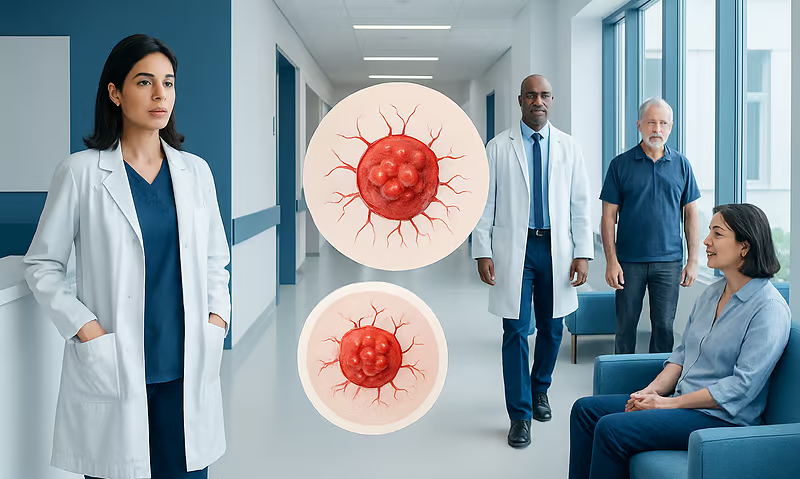
Male Genital Warts: HPV Transmission, Treatment, and Prevention

Male genital warts are usually caused by low-risk HPV types, most often HPV 6 and HPV 11. HPV can spread through vaginal, anal, or oral sex and close skin-to-skin genital contact, even when visible warts are not present.
Key Takeaways
- Male genital warts are usually caused by low-risk HPV types, most often HPV 6 and HPV 11.
- HPV can spread through vaginal, anal, or oral sex and close skin-to-skin genital contact, even when visible warts are not present.
- Treatment can remove visible warts, but it may not completely eliminate HPV from the skin, so recurrence is possible.
- The HPV vaccine helps prevent the HPV types most commonly linked with genital warts and several HPV-related cancers.
- Men should seek medical assessment for new genital bumps, persistent irritation, bleeding, pain, or concerns after sexual exposure.
Male genital warts are a common sexually transmitted condition caused by certain types of human papillomavirus, or HPV. They are treatable, and prevention strategies such as vaccination, condom use, and regular medical care can reduce future risk.
Overview
Male genital warts are small growths that appear on or around the penis, scrotum, groin, anus, or nearby skin. They are caused by human papillomavirus, commonly called HPV. HPV is one of the most common sexually transmitted infections worldwide, and many sexually active people are exposed to it at some point in their lives.
Most genital warts in men are linked to HPV types 6 and 11. These are considered low-risk HPV types because they usually do not cause cancer. However, other HPV types can be associated with cancers of the anus, penis, throat, and other areas, which is one reason prevention and appropriate medical follow-up are important.
Having genital warts can feel worrying or embarrassing, but it is a medical condition, not a reflection of personal hygiene or character. Warts can often be treated effectively, and a doctor can help confirm the diagnosis, explain transmission, and recommend ways to protect sexual partners.
Symptoms and What Male Genital Warts Look Like
Male genital warts may look different from person to person. They can be flat, raised, smooth, rough, or cauliflower-like. Some are flesh-colored, pink, brown, or grayish. They may appear as a single bump or in clusters, and they can be so small that they are difficult to see without a medical examination.
Common locations include the shaft or head of the penis, under the foreskin, the scrotum, the groin folds, the area around the anus, and sometimes inside the anus or urethral opening. Warts may also occur in the mouth or throat after oral sexual contact, although this is less commonly noticed.
Many genital warts do not cause pain. Some men notice itching, irritation, mild bleeding after friction, discomfort during sex, or a change in the appearance of genital skin. Because other conditions can resemble genital warts, including skin tags, pearly penile papules, molluscum contagiosum, herpes lesions, folliculitis, or certain skin cancers, a medical diagnosis is recommended rather than self-diagnosis.
HPV Transmission: How Genital Warts Spread
HPV spreads mainly through direct skin-to-skin contact during sexual activity. This includes vaginal, anal, and oral sex, as well as genital-to-genital contact without penetration. The virus can affect areas not covered by a condom, which means condoms reduce risk but cannot provide complete protection.
A person can transmit HPV even when they have no visible warts or symptoms. Warts may appear weeks, months, or sometimes longer after exposure, so it is often not possible to know exactly when or from whom HPV was acquired. This delayed appearance can be confusing for couples, but it is a known feature of HPV infection.
HPV is not typically spread through casual contact such as hugging, sharing utensils, or using the same toilet seat. Transmission through shared towels or surfaces is considered unlikely. The most relevant risk is intimate skin contact with an infected genital or anal area.
Causes and Risk Factors
The direct cause of male genital warts is infection with wart-causing HPV types. The immune system often controls HPV over time, and in many people the virus becomes undetectable or inactive. In some cases, however, HPV remains in the skin and causes visible warts or recurrent lesions.
Certain factors can increase the chance of acquiring HPV or developing visible warts. These include having unprotected sex, having multiple sexual partners, starting sexual activity at a younger age, having a partner with HPV or genital warts, and having another sexually transmitted infection. People with weakened immune systems, including those living with HIV or taking immune-suppressing medicines, may have more persistent or extensive warts.
Smoking has been associated with reduced immune control of HPV in some studies, and overall genital skin health may also affect irritation and recurrence. Circumcision status is not a guarantee of protection either way; HPV can affect any exposed genital or nearby skin. Risk is best reduced through vaccination, safer sex practices, and early medical assessment of symptoms.
Diagnosis
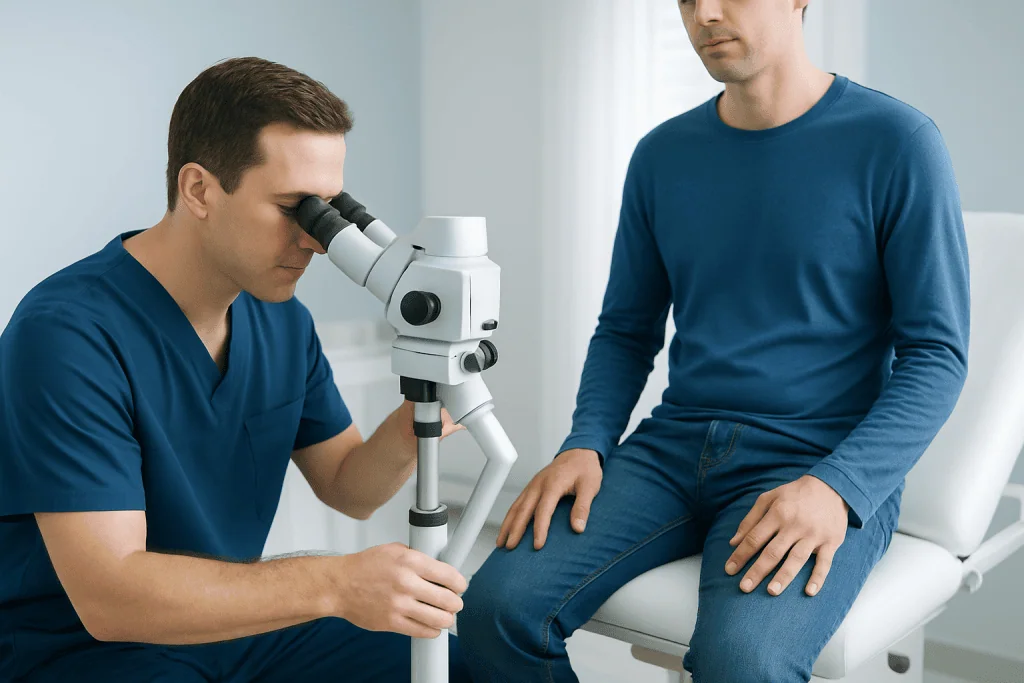
Diagnosis is usually made by a doctor through a visual examination of the affected area. A dermatologist, urologist, infectious disease specialist, or sexual health clinician can assess the size, number, and location of lesions and check whether they are likely to be genital warts or another condition.
There is no routine HPV test recommended for most men in the same way that cervical HPV testing is used in women. If a lesion looks unusual, does not respond to treatment, bleeds easily, has irregular color, or occurs in a higher-risk area such as inside the anus, a doctor may recommend additional evaluation. This may include anoscopy, urethral assessment, or a biopsy, where a small tissue sample is examined under a microscope.
Because genital warts are sexually transmitted, clinicians may also suggest testing for other sexually transmitted infections such as chlamydia, gonorrhea, syphilis, HIV, or hepatitis, depending on personal risk and local guidelines. This is a routine part of sexual health care and helps ensure that treatable infections are not missed.
Treatment Options
Treatment aims to remove visible warts, reduce symptoms, and lower the amount of affected tissue. It does not always remove HPV completely from the skin, so warts may return after treatment. Some small warts may also go away without treatment as the immune system controls the virus, but medical assessment is still useful to confirm the diagnosis and discuss partner protection.
Treatment choice depends on the location, number, size, appearance, and patient preference. Options may include clinician-applied treatments such as cryotherapy to freeze warts, chemical treatments applied in a clinic, electrosurgery, laser therapy, or surgical removal. Prescription creams or solutions may be suitable for some external warts and should be used exactly as directed by a doctor.
Over-the-counter wart removers designed for hands or feet should not be used on genital skin. The genital area is sensitive, and inappropriate products can cause burns, scarring, or significant irritation. Men should also avoid cutting, picking, or shaving directly over warts, as this may irritate the skin and potentially spread lesions to nearby areas.
Follow-up may be needed because warts can recur, especially in the first months after treatment. If warts are extensive, painful, recurrent, or difficult to treat, a specialist may review immune health, sexual health history, and alternative diagnoses. Treatment can be tailored to minimize discomfort while achieving good clearance of visible lesions.
Prevention and Self-care
The HPV vaccine is one of the most effective prevention tools. It protects against HPV types that cause most genital warts and also against several high-risk HPV types associated with cancers. Vaccination is most effective before exposure to HPV, but many adults may still benefit depending on age, previous vaccination status, and sexual health history, so men should ask a qualified healthcare professional whether it is appropriate for them.
Condoms and dental dams reduce the risk of HPV and other sexually transmitted infections when used consistently and correctly, although they do not cover all skin that may carry HPV. Limiting the number of sexual partners, mutual STI testing in new relationships, and avoiding sex when visible warts are present can also reduce transmission risk. Partners should be informed in a calm, honest way so they can make their own healthcare decisions.
- Avoid sexual contact with visible warts until a doctor advises it is safe to resume.
- Keep the genital area clean and dry, but avoid harsh scrubbing or perfumed products.
- Do not share sex toys without cleaning them and using barriers where appropriate.
- Stop smoking if possible, and seek support if quitting is difficult.
- Attend follow-up appointments if treatment is prescribed or warts return.
Self-care also includes emotional wellbeing. Genital warts are common and manageable, but they can affect confidence and relationships. Speaking with a healthcare professional can help men understand the condition accurately, reduce unnecessary guilt, and plan practical steps for treatment and prevention.
When to See a Doctor
Men should seek medical advice for any new lump, bump, rash, sore, or change in genital or anal skin, especially if it persists, spreads, bleeds, itches, or causes pain. A prompt check is also recommended if a sexual partner has been diagnosed with genital warts or another sexually transmitted infection.
Urgent or early assessment is particularly important for men with a weakened immune system, men living with HIV, men who have receptive anal sex and notice anal symptoms, or anyone with lesions that look dark, irregular, ulcerated, or rapidly changing. These features do not necessarily mean something serious is present, but they deserve careful evaluation.
A healthcare visit can provide diagnosis, treatment, STI screening, vaccination advice, and guidance on discussing HPV with partners. Acibadem International’s multidisciplinary specialists and JCI-accredited hospitals diagnose and treat HPV-related genital conditions for international patients, with care plans based on individual medical needs.
Frequently asked questions
Are male genital warts the same as HPV?
Genital warts are a visible sign of infection with certain types of HPV. Most genital warts are caused by low-risk HPV types, especially HPV 6 and 11. HPV itself can also be present without any visible warts or symptoms.
Can genital warts go away without treatment?
Yes, some genital warts shrink or disappear as the immune system controls HPV. However, this can take time, and warts may persist, spread, or return. A doctor can confirm the diagnosis and discuss whether monitoring or treatment is the better option.
Can a man spread HPV if he has no warts?
Yes. HPV can be transmitted through skin-to-skin sexual contact even when there are no visible warts. This is one reason HPV is common and why vaccination and safer sex practices are important.
Does treatment cure HPV permanently?
Treatment removes visible warts but may not completely eliminate HPV from the surrounding skin. The immune system often controls the virus over time, but recurrence can happen. Follow-up care is useful if warts return.
Should sexual partners be tested or treated?
Partners should be informed so they can seek medical advice if they notice symptoms or have concerns. There is no routine HPV test for most men, and partners without visible warts may not need treatment. STI screening may still be recommended depending on exposure and risk.
Is the HPV vaccine useful for adult men?
The HPV vaccine is most effective before sexual exposure, but some adult men may still benefit. Eligibility and expected benefit depend on age, previous vaccination status, and sexual history. A healthcare professional can advise based on current guidelines.
Is it safe to have sex while treating genital warts?
It is usually advised to avoid sexual contact involving the affected area while visible warts are present or while the skin is healing after treatment. This helps reduce irritation and may lower the risk of transmission. A doctor can give guidance based on the treatment used and the condition of the skin.
References
- World Health Organization
- Centers for Disease Control and Prevention
- European Association of Urology
- American Academy of Dermatology Association
- International Union against Sexually Transmitted Infections
This article is for general information only and is not a substitute for professional medical advice. Please consult a qualified doctor about your individual situation.
Genital Warts in Turkey — costs, top hospitals & a free quote
JCI-accredited · board-certified surgeons · reply within 24h
Add us as a Preferred Source to see more of our trusted health content across Google Search, AI Overviews and Discover.

Gynecology & Obstetrics
Women’s health across pregnancy, gynecologic surgery and high-risk pregnancy care.
187 specialists in this unit