Spinal Cord Tumor
Spinal Cord Tumor explained: symptoms, causes, diagnosis, treatment options, recovery, and when to seek specialist medical advice.
Quick answer
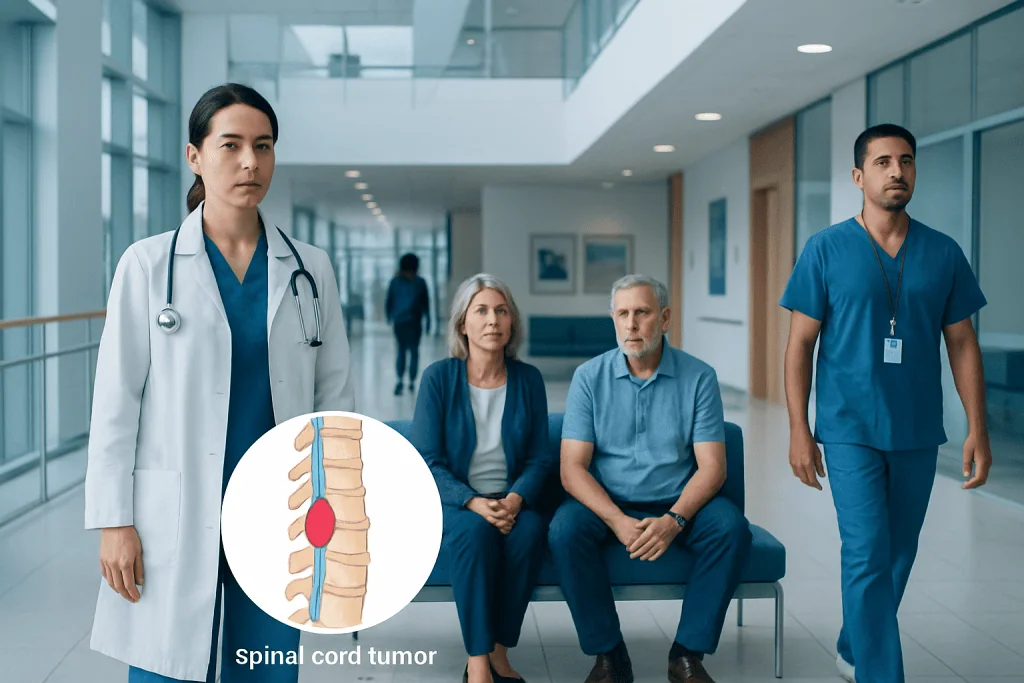
A spinal cord tumor is an abnormal growth in or around the spinal cord that can compress nerves and affect movement, sensation, or bladder and bowel function. Treatment depends on the tumor’s type, size, and location, and at Acibadem in Turkey it may include advanced imaging, surgery, radiotherapy, chemotherapy, and rehabilitation planned by a multidisciplinary team.
A spinal cord tumor is an abnormal growth of cells in or near the spinal cord, the spinal nerves, or the protective tissues around them. It may be noncancerous or cancerous, and symptoms often develop because the tumor presses on delicate nerve structures.
Overview
A spinal cord tumor is an abnormal mass of cells that forms within the spinal cord, around the spinal cord, in the spinal nerves, or in the bones and soft tissues of the spine. These tumors may be benign, meaning they do not spread to distant organs, or malignant, meaning they are cancerous. Even a benign spinal cord tumor can cause serious symptoms if it compresses the spinal cord or nerve roots.
Spinal cord tumors are often described by their location. Intramedullary tumors grow inside the spinal cord itself. Intradural-extramedullary tumors grow inside the protective covering of the spinal cord but outside the cord tissue. Extradural tumors grow outside this covering, often in the vertebrae, and may press inward on the spinal cord or nerves.
Some spinal cord tumors are primary, meaning they begin in the spine or spinal cord region. Others are metastatic, meaning they have spread from cancer in another part of the body. Because the spinal cord carries signals between the brain and the rest of the body, prompt evaluation by a neurology, neurosurgery, or oncology specialist is important when symptoms suggest spinal cord involvement.
Symptoms
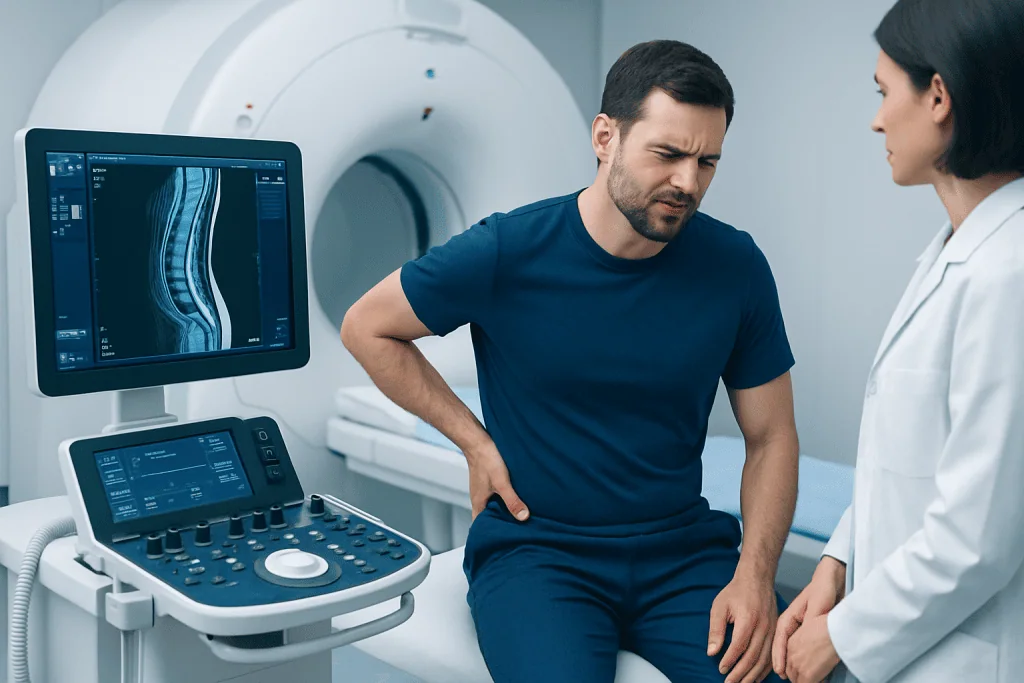
Spinal cord tumor symptoms depend on the tumor’s size, exact location, growth rate, and whether it affects the spinal cord, nerve roots, bones, or surrounding tissues. Symptoms may appear gradually over weeks or months, but in some cases they can worsen more quickly. Pain is often one of the first symptoms, especially persistent back or neck pain that does not clearly relate to an injury.
Possible symptoms include:
- Back, neck, arm, or leg pain that may worsen at night or with lying down
- Numbness, tingling, burning, or reduced sensation in the arms, chest, abdomen, or legs
- Muscle weakness, clumsiness, stiffness, or difficulty walking
- Loss of balance or frequent falls
- Pain that radiates along a nerve path, sometimes into the arms or legs
- Changes in bladder or bowel control
- Sexual function changes related to nerve involvement
Symptoms can resemble more common conditions such as disc herniation, arthritis, neuropathy, or muscle strain. However, symptoms that are progressive, unexplained, associated with neurological changes, or accompanied by a known cancer history require medical assessment. Early diagnosis can help protect nerve function and guide appropriate treatment.
Causes & Risk Factors
The exact cause of many primary spinal cord tumors is not known. They develop when cells grow in an uncontrolled way, forming a mass in or near the spinal cord. Some tumors arise from nerve sheath cells, meninges, glial cells within the spinal cord, or other tissues in the spinal canal. A tumor’s behavior depends on its cell type, grade, and location.
Metastatic spinal tumors occur when cancer cells spread to the spine from another part of the body. These tumors more commonly involve the vertebrae and can compress the spinal cord or nerve roots as they grow. A previous or current cancer diagnosis is therefore an important risk factor for spinal tumor-related symptoms, especially new back pain or neurological changes.
Known risk factors can include certain inherited conditions that increase the chance of nervous system tumors, prior radiation exposure to the spine, and a personal history of cancer. Most people with back pain do not have a spinal cord tumor, and most spinal symptoms are caused by non-tumor conditions. Still, persistent or progressive neurological symptoms should be evaluated rather than assumed to be routine back pain.
Diagnosis
Diagnosis begins with a careful medical history and neurological examination. The doctor assesses pain patterns, muscle strength, sensation, reflexes, coordination, walking ability, and bladder or bowel symptoms. Information about previous cancers, recent weight changes, infections, injuries, or inherited conditions may help guide testing.
Magnetic resonance imaging, commonly called MRI, is the main test used to evaluate a suspected spinal cord tumor. MRI provides detailed images of the spinal cord, nerve roots, spinal canal, and surrounding structures. Contrast material may be used when appropriate to show tumor borders, blood supply patterns, inflammation, or spread. In some cases, computed tomography, spinal X-rays, or whole-body imaging may be used to evaluate bone involvement or search for a primary cancer source.
Additional tests may include blood tests, neurological studies, or examination of cerebrospinal fluid in selected cases. A biopsy may be needed when imaging cannot confirm the tumor type or when treatment decisions depend on tissue diagnosis. Because the spinal cord is delicate, biopsy and surgery are planned carefully by specialists with experience in spinal and neuro-oncological disease.
Treatment Options
Treatment for a spinal cord tumor is individualized. The right approach is decided by a specialist team after assessing the tumor’s type, size, location, growth rate, symptoms, general health, and whether the tumor is primary or metastatic. The goals may include removing or reducing the tumor, relieving pressure on the spinal cord, preserving nerve function, controlling cancer, reducing pain, and supporting mobility and independence.
Surgery may be considered when a tumor can be safely removed or when decompression is needed to relieve pressure on the spinal cord or nerve roots. Some tumors can be removed completely, while others are close to essential nerve tissue and may only be partially removed to reduce risk. Advanced imaging, microsurgical techniques, and nerve monitoring may be used in specialized centers to improve precision.
Radiotherapy may be recommended for tumors that cannot be fully removed, tumors that are sensitive to radiation, or metastatic disease affecting the spine. Systemic treatments, such as chemotherapy, targeted therapy, immunotherapy, or hormone-related treatment, may be used for certain cancer types when appropriate. Medication may also be used to manage pain, swelling, muscle spasm, or other symptoms, while rehabilitation helps patients regain strength, balance, and daily function.
Some small, slow-growing tumors that are not causing significant symptoms may be monitored with regular examinations and imaging. This is often called active surveillance or watchful waiting. Monitoring does not mean ignoring the condition; it means the specialist follows the tumor carefully and begins treatment if growth or symptoms appear.
Living With / Prognosis
Living with a spinal cord tumor can affect movement, comfort, sleep, work, and emotional wellbeing. Many patients benefit from a coordinated care plan that includes medical treatment, pain management, rehabilitation, and practical support at home. Physical therapy and occupational therapy can help maintain strength, flexibility, balance, and safe daily activity.
The prognosis for a spinal cord tumor varies widely. Important factors include whether the tumor is benign or malignant, where it is located, how much it compresses the spinal cord, whether it can be removed or controlled, and whether there is cancer elsewhere in the body. Nerve recovery can take time, and some symptoms may improve gradually after pressure is relieved, while others may persist depending on the degree and duration of nerve injury.
Regular follow-up is important after treatment or during monitoring. Follow-up visits may include neurological examinations, repeat MRI scans, symptom review, rehabilitation adjustments, and discussions about work, travel, exercise, or daily activities. Patients are encouraged to report new or worsening symptoms promptly, rather than waiting for a scheduled appointment.
When to See a Doctor
A person should see a doctor if they have persistent back or neck pain that is worsening, unexplained, or different from previous pain, especially if it occurs with numbness, weakness, balance problems, or pain spreading into the arms or legs. Medical evaluation is also important when pain wakes a person from sleep, does not improve with usual measures, or occurs in someone with a history of cancer.
Urgent medical care is needed for sudden or rapidly worsening weakness, loss of walking ability, new bladder or bowel control problems, numbness in the groin or saddle area, or severe spinal pain with neurological symptoms. These may indicate pressure on the spinal cord or nerve roots, and timely treatment can be important for preserving function.
Patients with suspected or confirmed spinal cord tumors are usually cared for by a multidisciplinary team that may include neurosurgery, neurology, medical oncology, radiation oncology, radiology, pathology, pain medicine, and rehabilitation specialists. Acibadem International’s multidisciplinary specialists and JCI-accredited hospitals diagnose and treat spinal cord tumors for international patients, with care plans based on individual assessment and established medical standards.
Frequently asked questions
What is a spinal cord tumor?
A spinal cord tumor is an abnormal growth of cells in or near the spinal cord, spinal nerves, or tissues surrounding the spinal canal. It can be benign or cancerous, and symptoms usually occur when the tumor compresses nerves or the spinal cord. Even noncancerous tumors may need treatment if they affect neurological function.
Are all spinal cord tumors cancer?
No, not all spinal cord tumors are cancer. Some are benign and grow slowly, while others are malignant or have spread from cancer elsewhere in the body. The tumor type is determined through imaging, specialist assessment, and sometimes biopsy or surgical pathology.
What are the early symptoms of a spinal cord tumor?
Early symptoms may include persistent back or neck pain, pain that radiates into an arm or leg, numbness, tingling, or mild weakness. Some people notice balance problems, changes in walking, or symptoms that worsen at night. Because these symptoms can resemble common spine problems, persistent or progressive symptoms should be checked by a doctor.
How is a spinal cord tumor diagnosed?
Diagnosis usually involves a neurological examination and MRI of the spine. MRI is the most important imaging test because it shows the spinal cord, nerves, and surrounding tissues in detail. Additional imaging, blood tests, cerebrospinal fluid tests, or biopsy may be used when needed.
Can a spinal cord tumor be removed with surgery?
Some spinal cord tumors can be removed completely or partly with surgery, depending on their location and relationship to important nerve structures. In other cases, surgery may be used mainly to relieve pressure or obtain a diagnosis. The decision is made by a specialist team after weighing expected benefits and risks.
What treatment options are available for spinal cord tumors?
Treatment options may include surgery, radiotherapy, systemic cancer treatment, medication for symptoms, rehabilitation, or careful monitoring. The best approach depends on whether the tumor is benign or malignant, where it is located, how fast it is growing, and the patient’s overall health. A specialist should decide the plan after a full assessment.
When is a spinal cord tumor an emergency?
Urgent care is needed if a person develops sudden or worsening weakness, difficulty walking, loss of bladder or bowel control, numbness around the groin, or severe spinal pain with neurological symptoms. These signs may suggest spinal cord or nerve root compression. Prompt medical evaluation can help protect function and guide treatment.
References
- National Cancer Institute
- American Association of Neurological Surgeons
- Mayo Clinic
- European Society for Medical Oncology
- Merck Manual Professional Edition
This article is for general information only and is not a substitute for professional medical advice. Please consult a qualified doctor about your individual situation.
Treatments for This Condition
Doctors Who Treat This Condition

Prof. Dr. Abdullah Büyükçelik
Medical Oncology
Prof. Dr. Ali Arican
Medical Oncology
Prof. Dr. Aziz Yazar
Medical Oncology
Prof. Dr. Başak Oyan Uluç
Medical Oncology
Prof. Dr. Bülent Karabulut
Medical Oncology
Prof. Dr. Ersin Özaslan
Medical Oncology
Prof. Dr. Faysal Dane
Medical Oncology
Prof. Dr. Gökhan Demir
Medical Oncology
Prof. Dr. Gül Başaran
Medical Oncology
Prof. Dr. Handan Onur Topuzlu
Medical Oncology
Prof. Dr. Hüseyin Engin
Medical Oncology